
Travel
Cost-saving tips when using a prepaid eSIM for travel


Travel brings excitement, yet costs can rise quickly if small details go unchecked. Mobile data plays a key role in how smoothly your trip unfolds. Poor planning can lead to unnecessary expenses, especially when you rely on constant connectivity for maps, bookings, and communication. Many travellers now look for ways to stay connected while keeping their spending under control.
A prepaid travel eSIM offers a practical way to manage connectivity costs without physical SIM cards. It provides clear pricing and flexible plans that suit different travel needs. This article shares seven effective tips that help you reduce expenses and get the best value from your eSIM during your journey.
Choose a plan that matches your actual usage
Selecting the right plan is the first step toward saving money during travel. Many travellers pick a plan based on guesswork, which leads to either unused data or frequent recharges. This can affect your budget and create unnecessary stress.
Take time to estimate your daily data needs before your trip. Consider how much you will use maps, messaging apps, and bookings. A plan that matches your usage pattern helps you avoid overspending and ensures your data lasts for the entire journey.
Reduce data consumption through smart usage
Data can disappear quickly when you use it without control. Activities such as video streaming, large downloads, or continuous app usage can reduce your balance in a short time.
Focus on essential tasks while using mobile data. Limit activities that consume high amounts of data and save them for Wi-Fi access. This approach allows you to extend your plan and maintain a stable connection throughout your trip without extra costs.
Control background data to prevent waste
Many apps continue to use data even when you are not actively using them. Automatic updates, notifications, and cloud services can consume your plan without notice.
Check your device settings and disable background data for apps that are not essential. This ensures your data remains available for important tasks such as navigation and communication. Controlling background usage helps you maintain better control over your expenses.
Use offline options to minimise data dependence
Offline features can reduce your reliance on mobile data during travel. Many apps allow you to download maps, guides, and documents for later use.
Download essential information before you begin your day or before your trip starts. This allows you to access key details without using data. It also helps you stay prepared in areas where network strength may vary, which improves your overall travel experience.
Track your data usage on a daily basis
Monitoring your data usage helps you stay aware of how much you have used and how much remains. Without regular checks, you may reach your limit without warning.
Use your phone settings or provider app to review your usage each day. This allows you to adjust your habits based on your remaining data. Daily tracking helps you avoid sudden interruptions and ensures your plan lasts for the duration of your trip.
Disable automatic updates before travel
Automatic updates for apps and system software can consume a large portion of your data without notice. This can affect your plan and reduce the data available for essential tasks.
Turn off automatic updates before your trip begins. Update your apps in advance while connected to Wi-Fi. This simple step helps you save data and ensures your plan is used only for important travel needs.
Use Wi-Fi strategically for high data tasks
Wi-Fi can help reduce your mobile data usage when used carefully. Hotels, cafés, and public spaces may provide access to internet services that support high-data tasks.
Use trusted Wi-Fi networks for activities that require more data, such as video calls or downloads. This helps you preserve your mobile data for essential tasks when you are on the move. Always choose secure networks to protect your information.
Why these tips help you save more
Each of these tips focuses on small adjustments that reduce unnecessary data usage. These changes can make a noticeable difference in your overall travel expenses. Managing your data wisely helps you avoid additional charges and keeps your connection stable.
A prepaid travel eSIM works best when combined with smart usage habits. It provides clear pricing and flexibility, while your approach ensures efficient use of your data. This combination supports a cost-effective travel experience.
Travel becomes more enjoyable when you manage your expenses with care. Mobile data plays an important role in your budget, and simple steps can help you control your spending.
A prepaid eSIM offers a reliable way to stay connected while keeping costs under control. By following these tips, you can use your data efficiently and avoid unnecessary expenses. With the right approach, your journey remains smooth, efficient, and budget-friendly.







%
Barcelona Airport Strike Threatens Disruption For 1.8 Million Passengers As Sackings Spark Protests



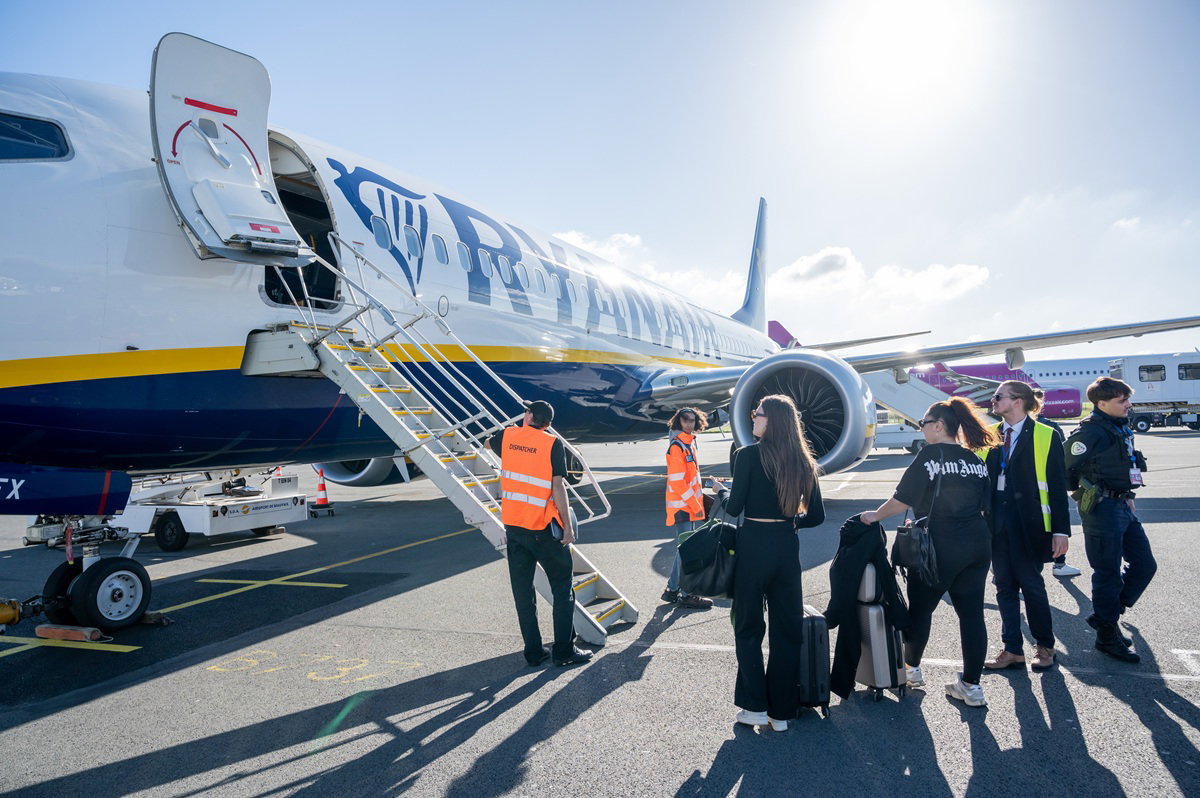
Ryanair will end three routes linking Germany and Spain in April 2027.
Credit : Ksenz-E, Shutterstock
Travellers flying between Germany and Spain will lose three direct Ryanair routes next spring after the airline confirmed it will end all operations at Bremen Airport. From April 2027, its connections with Alicante, Málaga and Palma de Mallorca will disappear.
On October 8, the Irish carrier announced the cancellation of all routes to and from the German airport, which will result in the reduction of approximately 500,000 seats per year. Ryanair said that it was forced to make this decision due to high airport charges, taxation, and other operating costs.
Also affected is the connection between Bremen and London Stansted, which could make travel more difficult for British passengers based at Bremen.
The announcement concerns Bremen rather than an abandonment of the Spanish connection. However, the current customers will have to consider other routes for the summer of 2027.
Ryanair confirms Bremen exit: Alicante, Málaga and Mallorca routes affected
The decision applies to three Spanish airports that have connections with Bremen: Alicante-Elche Miguel Hernández Airport, Málaga-Costa del Sol Airport and Palma de Mallorca Airport.
These lines make a direct connection with the most popular holiday spots of Spain, the Costa Blanca, the Costa del Sol and the Balearic Islands.
According to aviation industry data published by ch-aviation, Ryanair’s Bremen network comprises six destinations: Alicante, Málaga, Palma de Mallorca, London Stansted, Zadar and Lamezia Terme, with the Italian route scheduled to launch on October 26
This means that the airline’s withdrawal is more than just a matter of Spain for holiday trips; it means the whole of Ryanair’s Bremen network is going to be over, the network which was established here almost two decades ago.
The official company statement is that all flights from Bremen will end in April 2027, and that the estimated half million seats will be transferred to other European airports and regions.
For travellers planning their holiday, the timing is very important. The withdrawal is just at the beginning of the 2027 summer season, when the traffic to Spain is usually increasing.
On its website, Ryanair still offers fares to Bremen up to March 2027, but flights from April onwards have been removed.
This does not mean Ryanair is abandoning Alicante, Málaga and Palma de Mallorca altogether. They will be operating large schedules from these Spanish airports. The only cancellations concerned are the direct flights to and from Bremen.
However, for the passengers who used to travel between the north of Germany and Spain without changing planes, these changes will probably lead to longer journeys or the need to look for an alternative departure point.
Why is Ryanair withdrawing from Bremen Airport?
Ryanair cites as the reason for the change the excessive cost of operating in Germany.
Ryanair cited several reasons for its withdrawal, including air traffic control charges, security fees, airport charges and Germany’s aviation tax.
These expenses, the company claims, make Bremen less competitive than other European airports, which have cheaper operating costs.
Then Ryanair’s chief commercial officer, Jason McGuinness, spoke of a loss of 500,000 seats per year, a major source of air traffic and visitors to Bremen and the surrounding area.
He also pointed out that other German airports could face similar reductions if costs were not reduced to make the country more attractive to international operators.
According to Ryanair, the capacity it is withdrawing from Bremen will be redeployed at other European airports and in other areas where the operating conditions are more favorable.
However, local authorities in Bremen dispute the airline’s explanation.
In a report on the German public service broadcaster Tagesschau’s web page, the economic department of the city of Bremen is quoted as saying that the company wants to make use of the airport’s equipment and services at almost no cost to itself.
The conflict between the low-cost carriers, which are seeking to minimize their fees, and the regional airports, which need to be able to support themselves financially, is more than apparent.
The consequences for Bremen could be considerable: German news agencies report that, over the past few years, Ryanair has carried around 400,000 passengers via the Bremen airport, which in the last year accounted for around two million passengers.
Loss of this service could, therefore, represent a considerable reduction in the flow of traffic, though the ultimate effect will depend on the extent to which other air companies will take up the route.
This decision is based on the reduction of capacity that Ryanair has been making across Germany. The company has repeatedly complained about the taxes levied on aviation and the high costs of running airports.
For Spain, the announcement means the loss of three direct connections with Bremen from April 2027, rather than Ryanair withdrawing from the three Spanish airports themselves.
What travellers to Spain should know before April 2027
A particular warning goes out to travellers going to Alicante, Málaga or Palma de Mallorca on dates which are definitely restricted.
From April 2027, Ryanair is scheduled to withdraw, which means that the routes will be removed from its summer schedule.
Those wishing to book for Easter or the summer holidays are asked to check the details of the service on the official Ryanair website before making arrangements for their accommodation or other transport.
The regular traveller who usually flies from Bremen may well have to consider alternative routes, possibly to Hamburg or to Hanover, according to the circumstances at the time of departure.
Another way of getting to Spain is to go by other airlines, although there is no guarantee that direct replacement services will be introduced on all three routes.
This is of particular importance to travelers who have relatives, homes or commitments in the Costa Blanca and Costa del Sol and in Mallorca and who previously relied on these connections.
German press has been reporting that Bremen is about to lose its only direct link with the United Kingdom unless another airline steps in. And as far as British travellers are concerned, they’ll be left without a link to the UK, at least until another operator takes up the challenge.
Importantly, this announcement does not necessarily mean that the existing flights will be cancelled immediately. It is noteworthy that the date of termination of operations is April 2027, and before then the passengers should check with the airline to see whether their flights are affected.
As far as flights already booked but later cancelled by the company, passengers should be contacted about alternative arrangements.
According to European regulations, a passenger who has his flight cancelled generally has the right to choose between a refund or an alternative route, subject to certain conditions. Any compensation is dependent on the circumstances of the cancellation and the notification.
So please keep your ticket and watch out for all communication from Ryanair.
For now the most important difference is that Alicante, Málaga and Palma de Mallorca will not be removed from the Ryanair network. What will end is the direct connection with Bremen, as the low-cost carrier redistributes its capacity away from the German airport.
It is a further reminder that a traveller’s route can be changed at any time, and that it is worth re-checking the routes before booking flights.
The €4,000 cost of getting around Spain is putting jobs out of reach
Eurostar disruption after crash leaves 19 injured, including five in critical condition
New Valencia flood maps reveal 61% more land at risk: Is your home affected?


-

 Uncategorized2 weeks ago
F1 Bahrain Grand Prix will be live and FREE on TV this weekend
-
Blackout preparedness2 weeks ago
Brussels takes action against Spain over failure to update blackout plan
-

 Foreign demand3 weeks ago
Market Snapshot: German Market In Q2 2026
-

 Uncategorized2 weeks ago
Lewis Hamilton F1 wish could come true as stunning plans for new track revealed
-
Latest2 weeks ago
Spain’s Government Dealt Huge Blow As MPs Reject Housing Crisis Laws
-

 Housing access / crisis / affordability2 weeks ago
Radical Housing Decrees Defeated As Snap Election Talk Grows
-
EU2 weeks ago
EU nicotine crackdown sparks warning that ex-smokers could be driven back to cigarettes
-

 New Developments2 weeks ago
How To Get A Tourist Rental Licence In Andalusia (Spain) – Step-By-Step Guide 2025