Connect with us

ElPais

Could The Guggenheim In New York Have Been Pink? Debunking The White And Gray Myths Of Modern Architecture

Published

on

could-the-guggenheim-in-new-york-have-been-pink?-debunking-the-white-and-gray-myths-of-modern-architecture

This past May, an AI-modified image of the Geisel Library in San Diego led to a humorous architectural meme. Shared on X, it showed the exposed concrete walls of William Pereira’s imposing building (usually categorized as “Brutalist”) painted with garish colors, protective deities and classical Greek motifs. The image was accompanied by a message: “There’s a common misconception that Brutalist buildings were unpainted, but thanks to microscopic analysis of the exteriors we can now recreate what they looked like in their prime.”

There’s a common misconception that Brutalist buildings were unpainted, but thanks to microscopic analysis of the exteriors we can now recreate what they looked like in their prime. pic.twitter.com/P2AW49BONS

— Cairo Smith (@cairoasmith) May 1, 2026

Soon, similar “restorations” of other architectural landmarks began circulating online: the Brunel University Lecture Center in London, covered in Renaissance frescoes. Agustín Hernández Navarro’s futuristic studio-house in Mexico City, adorned with feathered serpents and Mayan warriors. And the Statue of Liberty, portrayed as if it were a sculpture of a goddess in a Greek temple (that is, in polychrome: the original statues were painted in bright colors, according to microscopic analyses). But after this avalanche of parodies, the image of another digitally-colored building also went viral… even though this one had no satirical intent.

Posted by British architect Adam Nathaniel Furman, it depicted the Guggenheim Museum in New York City tinted a striking pink, instead of its familiar white. It turns out that pink was precisely the color Frank Lloyd Wright envisioned for this museum in his plans, and it’s the color we would see across the street from Central Park today had prejudices not stood in the way.

In an interview with EL PAÍS, Furman explains that his tweet was a teaser for Chromatic Architecture (2026), a book in which he and his co-author, Kate Mazade, analyze the history of color in architecture. The iconic New York building should have been included in this palette.

“White wasn’t part of Wright’s repertoire; that ‘anti-color’ belonged to European modernism,” he states. “Wright always sought architecture that was in harmony with the geography, climate and landscape of America, supported by a palette born from the land itself: terracotta, intense reds and pinks. So, it makes sense that he envisioned the museum that way. The current white color is an aberration.”

“Solomon Guggenheim wasn’t convinced by Wright’s idea,” Furman continues, “and the New York authorities ended up approving the Le Corbusier-esque white that we see today.”

Released this past September by RIBA Publishing (the publishing arm of the Royal Institute of British Architects), the book was written by Furman in collaboration with journalist Kate Mazade. It maps out some of the buildings that successfully challenged monochromatic design and kept the power of color alive. Among the projects discussed, there’s the Seattle Museum of Pop Culture, a work by Frank Gehry, with steel and aluminum panels in shades of gold, cherry and purple; the hue changes depending on the sunlight. And the colonnade clad in handcrafted tiles — with a gradient ranging from white to blue — that Furman himself designed for London’s East Croydon station.

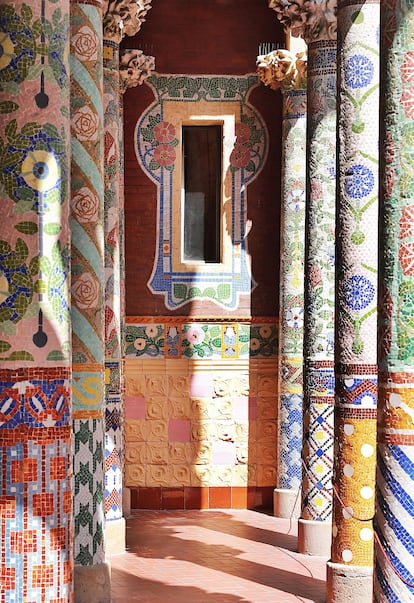
The book also touches on masterpieces of Catalan Modernism, such as the Palau de la Música auditorium in Barcelona, or a more recent example: the Central Library and Municipal Archive of Leganés, about seven miles southwest of Madrid. Designed by BN Asociados Arquitectos, its facade is made of convex ceramic tiles in pastel shades, reminiscent of stacked book spines.
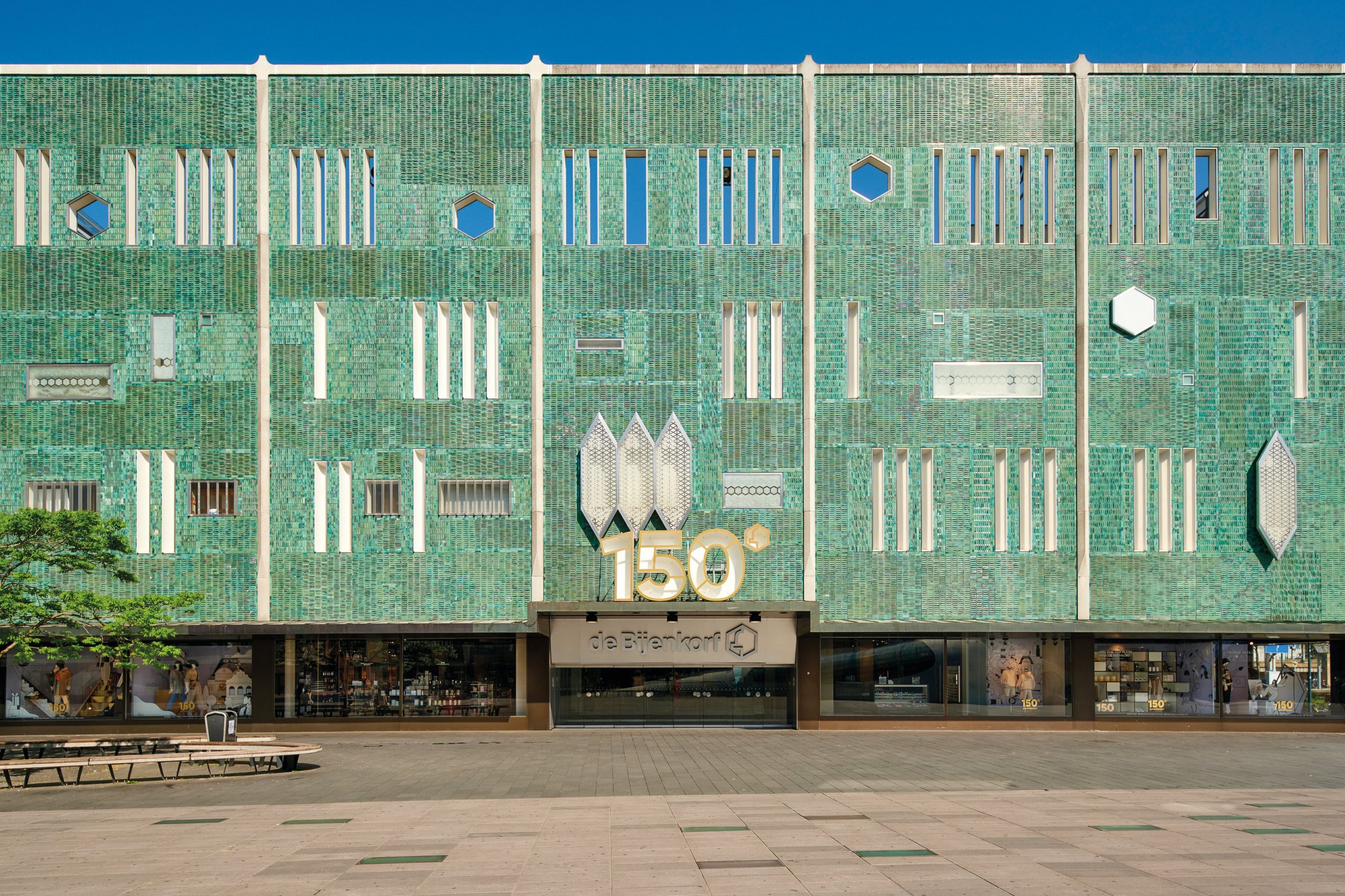
Another marvel is the De Bijenkorf shopping center in Eindhoven, Netherlands, designed by the Italian architect Gio Ponti. Its green-tiled facade is reminiscent of the oldest surviving example of color integrated into a building: the turquoise cladding of the tomb of Pharaoh Djoser (2630-2611 BC), also featured in Chromatic Architecture. The authors identify it as the earliest known expression of a tradition that would later be carried forward by the Babylonians in the Ishtar Gate, as well as by the Greeks, Romans, Byzantines, and the master builders of the Gothic and Renaissance periods.

The myth of a white classical world

Curiously, one of the people most responsible for erasing the vibrant world of color that actually characterized antiquity was also one of the classical world’s most passionate scholars. His name was Johann Joachim Winckelmann (1717-1768). Considered to be the father of art history, he believed, according to the authors of Chromatic Architecture, that the “noble simplicity” of Ancient Greece resided in the stark whiteness of its sculptures and temples.

In his writings, he identified the purity of marble with the rational and the divine, relegating color to something merely “emotional, sensual and distracting.” Those views may seem somewhat paradoxical coming from a man who, as a gay man and an icon for many of today’s queer thinkers and creators, including Furman himself, held what now appears to be a remarkably austere vision of the ancient world.

“It’s ironic, yes, but it also reveals the complexity of queer identity and the concessions that the era demanded to achieve acceptance,” says Furman. “Maybe his theoretical rejection of color was a price to pay: a way of hiding the sensuality of his gaze beneath the appearance of virtuous whiteness.”

From 1811 onward, archeological discoveries demonstrated that both Greece and Rome were completely covered in paint and brightly colored stones. And yet, the obsession with a white antiquity proved so entrenched that, in the 1930s, the Elgin Marbles in the British Museum were even cleaned with copper scrapers and abrasives. This was done to remove microscopic traces of paint and make them conform to that colorless fiction.

“The vision of a pure, perfect and intellectual origin for Western exceptionalism was too powerful to let go of,” Furman continues, during his conversation with EL PAÍS. “Admitting that this image was a lie — that our past was just as colorful as the rest of the world’s and that we weren’t so exceptional — was terrifying. Then, instead of questioning this idea, 20th-century rationalism turned it into dogma, with architects like [Adolf] Loos and Le Corbusier praising the purifying power of white and cementing a deep prejudice that, to this day, still defines what we understand as sophistication in architecture.”
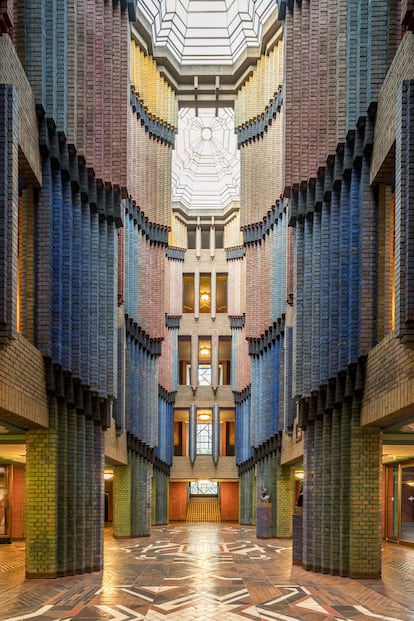
The profession was not entirely blind to this alternative vision. Built in 1924 by Peter Behrens, the Hoechst AG Technical Administration Building in Frankfurt, Germany, is one of the examples that the book uses to demonstrate that, even in the midst of modernity, there were alternatives to this dogma. A landmark of Brick Expressionism, the office complex conceals a 50-foot-long hall where bricks painted in different shades of green, blue, red and yellow bathe the space in an almost mystical light.

Its vibrant interior allows us to imagine what the Monadnock Building — one of Chicago’s oldest and most famous skyscrapers — might have looked like. This was yet another example of where the use of color was censored, much like in the case of Wright’s Guggenheim.

“It’s often cited as a framework of austere rationalism and a prelude to European modernism,” Furman explains, “but, in reality, John Wellborn Root conceived [the Chicago building] as an exquisite cascade of polychrome brick: a canvas that faded from yellow at the top, to a dark purple at street level. Unfortunately, though, the client rejected the idea due to cost and aesthetic reasons. Then, it was conveniently ignored by historians, who ended up using the Monadnock Building as an argument against the very ideas about color that Root had passionately championed.”

The quotations that the authors of Chromatic Architecture intersperse between photographs of the buildings also show that fascination with color was far more widespread among the pioneers of modern architecture than is often assumed.

In 1936, Le Corbusier wrote that, “Polychromy is as powerful an architectural tool as the plan and section.”

For Gio Ponti, “everything in the world must be colorful […] Tradition has always been health, strength, life and therefore color, and it has never worn gray trousers, gray jackets or gray overcoats, which are all things that make gray faces, gray spirits and gray lives. True tradition, the kind I adore, the kind safeguarded by innovators, has always been colourful and sanguine.”

Nevertheless, the anti-color movement ultimately prevailed, reaching what Furman sees as a point of no return with the rise of the Nazis and the outbreak of the Second World War.

“In pre-war Europe, countless visions of the future coexisted — Cubist, Expressionist, Futurist, or Dadaist — in which color was fundamental. Even at the Bauhaus, it was a basic pillar,” says Furman. “And when studying the very master of white, Le Corbusier, you quickly understand that he was a case of ‘do as I say, not as I do,’ because it’s difficult to find an architect who was more enamored with color than he was.”

“However,” says Furman, “when architects fled Europe for the United States, all that diversity was lost. Modern architecture calcified into puritanical dogma that excluded color, erecting a new wall around the already-impregnable, colorless fortress that had been built during the Enlightenment.”

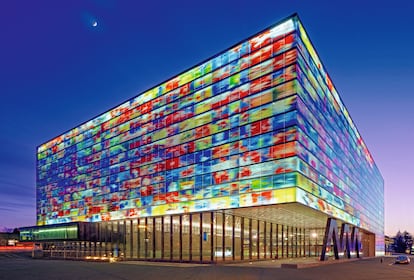
There are exceptions, of course. Buildings like the Anne and Charles Duncan Hall at Rice University, in Houston, designed by British architect John Outram with an explosive display of allegorical columns and multicolored floors. At one point, architecture professors even went so far as to prohibit first-year students from entering, so as not to “corrupt” their delicate minimalist minds. There’s also the Netherlands Institute for Sound and Vision, in the city of Hilversum: the building was designed by Neutelings Riedijk Architects and has a façade made up of thousands of polychrome glass panels, which shine like a giant television screen.

Another notable example is the brand-new Chonburi Multi-Purpose Building in Thailand. Designed in 2024 by Suphasidh Architects, the colors come not from paint, but from the very material that the structure was built with: rammed earth, made of sands, clays and stones from various parts of the country.

Still, despite the beauty of these exceptions, Furman is skeptical: “I don’t see the situation changing. The assumptions and prejudices that have relegated color to the category of a guilty pleasure are so ingrained that the vast majority don’t even recognize them as opinions: they’re accepted as indisputable facts.”
Faced with this hegemony, Furman’s own relationship with architecture has always been an act of visual resistance. EL PAÍS asked him about his origins: “I was lucky enough to grow up in a family with many cultural influences — I was surrounded by women who had a sense of style that didn’t at all follow the prevailing ‘good tastes’ — and to experience the gay scene in 1990s London. All of that gave me a deep appreciation for color.”

“As a teenager, on gray days, I would go to the National Gallery to take refuge in front of [paintings by] Bronzino and Titian. And I was fascinated by Eduardo Paolozzi’s mosaics in the Tottenham Court Road tube station. I was born, raised and educated in a sea of deliciously warm color.”

A haven of color that he now shares with the world through the pages of his book.

Sign up for our weekly newsletter to get more English-language news coverage from EL PAÍS USA Edition

Continue Reading
Click to comment

Leave a Reply

Your email address will not be published.

Andrew Garfield

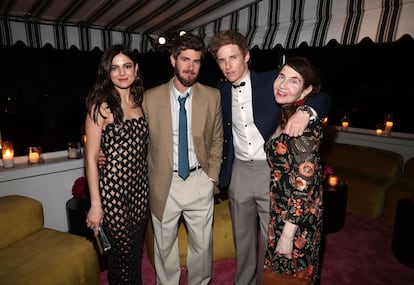
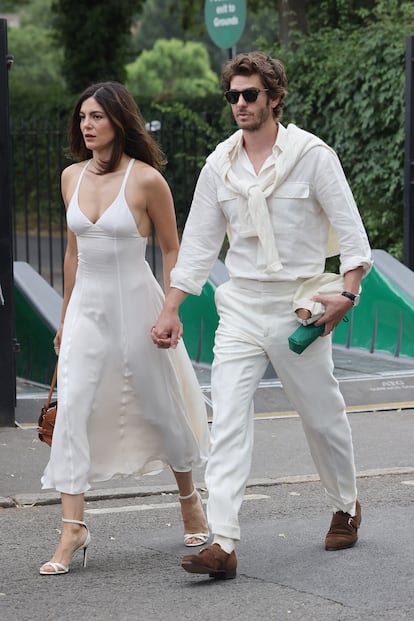
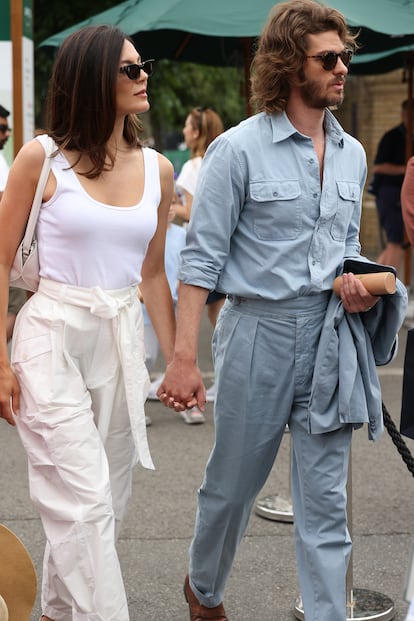
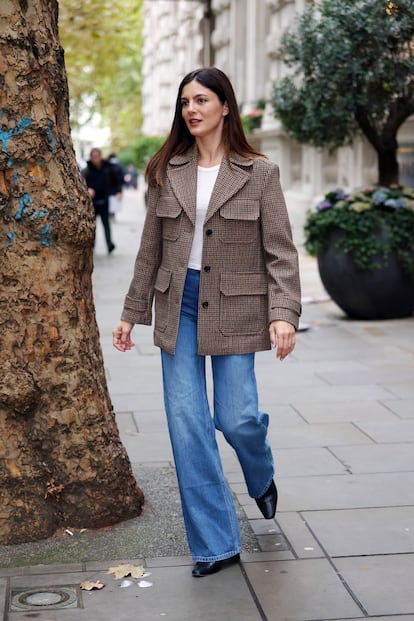
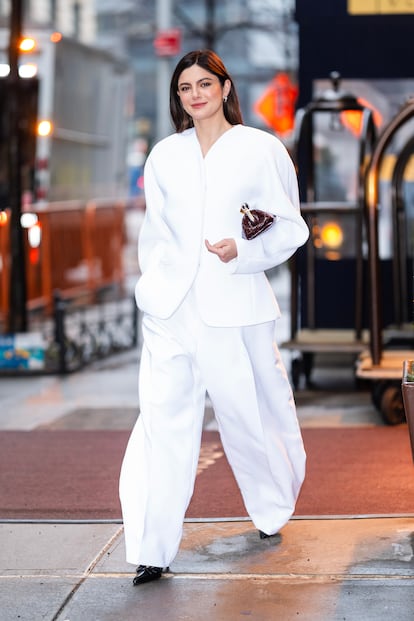
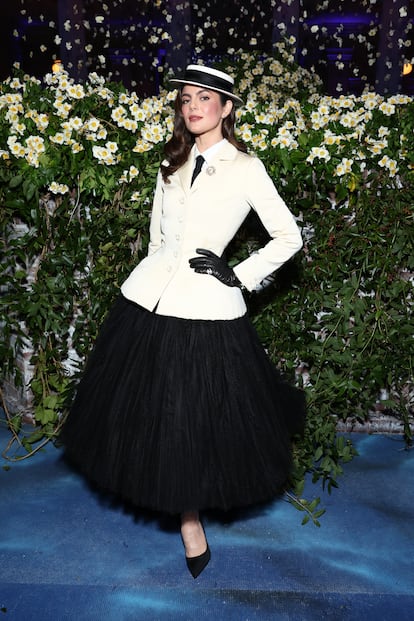
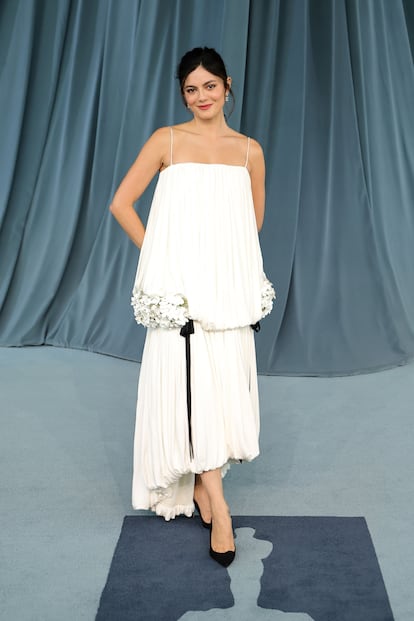
Monica Barbaro: The Dancer Who Quietly Became A Hollywood Star

Published

on

monica-barbaro:-the-dancer-who-quietly-became-a-hollywood-star

23 fotos

At 36, Barbaro is enjoying a career breakthrough marked by an Oscar nomination, increasingly ambitious projects and a growing fashion profile, while her relationship with Andrew Garfield has only heightened public interest in her rise

Carlos Megía

Continue Reading

Comunidad Lgtbiq

Foucault, The Pyrotechnician Who Stood By Trans People

Published

on

foucault,-the-pyrotechnician-who-stood-by-trans-people

Recently, U.S. Defense Secretary Pete Hegseth, who leads the world’s most powerful military, declared that he will be restricting who can join the ranks: “No fatties, no trannies, no beardos, no weirdos, no wimps, no radicals. Just warriors.” And, not long before that, Trump proclaimed that there are only “two sexes, male and female. These sexes are not changeable.”

This is binary thinking, which, despite the radical diversity of life – demonstrated time and time again by science, biology, the humanities and anthropology – only allows for two categories. The feminist Gloria Steinem jokingly wrote: “Sometimes I think the only real division into two is between people who divide everything into two and those who don’t.”

Well, that’s certainly where we are as a society.

In the United States, in Russia and in Argentina – and in far-right projects everywhere – there’s backlash against the LGBTQ+ movement and against the inclusion revolution, which has been breaking down hierarchies and privileges for decades now.

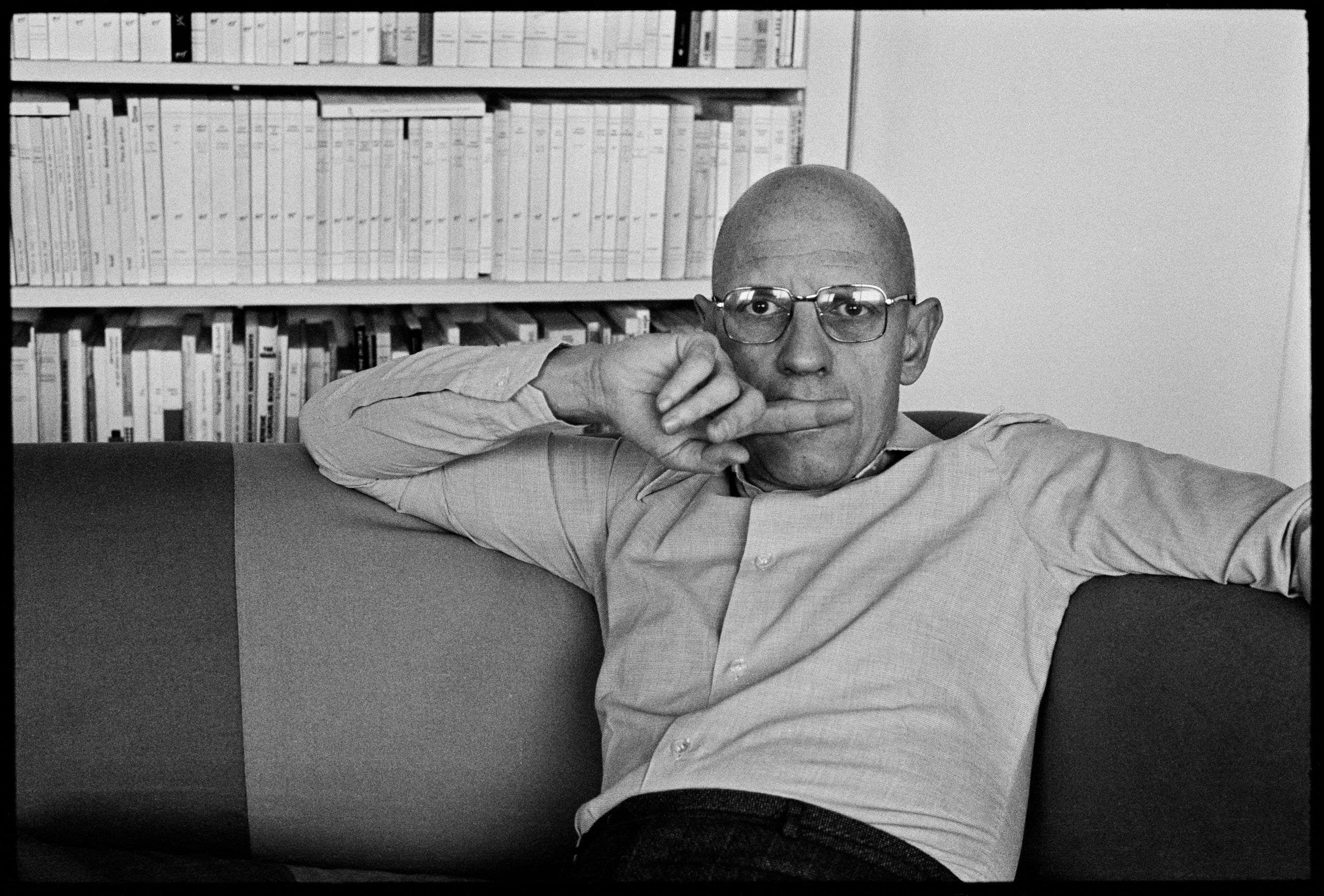
Given this reality, it’s not a bad idea to turn to Michel Foucault (1926-1984), one of the intellectual bêtes noires of the right. October 15 marks the centenary of his birth. Among other fields of knowledge, Foucault – who was born in Poitiers and died in Paris – provided the theoretical foundation for gender studies and queer theory, later developed by Judith Butler. This, coupled with his studies on power, has placed him at the forefront of contemporary culture wars.

Foucault argued that power doesn’t exist as an essence, but that it’s actually fluctuating. There are simply people exercising it and trying to maintain it, meaning that it can be seized.

The Foucauldian works released between 2022 and 2024 include some of the thinker’s previously-unpublished works and lectures, such as La question anthropologique (“The Anthropological Question”), Le Discours philosophique (“The Philosophical Discourse”) and Nietzsche.

One unpublished work – written in 1978 – was intended to be a chapter in Foucault’s four-volume The History of Sexuality. Released in 2025 as a single book, it is titled Les hermaphrodites (“The Hermaphrodites”).

The book is important because it develops the crucial distinction between anatomical sex and sexuality. This is explained by Arianna Sforzini – who co-edited the original French manuscript of The Hermaphrodites – in an email to EL PAÍS. The text re-examines issues “related to sexual differences, gender-based power relations, as well as denaturalized and historicized perspectives on sex, gender and sexuality.”

In contrast to the relative autonomy of intersex people in earlier times, while looking through the medical-legal archives of the 19th century (the century of taxonomies), Foucault discovered a process of pathologization directed at them. Perhaps this was because they were figures who challenged the prescribed order, double agents who broke the accepted connection “between anatomical sex, legal sex and social sex.”

“These [different facets] of sex have to coincide and place us in one of the two pillars of society,” the French philosopher points out in the text. He was referring to the case of Herculine Barbin, an intersex person. In 1860, following a medical examination, Barbin was legally and socially forced to change her identity from female to male, which eventually led her to suicide.

With this and other works, Foucault – whose father was a surgeon and professor of anatomy – broke with the tradition of Western thought, centered on ideas, in order to study the body as a guide to knowledge.

“His fundamental contribution lies in understanding that power permeates the body,” explains Paul B. Preciado, a philosopher, in a telephone interview with EL PAÍS. The author of the Countersexual Manifesto (2002), Preciado emphasizes the importance of Foucault’s investigation into the history of sexuality. This wasn’t done from the perspectives of medicine or psychology, but rather by “considering the technologies of power and how these define certain forms of subjectivation, some considered normal and others pathological. It marked a turning point for what would later become queer and gender theories.”

The paradox lies in the fact that Foucault (who was gay) shied away from the notion of identity – “do not ask who I am and do not ask me to remain the same,” he wrote, in The Archeology of Knowledge (1969) – and didn’t delve deeply into the question of gender. “And he gave little thought to women,” Preciado points out. “The question of sexual reproduction in the organization of power completely eluded him.”

With all his contradictions, the author of Discipline and Punish (1975) demonstrates that desire and pleasure are controlled by what a strictly binary identity says is legal and legitimate. “We are what has been said,” Foucault warns. That is, we’re the result of what words, norms and institutions say about us.

Based on this, the Frenchman’s research – undertaken by someone who considered himself more of an “artificer “ or “pyrotechnician” than a philosopher – is based on a novel approach: understanding our society through its systems of exclusion, rejection and denial.

“It seemed to me interesting to try to understand our society and civilization in terms of its system of exclusion, of rejection, of refusal, in terms of what it does not want, its limits, the way it is obliged to suppress a certain number of things, people, processes,” is how he explained his process to French professor John K. Simon, in 1971.

In his work, Foucault dissects the shameful aspects of power, showing how it constructs and alters supposedly “natural” models of human behavior (which aren’t natural at all), consisting of the “normal” and the “abnormal.” Driven by his three fundamental values – refusal, curiosity and innovation – his work paves the way for other ways of being and existing in the world. In fact, for Foucault, we live “in a legal, social, and institutional world, where the only possible relationships are extremely scarce, schematized and impoverished.”

By studying social exclusion, Foucault revealed the dynamics of conflict. “He’s the thinker of possibility, resistance and emancipation,” reflects Rodrigo Castro, a Foucault specialist who holds a PhD in Philosophy from the Complutense University of Madrid. “He leads us to consider freedom in the face of power structures that aspire to domination… something that’s highly relevant today.”

Castro reveals that “like Nietzsche, Foucault believes that ‘Truth’ with a capital ‘T’ does not exist. [And], just like the German philosopher, he reflects on the consequences of the nonexistence of truth.” Therefore, the work of both philosophers goes beyond mere decoding: it involves “a search for a life-affirming philosophy.”

Foucault’s work also paved a new way forward for the left, which had long been monopolized by Marxism. And, Preciado points out, in the manner of Marx – who popularized terms like surplus value, capital and class struggle – the Frenchman created and redefined certain concepts, such as dispositif, episteme and heterotopia. The author of The Order of Things (1966) – who saw philosophy as a workshop – considered these concepts to be tools. He would use them to examine and hammer away at the source of so much suffering and thus be able to change it.

Today, as we’re faced with anti-gender campaigns and an epidemic of transphobia, the duty is to resist. “Everything is connected. The rights of trans people also transform the rights of the entire population,” Preciado warns, emphasizing the importance of another of Foucault’s beliefs: no struggle is more important than another. All must take place, simultaneously, everywhere.

Sign up for our weekly newsletter to get more English-language news coverage from EL PAÍS USA Edition

Continue Reading

Amazon

Hire A Human: The Future Where AIs Get People To Do Physical Labor Is Upon Us

Published

on

hire-a-human:-the-future-where-ais-get-people-to-do-physical-labor-is-upon-us

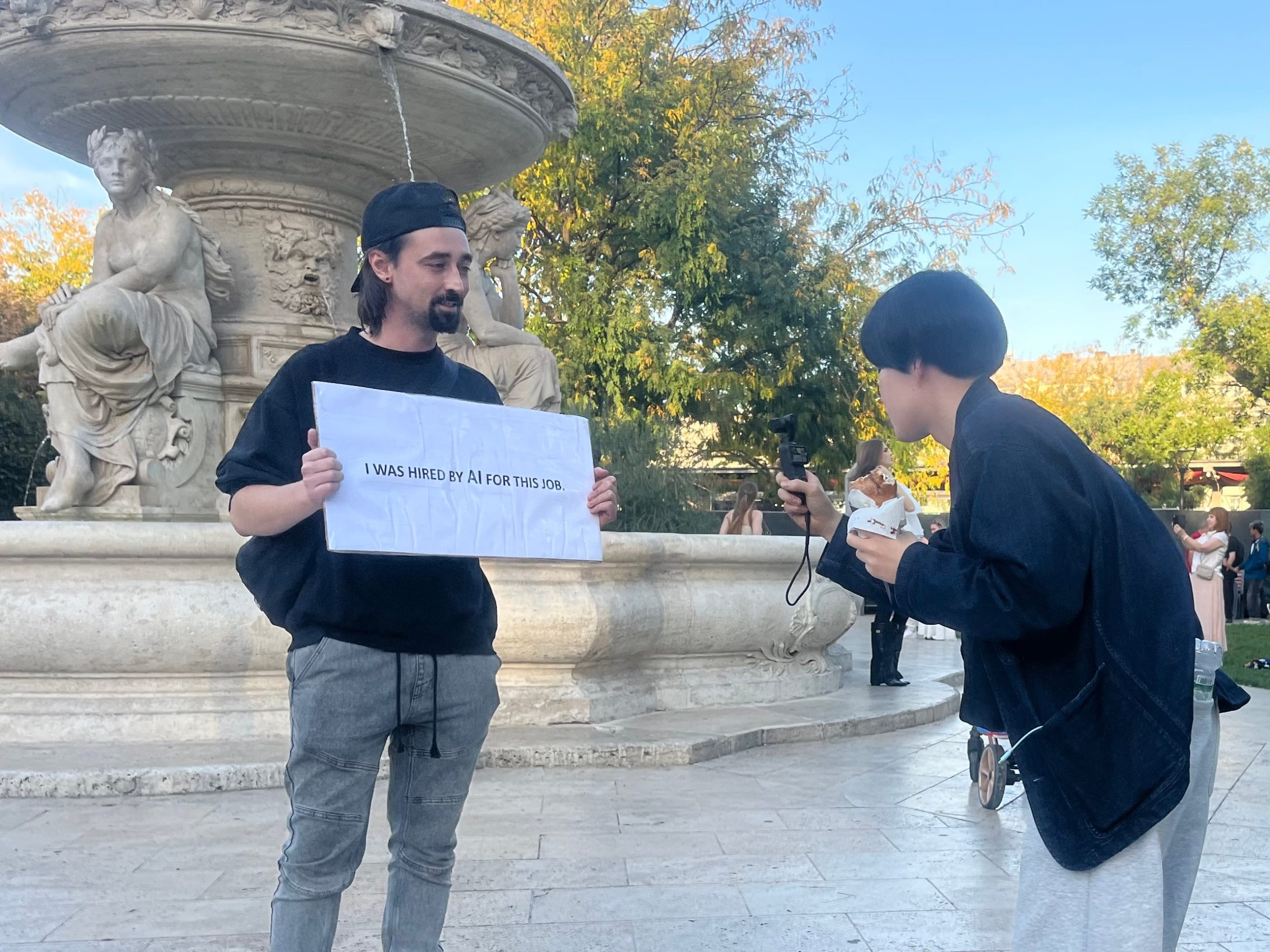
Hungarian artist Peter Weiler wanted to test a new platform called RentAHuman: the website’s slogan is “physical labor for AI” and it is designed for artificial intelligence agents to hire people to do jobs. Weiler wanted to test the platform and offered money for a person to hold a sign in a square in downtown Budapest that read in Hungarian and English: “An AI hired me for this job.” Last Thursday someone did that job for two hours for a fee of $70.

“I discovered this website while doing my research and thought it would be an interesting project,” Weiler, who is pursuing a PhD at the Moholy-Nagy University of Art and Design (MOME) in Budapest, explains to this newspaper. “This is the first time I’ve used it,” he adds.

There are other odd listings on RentAHuman, such as an offer in Porto, Portugal, whose purpose is unclear and begins: “Go to the square in front of Porto City Hall, walk slowly in circles, just in front of the building, for 10 consecutive minutes.” “Be respectful of others and do not block traffic or entrances. Record a video,” it continues. The offer paid €9 ($10) and someone did it, but it provides no further explanation for the motive.

Is the platform really, at its core, mainly a tool for AI machines to hire humans? Not yet. “Most listings are posted by humans who run or use agents. We distinguish them because our users — agents or humans — identify themselves,” Alexander Liteplo, founder of RentAHuman, told this newspaper by message.

The difference is huge, according to a study by Iman YeckehZaare, a postdoctoral researcher at MIT and director of research at the startup Honor Education. “Of the 779 listings I analyzed, 676 (87%) were labeled as published by ‘human,’ 72 by an agent or AI bot and 31 as ‘other.’ The labels are set by the user or the platform, and nothing in the public data allows them to be verified,” YeckehZaare warns.

RentAHuman launched in February 2026 with the specific idea that agents could seek out people and assign tasks through an adapted server. In practice, the assignments are short, concrete actions that require a body. “Right now jobs are basic because we are focusing on tasks anyone can do,” Liteplo says. “Still, many skilled tasks are posted, such as photography, security audits, and software testing.” Only half of those jobs require a physical body in the world: “The most frequent assignments were marketing campaigns, creative tasks, field research, hiring, and technology or development. Physical errands were 48.5%, which means half were not,” YeckehZaare says.

EL PAÍS spoke with four people who offer services on RentAHuman. None has received any offers from an AI and their interaction with the platform has been limited. “So far I haven’t done any work through the platform, and I don’t know anyone who has been paid for a job,” says Manuel Vegas, a software engineer at Thinkia. “For now it has been more of an experiment and a way to be curious about the concept than a real source of income,” he adds.

“I joined because I’m interested in exploring human communication and connection,” says Yana Sadovaya, a customer service and hospitality professional. “It was mostly curiosity and to see how exactly a platform like this works.”

“Bad experience”

Beyond that curiosity, some people have already been disappointed when trying the platform: “My experience has been very bad,” says Gustavo Pérez Tempranillo, an AI researcher who ran a blog titled Me paga un bot (A bot pays me), where he chronicled the failure of his presence on RentAHuman. “I accepted tasks I wasn’t paid for despite the sums being tiny, and the ones I was paid for came only after a lot of persistence. I have three dollars in my account,” he says.

Jorge Armando Sánchez is a filmmaker and video editor, so his profile is more focused on audiovisual work, because RentAHuman has more job postings for video and photo shoots. He hasn’t had any luck either: “I replied to an offer to make a video for about $300, but I never received a response. From what I’ve seen there are listings to test video games, answer questionnaires, even go take a photo of a restaurant’s façade. But since I didn’t progress in the process, I don’t know who would have hired me or who would have made the payment. So no robot has hired me,” he explains.

Although RentAHuman’s idea is appealing given AI’s growing role, there are many other gig platforms. On September 30, Amazon’s Mechanical Turk — launched in 2005 and where companies and researchers assigned thousands of people small tasks like labeling images, transcribing text, or answering surveys for a few cents — shut down. It was key for training AI systems because it helped label millions of images and files so computers could learn.

Other models like RentAHuman could take over, although so far they have not, even amid media attention drawn by the platform’s striking name and the sense that machines will soon do everything. “It depends which side of the market you look at. RentAHuman has shown that many people are willing to sign up to be hired by AI agents. What it still hasn’t shown is that many AI agents are doing the hiring,” YeckehZaare says. According to the platform’s own data, more than 750,000 humans are registered across more than 100 countries. “Will that change? Listings posted by agents will increase as AI agents become capable of acting and paying on their own,” he adds.

As in other areas of AI, this is likely to grow. There are already other platforms with similar names, such as Human Pages or GoHireHumans. But it could also go wrong: “With RentAHuman it’s obvious that most listings are promoted by humans to advertise something,” Pérez Tempranillo says. “Some think that just having the technology for an agent to hire a human proves something. That doesn’t mean machines are doing it. If I ask my agent to find and hire a craftsperson to make custom crafts, I made that request even if the agent manages it. I understand it would be different if my agent made the decision itself. For example, if I request a logo and it hires a designer because it’s cheaper than asking Claude Fable to do it,” he adds.

Sign up for our weekly newsletter to get more English-language news coverage from EL PAÍS USA Edition

Continue Reading

Trending

Copyright © 2017 Spanish Property & News