Connect with us

%

DIA Frozen Seafood Warning With Undeclared Egg

Published

on

dia-frozen-seafood-warning-with-undeclared-egg

Frozen food product alert. Credit: AESAN

Shoppers across Spain are being encouraged to check their freezers after the country’s food safety agency issued a nationwide warning over a frozen seafood product sold by supermarket chain DIA.

The alert concerns eight batches of MeloDIA marinera con gambas al ajillo, a frozen seafood preparation sold under the DIA Mari Marinera brand. The 250g plastic tray contains two 125g portions, and the product was distributed across Spain.

Spain’s Agency for Food Safety and Nutrition (AESAN) published the warning on Wednesday, October 28, after being notified that the product contains egg that is not declared on its packaging. Read the official AESAN food safety warning.

The warning is specifically directed at people with an egg allergy, who are being told not to eat the affected product if they have it at home. AESAN has stressed that consuming the product does not pose a risk to the rest of the population in relation to this alert.

Which DIA frozen seafood batches are affected?

Consumers who have bought the product should check the batch code and expiry date printed on the packaging.

The eight affected batches are:

  • L260566GGO – November 30, 2027
  • L260642GGO – December 31, 2027
  • L260747GGO – January 31, 2028
  • L260754GGO – January 31, 2028
  • L260769GGO – January 31, 2028
  • L260942GGO – March 31, 2028
  • L260951GGO – March 31, 2028
  • L260962GGO – March 31, 2028

The warning follows information supplied through Spain’s coordinated food safety alert system after the company reported the labelling problem to the authorities. AESAN has passed the information to the relevant authorities so they can verify that affected products have been withdrawn from sale.

Anyone who is unsure whether their product is affected should check the batch details carefully and contact the retailer for guidance. Consumers can also consult AESAN’s official food safety alerts page for other warnings affecting products sold in Spain.

Why undeclared egg can be dangerous

Egg is a recognised food allergen, and people with an egg allergy can experience reactions after eating a product containing it. Symptoms can range from skin reactions and digestive problems to breathing difficulties. In severe cases, food allergies can cause anaphylaxis, a potentially life-threatening reaction requiring emergency treatment.

The issue is that shoppers who rely on ingredient labels to avoid allergens may have no reason to expect egg in a product whose packaging does not declare its presence. The European Commission explains which allergens must be declared on food labels and why accurate labelling matters.

People with an egg allergy should not consume any of the identified batches, even if the product looks and smells normal.

Malaga food poisoning cases put food safety in focus

It seems that Spanish prawn dishes are not the flavour of the month. The warning comes after two separate food poisoning incidents affected wedding celebrations in Malaga province during October. Around 40 people fell ill after a wedding reception at the Estival Torrequebrada hotel in Benalmadena on October 10. Health authorities subsequently confirmed salmonella as the cause. Read our report on the food poisoning outbreak affecting wedding guests at a Benalmadena hotel.

A second outbreak was reported following a wedding celebration in Iznate, in the Axarquia, where around 40 people developed symptoms. Initial tests detected salmonella in an affected person, while investigations continued to establish the source. One guest was admitted to intensive care. Our follow-up report covers the two Malaga wedding food poisoning outbreaks under investigation.

There is no reported connection between those incidents and the DIA seafood warning. The distinction is important: the latest alert concerns an undeclared allergen, whereas the wedding outbreaks involved suspected foodborne infections. But, all three incidences involved prawns.

For consumers, the practical message is to check official food safety warnings, pay attention to product labels and take any suspected allergic reaction or foodborne illness seriously.

%

British Grandmother Dies In Rescue Attempt After Granddaughter’s Inflatable Boat Overturns

Published

on

british-grandmother-dies-in-rescue-attempt-after-granddaughter’s-inflatable-boat-overturns

There were no lifeguards on duty at Cavalleria beach. Photo credit: Afonso Farias/Shutterstock

A British grandmother has died trying to save her 10-year-old granddaughter after the child got into difficulty in the sea at a popular Menorca beach. The woman’s husband also entered the water during the desperate rescue attempt and suffered injuries, while the girl and her mother received medical attention after the ordeal.

The tragedy happened at Cavalleria beach, on the north coast of Menorca, shortly before 01:00pm on Wednesday, October 28. The family had been enjoying a holiday on the Balearic island and were due to return home the following day. 

Inflatable boat capsizes in the sea

According to local reports, the 10-year-old girl had gone out into the water in an inflatable boat but was unable to make her way back to shore. The boat overturned, and the current carried her towards a rocky section of the coastline. Her grandparents entered the water to try to reach her. The girl’s mother also joined the rescue attempt as the situation unfolded.

The grandfather suffered cuts after coming into contact with rocks during the incident. He eventually managed to bring his wife’s body back to the shore, but she could not be saved. Other beachgoers also tried to help. According to Menorca.info, some used the rope marking the boundary of the dunes to help those involved in the rescue get closer to land. The child survived, but she and her mother were left suffering from severe anxiety following the incident. Both received medical attention at the scene. 

Emergency crews rushed to Cavalleria

The emergency call was made at around 12.30pm, prompting a response from the Guardia Civil, Es Mercadal Local Police, firefighters from Ciutadella and medical teams from the 061 emergency service. The firefighters approached the beach by land, while a Red Cross boat based in Fornells also took part in the response.

According to Menorca al Dia, the advanced life-support ambulance could not reach the point where the woman’s body was located, meaning medical staff had to walk across the beach to get there. By the time they reached her, she had already died. The Guardia Civil has taken charge of the investigation into the circumstances surrounding the drowning. 

No lifeguards on duty at the beach

One detail highlighted in local coverage is that Cavalleria beach no longer had a lifeguard service when the incident happened. The seasonal surveillance and rescue service had ended on October 15, almost two weeks before the drowning. Cavalleria is known for its natural setting and clear water, attracting visitors to the northern coast of Menorca. However, conditions at sea can change, and inflatable boats can be difficult to control when currents or waves push them away from the shore.

Visitors should check local conditions before entering the water, pay attention to currents and waves, and avoid going further out than they can safely manage. Anyone using an inflatable boat should also be aware that it may not remain close to the shore, even when the sea appears manageable. For the family, what began as a holiday in Menorca ended in tragedy just one day before they were due to leave the island. The grandmother’s death is now being investigated by the Guardia Civil.

Continue Reading

%

Brits In Spain Get A New Banking Option As Monzo Launches With Free Accounts

Published

on

brits-in-spain-get-a-new-banking-option-as-monzo-launches-with-free-accounts

Monzo’s launch gives Spain’s residents another free bank account to consider. Credit: lilaclion / Shutterstock

Brits living in Spain have a new bank to weigh up as Monzo launches here, with free accounts and a 4 per cent savings pot. Whether it could replace your current one is another matter, with some small print to check first.

Monzo has opened accounts to the public in Spain

Monzo, the British app-only bank used by around 16 million people in the UK, started opening accounts to the public in Spain on Wednesday October 28. Until now, access has been limited to people on a waiting list that opened in May. 

There are five types of accounts: personal, joint, children’s (for ages six to 17), business and a basic account, all run through one app and described by Monzo as free. It also says its personal accounts carry no foreign exchange charges, with purchases abroad converted at the Mastercard rate. 

Joint accounts need both holders to have a Monzo account, while the children’s version needs a parent or guardian with their own. The business account is for autónomos and limited companies, which could matter to self-employed Brits, and Monzo says it already has one million business customers in the UK. Its Spanish site is also available in English.

The bank has opened offices in Barcelona and Madrid and had hired more than 50 staff by May. Its Spain boss, former Western Union and N26 executive Francisco Sierra, called the launch “a huge milestone for Monzo” and said the bank has “big ambitions here”. 

It’s entering a busy market, up against Revolut, N26 and Santander’s online bank Openbank. Monzo’s own research claims close to 60 per cent of Spaniards have been caught out by unexpected bank fees, which helps explain its pitch of free accounts.

Why the British bank is arriving through Ireland

Monzo’s British banking licence doesn’t cover the EU after Brexit, so the company claimed a European one through Ireland in December 2025. It launched there in April this year, which makes Spain its second EU market. 

In Spain, customers are served by Monzo Bank Europe DAC, a branch registered with the Banco de España. That matters for your money as deposits are protected by Ireland’s guarantee scheme up to €100,000 per customer, and not by the UK scheme that backs Monzo’s British accounts.

That isn’t unusual, though. Revolut’s Spanish accounts are currently covered by Lithuania’s scheme up to the same €100,000, and the cover could move to France if the company shifts its Spanish customers to its new French bank. 

Can British residents open an account?

Monzo’s launch announcement doesn’t mention foreigners at all, so the answer has to come from the small print. Its Spanish site says the basic account is for people who live in Spain, are 18 or over and don’t already have a payment account here, unless one is about to close. That would suggest that anyone living in Spain could open an account. 

Monzo’s help page then spells out what ID counts. Spaniards need a DNI (national identity card), other EU nationals can use their own ID card or passport, and nationals of non-EU countries can use a TIE (foreigner identity card) or passport. That would appear to cover Brits living here legally, although British residents aren’t explicitly named. 

To move up to a full personal account, the same page says you must declare Spanish tax residence and provide a NIF (Spanish tax number), which foreign residents normally have in the form of their NIE (foreigner identity number).

Anyone who owns a home in Spain but lives in the UK looks to be out of luck for now, as the accounts are only described for people living in the country and using it as their main residence.

The 4 per cent savings pot is the main attraction

Monzo’s savings pot pays 4 per cent a year (TAE, the Spanish equivalent of AER) for 12 months on the first €5,000, as long as it’s opened before Thursday December 31. After that, the rate drops to 2.50 per cent on balances of up to €100,000. Interest is paid monthly, and the pot needs a Monzo current account alongside it, which pays nothing. 

Savings interest is taxable in Spain, with 19 per cent withheld at source. One Spanish finance site worked out that €5,000 would earn about €196.50 before tax, which is roughly €159 after it. The standard rate is also variable, although Monzo has to give at least a month’s notice before cutting it.

What’s still unclear before you switch

Monzo’s website says the accounts come with a Spanish bank account number (IBAN) and work with Bizum, the mobile payment app that’s now spreading into Spanish shops. However, a launch-day review on Finect said the Spanish IBAN is still planned for this autumn and that wages can’t yet be paid in. The same review and others also report limits on free cash withdrawals, so it’s worth checking the fees document in the app. Finect also notes that the contract can be cancelled within 14 days of opening.

Nor is it clear whether a Spanish Monzo account can be linked to a British one, as the help pages don’t say.

So if you’re thinking of switching, open the app to see what Monzo asks of you, and keep your current bank open until your wages, bills and Bizum payments are definitely working.

Continue Reading

%

Sevilla Train Derailment Suspends Cercanías Services Hours After Deadly Spain Rail Disaster

Published

on

sevilla-train-derailment-suspends-cercanias-services-hours-after-deadly-spain-rail-disaster

The events have put railway operations under intense scrutiny. Photo credit: Maksim Safaniuk/Shutterstock

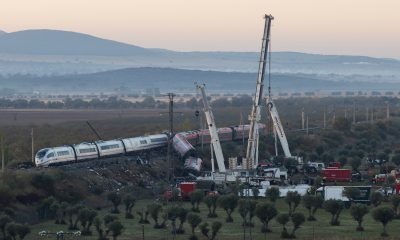
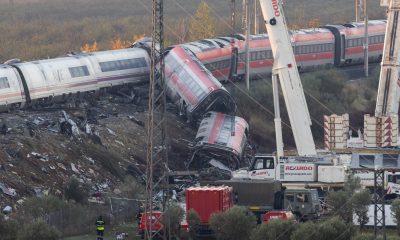
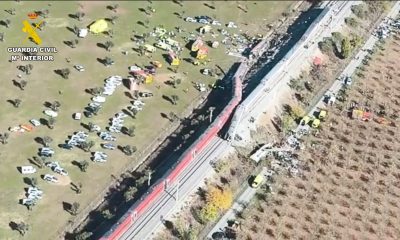
After the horror of the deadly train collision near Urda, the last thing passengers need is more uncertainty about Spain’s railways. Tonight, Wednesday, commuters in Sevilla are facing disruption of their own after a maintenance train derailed near Padre Pío-Palmete, forcing the suspension of the C4 Cercanías line.

The incident comes on the same day as the high-speed collision near Urda, Toledo, which left dozens dead and many others injured. There is no evidence linking the two incidents, but the timing will inevitably raise questions among passengers already worried about getting to their destinations safely and on time. For people who rely on Sevilla’s commuter trains, the main concern right now is whether services will resume before the morning rush hour and what alternatives will be available if they do not.

What happened near Padre Pío?

Early reports described the incident as a freight train derailment near Padre Pío station. Adif’s account, however, referred to a maintenance train in the La Negrilla area, whose axles had come off the rails, but at the current moment in time the precise circumstances have not yet been established. Adif confirmed that the incident interrupted the C4 service while railway teams worked to deal with the problem. The cause had not been confirmed in the initial reports.

There was no confirmed timetable for restoring services when the first reports appeared nor was it yet clear how long the work to deal with the derailed train would take. The C4 forms part of Sevilla’s Cercanías commuter network. An interruption can affect people travelling across the city for work, education, medical appointments and connections with other services.

Will trains run on Thursday?

Passengers face the possibility of further disruption on Thursday,October 29, if the C4 line cannot reopen in time. Initial reports warned that the interruption could affect services the following day, but a confirmed reopening time was not available. For commuters, that uncertainty makes checking before travelling particularly important. Those who normally use the C4 should look for updates from Renfe and allow extra time to reach work or make connections.

Any replacement transport arrangements should be confirmed through official travel information rather than assumed to be in place. The disruption also comes as high-speed services between Madrid and Andalucía face interruptions following the Urda collision. Renfe announced that services on the route would remain suspended on Thursday, leaving passengers with journeys to rearrange and uncertainty over when normal operations would resume

Another difficult day for rail passengers

The events have put railway operations under intense scrutiny, although the details of the Sevilla incident remain limited. Investigators will need to establish why the maintenance train’s axles left the rails and whether any technical or infrastructure issues contributed. Until that information is available, it would be premature to draw conclusions about the cause.

For passengers, however, the consequences are immediate. People travelling on the C4 need to know whether their trains are running, while those planning longer journeys between Madrid and Andalucía must contend with separate disruption following the Urda disaster. Adif’s priority is to deal with the derailed train and restore the affected service when it is safe to do so. Renfe’s updates will be essential for anyone hoping to travel on Thursday.

After a day marked by a deadly high-speed collision and a separate rail incident in Sevilla, passengers will be looking for clear information rather than speculation. Until services are confirmed as operating normally, checking before travelling remains the safest way to avoid an unnecessary journey.

Continue Reading

Trending

Copyright © 2017 Spanish Property & News