
around the world
Dog rescue mission: Malaga boy meets shelter dogs before embarking on world cycle

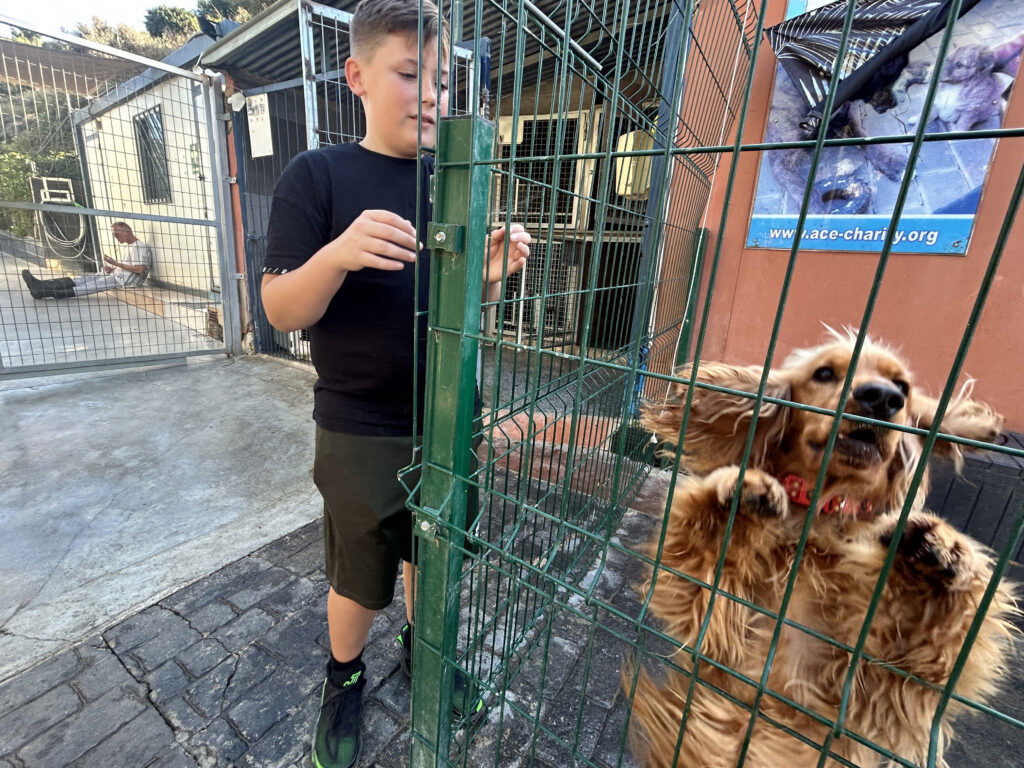
A 12-year-old boy preparing to cycle more than 20,000 kilometres around the world stopped off at an animal rescue centre in Mijas on Monday, November 2, where he was greeted by scores of excited dogs desperate for his attention.
Samuel, the young lad behind the Samuel Cycles the World project, visited ACE-SHIN in Mijas Costa, where he met founder Fabienne Paques and many of the abandoned animals in her care. The visit carried extra poignancy. Recently, Samuel’s beloved dog Naam passed away. Meeting so many dogs desperate for attention brought the loss home in a new way, while reinforcing exactly why his project matters so much.
Introduced to the dogs by Fabienne Paques, 28-year director of ACE-SHIN, Samuel quickly fell in love with them all. The excitement was mutual, with the animals jumping up enthusiastically to greet their young visitor. There was just one problem: Samuel couldn’t take any of them home with him. In less than a fortnight, he and his parents, Wendy and Ronald, are due to leave Malaga to begin an extraordinary cycling adventure with a very special purpose. Euro Weekly News previously reported on Samuel’s ambitious 20,000 km plan and his first shelter visit earlier this year.
Credit: EWN
Samuel’s mission to help 56 animal shelters
Samuel and his parents are preparing to travel approximately 20,235 kilometres through 20 countries over 594 days, visiting 56 animal shelters along the way. At every stop, Samuel intends to meet an abandoned dog, film it, tell its story and share it with the world in the hope that someone might offer it a forever home. The idea of visiting animal shelters came from Samuel himself, as did the decision to make the journey by bicycle.
His parents had often talked about travelling around the world in a motorhome, originally as a way of giving their son the opportunity to experience different countries and cultures as part of his education. However, the idea had never progressed beyond conversation until Samuel began developing his own plans. Ronald explained that cycling was perhaps something in the family’s blood, reflecting the strong cycling culture in the Netherlands. What started as an educational adventure has since developed into a mission to help animals that might otherwise be overlooked.
A special meeting at ACE-SHIN in Mijas
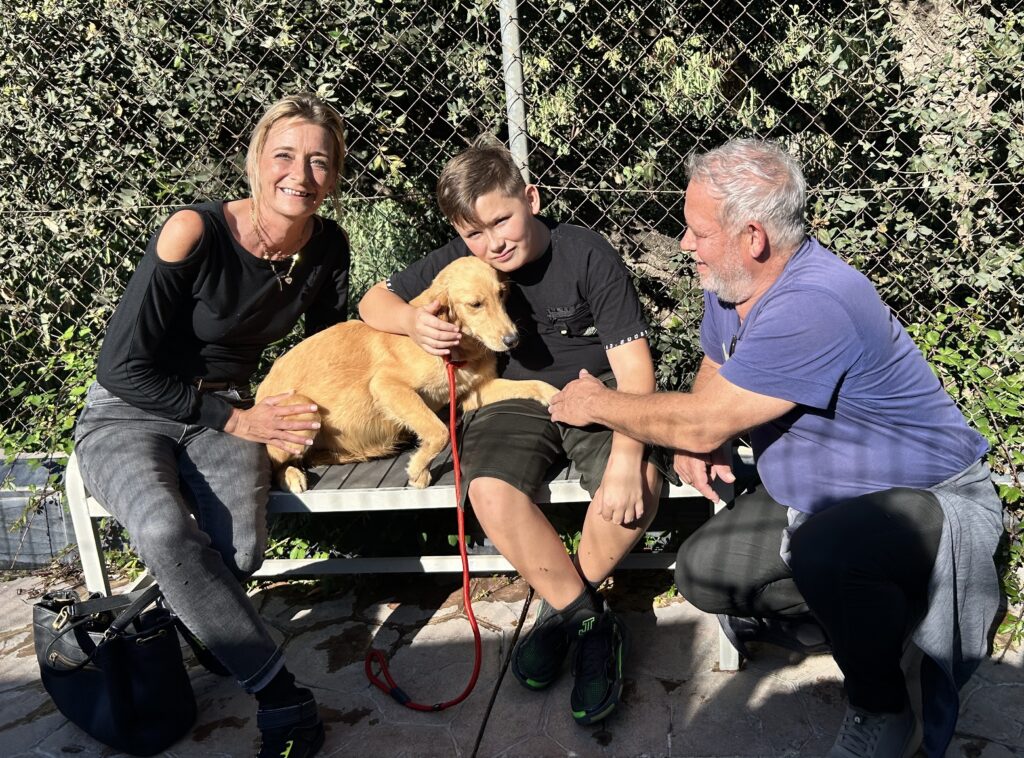
Monday’s visit was not Samuel’s first experience of an animal rescue centre, but it provided valuable preparation for the many shelters he hopes to visit during the expedition. Fabienne showed him around ACE-SHIN and introduced him to dogs with very different backgrounds and stories. For Samuel, meeting so many animals in need of loving homes brought home exactly why his project matters so much, especially after the recent loss of his own dog, Naam.
Credit: EWN
ACE-SHIN, which stands for Animal Care España and the Dutch name Spaanse Honden In Nood (Spanish Dogs in Need), was founded in 1999 by Fabienne and her late husband, Dirk Itterbeek. The organisation works to rescue abandoned and mistreated dogs and cats, provide veterinary treatment and find animals permanent homes. Its Mijas facilities care for hundreds of animals, relying on donations, volunteers and fundraising to continue their work. Euro Weekly News has followed the shelter’s efforts closely, including recent coverage of community fundraisers supporting ACE-SHIN and calls for volunteers to walk the dogs at the Mijas centre.
The scale of the challenge across Malaga province remains significant. Recent police action saw 61 dogs and cats rescued from appalling conditions in Velez-Malaga, while official figures show Malaga has almost twice as many registered pets as children.
Fabienne wished Samuel, Wendy and Ronald every success with their adventure and hopes to keep in touch with the family throughout their 19 months travelling around the world.
The challenges before setting off
Preparing for such a lengthy expedition has not been straightforward. The family originally considered using electric bicycles but encountered difficulties transporting the large lithium batteries required for the journey, particularly when taking flights between continents. They consequently switched to conventional touring bicycles, requiring changes to their route and travel arrangements.
Finding suitable equipment and financing the expedition have also presented challenges. The family has sold its car and many of its possessions to help pay for the adventure, while sponsorship has provided some essential equipment, including water filtration supplies and bicycle security locks. Safety has also influenced their preparations, with the family reviewing sections of the proposed route where cycling conditions may be unsuitable. Despite these obstacles, the November 15 departure from Malaga remains the plan.
How to support Samuel Cycles the World
The family is hoping to raise €5,500 through its GoFundMe campaign to help cover the costs of the expedition. With almost 20 months of travelling ahead, the financial commitment is considerable. The family estimates that food and accommodation alone will cost around €42 a day, before bicycle repairs, transport and other expenses.
Readers who would like to support Samuel’s mission, follow his progress or find out more about the dogs he meets can visit the official Samuel Cycles the World website, follow him on Instagram or the Facebook page.
For Samuel, the real success will not simply be reaching the other side of the world. It will be the number of abandoned dogs whose stories reach people who might otherwise never have known they existed.






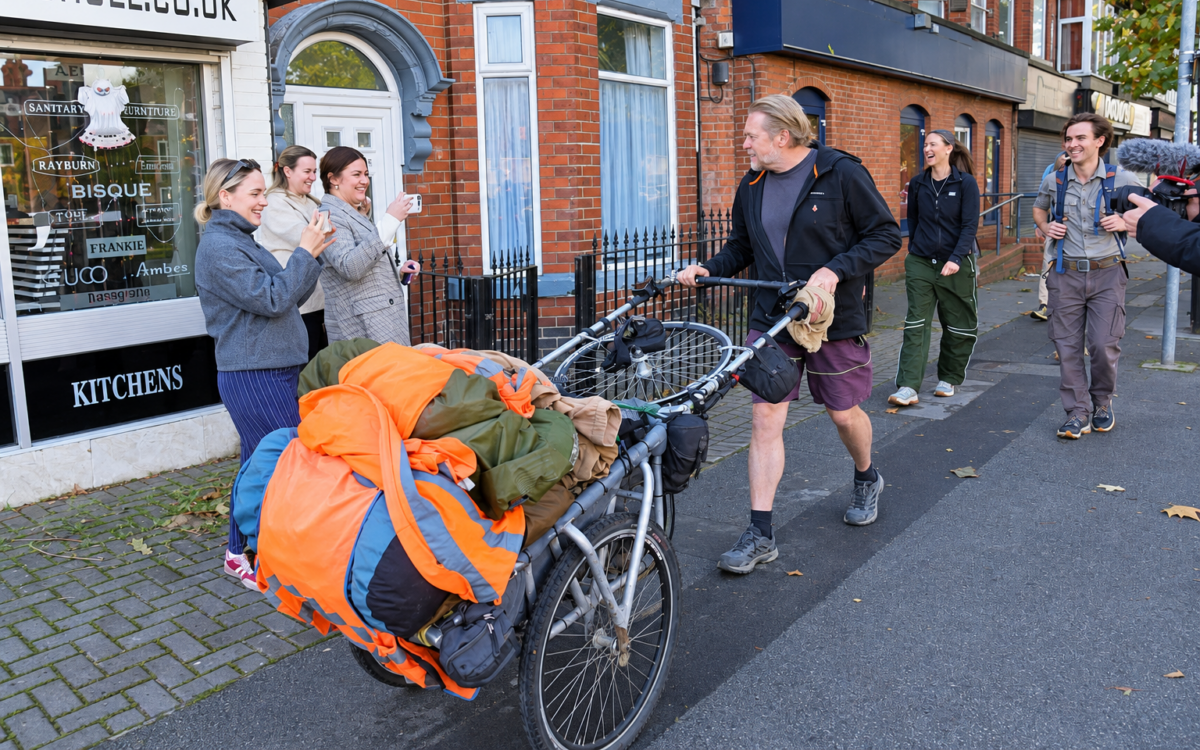
A British adventurer who left home nearly three decades ago has finally returned to his family after walking approximately 31,000 miles (50,000 kilometres) across the world.
Karl Bushby, 57, arrived back in his home city of Hull on Monday, November 2, bringing an extraordinary 28-year adventure to an emotional end.
His return was greeted by hundreds of cheering supporters, but the most important moment was waiting at the end of the final stretch: a reunion with his mother, Angela, whom he had not seen in person for around 10 years.
As he arrived at the family home he had left in 1998, his mother greeted him with the words: “Where have you been?”
A banner reading ‘Welcome Home Son’ had been put up outside the house, as the former British Army paratrooper finally completed the promise that had kept him travelling for almost half his life.
A journey that took 28 years
Bushby began his Goliath Expedition, a 28-year journey around the world, in Punta Arenas, at the southern tip of Chile, on November 1, 1998. He was just 29 years old and expected the challenge to take around 12 years.
His ambition was to walk all the way home without using conventional transport to advance his journey. What followed was a 31,000-mile route through four continents and 30 countries, involving some of the world’s most difficult and dangerous terrain.
Among the most extraordinary achievements were crossing the frozen Bering Strait between Alaska and Russia, surviving the notorious Darien Gap jungle between Colombia and Panama, and swimming across the Caspian Sea.
His final major challenge was reaching Britain. After his request to walk through the Channel Tunnel was rejected, he eventually swam across the English Channel, reaching the coast at Dover in October.
The obstacles that kept him away
The journey was repeatedly interrupted by problems that had little to do with walking. Visa restrictions, border disputes, financial difficulties following the 2008 financial crisis and the Covid pandemic all added years to the expedition.
At times, Bushby spent lengthy periods waiting for permission to continue, while his determination to complete the journey meant he refused to simply abandon the challenge and return home.
His final arrival in Hull brought a huge public welcome, with Hull City Council organising a special homecoming reception in Queen Victoria Square, before he made the last journey to his mother’s house.
The Channel Tunnel dispute had threatened to prevent him completing the final stretch, as Euro Weekly News previously reported in its coverage of Karl Bushby’s 28-year walk home and the Channel Tunnel battle.
Speaking to the crowd, he joked: “Sorry to keep you waiting.” He also paid tribute to the people who had helped him along the way, saying: “They say it takes a village but literally it took a world to get me here.”
A family reunion 28 years in the making
The homecoming was about much more than completing a remarkable physical challenge. Bushby left Hull as a young man of 29 and returned at 57. During those years, life continued for the family he had left behind. He was reunited with his adult son, Adam, and met his 12-year-old granddaughter for the first time.
His mother had waited around a decade to see him again, making the embrace outside the family home an especially poignant moment after so many years apart. The adventurer has also admitted that finishing the expedition brings a new challenge: working out what comes next after spending 28 years with one overriding purpose.
A documentary about his extraordinary journey is in production, and he is expected to undertake speaking engagements in the coming weeks. For now, however, the man who spent almost three decades walking towards home has finally reached his destination.
around the world
Three children, one-way tickets, no school: The radical experiment dividing parents and teachers
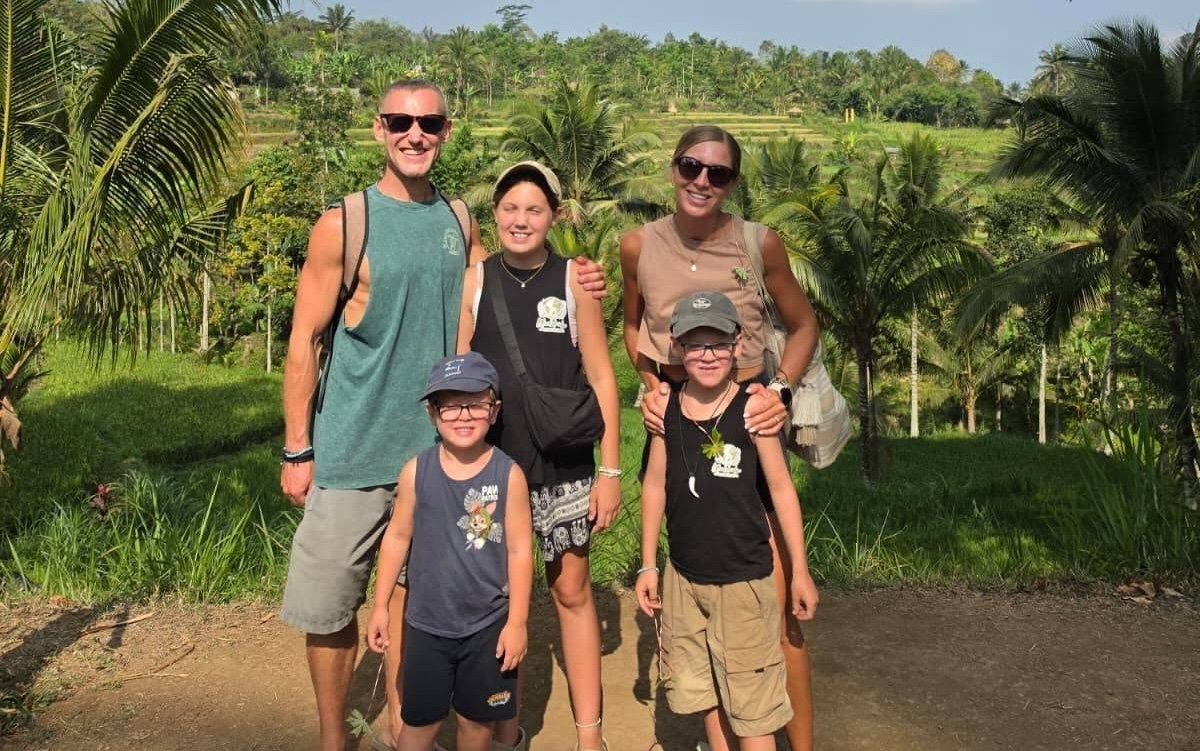
British parents Dani and Tom Wooldridge have sold their renovated home in Wales, quit their jobs and businesses, and taken their three children out of school for an open-ended world tour that began with a one-way flight to Indonesia. Olivia, 12, Morgan, 7 and George, 4 are now learning on the road while the family moves between islands and plans visits to every continent.
Why a Welsh family packed up and left the UK school system
A month-long Christmas trip to Thailand two years earlier showed Dani and Tom that the children adapted well to travel. They drew up lists of positives and negatives, weighed the mortgage against the desire for more family time, and finally sold the house rather than rent it out.
Olivia felt nervous about leaving friends after only a short time at high school in Rhondda Cynon Taf; the boys were more excited from the start. Family and friends came to the airport to see them off, and Dani has said the hardest part was missing people rather than possessions. Once the plane took off the mood shifted, and five months later the family is still in Indonesia after island-hopping, climbing Mount Batur and spending time in Ubud and Lombok.
How the children continue their education without a classroom
Textbooks and workbooks recommended by teachers travel with them in one of the rolling bags as they follow the British National Curriculum. Olivia has an online maths tutor who previously taught at her old school; the boys work with another tutor on primary subjects, English and some science. In Lombok they joined a world-schooling centre that gave them a regular routine and chance to make friends.
Dani has stressed that real-world learning matters, yet she also wants the children to keep the option of university or careers such as nursing or medicine. Full details of the decision and daily life appear in the BBC interview.
Parents and teachers split over the long-term effects
Supporters argue that children gain confidence, practical skills and cultural awareness that ordinary school days rarely provide, and that experiences such as markets, volcanoes and meeting people from many backgrounds count as genuine education. Critics point to possible gaps in formal qualifications, the difficulty of making lasting friendships while constantly moving, and the challenge of re-entering a conventional school system later.
These questions already surface in other settings. British parents continue to take children out of school for holidays despite rising fines, as covered in earlier reporting on term-time absences. Families already living in Spain face their own choices around homeschooling rules and the structure offered by the British National Curriculum in international schools. Similar lifestyle experiments, such as families travelling in a van with young children, raise the same trade-offs between freedom and routine.
Opinions on social media have been divided in the extreme. No one seems indifferent:
“It was an extremely formative experience that left me with a whole new perspective that I still carry with me to some extent. I’ll always be thankful for that experience.”
— Adult whose parents took him and his brother travelling when he was 13
“Kids need stability. And parent putting their lifestyle ahead of their children’s wellbeing is selfish and shouldn’t be a parent.”
— Commenter in a teachers’ discussion on worldschooling families
“Here’s the uncomfortable truth: whether kids should miss school for travel depends entirely on the individual kid, family, and circumstances.”
— Parenting expert Dr. Stern, quoted in a Good Housekeeping piece on the topic
Teachers of reddit, what are your thoughts and opinions on these ” worldschooling families” on social media?
byu/Slow_Pomegranate_305 inAskTeachers
What the experiment means for British families on the Spanish coast
Many readers have already left UK schools behind by choosing international options on the Costa Blanca or Costa del Sol that combine British standards with local language and culture. Others wonder whether full-time travel with no fixed return date goes too far or simply reflects a wider search for better family balance. Plans for the Wooldridges include Malaysia (with an orangutan sanctuary visit), Thailand, Cambodia, Vietnam and the Philippines, with Africa and Tahiti also on the wishlist. They say they will keep going for as long as it feels right.
Would you take your own children out of school for an open-ended world tour, or does the risk of falling behind outweigh the adventure? Let us know in the comments below.
Another rail scare in Spain as three runaway wagons crash into Renfe train
Local women invited to join friendly Sunday netball sessions in Alhaurin el Grande
Village pride: Six Axarquia pueblos compete for 2027 title of best village


-
DGT2 weeks ago
Viral video in Spain sparks fury over drivers who ‘have no idea how to drive’
-

 Arabia Saudí3 weeks ago
Un Ataque De Los Hutíes Contra El Aeropuerto De Riad Causa Al Menos 12 Muertos Y Más De 300 Heridos
-

 %4 weeks ago
Spain Payslip Change Coming In January 2027
-

 America3 weeks ago
Un Tirador Mata A Ocho Personas En Una Vivienda En Pensilvania
-
 House prices4 weeks ago
Spanish House Prices Rise 9pc But Market Growth Stalls In H1 2026
-
Costa Blanca North4 weeks ago
Jávea opens historic lighthouse to the public with a new whale-watching viewpoint
-

 Uncategorized3 weeks ago
Williams F1 driver caught up in four-car pit lane pileup
-

 America4 weeks ago
Trump Llega A Un Acuerdo Con Putin Para Que Rusia Libere Miles De Barriles De Diésel En Los Mercados Mundiales