
Apple
Goodbye Screens, Hello Rings: The New Generation Of Inconspicuous Devices

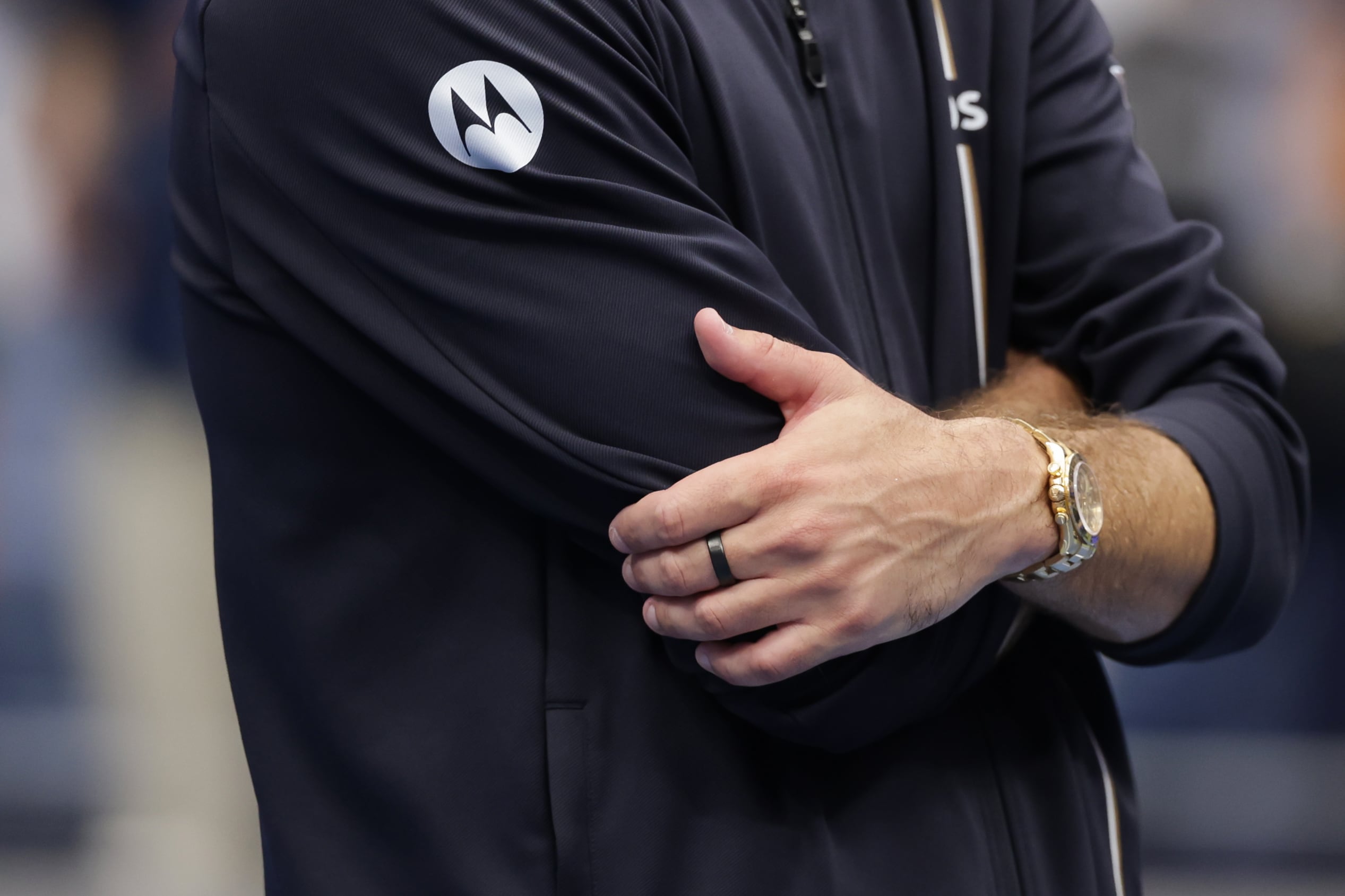
In the age of silent luxury, there’s a new status symbol that doesn’t flash, vibrate with notifications, or demand a screen. It’s worn discreetly on the ring or index finger and is forged from biocompatible titanium. Forget gold or platinum. The Oura Ring, along with its wrist competitors like Whoop — yes, the bracelet Carlos Alcaraz was banned from wearing at the Australian Open last January — or ring-shaped alternatives like Ultrahuman, have achieved a feat unthinkable in the age of digital overstimulation: convincing the consumer that the greatest technological luxury of the 21st century is all but invisible.
Welcome to the empire of screenless health trackers, a biohacking trend that has conquered everyone from hedgefund traders to soccer players in the locker rooms of the Champions League. The appeal of these screenless wearables lies not only in their size but also in their modus operandi. The technology is designed to be unobtrusive, presenting its conclusions only when the user decides to consult them. For the last decade, the landscape has been dominated by the Apple Watch and Garmin’s bulky and indestructible multisport watches. In other words, devices created to announce to all and sundry that you are running a marathon, monitoring your heart rate in a Hyrox series, or answering an urgent email while climbing a mountain pass.
However, the socio-cultural paradigm has changed radically. Society no longer worships anxious hyperactivity or the ostentatious display of live data, but rather invisible performance and longevity. The priority of the day is no longer to accumulate 10,000 steps at any price, but to interpret heart rate variability (HRV) to find out if our nervous system allows for more punishment or if, on the contrary, it is advisable to suspend the afternoon dumbbell session.
As Tito Mauna, a high-performance coach and lifestyle consultant, explains, the change in mindset has been drastic: “We have gone from the era of ‘how much I train’ to the era of ‘how do I recover,’” he says. “Contemporary man has understood that prolonged stress destroys muscle mass, chronically raises cortisol and ruins executive decision-making. Screen-free devices nip the anxiety factor in the bud; there is no red number or graph flashing on your wrist while you try to have dinner quietly with your partner. The ring collects millions of biometric data silently during the night and gives you the diagnosis right when you wake up.”
The shift also has a solid anatomical foundation, since the blood vessels of the digital arteries in the fingers offer a much cleaner and more precise photoplethysmogram (PPG) signal than the capillaries on the back of the wrist. And Oura, the pioneering Finnish firm founded in 2013, understood this biological advantage before anyone else. There is also the fact that a ring is integrated into clothing with more discretion than a sports watch.
The current Oura Ring 5, which ranges from €429 to €529 ($481 to $593) minus a subscription fee and depending on the equipment and configuration, measures variables such as heart rate, HRV, skin temperature, breathing, and movement. Based on the results, its software offers estimates on sleep, activity, stress, and recovery. The information is presented with simple indicators, scores and recommendations that try to translate physiological data into everyday choices: the intensity of training, prioritizing rest, or paying attention to unusual lifestyle shifts.
Regarding its public offering, after confidentially registering its Form S-1 with the U.S. Securities and Exchange Commission on September 3 with a turnover that exceeded $1.2 billion in the first half of the year and an estimated valuation of $16 billion, Wall Street took its IPO for granted. However, the board decided to postpone its IPO in late September citing market uncertainty, preferring to remain in the private sphere despite strong investor demand.
The company’s CEO, Tom Hale — a Silicon Valley veteran who joined the board after falling in love with the product in the midst of an insomnia crisis — talks of the Oura ring in the following terms: “It’s about people becoming the CEO of their own health. Patriarchy in medicine is dead. We don’t tell you what to do, we give you the information and you decide what to do with it.”
Sign up for our weekly newsletter to get more English-language news coverage from EL PAÍS USA Edition











America
Mexican Prosecutors Locate Alfonso ‘N’, The ‘perfect Man’ On A Dating App Who Scammed Over 15 Women


This Popular Fish Is Now Being Fed Chicken Meat: What’s Really On Your Plate?

One Of Germany’s Biggest Retail Chains Is Preparing A Major Expansion In Spain
Horse sinks into trouble after falling into pond in Valencia


-
DGT2 weeks ago
Viral video in Spain sparks fury over drivers who ‘have no idea how to drive’
-

 Arabia Saudí3 weeks ago
Un Ataque De Los Hutíes Contra El Aeropuerto De Riad Causa Al Menos 12 Muertos Y Más De 300 Heridos
-

 %4 weeks ago
Spain Payslip Change Coming In January 2027
-

 America3 weeks ago
Un Tirador Mata A Ocho Personas En Una Vivienda En Pensilvania
-
 House prices4 weeks ago
Spanish House Prices Rise 9pc But Market Growth Stalls In H1 2026
-

 %3 weeks ago
Concrete Balcony Slabs Collapse Onto Marbella Street
-
News from Spain3 weeks ago
Spain police warn parents over WhatsApp scam that uses their children’s real accounts
-

 America4 weeks ago
Trump Llega A Un Acuerdo Con Putin Para Que Rusia Libere Miles De Barriles De Diésel En Los Mercados Mundiales