
AVE
‘I Was Thrown Into The Luggage. Everything Is Destroyed’: Survivors Speak About The Toledo Crash In Spain

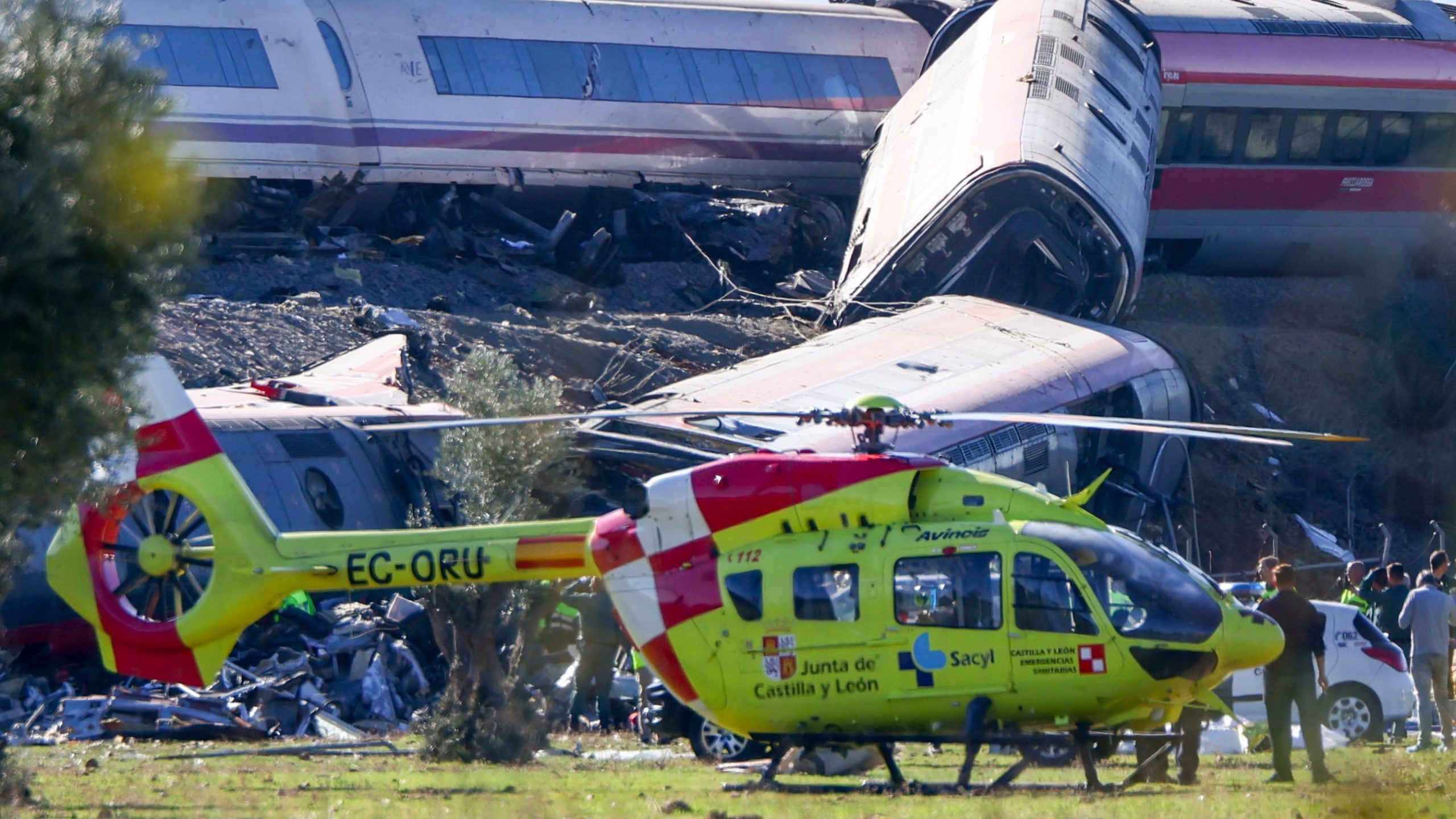
At least 68 people were killed on Wednesday in a train crash near the Spanish town of Urda, in the province of Toledo, according to the regional government of Castile-La Mancha, although officials fear the death toll could rise further.
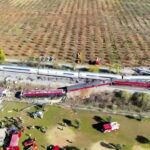
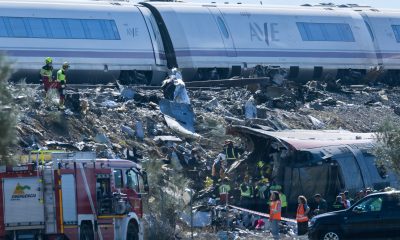
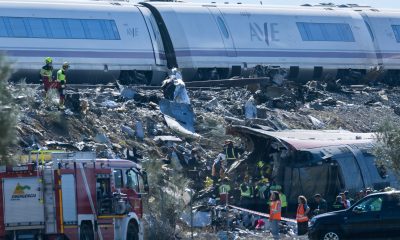
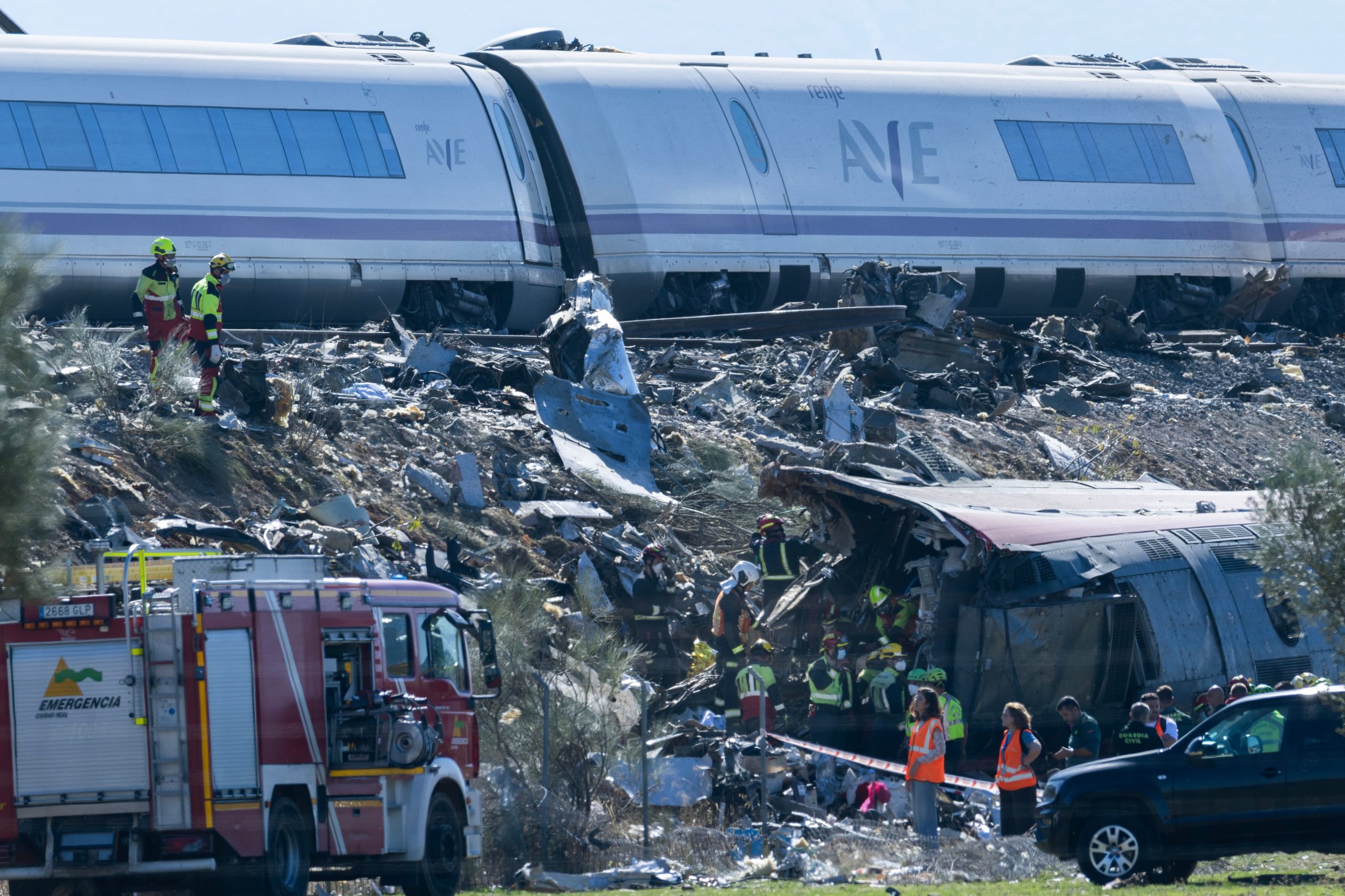
A Renfe AVE high-speed train, operated by Spain’s state-owned railway company, collided with an Iryo train that was stationary on the tracks, according to emergency services sources. Two Iryo carriages and one from the AVE train plunged down an embankment following the impact.
Ana María, 60, was travelling in carriage six of the AVE train. “When we left Atocha,” she says by phone, “the train was stopped for a few minutes. They had told us there were track problems. Then it started again and, within a couple of minutes, it was over. I don’t know if we hit another train, but we ran into the coach in front. I was thrown into the luggage. Everything fell on top of me. My husband was next to me. He has a serious blow to the head and we’re on our way to Toledo Hospital.”
The couple were travelling to Seville as tourists. “Everything was destroyed. I know a couple of coaches had overturned, but ours hadn’t. Emergency services arrived quickly,” she says.
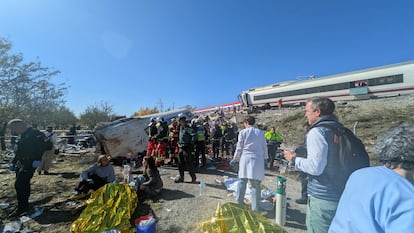
Jesús Jerónimo, 54, was also near the scene of the crash. He had been travelling in carriage two of the AVE train, where he often sits when travelling to work meetings in his role as a medical consultant.
“I was working on my laptop when I felt a violent acceleration and was slammed into the seat in front,” he says by phone. “People were thrown about. We thought we had derailed. Little by little we got out and saw our train was leaning. There were lots of injured people, and people in shock. I saw papers on the floor and a child who seemed fine. Right now we were helping emergency crews, holding IV drips by hand…. The firefighters, though, are working on the most badly damaged train.”
In the background, sirens can be heard, along with footsteps on the gravel beside the tracks and scattered conversations, as David Gómez tries over the phone, his voice shaking, to describe what he witnessed and how he is trying to help. “We were working in the area. We heard the impact and came over.” Gómez is a bricklayer and was working with his brother and another colleague on a nearby property.
When they finally reached the crash site, he found two carriages off the tracks. “People were trying to get out through the windows,” he says. “We cut through some fencing to get access and started treating people with the first-aid kits we had with us.”
The scenes he encountered left him shaken. “When we tried to pull a young woman out, there was part of a leg…” he says, clearly distressed.
About an hour after news of the crash emerged, “there are ambulances here now, Civil Guard vehicles, the authorities have arrived,” Gómez says. He could not say how much time had passed between hearing the crash and the arrival of the first emergency crews, nor how long they had been left to cope on their own.
Juan Casares is president of CONCOVI, the Confederation of Housing Cooperatives of Spain. He was traveling in carriage one on his way to Seville, where he had a meeting with the Andalusian regional government.
“I ended up in the carriage ahead,” he says. “There was a tremendous jolt, and then, automatically, a series of impacts. I understand that the driver tried to brake, but then the train shifted two or three meters with each impact. The train was packed. There weren’t many children, but there were strollers. People with limited mobility. Two passengers helped me, and we broke the window. We tried to prevent another train from coming. That was our fear. The entrances and exits were blocked by suitcases.”
Sign up for our weekly newsletter to get more English-language news coverage from EL PAÍS USA Edition








Adif
El Incendio De Un Tren Interrumpe La Circulación En La Línea De Alta Velocidad Madrid-Barcelona

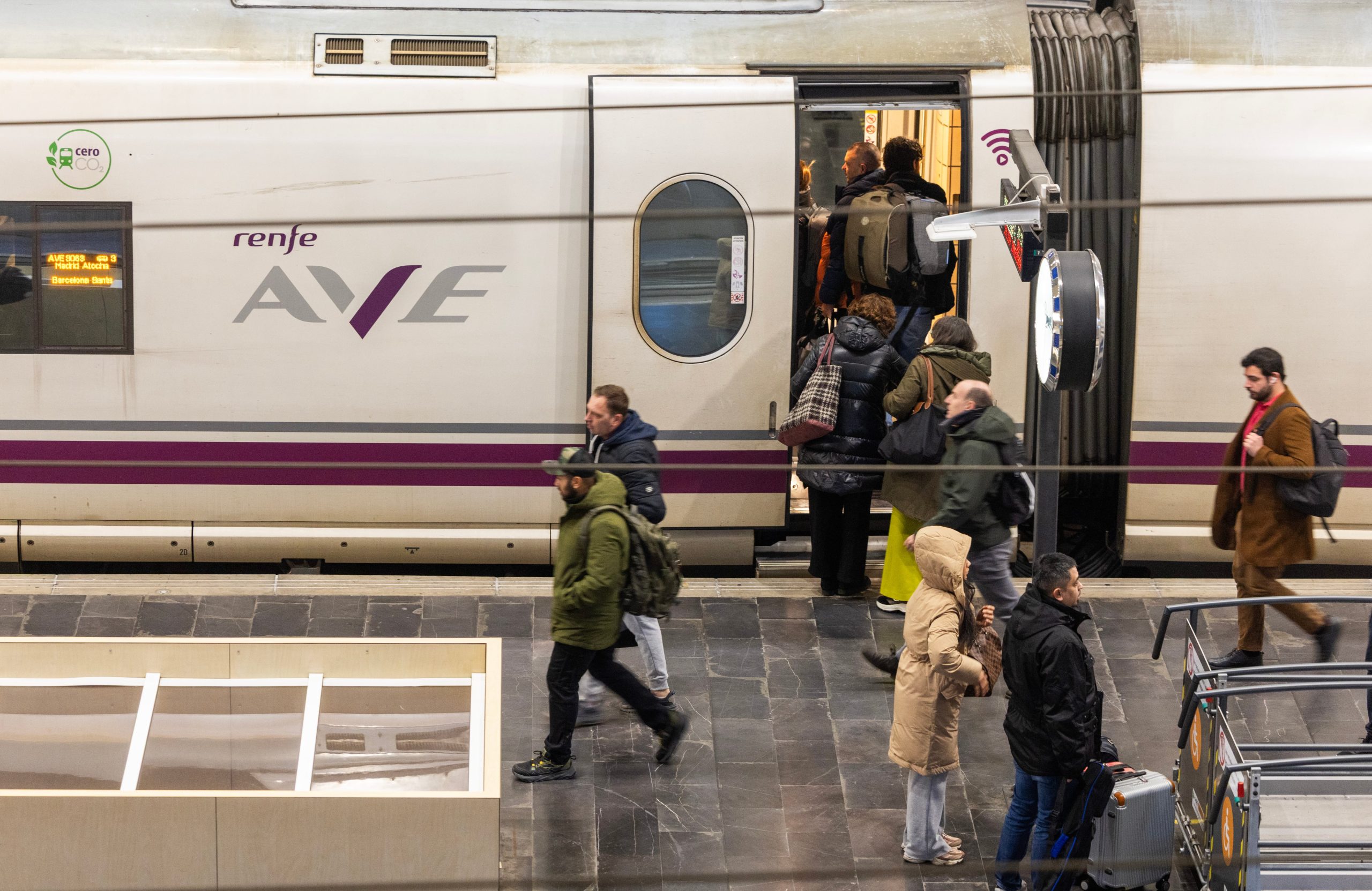

La avería de un tren de alta velocidad de Renfe entre las localidades zaragozanas de Ricla y Plasencia de Jalón ha motivado la interrupción de la circulación en la línea Madrid-Barcelona poco después de las 16.00 horas, concretamente en el tramo entre Calatayud y Zaragoza. La incidencia en día festivo y en plenas fiestas del Pilar en Zaragoza amenaza con provocar fuertes demoras en los servicios que operan tanto la citada Renfe como Iryo y Ouigo.

F1 owner Liberty Media faces rider revolt over Qatar Grand Prix safety fears

Toledo Train Disaster: People & Their Testimonies
Spain’s Transport Minister Blames Rail Crash On ‘inexplicable Human Error’


-

 New Developments4 weeks ago
Luxury Villas For Sale, Estepona – ProjectL1
-
Blackout preparedness4 weeks ago
Brussels takes action against Spain over failure to update blackout plan
-
EU4 weeks ago
EU nicotine crackdown sparks warning that ex-smokers could be driven back to cigarettes
-
 Housing access / crisis / affordability4 weeks ago
Radical Housing Decrees Defeated As Snap Election Talk Grows
-

 Uncategorized4 weeks ago
Lewis Hamilton F1 wish could come true as stunning plans for new track revealed
-
British tourists arrested in Magaluf4 weeks ago
British tourists arrested after taxi driver left bloodied in Magaluf
-

 %3 weeks ago
Spain Payslip Change Coming In January 2027
-
Catalonia3 weeks ago
Why the rain opened a hole in front of Granollers’ courts