
Cuba
ICE’s Corpses And The Search For Answers: ‘Let The Truth Come Out. My Son Was Killed By The Guard’

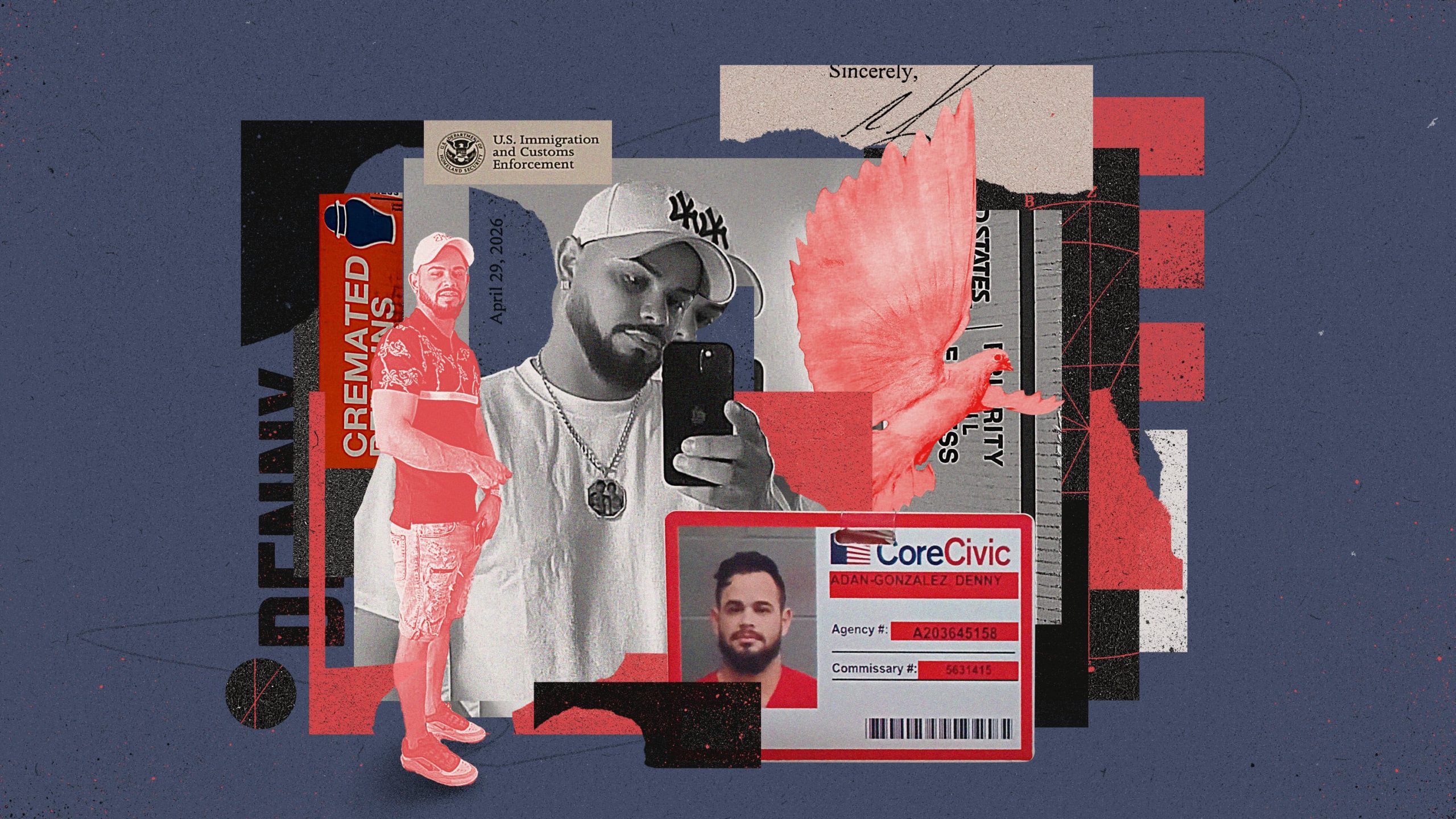
At that point, the body had not yet begun to decompose and Sybil Ammons, a 68-year-old nurse who has spent 30 years as the coroner for rural Stewart County, Georgia, had not yet urgently requested that it be taken away. Around 3 p.m. on May 11, the first message from Ammons arrived, short and to the point. She would not release information about the case of Cuban national Denny Adán González unless the family consented. The family agreed, but two days later Ammons still had no final finding on the incident: “I’m working on it. I hope to have an answer today,” she says, hurriedly, like someone who saves her patience for the dead.
She has spent three decades deciphering lifeless, pale, cold bodies or, worse, answering families’ unanswerable question: why someone has ceased to exist forever. She has witnessed scenes that haunted her for weeks, even years, and she is convinced that her becoming Stewart’s forensic pathologist was almost a matter of destiny. “I am fully convinced God chose me for this work.”
In 1995, when she was the nurse in charge at the small Stewart-Webster Hospital in Richland, she received a young man who had died in a traffic accident while on his way to work. His wife and mother waited anxiously at the hospital. After a while, the coroner arrived wearing shorts, a sleeveless shirt and sandals, showing no hint of empathy for the relatives. Ammons turned to her sister, who was then the hospital’s director of nursing, and confessed in a low voice: “I’m going to run in the next election for coroner and, if I win, I will restore dignity to the Stewart County coroner’s office.”
She ran for the position and won, and ever since, she has made sure that every person who comes through her door is treated with at least a measure of dignity. “I treat each one exactly as I would like to be treated under the same circumstances.” She prays over the bodies that arrive in her office and embraces mothers — or fathers, or children, or grieving spouses. “Sometimes I cry with them,” she admits. She has known some of them her whole life; she has spent nearly her entire life in Stewart, a place so small that one person’s death is, in a sense, everyone’s loss. At other times, she has been called upon to care for people who were just passing through, tourists visiting the area whose journeys ended there. The most recent body to arrive at her office belonged to a migrant.
So far, she has not been able to meet or even speak with González’s family. González, a 33-year-old Cuban national, died at the Stewart Detention Center in April. His mother, Lourdes González, 62, lives in Cuba, while his brother, Dayán Hernández, 40, lives in Spain. González died in a way that was never supposed to happen, far from everything he had ever known, in a town surrounded by peanut and cotton fields, with only a Georgia coroner as his final companion.
González’s mother wants to know what happened to her son, a young man who was, she says, “beautiful inside and out,” humble and unfailingly respectful. “He was a lot like me. He was very family-oriented and always wanted to make sure we never lacked anything,” Lourdes says from her home in Camagüey, in central Cuba.
Hardly a day went by without González asking his mother whether she had food in the refrigerator. More than once, he even asked her forgiveness. “He told me that none of his achievements meant anything if he didn’t have his two children and me,” she says. But he could not return home. He had set out in pursuit of a dream, a long and difficult one, but one he considered his own: the American Dream.

“He wanted to achieve his goal, and he did,” says his brother, who helped raise him with their mother from a very young age. González arrived in the United States in 2019, was deported once in 2020, crossed Latin America again, and entered through the El Paso, Texas, border for a second time in 2022. He stayed in the country without legal status and experienced the hardships of life as an undocumented immigrant until he once again fell into the hands of immigration authorities. He owned a car, paid his rent, and worked right up until the end.
Now his body was in the custody of Ammons, somewhere in a forensic laboratory in the southern United States. The family needed to understand what had happened to González, and the coroner would soon provide that answer. For the time being, Ammons had placed an open Bible near the room where the young man’s body lay. “I pray that gives the family some comfort and peace,” she says. “I am the mother of two precious grown children, and I cannot imagine the devastation this news means for them.”
***
On May 13, Sybil Ammons sent the journalist a more definitive message: “The investigation has concluded,” she said. She added that the Georgia Bureau of Investigation (GBI) had also conducted a “very thorough” inquiry. Cause of death: self-inflicted hanging. Manner of death: suicide.
The finding confirmed the account contained in a report issued by U.S. Immigration and Customs Enforcement (ICE): that on April 28, 2026, at approximately 10:26 p.m., detention staff at the Stewart Detention Center, while conducting routine inspections, found González “hanging by a bedsheet in his cell.”
Guillermo Aguilar, a 44-year-old Mexican national, arrived in cell block A at the detention center in early February. The place was overcrowded, with barely enough room to find a spot on the floor to sleep. Hungry, he negotiated with another detainee to buy food for $60. As a newcomer, he had to learn how to survive in jail. His food was stolen, he had conflicts with some of the detained migrants, and he was placed in disciplinary segregation for seven days. When he was released, he became González’s cellmate in a space holding 80 people. Despite this, the Cuban managed to find a way to exercise. Aguilar recognized his accent.
“I said: ‘Cuba!’ We introduced ourselves. He told me: ‘If you need anything, tell me, champ.’ I told him the same. And he asked me: ‘Man, do you have spaghetti or rice? Sell me something, let me finish making some bracelets and I’ll pay you,’” Aguilar recalls.
González received very little commissary money to make up for the hunger due to the meager food provided in detention, so he began making bracelets. He carefully pulled white threads from the blankets and red or orange threads from the uniforms, weaving them into bracelets that he later sold for $20 each. “People who arrived there would leave with one of his bracelets. He made them beautifully,” says Aguilar, who still wears his on his wrist even now that he has been deported to Mexico.
At the end of April, a friend at the center told him that the guard who had had the altercation with González “threw all his threads” in the trash. “They are like that, they have no respect for us, they speak to us badly, they treat us worse than animals,” Aguilar says. González picked the threads back up. “They say he was making a little beanie that time.” Then the same guard threw them away again. “Cuba got angry and started telling him things in Spanish. They argued.” The altercation occurred on April 26, two days before his death.
From inside the detention center, another migrant detainee who secretly keeps a cell phone agreed to speak on condition that his name never be revealed. His version of events is different. Two officers were conducting an inspection when one noticed that a hinge was missing from González’s cell door. “One of the officers went to the office, filed a disciplinary report against Denny and told him they were going to put him in segregation because he had removed the hinge,” he says. According to this detainee, they argued for between five and 10 minutes, until González “slapped one of the officers very hard across the face; the officer immediately lost consciousness and fell backward onto the floor.”
The officer, who was bleeding from somewhere on his head, remained on the ground until backup arrived and transported him to a medical facility. “Two days later, people began saying Denny had died and that he had probably died by suicide. None of the officers gave us real information about what happened. To tell you the truth, I don’t know if it was a suicide or if they killed him,” the detainee says.
According to the ICE statement provided to EL PAÍS by immigration authorities, on April 26 a nurse evaluated González to determine whether he should be transferred “to a restrictive housing unit after assaulting a detention officer.” The nurse, authorities said, “documented a normal physical examination and mental health assessment, including no suicidal ideation, as reported by the detainee.”

In reality, González was the one encouraging others to make it through the confinement. On December 12, 2025, following an argument with his partner at their home in Charlotte, North Carolina, his mother-in-law called the authorities, and the Mecklenburg County Sheriff’s Office arrested him. In January 2026, he arrived at the Stewart Detention Center, one of the largest and most feared detention facilities in the United States. The center, which can hold up to 2,000 people, has been the subject of numerous complaints involving solitary confinement, medical neglect, the use of force against detainees, and sexual abuse.
Aguilar does not remember González as particularly depressed. Quite the opposite. “I had never exercised a day in my life, and I started because of him. He told me, ‘Hey, whenever you feel depressed, start working out.’” In the final weeks, when González learned that Aguilar was likely to be granted voluntary departure from the facility, he was hopeful. “He was happy. Whenever someone got out of there, people were happy, because that could mean they would deport you soon.”
The two had become friends and were making plans. González, who had construction experience, hoped to make it to Mexico and work alongside Aguilar renovating houses. “He asked me, ‘Would you really do that for me?’ I told him, ‘Not just for you, for me too,’” Aguilar recalls.
The day he learned González had died, Aguilar immediately contacted another detainee at the center. “‘Hey, what happened to Cuba?’ I asked.” He could not believe what he was being told, especially because he himself had spent time in the same segregation cell where, according to ICE, González hanged himself.
“When you are in the punishment cell, every five minutes the guard comes and checks you. It’s a tiny room; there’s no way to hang yourself from the ceiling. Where are you going to put the sheet? I think the guards went in and strangled him. But it’s your word against theirs,” Aguilar says.
Steven Owen, vice president of communications for CoreCivic, the company that runs the detention center, said in a statement to EL PAÍS that at about 10:26 p.m. a staff member “raised the alarm after finding an unconscious person in his housing area.” It was González. “On-duty medical personnel responded quickly, initiated resuscitation measures and requested the intervention of the emergency medical services (EMS) at the facility.”
At about 10:31 p.m., a nurse arrived at the cell and observed the body, which was already “lying on the floor, face up and unresponsive, with a weak pulse and shallow breathing,” according to ICE’s account. At 10:34 p.m., staff “placed a cervical collar, secured him to a spine board, transported him to the medical clinic and notified central control to call emergency medical services.” In the clinic, the nurse, seeing that González was unresponsive and without a pulse, “initiated cardiopulmonary resuscitation, provided bag-valve ventilation and oxygen, and administered naloxone.”
Although specialists performed resuscitation maneuvers, “the person’s death was certified before he was transported out of the facility,” CoreCivic says. They then “immediately notified ICE of the incident.”
On April 29, at about 7 p.m. in Spain, Dayán Hernández received a call from the United States. “I have bad news, they found your brother lifeless in the cell,” he heard on the other end of the phone. “I said: ‘It can’t be, it can’t be, who are you?’ He said: ‘I’m Officer Valdés, from Stewart detention center, where he was detained, and I’m calling to inform you he has died.’ I asked: ‘But how?’ He said: ‘We can’t give you any more information; give me your email and you will receive a letter.’”
A week after his brother’s death, Hernández received a letter signed by LaDeon Francis, director of the Department of Homeland Security (DHS) Regional Office in Atlanta. “I regret to inform you of your brother’s death,” it read. “On behalf of our agency, I extend our most sincere condolences to you and your family for your loss. Your brother died on April 29, 2026. His death was due to suicide.” Although the official date of death in the letter is listed as April 29, the ICE statement refers to April 28. Francis left his number in case Hernández wanted to call for more information. “I tried to call and they never answered,” the brother says.
González was pronounced dead at approximately 11:11 p.m. by Webster County Emergency Medical Services. He became the 14th person to die at the Stewart Detention Center, the third death there in the previous two years, the 18th death in ICE detention facilities nationwide during the first four months of 2026, and the 49th person to die in detention since the second Donald Trump administration took office. As of today, 54 people have died while in immigration custody since January 2025.
Brian Root, senior adviser at the Digital Investigations Lab of Human Rights Watch (HRW), which recently published an investigation into deaths in detention, told EL PAÍS that during the first year of the Trump administration, when 39 deaths in detention were recorded, seven were classified as suicides. “All of them were by hanging; people were found unconscious with a ligature or cloth around their neck,” he explains, despite the fact that in six of the seven cases ICE had recorded no suicidal ideation during the detainees’ initial intake evaluations. Other common causes of death included cardiac arrest, heart failure, infections, and strokes. In many of these cases, “emergency care was requested too late.”
HRW investigators encountered, among other obstacles, a “lack of details or transparency in notices and reports,” Root says, noting they could only work with the limited information provided by ICE. “Because documentation was typically minimal in most cases, by itself it did not provide enough information to support a definitive clinical assessment of whether the deaths were preventable or to determine the exact cause of death.” The picture is bleak: the mortality rate of migrants in ICE custody is now at its highest level in more than a decade.
***
On May 14, coroner Ammons sent the journalist another message, this time a far more urgent one: “Have they found a funeral home yet?” Then she sent another: “Any updates? We need to take care of this body.” On May 26, nearly a month after González’s death, the coroner said: “You have to do something. The body is starting to decompose.”
The family did not know how to proceed. They do not speak English, they are far away, and they have very little money. They did not even know where González’s body was after it left the detention center, but activists helped locate it at the coroner’s office. His mother, Lourdes, pleaded that he not be cremated and that he be buried instead. It was the least she could ask for her son, whom she had raised alone and in poverty, but with immense love.
“I want them to do another autopsy, to reveal the truth. My son was killed by the guard,” the mother says. “I want justice, not only for my beautiful child but so that everyone in that horrible place no longer suffers and they release them, because they are not killers, they are children who leave their country to seek a better life.”
As the days passed, Ammons remained firm: González’s body was still in the morgue at the state crime laboratory, and “we need to resolve this as soon as possible.”
The costs were simply beyond his brother’s means. The funeral home charged more than $4,000 just to retrieve the body from the laboratory. A burial plot, as his mother wished, would add another $6,000 or so. That did not even include a wake, which they could not afford.
“It’s like $10,000, imagine. If he were alive, I would do the impossible to keep him alive. But he is dead; nobody is going to give him back to me,” Hernández says. “Everything runs on money. It takes a fortune to wage these battles. Even after death, this is a business. If in 30 days I don’t sort anything out, I’ll have him cremated and, when I can go to the United States, I’ll scatter his ashes at sea, which is what he liked; his hobby was fishing.”
Amílcar Valencia, executive director of El Refugio, an organization that assists families and migrants passing through Stewart Detention Center, initially contacted another organization about performing a second autopsy. But once they learned the body was decomposing, they concluded it would not be possible. “When the family finally gained access to the body, more than four weeks had passed since the death. They said that after that time it would be difficult to find information useful to the investigation.”
Meanwhile, attorney James M. Slater, who agreed to represent the family, requested that the detention center preserve all evidence, including surveillance footage from the 24-hour period before González’s death through the removal of his body from the facility, as well as records and text messages. The attorney confirmed to EL PAÍS that the investigation is ongoing.
On June 5, the coroner reported that González’s body had finally been removed from the crime laboratory. When Fisher Funeral Care and Cremation Services retrieved the body, Hernández asked for a video call to identify his brother. He was denied that possibility. “They told me at the funeral home that those WhatsApp calls had been suspended,” he says. He was told the body was “in very bad condition.” A viewing would not be possible. Instead, they offered identification through scars and marks left by childhood accidents from the years they grew up together in Camagüey.
Hernández asked the funeral home to check his brother’s heels. “When he was little, he stuck his foot in the spokes of a bicycle,” he remembers. Then he told them to look for a mark on his forehead. “He got hit with a rock playing with a friend as a child. That stayed with him forever.” The funeral home covered González’s face, leaving only his forehead exposed. They sent Hernández a photograph, and he was able to confirm that it was indeed his brother. He was dead. Then they showed his hands. “The body was very pale, and my brother had been tan.”
Dayán could take no more. He had neither the strength nor the money to return the body to his mother in Cuba, nor to bury him. “Let justice be in God’s hands,” he said. “This has made me sick, I’ve lost weight and I still have to live my life. It’s been almost two months and I can’t sleep.”
They could cremate him as soon as possible.
In mid-June, Ammons responded to another message. She appeared willing to have a more detailed conversation about the case.
The family still wanted answers to several unresolved questions: Why had the body begun to decompose if it had been preserved? Was there anything unusual about the condition of the body? What did the coroner think about the possibility of a second investigation?
On June 22, Ammons replied: “I understand this case is still under investigation, so I cannot provide further comments at this time,” she said. Two days later she asked the reporter to end the conversation: “Truthfully, right now I don’t feel comfortable talking about it. There are so many problems with politics at the moment. I’m very sorry. Maybe I can talk later.”
González’s ashes arrived through the mail. The urn is sky blue and bears the image of a white dove with its wings spread wide. It looks like a transfigured dove, one that came in pursuit of a dream and, at last, caught hold of it.
Sign up for our weekly newsletter to get more English-language news coverage from EL PAÍS USA Edition









America
Estados Unidos Sanciona A Nueve Entidades Y Dos Funcionarios Cubanos, Entre Ellos El Ministro De Salud, Por “evasión Y Represión”

America
Ada Ferrer, Historian: ‘A National Dialogue Is Something That Should Have Happened In Cuba A Very Long Time Ago’

The scene took place nearly half a century ago. It was June 9, 1977, and ABC News was about to broadcast journalist Barbara Walters’s highly anticipated interview with Cuban president Fidel Castro. A family of four, a husband and wife and their two daughters, sat in front of the television in the living room of an apartment in West New York, New Jersey. Before the interview began, and before Castro declared that he had become a communist through studying the political economy of capitalism, or that he would remain in power for as long as the people wanted him there, the newscast opened with images of El Morro, the Malecón, the Capitolio, the sublime city that is Havana.
One of the daughters, Ada Ferrer, a 15-year-old teenager, felt her eyes well up with tears. “What’s wrong with you? Why are you crying?” her parents asked. Ferrer was crying for everything she did not know about herself. She replied: “Because I was born there and I have no memory of that place. What does it mean to be born somewhere and not be able to remember it?”
Nearly all her life since then — through her training as a historian, her books, her Pulitzer Prize, her work — has been a personal and collective search for the Cuban nation.
Ferrer was just 10 months old when her mother carried her in her arms and, without saying goodbye to her nine-year-old son, Poly, whom his father from a previous marriage would not allow to leave the country, embarked on a one-way journey through Mexico that ended in the United States. It was April 1963. Castro’s Revolution was not yet a dying enterprise but a project barely four years old, although Ferrer’s father had already left to settle in New York. He waited for them there.
“My mother left Cuba leaving my brother behind, but always thinking they would be reunited soon, that Poly’s father would change his mind and let him leave. There was also the belief that Fidel might fall and we could return,” says Ferrer. But the mother and son would not see each other again for several years, and not even the letters they exchanged month after month could fill the deep crater that separation carved into the family.
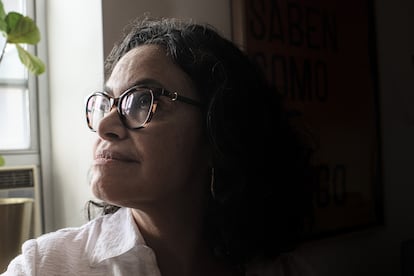
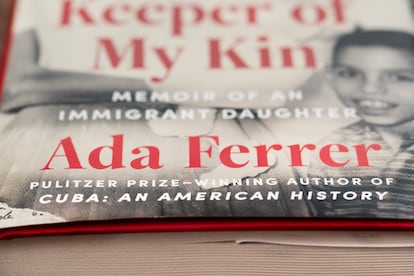
Following a superb essay published in The New Yorker, My Brother’s Keeper, Ferrer this year published Keeper of My Kin: Memoir of an Immigrant Daughter, a book in which the historian delves into and explores the search for her past.
“History shapes the heart of many families; it is present in daily life in ways people sometimes do not realize,” she says. “I have always tried to write histories from below, because we all live under the shadow of history. My family cannot be explained unless I place it in the context of the Cuban Revolution, the beginning of exile, and emigration to the United States. My family is made up of all that.”
Question. Why should people read your personal story today? What does it say about Cuba as a nation?
Answer. People tend to talk about Cuba in slogans: you are either for it or against it, who left and who stayed. Everything is reduced to that. But that is not Cuba’s true story; it is in families like ours, who experience the Revolution, exile and migration policies in flesh and blood. Family separation, ordinary people trying to survive, is part of the story but is often left untold. The main issue is not ideology; it is family ties and the human condition. This is not only the story of my family; it could be the story of many people over the past several decades. And in the United States, it is not just the story of Cubans: this is a country that receives people from all over the world. People leave their families behind because they see no other option. It is a very painful, very difficult process. At a time when U.S. politics, and especially the president, speaks of migrants as if they were not human, it is important to tell immigrants’ stories in a deeply human way.
Q. The symbolic arc of the Cuban immigrant experience in the United States can be seen in your own family: your family was welcomed into this country, yet until a few weeks ago one of your nephews was being held at Alligator Alcatraz. How much does that say about the current moment?
A. It is a very different moment. When we arrived in 1963, there was aid, people welcomed you, and now my nephew arrives and is detained. The so‑called Cuban “privilege” has, for the moment, disappeared. They did not repeal the Cuban Adjustment Act, but they are obstructing it; it is frozen. Not only that, the country has changed. The opportunities that existed when I arrived are no longer there. I studied at a very prestigious university and paid almost nothing. There was assistance, more jobs, lower housing costs. Everything has become more difficult.
Q. In your latest book we see Ferrer the person, but also the professional. Is it challenging to tell your own personal story using the techniques and tools of historiography?
A. It was the only way I could do it. One of the main sources was a set of documents I found after my parents died: the letters my brother Poly wrote to my mother after we left. We left on April 29, 1963, and the first letter is dated May 4 — not even a week had passed; it was a letter from a nine‑year‑old with spelling mistakes to his mother who had just left. Those letters kept arriving at our home until 1979. Reading them was one of the hardest things I have ever done. They were my brother’s letters of suffering, and I imagined my mother reading them and feeling that guilt. I would read one or two and then have to stop. They were hard to read, but I also read them as a historian, as if they were archival sources. That took a great deal out of me.
When my brother left during the Mariel crisis [in 1980], my mother and he crossed paths at sea. She went to pick him up in Cuba, but he had already come, and they sent him to one of the camps set up in northern Florida because many people were arriving in Key West and Miami. The documents from that camp are in the National Archives in College Park. So I went and worked in that archive. That is what I know how to do; I have spent more than 30 years going to archives and searching catalogs. I do not think I would have liked to do it any other way.
Q. When did Cuba become a subject of professional interest?
A. It took quite a while. At university I studied English literature; in the 1980s very little Latin American material was taught. In my first year, I wrote an article about women and the Cuban Revolution. After that, I did not write again about Cuba during my university career. I graduated thinking I would become a lawyer, but I worked at a law firm and did not like it. I only knew I was a good student. Later I thought of studying Latin American history with the aim of becoming a journalist. I did a master’s at the University of Texas, then returned to New York and worked as a teacher. I kept studying, completed a PhD in Latin American history and wrote my dissertation on Cuba — on the war of independence and the racial question within those struggles. That became my first book.
Q. Since then, professionally and personally, your life has been a project of reconstructing your memory and your country.
A. Yes, but it is not a very efficient method, because immersing yourself in an archive and reviewing 19th‑century documents does not reconstruct my memory or my parents’ memory. But that is how I began; I plunged into the national archive of Old Havana to work. My first trip to Cuba was in 1990. Since then, I have made more than 30 trips; I went almost every year.
Sometimes, when I was in Cuba, I felt that what I really wanted to do was look at everything and record it all with my eyes so that afterwards I could show the film to my parents. I began to feel that need to understand Cuba, and it all has to do with family separation. Most of my family remained in Cuba. I wanted to understand why some people had left and others had stayed, how different those who stayed were from those who left, how people change within a revolution and how they change in emigration.
Q. How do you think they change?
A. My mother in the United States and my aunt in Cuba remained the same, despite such a long separation. Yes, in my aunt’s house there was a photograph of Fidel Castro with his rifle, while in mine there was a picture of Our Lady of Charity. That was very different, but at the same time the culture was shared: the way they spoke, the coffee in the morning. I wondered how people who were so close to one another had chosen such different things.
I remember that on my first trip to Cuba I took a lot of photographs, and the whole family in Miami came to see them. One of them showed my uncle Gregorio, my father’s oldest brother, a very sharp-tongued man. I remember his sister seeing the photo and saying: “Look at my brother Gregorio, communism has destroyed him.”
That struck me. Twenty-five years had passed, yet there was still this idea that people had not gone on living, that everything was simply a matter of living under communism. But people do go on living, and that was one of the things I saw when I went there: Cuba is not a normal country, but there is life.
Q. You have said your father used to say: “Cuba is shit, but it’s my shit!” Is it yours too?
A. Yes, especially now. I used to have more hope, particularly during the Obama era, with the opening-up. Not anymore. Now Cuba is a total disaster, and I carry that with me; it keeps me awake at night.
Q. Has there ever been a crisis in Cuba’s history comparable to this one?
A. I think of Weyler’s reconcentration [policy]. He was the Spanish governor-general who, during the wars of independence, wanted to prevent Cuban rebels from receiving support from people in the countryside. Those people were driven off their land and concentrated in towns where there was not enough food, housing, or sanitation, and a great many died. I think about that from time to time. But this is the worst moment of the past several decades; it surpasses the Special Period. We have now been living through it for 36 years, and this crisis comes after more than three decades in which people have known that, to survive, they need hard currency. It is a crisis on top of a system that is already deeply deteriorated, which is why it is worse. It has been 30 years of collapse. The country is destroyed.
Q. There now seems to be a certain nostalgia for the Republic in some quarters…
A. Many people feel that nostalgia because it was the period before Fidel and before Batista’s coup, a time of promise. But the understanding of that period is not very deep, because there was a great deal of corruption, and people do not talk about that. People talk about the Constitution of 1940; there were elections with people from all parties, communists, conservatives, and I do not think that those who are talking about the Republic today are necessarily committed to that same spirit of diversity. Since I have always studied race, I do not know whether the people who glorify the Republic understand how much inequality there was. There is inequality now as well; the Revolution did not erase it, and it has worsened over the last 30 years.
Q. Your Pulitzer Prize-winning book Cuba: An American History seems especially relevant amid the tensions that exist today between Havana and Washington. How closely have Cuba’s past and present been tied to the presence of such a nearby empire?
A. You cannot understand the history of Cuba without understanding the history of that relationship. One thing I am seeing more and more on social media is people writing as though the empire did not matter; some even defend the Platt Amendment, which was imposed by the Americans in 1901 as an appendix to Cuba’s first constitution. It gave the United States the right to intervene and prevented Cuba from entering into agreements with third countries. We have reached a point where we know what the word sovereignty means, yet people associate the word sovereignty as though it belonged to Fidel Castro, and so they reject sovereignty.
Q. Recently, The New York Times published your open letter to Cuban President Miguel Díaz-Canel, in which you write: “The hour has come. It is time at the very least for a true national dialogue.” What would such a dialogue require, and what would it entail?
A. A dialogue that includes people from here and from there, dissidents, members of the government, people on the left and on the right; one that reflects a plurality of experiences and viewpoints. That is what I want, but I do not think it is possible. People are so attached to their positions that, if the government were to call for such a dialogue, some would refuse to take part, and if the dissidents were to call for it, the government would resist. A national dialogue is something that should have happened in Cuba a very long time ago, but it has not.
Sign up for our weekly newsletter to get more English-language news coverage from EL PAÍS USA Edition

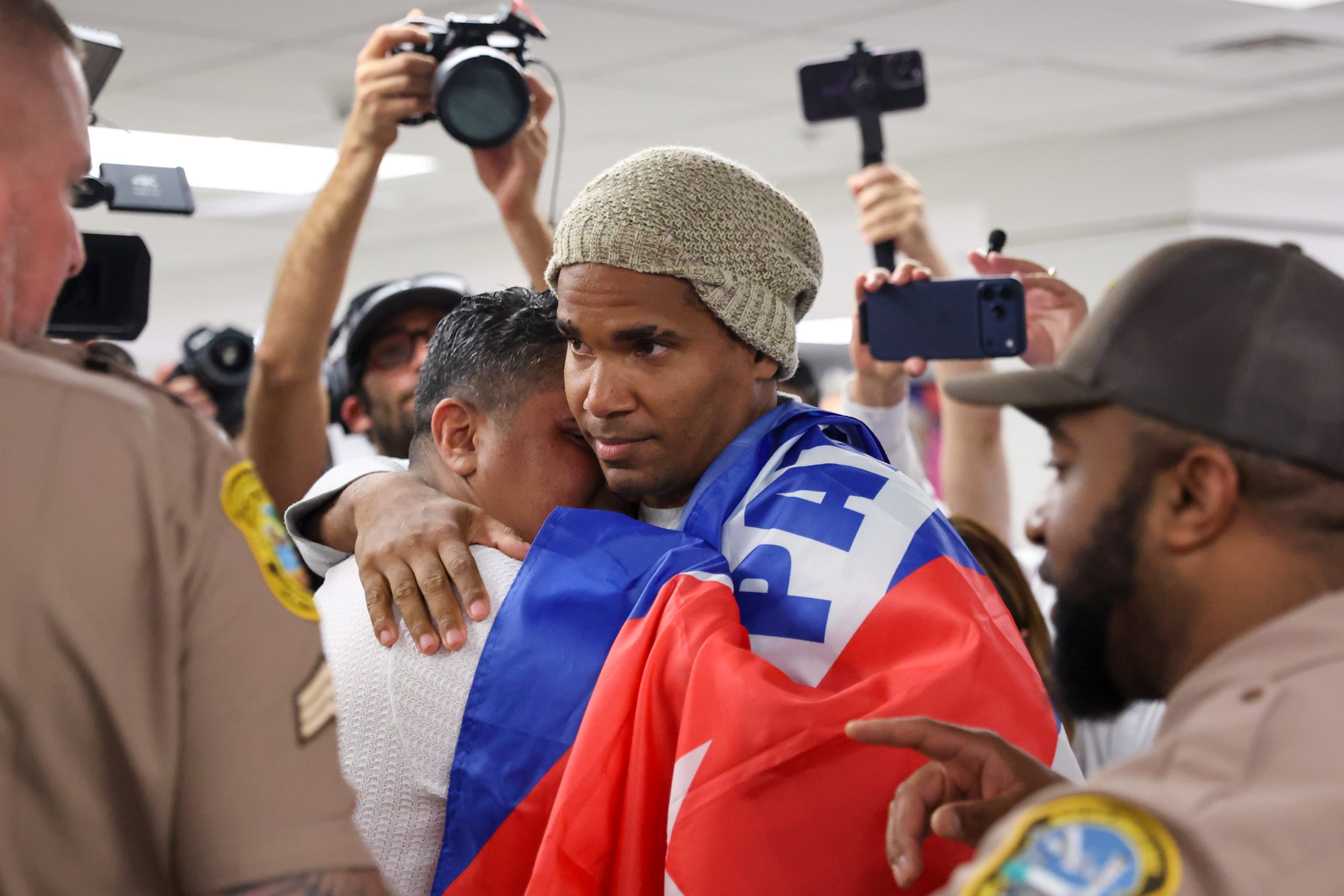
El artista cubano Luis Manuel Otero Alcántara llegó en la tarde de este sábado a Miami, en un exilio forzado después de cumplir una condena de cinco años por participar en las protestas masivas del 11 de julio de 2021. El creador de 38 años, fundador y líder del Movimiento San Isidro, fue liberado de la prisión de máxima seguridad de Guanajay el 7 de julio, pero las autoridades lo mantuvieron retenido en paradero desconocido, según familiares y activistas que denunciaron que se encontraba desaparecido.

Multitudinaria Protesta En Palma Contra La Masificación Turística: “Está Todo Sobreexplotado”
Gatwick stinks! Water crisis shuts toilets and bars at both terminals – passengers warned to sort essentials at home before flying

Check Out These Five Destinations In Spain Still Crying Out For Tourists To Pay A Visit
Axarquia wildfire cause emergency response across Archez, Competa and Canillas de Albaida
Buyers are pushing back against high house prices in Spain

El Escurreplatos De Dos Niveles Que Libera Espacio En La Cocina Está Rebajado Más De Un 50%


-
andulacia wildfires1 week ago
Axarquia wildfire cause emergency response across Archez, Competa and Canillas de Albaida
-
House prices1 week ago
Buyers are pushing back against high house prices in Spain
-
 Amazon1 week ago
El Escurreplatos De Dos Niveles Que Libera Espacio En La Cocina Está Rebajado Más De Un 50%
-

 España1 week ago
Lotería Nacional: Comprobar Sorteo Del Jueves 16 De Julio
-

 %2 weeks ago
Watch The Bizarre ‘Joker’ Stunt That Disrupted Pamplona’s Bull Run
-
Are dogs allowed on trains in SPain1 week ago
Renfe opens all trains to dogs weighing up to 40 kg
-
 Audiencia Nacional2 weeks ago
La Directora De La Guardia Civil Y Su Jefe Operativo Declaran Como Imputados En La Audiencia Nacional Por El ‘caso Leire Díez’
-

 Uncategorized1 week ago
F1 press conference shut down over Red Bull driver transfer rumours