
ElPais
Lamine Yamal: ‘I See Myself As Much Better Than How People See Me’

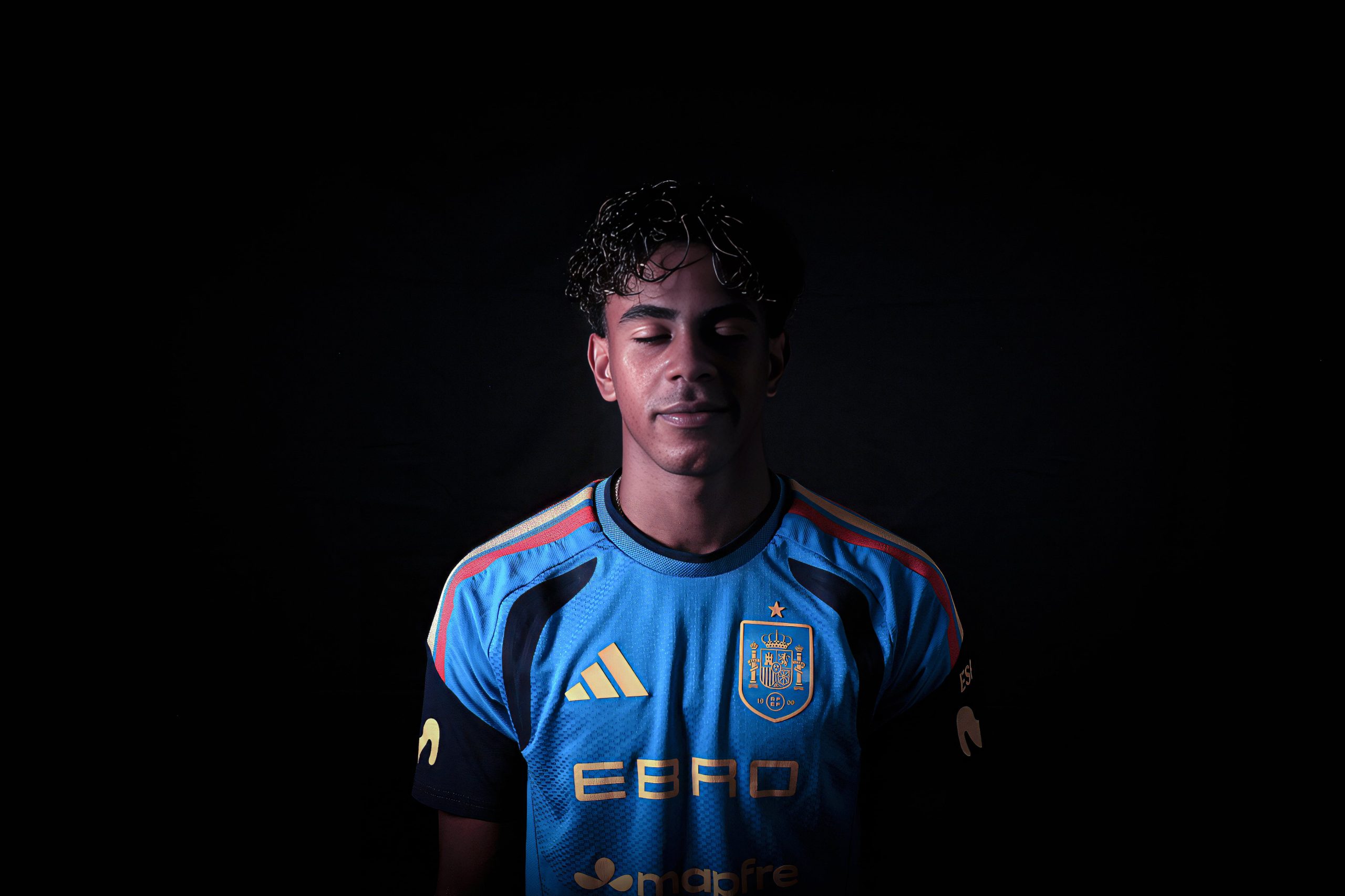
His father is from Morocco; his mother is from Equatorial Guinea. He was born 18 years ago in the tough Barcelona neighborhood of Rocafonda, and for the past three years his name has been making waves in soccer. His name is Lamine Yamal. A product of the streets and the academy, he has reached global fame — you only have to travel across Europe, and now also the United States, to see it. When he appears in the Spain training camp press center in Chattanooga to speak with EL PAÍS, he commands the room much like he does on the pitch.
He is cheeky and playful, intelligent and determined. And he seems unbothered by being labeled arrogant — he even appears to enjoy it. He takes a few seconds to think through each answer. At times more reflective, at others more impulsive, always natural. And approachable. He does not hide his past, nor his future — at least as he imagines it. And he knows he is central to Spain’s national team, which needs his talent to shake off the slight trouble it got into after drawing its opening match against Cape Verde at the World Cup in the United States, Mexico, and Canada.
Although he admits that his physique still wouldn’t hold up for a full match, Lamine scored the opening goal in Spain’s 4-0 win over Saudi Arabia on Sunday. Within the national team camp, confidence is high. Lamine, of course, feels the same. It’s in his nature.
Question. What is your first memory of a World Cup?
Answer. The 2014 World Cup. My mother was working and came back for the second half of Colombia-Uruguay, the match when James [Rodríguez] scored. She arrived, and we finished watching it together. Now she is here with me. She cried when I debuted. I told her, “How life changes…” My first World Cup memory is with her, and now we can experience it this way. It’s something I had dreamed of, but never this soon.
Q. Looking back, how important were your parents’ efforts in getting you to this point?
A. What my mother has done, what my father has done — I couldn’t have done that for anyone who was not my child. I’ve come to understand that only parents can make that kind of effort. To begin with, if you think about it, if you don’t have money, it’s very hard to get your child to play soccer. If you don’t have money, it’s very hard to give them a gift on Three Kings Day. When you don’t have money, many things are difficult. And my parents managed to make all that happen. I played soccer. I got gifts on Three Kings Day. It’s something I’ll never be able to repay them for.
Q. How do you process such a rapid change — from a modest life, with some hardships, to one of luxury?
A. I think there are two ways to see life. There are people who live a normal life and then move into luxury slowly. And then there’s me, who believes you should enjoy it. I think people overthink: what happens if I do this, what happens if I meet this person, what happens if this relationship ends, what happens if I buy this and then don’t want it. I think when I’m older I won’t spend all the money I make. I’ll be able to leave something to my children and, at the same time, enjoy life. Because you have to enjoy life.
Q. What do you mean by enjoying life?
A. Anything I feel like doing — since I couldn’t do it when I was little, I’m going to do it now, without worrying that it might be too much. Because I’ve earned it. I had nothing, and everything I have I’ve earned by playing soccer. It’s not something I was given or inherited. So I think I have the right to do what I want with my life. For me, that’s a principle: what you’ve achieved, you can do what you want with it. Of course, you need advice from people: “I wouldn’t do this” or “I’m not sure about that.” And that’s fine.
Q. You say you had to grow up very fast.
A. Everyone has problems in their life — everyone: you, me, anyone reading this interview. But there are things that are normal for a child and others that aren’t. I’ve had to live on my own from an early age. I’ve had to be away from my parents. When you’re young, sometimes you want things — you have wishes — and you can’t fulfill them. So you learn to accept that your life is like that and to appreciate everything your parents do. Going through all that, seeing my mother struggle, seeing her try everything to make me happy… all of it made me grow up earlier. It means that, at 18, I can walk into a dressing room full of veterans without seeming like a kid.
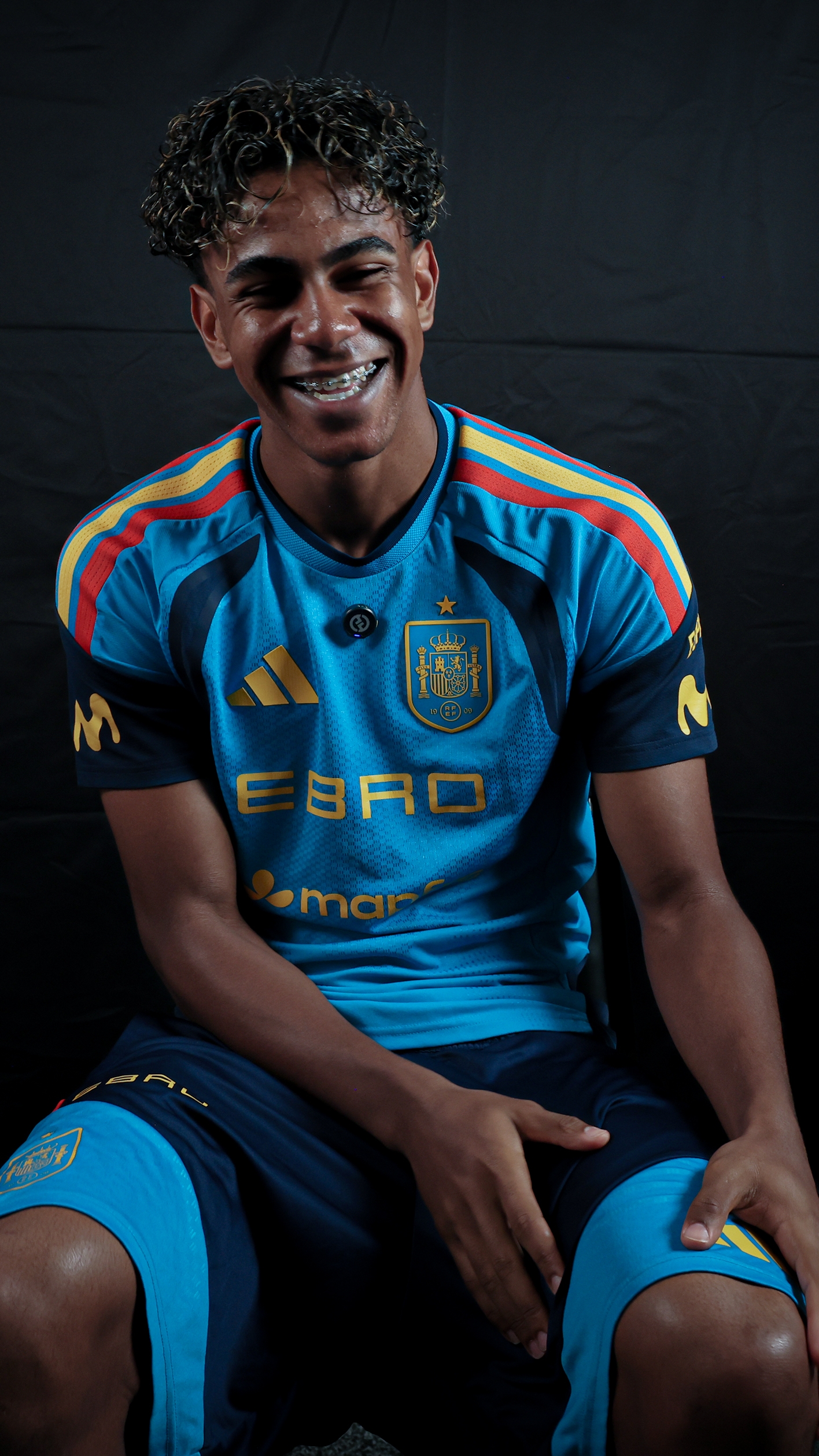
01:15
Lamine Yamal: ‘A tie makes me angrier than a loss’
Q. Is the downside that you can’t live a normal life?
A. A lot of times, I’ll be out eating with my partner or my mother and they ask me, “Can I get a photo?” And, sitting there peacefully on a sidewalk café, I think, “Maybe this isn’t the right time.” People don’t realize the value of being able to go out for a drink or to the movies without any hassle. We can’t experience that. I think I’d trade a lot of what we have just to be a free person. Anyone can go into central Barcelona, buy some clothes, have a drink and go home. I can’t. So when I can do those things — for example, right now, when I’m in the United States, where nobody knows me — I really make the most of it.
Q. Do you remember the moment you realized you were famous, that everything had changed?
A. Yes. I was 13 and, like any kid, I wanted to go out. I went to a park with my friends and a boy recognized me. From that moment it began: “That’s the Barça kid, the one they say is very good.”
Q. What are your thoughts on ego?
A. I think there are two things: ego and confidence. Both are important. To some extent it’s important to be egocentric. I don’t see it as a bad thing. But above all it’s important to have a lot of self-confidence. People often confuse confidence with egocentrism. In the world we live in, if you’re not full of confidence, they can tear you down. And it is true that it’s fun to have a bit of ego. You go to press conferences and have a bit of a laugh.
Q. Did you plan that line, “as long as I win, no one can say anything to me”?
A. No, it came out in the moment. I know that if I say something like that, I’ll go home, lie down, and laugh while you guys keep talking about it. I like that part; I don’t mind. I think that’s what soccer is all about. I liked the soccer of earlier years, in 2010, when the Barça–Madrid [matches] and all that was happening. The important thing is having confidence in yourself, because otherwise you can get crushed.
Q. Where do you draw the line so you don’t overdo it?
A. Obviously, if I say I’m going to score six goals on Sunday, I know I’m not going to score them. That’s a problem. But if I say I’m going to play well on Sunday, I know I have the ability. It’s about knowing your limits, that’s all.
Q. Have you ever doubted yourself?
A. No. I see myself as much better than how people see me. I know the road ahead is long, and I have many things to improve. I know people see this as my level and that’s it. But all that confidence I have I can use for many things. I’ll say it again: I’ve still got a long way to go, a lot to improve. And a lot, a lot of soccer ahead of me. I’m 18.
Q. Your style of soccer is a mix of street and academy. Is that the perfect combination?
A. I think so. With players coming up now, the problem I see is that at four years old they’re already signed to a team and on the team, they’re told: “Well, the fullback has to control the ball and pass it to the winger; the winger has to control the ball and pass it to the center forward. Everyone has to defend, everyone has to attack, we all have to pass it around.”
But when I played in the street, it was: whoever scores two goals wins, and the other one’s out. So, it was about being crafty — I don’t know — just having fun. I miss seeing people enjoy watching soccer. I used to watch a lot of soccer, but now I find it hard, because to watch a gameI need players like Neymar [Júnior], Isco [Francisco Román Alarcón Suárez], [Karim] Benzema, Vinícius [Júnior], [Rayan] Cherki… players you like to watch. They don’t have to be Brazilian like Ronaldinho [Gaúcho]. I never saw [Thierry] Henry live, but I loved watching him on videos.
Q. Do you visualize a move, a dribble, a play — or do you just go with the moment?
A. Before, I didn’t think about anything. Now it’s true that I already know what I’m going to face before the match. I mean, I know I’ll have three players on me.
Q. Three?
A. At least three, always three. If I’m lucky, two. But one-on-one never, never, never. So I start thinking about plays: I talk to the fullback and tell him, “If I give it to you, do this.” The coach tells me: “If you’ve got three players on you, there are three open teammates.” So it’s about playing deep, obviously, but when it comes to dribbling, you just have to improvise. You don’t plan it. It’s impossible.
Q. You don’t practice any tricks or flashy moves?
A. That’s the problem with today’s players: they might practice doing a step over. But that only comes out naturally when it hits you: the step over just comes out. Practicing it won’t make it natural. There are things in soccer you don’t practice.
Q. What do you make of the World Cup?
A. I’ve been watching, of course. And I’ve drawn a conclusion.
Q. What is it?
A. That journalists are in a big hurry to finish their work. It’s only the first round. Spain drew, Portugal drew, Argentina won 3–0. France won 3–1. And you already think the final will be France vs. Argentina? I don’t understand. Instead of enjoying the matches, you want to jump to conclusions straight away. Now Spain is supposedly terrible — but those of you who really understand soccer know that’s not true.
Q. What’s your conclusion?
A. That until July 19, you won’t know who will win, and you want to know today.
Q. Do you see yourself playing at 40 like Lionel Messi?
A. Impossible. Impossible. Impossible. Playing maybe, but at that level it’s very, very, very difficult. And you also have to really want it. For me, he’s the best, and he keeps proving it. He has an advantage over everyone, and he’s 40 years old.
Q. What about playing in the center?
A. I think Leo was also marked by three defenders. And the only place where three defenders can’t mark you is in the middle. There are a lot of players there. Over time, I’ll end up there, because on the wing it’s very easy to mark me with three, but in the middle they can’t do that.
Q. Won’t fans miss your dribbling?
A. I can still have one-on-ones in the middle. I’m a more decisive player when I turn in the middle than when I turn on the wing. Obviously, right now for the team I think it’s better for me to be out wide. But there will come a time when I’ll be more decisive in the middle. And that’s where I’ll end up.
Sign up for our weekly newsletter to get more English-language news coverage from EL PAÍS USA Edition









armada
The Strange Tale Of The Frigate That Traveled The Mediterranean Buying Archeological Artefacts

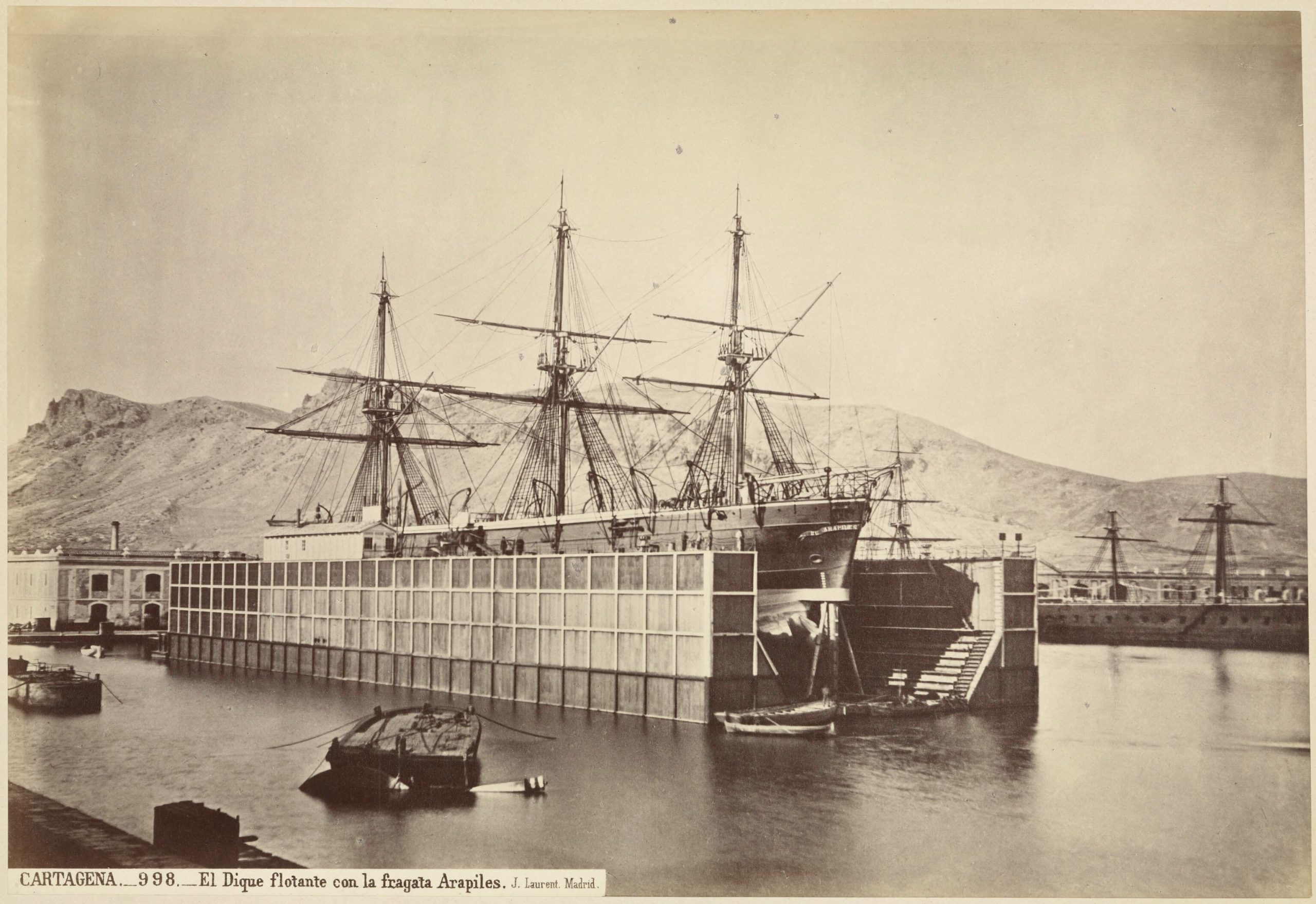
During the reign of Amadeo I of Spain (1871-1873) one of the most outlandish archaeological expeditions in history was carried out: the frigate Arapiles was sent to buy antiquities in the eastern Mediterranean to fill the halls of Spain’s recently inaugurated National Archaeological Museum (MAN). But there was one problem: the ship did not even carry enough funds to buy the coal needed to sail.
“Zero funds, help us minister with your legitimate influence,” the director of the scientific commission, Juan de Dios de la Rada, telegraphed from Constantinople. He did not receive a response.
Surprisingly, the mission achieved a measure of success, and the frigate returned to Spain with 319 archaeological objects, packed in 22 crates, along with 250 photographs and drawings. The question, however, remained: what exactly had they bought — or accepted as gifts? Nothing was entirely clear.
“Collecting implies choosing, an option that the commission to the East did not have. The compilation was not based on a specific and systematic research project. This methodological shortcoming aligns it more with illustrated collecting, but still far from a modern archaeological program,” writes the historian and Navy reservist, Carmen García, in The Archaeology that the Navy Brought by Sea. The Commission to the East of the Frigate Arapiles in 1871.
Winner of the last Don Juan Alvargonzález Naval History Prize, the book gives a detailed account of the ship’s odd journey that saw it cross the Mediterranean just when sailing ships were being abandoned in favor of steam power. The frigate had both systems, something that came in handy given the total lack of fuel. The crews had to wait for the winds to be favorable to begin the voyage.
At the end of the 19th century, Europe was creating its great museums, such as the British Museum and the Louvre. Spain launched the MAN. And although the great European museums filled their spaces with oriental objects, that was not on the cards for Spain; the country did not lead any of the great archaeological expeditions to the Middle East, which were mainly in the hands of the British, French and Germans. The Arapiles was presented as the solution. If you couldn’t loot, you could at least try to buy.
But soon the crew and the archaeological team came face to face with reality. “Today I only have 28 days of provisions left; the monthly payment in the box will barely suffice, a current monthly payment that, although I keep 520 tons of coal in the coal kilns, makes it absolutely impossible even using the sail as much as I can to travel the great distance that remains,” wrote the captain of the ship, who predicted that they would never reach Constantinople or Egypt, and the mission would fail.
Despite the challenges, the ship did, however, manage to reach present-day Turkey, where those on board discovered that other European countries were trading with Constantinople, while no ship with a Spanish flag was in evidence. They found that Italian, Greek, Austrian, French and English consuls lived in the finest villas in each of the country’s cities and invited local authorities to parties in huge palaces, something highly valued by the Ottomans. On the other hand, the Spanish diplomatic leaders resided in very modest houses where no high-ranking Turkish leader would deign to be seen.
When they went ashore, the culture shock for the Spanish expedition was severe. They understood absolutely nothing about Islam. In fact, one episode nearly triggered a serious incident: as a gesture of gratitude to some dockworkers, they offered them carefully wrapped pieces of bacon. For that reason, although the Spaniards were initially wary, the crew sought direct contact with the descendants of the Jews expelled from Spain four centuries earlier.
“On this trip to the East, the Sephardic Jews went from being a sector of the Ottoman population that was an object of official distrust, to being a group that the Spanish traveler valued for its hospitality and familiarity, making them feel at home,” says García.
The pieces that archeologist De la Rada acquired and that entered the MAN “were almost all gifts from the [Spanish and foreign] consuls, but not the vases that he acquired in Syracuse from his merchant friends who were gallant and attentive.” However, García adds that “Dr. Paloma y Romanas from the MAN affirms that the oinócoe [wine vessel] that was part of the grayish ceramic collection with black figures [that the expedition bought] is a forgery that managed to deceive De la Rada.”
The objects donated by the diplomats or otherwise acquired by the Arapiles included a large relief, a Greek stele (an upright stone or wooden slab monument), lanterns, a Roman head, torsos, fragments of marble sculptures, a Ptolemaic bust, a column from Pompey, ceramics, glass objects, coins and various statues. It was a not inconsiderable cache given the meagre amount of money available to the expedition.
Once back home, the Arapiles, which featured a wooden hull that could not support the armor it carried, ended up in Cuba and was scrapped. The ship cost 6.6 million pesetas but its wood and iron were sold for just 157,000 pesetas. Green, the U.S. shipbuilding company that sold the ship to the Spanish, was still demanding payment 40 years after the Arapiles was launched, claiming that the Spanish government had never paid for the frigate. Admiral Pascual Cervera responded: “I am almost absolutely certain that, if the books of the Green house are judicially searched, the sum they claim from us will be seen to have been paid.” Green did not insist again.
Carmen García wonders, given De la Rada’s denial of the forgeries, whether, on the right budget, he would have avoided such objects and bought instead only bona fide archeological pieces. Or if he would have fallen into a trap which García says is “as old as archaeology itself.” It is an unanswerable question, because he never had the chance to say, “I’ll take one of those mummies,” since the lack of funds meant he could never truly venture into the land of the Pharaohs. He only stopped in Alexandria — and only briefly and by sheer luck.
Sign up for our weekly newsletter to get more English-language news coverage from EL PAÍS USA Edition


The sperm of the fruit fly are enormous—the largest in nature relative to body size. The male Drosophila melanogaster rarely exceeds 1.8 millimeters in length. Its sperm measure the same — 1,800 microns. And it doesn’t produce just one, but thousands, which cluster in the seminal vesicle while they wait to encounter a female. After mating, the problem falls to her. These thousands of sperm cells end up in the spermathecae and the seminal receptacle. There they remain for up to two weeks before reaching the uterus and completing this delayed fertilization. Both organs are shorter than a single sperm cell. So how do flies keep them from getting tangled up? A theory first proposed in the 1970s — one that helped underpin the plastic age — has provided the answer.
A group of researchers has taken an in-depth look at how flies manage this. D. melanogaster is no ordinary insect: it is the most studied in science. Like mice among mammals, it is a key model organism and underpins much scientific and medical research (many human diseases have parallels in these flies). A team of physicists, biologists and mathematicians set out to understand how so many sperm — each 1,800 microns long — can fit into a space measuring just 200 × 150 × 150 microns, the volume of the seminal vesicle. Their findings, published in Nature Physics, show that the sperm are able to self-organize and generate movement through a physical mechanism.
Under the microscope, a human sperm cell looks like a tadpole: it moves on its own, beating its tail in a fluid medium, propelling itself forward as if swimming. It is programmed to do so. The sperm of the male fruit fly also moves under the microscope — it waves its tail — but it does not advance. What researchers discovered (see video above) is that its flagellum oscillates, but always in the same place. It only moves forward when it does so collectively: observed in the seminal vesicle, the sperm never stop moving in sync. What is striking is that, unlike in mammals, there is nothing in these sperm cells that makes them move autonomously.

“We found that two adjacent sperm in the male’s sperm-storage organ often swim in opposite directions rather than moving in the same direction,” says Jasmin Imran Alsous, from the Flatiron Institute in the United States. “This happens in any region of the seminal vesicle.”
It is as if they were gears: the oscillation of one in one direction forces, through contact, the movement of the other. “In one area of the vesicle, sperm can be aligned in a particular direction [even if they swim in opposite directions relative to each other], while in another area they can be aligned in a different direction [also maintaining opposite motion],” she continues. This dynamic allows the sperm to move without their flagella becoming tangled.
They appear to move like flocks of birds or schools of fish. But there are radical differences. “In those cases, the emergence of collective behaviors is often tied to sensory and behavioral cues such as vision, predator avoidance or a tendency to keep a fixed distance from others,” says Michael J. Shelley, also of the Flatiron Institute and senior author of the study. “That is possible because fish and birds are highly evolved organisms.”
He continues: “Individual sperm, as far as we know, have no communication system beyond mechanical interactions arising from their extremely dense packing. Therefore, the appearance of large-scale collective flows in these sperm aggregates is a mechanical consequence of their density and activity.”
In other words, a giant sperm cell that cannot move forward on its own — despite constantly beating its tail — manages to stay untangled and in motion only thanks to its interactions with its neighbors when packed in large numbers.
In nature, there are many examples of dense packing to make the most of space or of collective movement to gain efficiency. The DNA packed inside a tiny human cell can stretch to two meters. If the sperm whale, at nearly 20 meters long, is enormous, consider the length of its intestines — about 150 meters. And as for self-organized collective motion, in addition to bird flocks and fish schools, certain insect species — such as the black sawfly (Perreyia flavipes) — also move in coordinated groups.

“An isolated sperm differs from an isolated fish or bird in an important way. A fish can swim by itself, a bird can fly alone, and a mammalian sperm can also move individually,” Shelley notes. But the giant sperm of the fruit fly generate the typical bending waves seen in any sperm cell, yet remain motionless when isolated. “Hence both the large-scale flows and the rapid directional mobility observed in the seminal vesicle are the result of collective interactions,” the researcher concludes.
For the authors, this dynamic can be explained by the theory of polymer reptation. It was proposed by the French physicist Pierre-Gilles de Gennes in 1971. Developed in the years that followed, “it explains the most important phenomena in the use and recycling of plastics,” says Juan Francisco Vega, a researcher with the BIOPHYM Group at the Institute of Structure of Matter at Spain’s research center CSIC. Plastic is made of macromolecules that tangle and untangle during processing. “They move through an imaginary tube formed by adjacent polymers,” adds Vega, who did not participate in this study. Two decades later, Gennes would receive the Nobel Prize in Physics for his ideas on reptation and the physics of soft matter.
“But in this biological context reptation is active,” says Vega, who applies Gennes’s theory to ocular fluids and the design of eye drops: “Tears are made of highly confined macromolecules,” he notes. In plastics, molecules are passive; they move due to heat or an external force applied during processing. “By contrast, fruit fly sperm use their tails to writhe forcefully.” This self-organized movement — each one pushing against its neighbor — is, in Vega’s words, “the most efficient and fastest traffic jam in nature, where extreme density itself allows the system to function and not stall.”
Sign up for our weekly newsletter to get more English-language news coverage from EL PAÍS USA Edition
Alfonso Cuarón
The Creative Director Of Chanel Shuns The ‘Wild West’ Look: ‘We Already Have Too Many Cowboys In This World’

He has the most coveted phone book in Paris. In fact, it might even be one of the most-desired in the world. His contacts include the personal cell numbers of Martin Scorsese, Marion Cotillard, Gisele Bündchen, Luca Guadagnino, Lily-Rose Depp, Margot Robbie and Timothée Chalamet. When Thomas du Pré de Saint Maur, 57, decides to dial a number, you can tell that no one on the other end will be able to resist him. Anyone who sees his name on the screen is practically touched by Lady Luck. Who dares to say “no” to a Chanel ad?
“Almodóvar did, for example.” He reveals the Spanish director’s rejection with a laugh, relaxed on the sofa in his Parisian office. The space is almost as bright as he is. “Tarantino also turned me down. [He was] much more ambitious: he wanted to star in the film. And that was completely impossible,” he explains.
Du Pré, born in the wealthy Paris suburb Neuilly-sur-Seine, is the son of French aristocracy and Venezuelan bourgeoisie. This well-balanced mix manifests itself in his easy laugh, lightheartedness and good sense of humor. However, he claims to have a melancholic temperament and only reads “sad novels” by Stendhal (The Charterhouse of Parma being his favorite), or War and Peace by Tolstoy.
Does he read anything by Dostoevsky? “Never,” he replies emphatically. He answers this newspaper’s questions in fluent Spanish, interspersed with entire sentences in English and French.
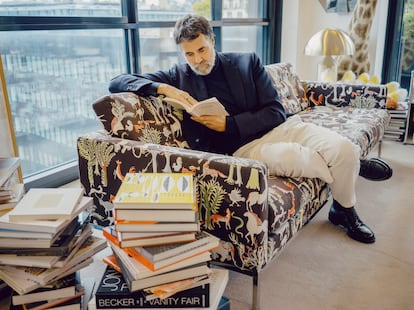
Since 2014, he has held the position with the longest title at the house: head of Global Creative Resources for Chanel Fragrance, Beauty, Watches and Jewellery. Among his responsibilities is keeping a legend alive: Chanel N°5.
Du Pré is the person who decides the face of the fashion house’s fragrances. He sat down with EL PAÍS to discuss the latest star he has signed: Jacob Elordi, the new brand ambassador for Bleu de Chanel L’Exclusif. The Australian actor appears in The Chase, a cinematic advertisement directed by Alfonso Cuarón, the Mexican filmmaker behind masterpieces like Gravity (2013) and Roma (2018).
For the first time, a Chanel advertisement is an action film. Instead of quiet, contemplative scenes, we’re plunged into a chase. “You can’t spend your life just admiring yourself,” the creative director explains. The idea of changing direction came to him in 2024 while filming the N°5 commercial with Margot Robbie and Jacob Elordi, directed by Luca Guadagnino.
“For 15 years, we’ve made existential stories; narratives where the man always re-evaluates his entire life. This time around, I was looking for something deeper and more sensory. And, with Cuarón, we’ve achieved it by using action, without excessive testosterone. That’s why I chose Elordi; he’s like an action hero, but there’s something very gentle about him.”
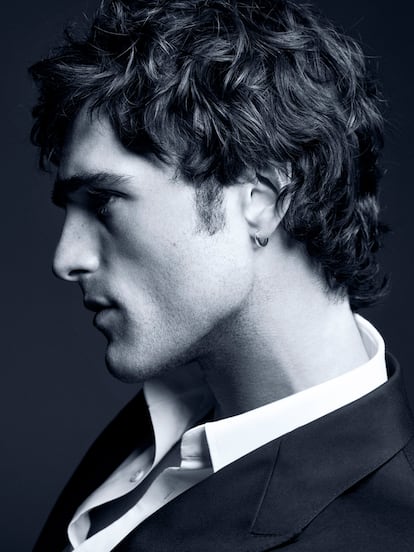
He says that it wasn’t his intention to give a face and texture to contemporary masculinity… but perhaps he’s ended up doing so. “I hate when people pressure me: ‘Express your feminine side!’ Give me a break! No, it’s not that; it’s something more sensitive and fragile that’s neither masculine nor feminine. It’s gentle,” he insists.
He’s a bit fed up: he says that, for 30 years, people have been trying to define the new masculinity. “In such a fragmented world, it’s better to accept that there isn’t just one single expression of masculinity. I’d say it should be more tender. I want to believe that there’s more tenderness than testosterone in the world. Only that will save us.”
Balance has been the great discovery of the shoot. “In the [2024 campaign] for N°5 (titled See You at 5), the characters played by Margot Robbie and Jacob Elordi weren’t at all balanced; he’s impulsive, always on edge, while she — calmer and more experienced — is in control. In the Bleu L’Exclusif story, they’re equals… and I find that to be very modern. There are no cowboys; we already have too many of them in this world. Aggressive, dominant masculinity is making a terrible comeback. I don’t like it at all, which is why this ad revolves around sensuality, not testosterone.”

When asked what it was like working with Alfonso Cuarón, Du Pré answers: “Great. I’m not a masochist by any means. Working with people who treat you like dirt and only want your money? No, that’s unacceptable. And there are many people who are like that, unpleasant and selfish.”
He recounts that Cuarón had two months free in his schedule. “That’s almost a miracle with these talented people who work so much and usually have their schedules booked for three or four years. In my mind, he wasn’t the best director to make an action movie. However, I liked how he had filmed men. So, I said to myself: ‘Let’s give it a try.’”
Du Pré notes that he goes into film shoots “lightheartedly.”
“I try not to get too anxious. If it doesn’t go well, we just do it again and it’ll work out.” He also doesn’t talk much with the actors, only with the director. “We work a lot. And, when we reach an agreement, he takes charge of giving his vision to the actors. [By that point], there’s little I can do, because the conversation is cinematic. They understand each other… and Cuarón is a huge talent.”
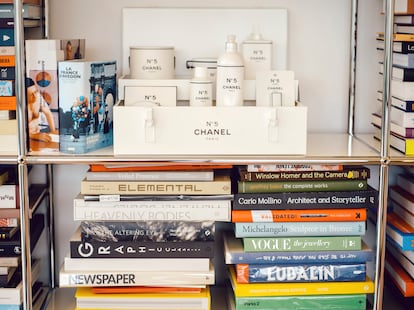
Du Pré has held his position as creative director since 2014. One of his predecessors was Jacques Helleu (1938-2007), “the guardian of the maison’s good taste.” The mission was entrusted to him by Pierre Wertheimer when he was just 18. In 1968, Helleu chose Catherine Deneuve as the face of N° 5 and commissioned famous photographers such as Richard Avedon and Helmut Newton to leave their mark on the house.
It was Helleu’s idea to begin collaborations with film giants. In 1978, he involved British director Ridley Scott in La Piscine — the first film featuring Chanel N° 5 — and later recruited Luc Besson and Roman Polanski for his aesthetic ventures. In the early 1990s, he directed advertising campaigns with Jean-Paule Goude, such as the one for the Égoïste perfume.
Helleu’s definitive theatrical breakthrough came when he made The Film with Nicole Kidman, then at the height of her fame for Moulin Rouge, with director Baz Luhrmann. This was the 2004 N° 5 commercial.
It is this very legacy that Du Pré has inherited; he made his debut in 2014 with a spectacular advert for No. 5 that is still remembered today: Gisele Bündchen surfing waves around the world. “For that film, we needed waves. We went to Baiona, then to Fiji, then to Hawaii and, finally, to Tahiti. Two weeks of travel to film one hour. In Tahiti, the waves were like a 40-story building. We had the Brazilian surfing champion with us… and she broke her nose on the first try. In the end, we got the 12-year-old son of the local king: we put a wig on him, he caught a wave and we were able to film. Things never happen the way you imagine them.”

Bleu de Chanel L’Exclusif, the fragrance championed by Elordi, is an eau de parfum created in 2018 by Olivier Polge. He’s the son of Jacques Polge, the former head perfumer at Chanel who, back in 2010, launched the first version — an eau de toilette — with the same name. French actor Gaspard Ulliel was its first and only ambassador until his death in 2022; he was succeeded by Timothée Chalamet in 2023 and by the Australian actor in 2026.
According to Du Pré, each of these stages has signaled changes in contemporary masculinity.
“15 years ago, men wore colognes that gave them headaches, very strong ones; that’s how power was expressed. What’s interesting is that, [over the past] 15 years, they’ve embraced complexity in the world of fragrances. Today, almost no man has a problem wearing an eau de parfum, a more refined and complex scent. What we’ve experienced in this decade is a shift toward complexity in men’s fragrances, while women are going in the opposite direction and seeking monofloral fragrances,” he explains.
The creative director enjoys talking. Non-stop. In fact, he says that he can’t stop. “You can wake me up at eight in the morning and I’ll launch into a speech,” he warns, adding: “I’m not one of those solitary creative types who get their ideas in silence. In French we call it ‘logo moteur’ — in other words, I need to talk in order to think. I can’t come up with anything on my own. In a conversation with someone, yes. If I don’t talk, I get bored.”
Is it possible to believe that Pedro Almodóvar said “no” to Du Pré?
“Well,” the Frenchman clarifies, “he set conditions. He only wanted to work with Penélope Cruz, but she was already committed to Lancôme. It wasn’t possible. It was more of a ‘not right now.’”
Sign up for our weekly newsletter to get more English-language news coverage from EL PAÍS USA Edition

Francia – Irak: El Partido Del Mundial 2026 En Directo | Se Activa El Protocolo Por Tormenta Eléctrica En El Descanso Y El Encuentro Está Detenido

Marshal reacts after being SLAPPED by angry racer following crash

The Strange Tale Of The Frigate That Traveled The Mediterranean Buying Archeological Artefacts
A major EU border system goes live today – What changes for travellers?
El Pentágono, Evacuado Por Una Falsa Alarma Ante La Sospecha De Un “incidente Con Materiales Peligrosos”
Mallorca launches new plan to save its beaches as coastal erosion threatens popular resorts


-
EU rules2 weeks ago
A major EU border system goes live today – What changes for travellers?
-
America2 weeks ago
El Pentágono, Evacuado Por Una Falsa Alarma Ante La Sospecha De Un “incidente Con Materiales Peligrosos”
-
Coastal erosion2 weeks ago
Mallorca launches new plan to save its beaches as coastal erosion threatens popular resorts
-
fira de ses herbes2 weeks ago
Selva herb fair returns: Mallorca’s most magical tradition blooms again
-
european airport delays1 week ago
1,225 delays at major European airports raise summer warning for Spain travellers
-

 %1 week ago
Barcelona Tests Olive Pit Asphalt That Could Transform How Cities Build Roads
-

 Uncategorized2 weeks ago
WATCH: Kim Kardashian steals F1 Monaco GP winner Antonelli
-

 Casa Real2 weeks ago
Victoria Federica De Marichalar Fue Vestida De Dior Para Ver Al Papa