Connect with us

%

Mercadona Faces Pressure Over Its Ready-Made Meals As Spain’s Bars Demand New Rules

Published

on

mercadona-faces-pressure-over-its-ready-made-meals-as-spain’s-bars-demand-new-rules

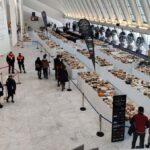
Mercadona has been at the centre of the debate. Photo credit: dodotone/Shutterstock

If you grab a ready-made lunch from Mercadona and eat it in the supermarket, you could be at the centre of a growing row between Spain’s supermarkets and its bars and restaurants. The hospitality industry wants supermarkets serving food and drink for customers to consume on the premises to face the same rules and costs as traditional hospitality businesses. It is now asking political parties to take up the issue ahead of the next government, although no new tax has been introduced.

Hostelería de España, the national organisation representing the hospitality sector, has included the proposal in a list of 30 requests sent to political parties. It argues that businesses offering similar services should face equivalent tax, health, labour and licensing obligations. The organisation says the current differences put bars and restaurants at a disadvantage when competing with supermarkets that have expanded their ready-to-eat food ranges. The proposal is a request from the hospitality industry, not an announced government measure. Any change would depend on whether political parties adopted it and a future government decided to act.

Why supermarkets have become part of the dispute

The argument centres on the growth of prepared meals sold by supermarkets, including food that customers can eat in designated areas inside the store. For traditional cafés, bars and restaurants, these services increasingly overlap with what they offer, particularly for people looking for a quick lunch without sitting down for a full restaurant meal. Mercadona has been at the centre of the debate because of its expansion of ready-to-eat food and spaces where customers can consume it. Other supermarket operators have also developed similar services.

José Luis Álvarez Almeida, president of Hostelería de España, raised the issue publicly in May, arguing that supermarkets were moving into territory traditionally occupied by bars. The association has now taken the complaint into the political debate, seeking changes that would apply to businesses offering comparable services rather than targeting Mercadona alone. 

The organisation wants food and drink served for consumption in public areas within commercial premises, clubs and associations to be subject to the same requirements as equivalent services in bars and restaurants. That would mean addressing differences in taxation, food safety rules, employment obligations and licensing. The precise changes would need to be defined by policymakers; the proposals do not set out a new tax rate for supermarkets.

The industry says the rules should be the same

Hostelería de España argues that traditional hospitality businesses face obligations that may not apply in the same way to other businesses offering food for immediate consumption. It believes this creates an uneven playing field, particularly for independent establishments that must meet the costs of running a bar or restaurant.

The organisation represents around 320,000 establishments, including bars, restaurants and cafés. The sector accounts for 6.7% of Spain’s gross domestic product, while the restaurant industry alone contributes 4.7%, according to figures cited in its proposals. It also generates direct employment fo

Those figures form part of the association’s case for giving hospitality a stronger position in economic policy. Its demands extend beyond supermarket food counters, covering taxation, recruitment, small businesses and the preservation of traditional restaurants. For customers, the practical question is whether any future changes would affect the price or availability of prepared meals in supermarkets. There is no confirmed answer yet. The proposal does not automatically mean higher prices, and no change to supermarket charges has been announced.

Other demands include protecting the 10% VAT rate

The supermarket dispute is one of 30 proposals Hostelería de España has sent to political parties ahead of the general election scheduled for 29 November. Another major demand is to protect the reduced 10% VAT rate currently applied to hospitality services. The organisation is concerned about calls at European level for Spain to remove the reduced rate and apply the standard 21% rate instead. It argues that a rise could affect demand, employment and businesses already facing high operating costs. 

The association is also calling for changes to the cost of hiring extra staff. It says an additional social security contribution of €31.22 per day for extra workers makes temporary recruitment more expensive, particularly when businesses need additional staff for weddings, banquets and large events.

It wants the contribution surcharge removed, arguing that hospitality businesses should not face an extra cost that it says does not apply in the same way to agriculture. Other proposals include increasing the tax-exempt value of meal vouchers to €14, reducing administrative paperwork for small businesses and self-employed workers, and improving support for traditional restaurants in rural areas. The organisation also wants a dedicated Directorate-General for Hospitality and Tourism within the Ministry of Industry and Tourism. 

What happens next?

Hostelería de España has asked to meet political parties to discuss its proposals and seek their inclusion in the next legislature’s agenda. That leaves the supermarket demand at the stage of an industry request: it would require political support and subsequent regulatory decisions before any new obligations could take effect.

For now, shoppers can continue buying prepared meals from supermarkets under the rules currently in place. Whether future legislation brings supermarket food counters closer to the regulatory framework for bars and restaurants will depend on the decisions taken by the next government.

The hospitality sector is making its position clear before the election. It wants businesses serving food to customers on their premises to compete under equivalent conditions, regardless of whether the meal is bought in a traditional restaurant or a supermarket.

%

Meet Rescued Horses In Coin

Published

on

meet-rescued-horses-in-coin

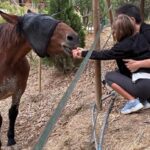
Picture a horse nuzzling your hand in search of a carrot, or a table covered in ribbons, glitter and handmade stars. Saturday, November 14 brings two wonderful reasons to visit an animal sanctuary and help animals that were once given up on.

Two events, one lovely Saturday

Todos los Caballos del Mundo or “All the Horses in the World”, is hosting a guided visit for all the family and a Christmas crafts workshop on the same morning at Ctra. de Borrajo, s/n, 29120 Alhaurin el Grande, Malaga

This guided visit runs entirely in English, from 10:30am to 12:30. You can wander the paddocks, hear the animals’ stories and meet the people who look after them with children are very welcome.

Entry is by donation: €10 for adults and €5 for children under 12, and under-threes go free. All of it goes towards the animals’ care. Please bring carrots for the horses and leave pets at home so the residents stay calm.

Limited spaces are available so you need to book at todosloscaballosdelmundo.com. Go to the “Visits” section and select 14 November.

Make your own Christmas decorations

Prefer something creative? The sanctuary’s Christmas workshop, is a morning of festive crafting surrounded by nature and animals. Organisers promise personalised ornaments and some surprises. Think stars, snowflakes, Christmas trees and reindeers. No experience is needed, only a willingness to have fun.

Tickets cost €30 per person, and is open to everyone so friends, couples and families can all join in. Everyone takes home their own handmade creations, which makes this a lovely way to get ahead on tree decorations or gifts.

Capacity is also limited for this event. To reserve, send a WhatsApp message on 660 092 092.

The sisters behind the sanctuary

Sisters Concordia and Virginia Marquez Garcia founded the charity roughly two decades ago, after moving to Malaga and finding horses abandoned and mistreated. Today it cares for hundreds of animals, including donkeys, dogs and cats, many of them rescued from neglect or illness. It is one of the country’s largest equine sanctuaries.

Can’t make it? You can still help

Anyone unable to attend has other ways to lend a hand. The sanctuary welcomes donations of food, blankets, towels and other useful items. Volunteers are always appreciated, and following and sharing @todosloscaballosdelmundo on social media helps spread the word.

Whichever event you choose, you will leave with a warm feeling, and perhaps a new four-legged friend to sponsor. For more information visit the charity website or social media channels.

Continue Reading

%

Minimum Wage Workers In Spain Could Get €65 A Month More From January

Published

on

minimum-wage-workers-in-spain-could-get-e65-a-month-more-from-january

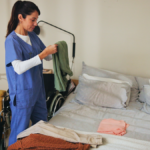
Carers and cleaners are among the workers in line for a new minimum rate from January. Credit: PeopleImages / Shutterstock

Cleaners, carers and seasonal workers across Spain are in line for a bigger pay packet from January, with the proposed minimum for hourly home help rising by 51 cents to €10.06. It’s part of a wider minimum wage rise the government wants signed off before voters go to the polls on Sunday November 29.

Hourly home help would rise to €10.06

Cleaners, carers and nannies paid by the hour would be entitled to at least €10.06 for every hour worked from January 1, up from €9.55, under a draft government order published this week.

That’s a rise of 51 cents, or roughly €80 over a year for someone who cleans for three hours every week and around €530 for a carer who works 20 hours a week. The rate applies to domestic workers who are paid by the hour and don’t live in the household, and the draft says the €10.06 has to cover every part of their pay for the hours actually worked.

The draft also says only cash counts towards the minimum, so payment in kind, such as food or accommodation, can’t be used to make up the difference. 

Short-term staff would get at least €60.88 a day

Workers on short contracts would see a bump too. Anyone hired for up to 120 days by the same company would be entitled to at least €60.88 for each legal working day, up from €57.82 this year.

That daily rate is meant to cover the worker’s share of Sundays, public holidays and the two extra annual payments (pagas extra, normally paid in summer and at Christmas), which is why it’s higher than the plain daily rate of €42.87 that applies to the standard minimum wage. Holiday pay for these workers is regulated separately.

The main minimum wage would climb €65 a month

For everyone else on the minimum, the draft sets €1,286 gross a month over 14 payments, or €18,004 a year for a full-time job. That’s a rise of 5.3 per cent, or €65 more a month than now and €910 across the year.

A group of experts advising the Labour Ministry had recommended 4.9 per cent, which would have meant €1,281 a month, so the government’s figure is slightly higher, only by about €5 a month. The unions CCOO and UGT had asked for at least 7 per cent, which would have meant around €1,306. They’ve made their backing conditional on the decree stopping employers from absorbing existing pay supplements into the new minimum, and hadn’t yet commented on the figure.

Anyone already earning more than €18,004 a year for full-time work isn’t affected, and the minimum will have risen by almost 75 per cent since 2018, when it was €736 a month. We compared the current €17,094 a year with UK minimum pay last month, in case you missed it.

Tax is still withheld, then claimed back

Elma Saiz, Spain’s Social Security minister and government spokesperson, said the Spanish tax agency would again approve a deduction so that minimum wage earners pay no income tax (IRPF).

This year, though, employers would still withhold tax from monthly pay, and the money could only be recovered by filing the annual tax return the following year. The draft also says regional or local rules, and private contracts that use the minimum wage as a reference, will stay on this year’s figure unless the parties agree otherwise.

Approval could land in the middle of the election campaign

The draft is open to comments until Monday November 16. The Council of Ministers could then approve it on Tuesday November 17 or Tuesday November 24, with the campaign officially starting on Friday November 13 and the general election on Sunday November 29.

Last year’s rise wasn’t signed off until Wednesday February 18, and it was backdated to January 1. The new draft is written to apply from January 1. Until the decree is approved and published in the BOE (Spain’s official state gazette), the €1,286 and the new hourly and daily rates remain proposals, so the final figures are worth checking once they appear there.

Continue Reading

%

Casares World Cheese Awards Debut

Published

on

casares-world-cheese-awards-debut

A semi-matured cheese from Casares will compete at the World Cheese Awards for the first time. Queseria Crestellina on the Costa del Sol has entered its queso semicurado, a semi-cured cheese, in the international competition, which runs in Cordoba from November 12 to 15 and features close to 5,000 cheeses from around the world.

A return to competition

Crestellina has entered contests before and has received awards, but it had stayed away from them for several years. Manager Juan Ocaña told Radio Casares that the dairy had concerns about some judging systems and preferred to focus on its work at the farm.

This year’s decision to return was influenced by the event taking place in Andalucia. For the family business, it offers a chance to meet other cheesemakers, compare methods and see how its cheese is received beyond the local area.

Winning is not the priority

Ocaña made clear that a prize is not the main aim. “More than winning another prize, what we really want is to get out of our daily routine and meet other producers, and see other ways of making cheese,” he said.

Crestellina’s entry will bring a cheese made in Casares before international judges. Manager Juan Ocaña hopes taking part will also draw attention to cheesemaking in Malaga province, and to the Payoya goat, a breed closely linked to the area’s rural landscape.

How the awards work

The World Cheese Awards is popularly known in Spain as the “World Championship of Cheese”. Judges assess entries in different categories, awarding recognitions according to the quality of each cheese rather than producing a single ranking of every entry.

With thousands of products entered, the event is a demanding test for any producer. It also gives smaller dairies the opportunity to measure their work against established names from across the international cheese sector.

Keeping tradition going

Crestellina continues to welcome visitors for cheesemaking workshops, tastings and visits to its Payoya goats. Schools, families and international visitors can take part, with activities available in other languages.

Ocaña’s niece, Erika, has recently joined the business, representing a fifth generation connected to the dairy. For the family, that continuity matters as much as any competition result, particularly as small livestock farms face growing pressure.

A name to watch in Cordoba

Medals will be awarded across the competition’s categories after judging. Whether Crestellina’s semi-cured cheese receives recognition or not, its first appearance at the World Cheese Awards puts a modest Casares local producer in front of an international audience.

Continue Reading

Trending

Copyright © 2017 Spanish Property & News