
ElPais
Ondrej Surý, The Man Who Saved The Internet: ‘You Have To Want To Do Something For Others’



Álvaro Uribe Mateos
Juan Manuel Santos, Former President Of Colombia: A Man Of Peace In Times Of War

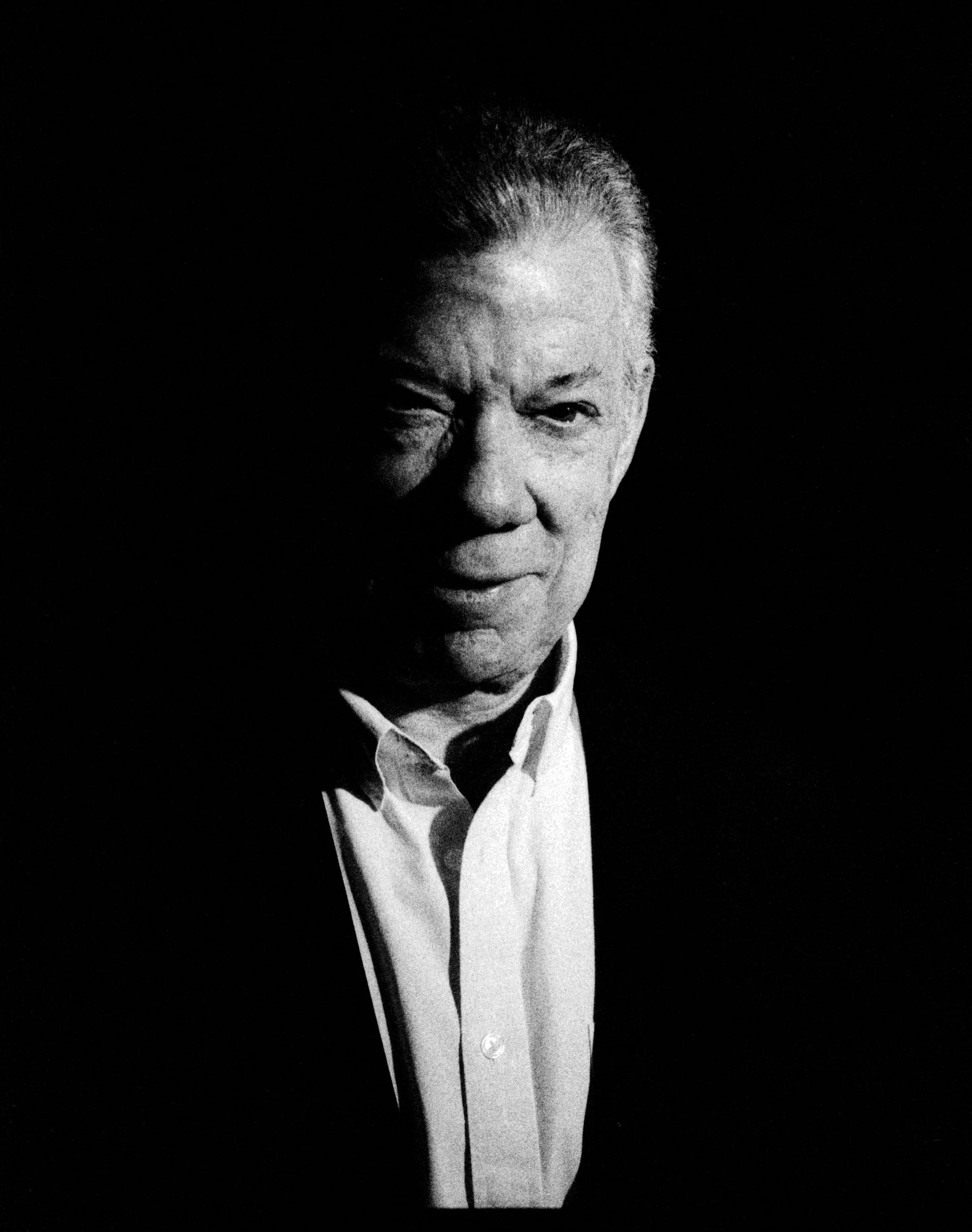
Never before had humanity been so close to its destruction. It was January 2025: the hands of the clock stood at 89 seconds to midnight.
Juan Manuel Santos was looking at the Doomsday Clock in Washington, D.C. The former Colombian president — who governed between 2010 and 2018 – had been invited by the Bulletin of the Atomic Scientists to participate in the annual session of this unsettling assessment of the dangers threatening the planet.
For almost 80 years, the clock has offered a symbolic calculation, warning us how close we are to total annihilation. The closer the hands get to midnight, the less time remains until the end of the world.
The Doomsday Clock, created in 1947, has been adjusted in response to wars, tensions between world powers, the proliferation of nuclear weapons and, more recently, climate change and new technologies. Not without criticism for spreading alarmism, the clock is a metaphor for fear, but also for humanity’s capacity to avert its own destruction.
In January 2026, a year after Santos’ visit, the clock moved four seconds closer to midnight: it’s now 85 seconds away.
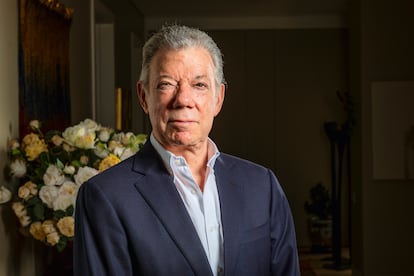
Juan Manuel Santos is 75 years old. And he has a strong belief that seems to have survived the disappointments of the last decade: all conflicts have a solution.
This isn’t a naive statement, given that it comes from someone who spent a good part of his life involved in war. As minister of defense for three years (2006-2009) during the administration of president Álvaro Uribe (2002-2010) — his current nemesis — Santos led some of the most decisive operations against the Revolutionary Armed Forces of Colombia (FARC). As president of Colombia, he negotiated with the men he had fought against: those he had once wanted to kill and who had wanted to kill him, too.
After leaving office, he has dedicated much of his time to defending that peace agreement with FARC, which has been questioned since its signing in 2016. It’s still awaiting full implementation, after neither the administrations of Iván Duque (2018-2022) nor Gustavo Petro (2022-2026) showed any real interest in doing so.
Today, the kind of politics that has been consolidated — one that uses brute force as the primary instrument of power — has changed the landscape that once made the Colombian peace agreement possible. Santos notes how, during the Cold War, Ronald Reagan and Mikhail Gorbachev were able to sit down and negotiate agreements to reduce the nuclear threat. Today, however, to expect such a willingness seems entirely unrealistic.
Santos believes that the problem isn’t a lack of solutions, but rather the absence of leaders willing to find them: “A true leader is someone who thinks long-term, someone who makes decisions — even if they’re unpopular — knowing that they’re the right decisions for the long run. It takes perseverance, as well as a certain amount of courage, to go against the grain. I went to war so that I could make peace.”
·
On November 24, it will be 10 years since Santos and Rodrigo Londoño — alias Timochenko, the top leader of the insurgency — signed the peace agreement for the second time. The first agreement (signed on September 26) was shattered at the polls just days later, after citizens rejected it in a referendum. Santos has always considered that holding the referendum was a mistake.
In December 2016, the Colombian president received the Nobel Peace Prize in Oslo for getting the FARC — Latin America’s oldest guerrilla group — to lay down their arms and sign a peace treaty, which ended the FARC’s conflict with the state after more than 50 years of war.
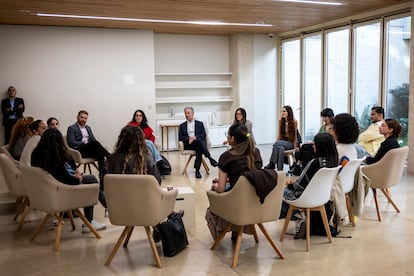
To mark that 10th anniversary, Santos received EL PAÍS four times between April and September of this year. The conversations — each lasting about an hour and a half — took place in his office at the Compaz Foundation, which he created after leaving the presidency. Today, he also chairs The Elders, the organization founded by Nelson Mandela that brings together former international leaders.
Politicians and other figures from Colombian public life come and go from his office before and after the interviews. Santos retains his eagerness to talk and sets few limits on the topics of conversation. He only becomes more reserved when the conversation delves too deeply into the day-to-day politics of his country.
His manner of speaking hasn’t changed much since his presidency, nor has his inclination to explain each of his decisions in detail. What has changed is the world he speaks about. Ten years ago, Colombia occupied a central place on the international agenda; it was a beacon of hope, and Santos was on the verge of becoming one of the central figures in its history. However, today — with his legacy inextricably linked to that agreement — he reflects on a decade in which the conditions that made peace possible seem increasingly difficult to replicate. The man who brought an end to one of the longest wars in the Americas now speaks of a world that seems to have regained its taste for conflict.
— Do you think the Colombian peace agreement would be possible in today’s world?
— In the last 15 years, the only peace negotiation that the U.N. has been involved in is the Colombian agreement. This is the issue on which the UN Security Council has unanimously adopted the most positive resolutions. Today, that would be impossible.
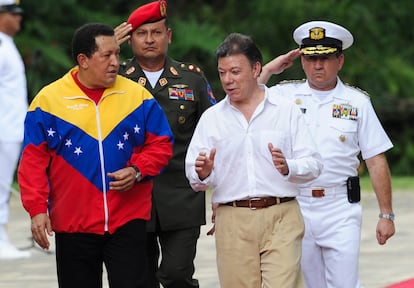
The negotiations required major international support. The United States, Cuba, Venezuela and other powers — each with very different interests — ended up backing the same objective. One of the most delicate moves was securing Hugo Chávez’s cooperation. As defense minister, Santos had been locked in a bitter feud with the then Venezuelan president, who maintained close ties to the FARC and provided safe haven to its leaders on Venezuelan soil. It was precisely for that reason that Santos concluded Chávez was indispensable to achieving peace. The challenge was to turn someone who had been part of the problem into part of the solution.
“Chávez and I needed each other. He was absolutely fundamental and he was also someone I had really fought with. So, I had to build a bridge,” he recalls.
The reconciliation began in 2010, at Quinta de San Pedro Alejandrino, a hacienda in the Colombian port city of Santa Marta. That’s where the two presidents mended their strained relations. Juan Manuel Santos then began asking Chávez to use his close ties with the guerrillas to facilitate dialogue.
“He didn’t contradict me. In fact, he used [his connections]. Almost implicitly, he was telling me: ‘Yes, I have very good contacts with them, I can help.’ And he did help.” Thus, Venezuelan cooperation became an important element of the secret talks that preceded the negotiations in Havana, Cuba. The former enemy had ended up becoming an ally in achieving the most important objective of the Santos presidency.
·
Santos wasn’t always a man of peace. Or, rather, for a long time, he didn’t understand that peace required renouncing the use of force. As minister of defense, he transformed Colombia’s intelligence services, modified his country’s military strategy, and strengthened cooperation with the United States and the United Kingdom. His objective went beyond weakening the guerrillas: he was convinced that the use of force would lead the FARC commanders to realize that their survival and future depended more on an agreement, rather than on continuing the war. “We had to get through to them, and we began to do so.”
Today, he recalls that the first commander to fall after that change in strategy was Tomás Medina Caracas (alias Negro Acacio), who controlled drug and arms trafficking in eastern Colombia. Many others followed, like Raúl Reyes, who was killed during a Colombian military operation on Ecuadorian territory.
When Santos was president — “I was elected because I had been the minister of defense,” he acknowledges — Jorge Briceño Suárez (alias Mono Joyjoy) and Alfonso Cano (the top guerrilla leader at the time) were killed just as the peace process was beginning. That was one of the most decisive actions taken by Santos. According to his interpretation of events, the war allowed for a shift in the balance of power, making negotiation an attractive option for the state’s enemies: “The person who hit the FARC the hardest in its entire history — and the commanders themselves say so — was me, both as minister of defense and as president.”
In reality, however, the story is more unsettling than a string of military successes. Colombia’s security policy has long been riddled with serious human rights violations, especially during Uribe’s presidency. For instance, there was the so-called “false positives” scandal — the murders of civilians, who were presented as guerrillas killed in combat.
Santos, who was serving as minister of defense when the scandal broke, apologized. And he has always distanced himself from those events, which still haunt Uribe. He insists that he spearheaded a doctrinal shift to strengthen respect for human rights and rebuild trust with communities. And he maintains that he learned something that ultimately proved to be essential: legitimacy can be just as important as military superiority.
The first two interviews with EL PAÍS for this report took place before Abelardo de la Espriella won the presidential elections back in June. The third took place the day after his electoral victory. And, finally, the last was conducted after De la Espriella had been sworn in as the new president of Colombia.
A few days before that fourth conversation, De la Espriella celebrated a military operation. It concluded with him posing alongside the bodies of the criminals, which were wrapped in sheets on the ground.
— What did you think when you saw the sitting president walking around and displaying corpses?
— It saddened me greatly because the way we won the war — in the sense of bringing the FARC to the negotiating table — was precisely by doing the opposite: respecting the dignity of the guerrillas. The legitimacy of a state and its military forces is their greatest asset. If you lose that legitimacy, you lose respect. You can’t do what your enemies do. The state must be above that. I think that it’s very sad and counterproductive.”
Santos then recalls the operation launched against Alfonso Cano, which took place shortly after the peace process began: “I gave instructions to the brigade commander in charge of the operation: ‘Try to capture him, not kill him.’ I even thought that the impact of Cano’s capture — like that of Abimael Guzmán [the Shining Path leader, now deceased, who was arrested and imprisoned in Peru back in 1992] — could be very positive for peace. I knew it would be very difficult to capture him and that he wouldn’t give up. And what happened, happened. But it’s not true what they say, that he was murdered in cold blood. He was hiding; it was nighttime. He ran out and a soldier shouted [at him to identify himself], but he didn’t respond, so he was killed.”
·
Santos has never hidden the fact that his approach to politics is highly calculated. “I love poker,” he admits with a smile, referring to one of the most frequent criticisms leveled against him: his willingness to take political gambles. “I like to take risks, but risks to win, not risks to lose,” he clarifies, when he recalls why he made the decision that ultimately defined not only his presidency, but also his entire career.
Peace was the riskiest gamble of his time in politics. And it wasn’t an improvisation or a sudden conversion. “I had this idea of peace in my head,” he says, with a gesture suggesting it had been a long time coming. For decades, he had built up experiences that led him to believe that Colombia could never reach its full potential while trapped in a war.
Long before becoming president, Santos had understood that goodwill alone wasn’t enough to achieve peace. It was necessary to learn how to negotiate. His approach to the country’s internal conflict was driven by both intellectual curiosity and an obsession with methodology. Years earlier, he had been a student of Roger Fisher, a Harvard professor and one of the world’s leading experts in conflict resolution. Santos consulted Fisher when he became interested in the reconciliation experiences of other countries. And it was his former professor who put him in touch with Adam Kahane, a Canadian expert who had participated in dialogue initiatives during the South African transition from apartheid to democracy in the early 1990s.
Santos invited him to Colombia in 1996. Kahane — who was also working on other international conflicts at the time — accepted, but on one condition: that Santos bring together people from truly opposing sides. The former president began calling guerrilla leaders, representatives of paramilitary groups, members of the government, opposition figures, business leaders and rural organizations. A dialogue, as well as scenario planning, emerged from that effort. The initiative — known as Destino Colombia (“Destination Colombia”) — sought something that seemed impossible in a country riddled with violence: that, together, the protagonists of the conflict could imagine a different future. The negotiation of an agreement still wasn’t in the works, but the parties were at least learning to listen to one another. They recognized that there could be another destiny besides war.
Santos has also learned from other peace and reconciliation processes. He especially remembers a conversation with Nelson Mandela in South Africa. He was impressed to see how victims and perpetrators met in public forums to discuss the crimes of apartheid. Mandela explained the meaning of that exercise and warned Santos that Colombia could never truly take off until it resolved its armed conflict.
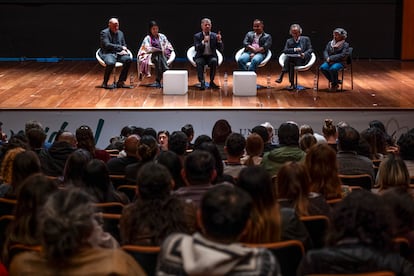
That conversation marked him deeply. Decades later, Santos still invokes Mandela to defend a seemingly simple idea: negotiation requires recognizing the adversary, listening to their concerns and accepting that no one has a monopoly on the truth. But his interest didn’t stop at the moral teachings of great leaders. When the time came to negotiate with the FARC, he also turned to William Ury, a disciple of Fisher and another of Harvard’s leading figures in negotiation theory. And he surrounded himself with specialists who had participated in the peace processes in Northern Ireland (Jonathan Powell), the Middle East (Shlomo Ben Ami) and Central America (Joaquín Villalobos), among others.
The Colombian peace process had something of a laboratory feel to it: a combination of military experience, political intuition and negotiation techniques, honed over decades. “They were my advisers — not the team’s advisers. They were immensely helpful in difficult times. Everything they told me made sense and was very useful,” Santos recalls. He frequently met with them to discuss how the talks were going: “They were a dream team.”
At one point, when he was still hesitant about the risks he was willing to take, former Israeli minister Shlomo Ben-Ami posed the following question to him: “I know you’re facing this dilemma, but consider this: Stand in front of your grave, look back, and ask yourself this question: ‘If I take the risk of making peace and succeed… how many lives will I have saved?’ If you do not [take the risk], will you go to your grave with a clear conscience?”
Santos concludes: “That argument was very powerful in finally convincing me to do what I had to do.”
·
On September 24, 2015, Santos and Rodrigo Londoño met face to face for the first time. In public, Cuba’s Raúl Castro took each of their hands and clasped them together for a handshake. When they met, Santos admits, there was a special connection. He recounts that, during the meeting, he was calm: “I’m very level-headed. I wasn’t nervous, and I wanted to put him at ease.”
The FARC leader confessed that he was sick, that he had dengue fever. “That meeting impressed me a lot, because I saw that he was willing and sincere. We talked about the difficulties that he was going to have with his own people and I, with mine.” The then-president told him: “Listen, you and I have been trying to kill each other for 35 years. Now, let’s commit to getting in the same boat, rowing in the same direction and not stopping until we reach our destination.”
When asked if he thinks that this is what has happened, Santos replies: “Yes, I have to admit that he’s kept rowing. From back then — when I met him — all the way until now, he’s grown as a human being, I admire him even more.”
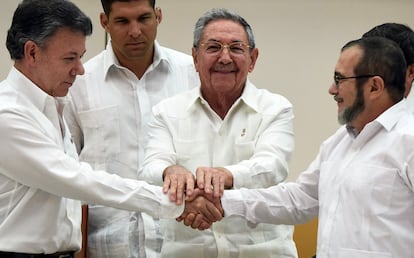
The Final Agreement, signed in 2016, ended the conflict with the FARC. Thousands of combatants laid down their weapons and began their reintegration into civilian life. However, the signing didn’t end all the violence in the country, nor did it resolve the problems that had fueled the conflict.
Santos distinguishes between the end of the war and the violence that still permeates many parts of Colombia today. For the former president, the current violence is caused by gangs vying for territory. The state has left gaps in security by failing to fulfill the security and rural development commitments outlined in the agreement.
— Was this the peace you envisioned?
— With the FARC, yes. As for the country, no. 2017 and 2018 were the most peaceful years we’ve experienced in 100 years, but that peace was reversed. That vacuum [left by the demobilized guerrillas] was left to chance. And criminal gangs began to fill it. The violence in Colombia today is similar to what the entire continent is experiencing. I never imagined this would happen, but it has occurred precisely because of the non-implementation of the agreement. There’s still time if we manage to gain control of the territory. The state must be present. Implementing the peace agreement is the best security policy for this government — not [Trump’s] Shield of the Americas.”
·
Santos speaks of moderation as if it’s a political cause that needs rescuing. “I’m not willing to fuel divisions or aggression under any circumstances; I believe that makes democracy unviable. I believe in finding the best of both the left and the right and putting it to work.”
— Being a moderate now is somewhat like being a rebel…
— The decline of democracies around the world is due to the loss of that moderation. If that’s being a rebel, then I’m a rebel.
This statement aptly expresses his diagnosis of an era in which, according to him, confrontation offers greater electoral benefits than negotiation. “The effect of social media in fueling aggressive language has solidified the notion that, politically, we’re more polarized than before. The more hateful the speech, the more traction it gets.”
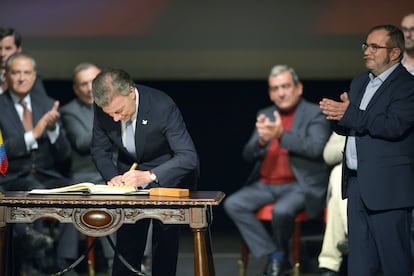
Throughout his life, Santos has been a tough, competitive politician, convinced of his decisions. He hasn’t always shied away from confrontation. And although he acknowledges his mistakes, he shows great reluctance to question his presidency.
— Did you ever think you were making a mistake?
— Many times. You never have the absolute truth. Constant doubt is necessary to fuel perseverance. It helps you stay on track.
·
Santos frequently recalls that, when he began exploring negotiations with the FARC, he encountered opposition even among close associates. Some warned him that it could destroy his career and hand his enemies a political victory.
The outcome wasn’t what some had imagined, either. The signing of the agreement didn’t produce immediate reconciliation, nor did it end the disputes or transform his adversaries into allies. The peace agreement, however, did alter Colombian political life. The former president believes that one of its less-appreciated effects was helping to remove the stigma that had been carried by segments of the left for decades, as they were frequently associated with the armed insurgency. “The stigma attached to the left was lifted, and it gradually established itself as a legitimate movement, back when it was said that leftist movements were the political arms of the FARC,” the former president notes.
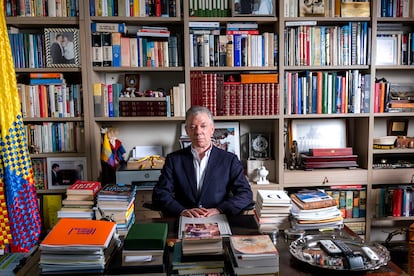
Santos now observes this process through a global lens. The cooperation between the United States, Cuba and Venezuela that helped forge the agreement seems difficult to replicate in a fragmented world. Multilateral institutions face new tensions. And, once again, the foreign policy of the major powers is marked by strategic competition.
The former president reflects on some of the current global conflicts. Regarding the possibility of the war between Russia and Ukraine coming to an end, he refers to the Colombian experience: “Every negotiated [end to a] conflict has to consider where the line is drawn between justice and peace. There can be no peace if Russia keeps everything it wants, nor if Ukraine refuses to compromise. There always has to be a sacrifice on both sides.”
For Santos, in a world where “force prevails over law” — specifically regarding the case of Venezuela and the transition after the January 3 operation that led to Nicolás Maduro’s arrest — he argues that “a true democracy cannot be imposed from the outside; otherwise, it won’t be a lasting democracy.”
For decades, the Colombian war seemed impossible to end. Many tried to negotiate and failed. Santos could also have failed. He lost the referendum, won the Nobel Peace Prize, signed the peace agreement and spent the following years defending it. His victory was incomplete and the consequences of the agreement are still being debated. But thousands of former combatants laid down their arms. A seemingly endless war came to an end. And, 10 years later, Santos is still rowing that imaginary boat with Timochenko. He knows the journey was much longer than expected, that some abandoned their commitment, and that others never wanted to get on board in the first place.
The Doomsday Clock keeps ticking. Juan Manuel Santos watches its hands with the concern of someone who knows the consequences of violence, and the conviction of someone who once succeeded in bringing it to an end. “I believe in the law of the pendulum; I believe people will realize that what’s happening, in the long run, could be fatal. It’s simply a matter of sitting down and talking.”
Sign up for our weekly newsletter to get more English-language news coverage from EL PAÍS USA Edition.

Donald Trump
Narges Mohammadi, 2023 Nobel Peace Prize Winner: ‘Iranian Society No Longer Tolerates The Islamic Republic’

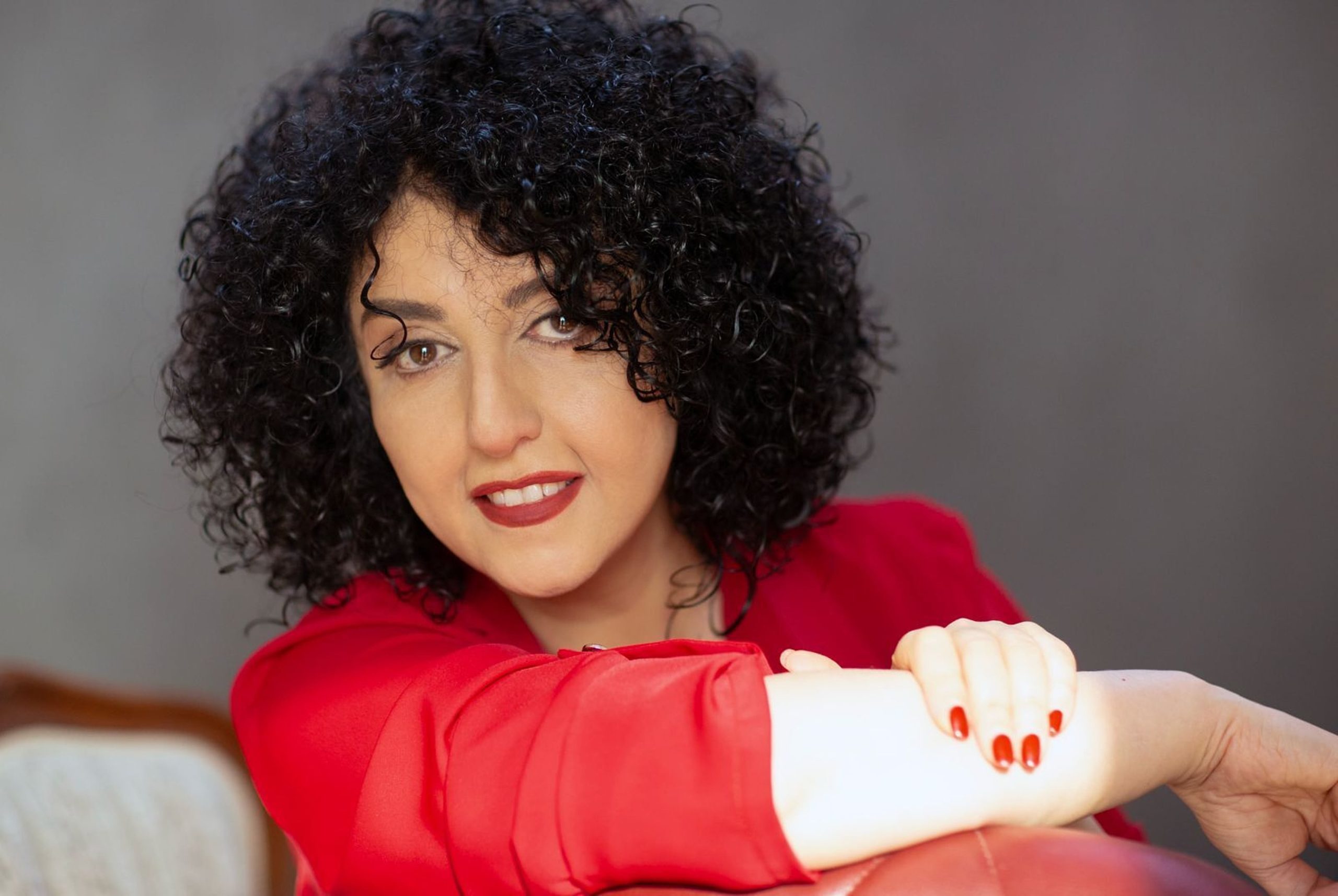
A statue of Justice presides, as if making a statement of principle, over the green room in Tehran where Narges Mohammadi, 54, appears for a video call with this newspaper. It is an act of courage in itself, given that the activist, who was awarded the 2023 Nobel Peace Prize for her struggle for human rights and women’s rights in Iran, still faces a prison sentence of at least 18 years.
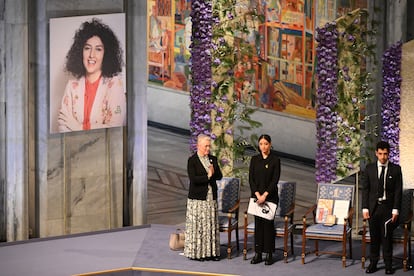
Mohammadi’s freedom is only a reprieve, a suspension of her sentence granted in May after she suffered two heart attacks in prison. The activist has been arrested 14 times and tried on 10 occasions. In total, she has been sentenced to 44 years in prison and 154 lashes, and has spent 161 days in solitary confinement. She has paid another price as well: she has not embraced her 19-year-old twins, Ali and Kiana, since 2015, when they went into exile in Paris with their father.
Mohammadi recently published a memoir she wrote while in prison. The book, A Woman Never Stops Fighting: My Struggle for Freedom, Democracy and Human Rights in Iran, is a portrait of a woman who has spent decades going in and out of prison for refusing to give up her freedom.
Question. Your health scare led many to fear for your life. Aren’t you worried that giving this interview could send you back to prison?
Answer. During my last detention in Mashhad [in northeast Iran, on December 12, 2025], I suffered very serious injuries. I was hit repeatedly in the head and spent two months in solitary confinement. I was then transferred to another prison in Zanjan, where I received no medical care despite severe lung and heart problems. After my sentence was suspended, I was hospitalized in three provinces of Iran, and I remain under treatment. When I began writing this book in Evin [a Tehran prison notorious for holding political prisoners, from which Mohammadi secretly smuggled out her manuscript], I already knew it would have consequences for me, but I saw it as a duty.
Q. The Nobel Peace Prize was awarded to you while you were in that prison. What did it change for you?
A. Contrary to the common belief that the Nobel would make life easier for me in prison, the reality was the opposite. The pressure on me and my family intensified in different ways. The prison director himself told me that until I received the Nobel, the decision to provide me with the urgent medical care I needed was partly in his hands. After the prize was awarded, decisions such as taking me to the hospital were made by much higher state authorities. Treatment became draconian, and every statement or protest I joined while in prison brought new convictions [Mohammadi received several additional sentences while already serving time, including one of seven and a half years in prison].
Q. In your book, you describe solitary confinement as a tool of torture. In your case, that isolation led you to speak to the walls and the door of your cell.
A. Solitary confinement is one of the Islamic Republic’s main instruments of torture, and its purpose is to break a prisoner’s will so that they confess whatever they are being pressured to confess. That is the result of keeping a human being isolated for long periods, with no information from the outside world, no contact from their family, and no exposure to sunlight, which produces spiritual and psychological disintegration. Many prisoners confess while in isolation, a punishment sometimes accompanied by physical torture. Courts then hand down death sentences based on those coerced confessions. Hangings in Iran have increased greatly in recent times, and that makes clear the consequences of isolation. This form of imprisonment is the mother of executions in Iran.
Q. How does the Islamic Republic use the death penalty?
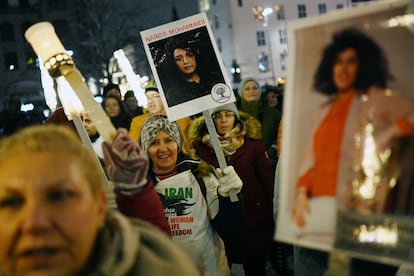
A. The death penalty is a wound in Iranian society that has lasted 47 years, since the early days of the Islamic Republic. You will know about the executions of the 1980s, but you may see them only as numbers [Amnesty International estimates that, in the summer of 1988 alone, around 4,500 people — many teenagers and leftist activists — were executed in Iran]. For Iranian society, that wound has never healed and continues to bleed with each new hanging. An execution is not only the killing of a human being, but a punishment for an entire society. Lately, Iranians wake up every morning to news of another hanging of a person who was often tried behind closed doors, without a lawyer and on ambiguous charges. Executions in Iran represent the slow death of our society.
Q. Some people are hanged in public…
A. Authoritarian political systems use any tool to oppress their own people. Do you think that such regimes are unaware of how inhuman such an act is? The reason is that they seek to terrorize a society that no longer tolerates the Islamic Republic. That political system therefore uses all forms of repression at its disposal, including executions and, in their most terrifying form, public executions. Each time social movements have organized protests and voiced their demands, instead of addressing those demands, the response has been repression, prison and executions.
Q. You attribute change in Iran to social movements.
A. Iranian society is one of the most dynamic in the world. In the last two decades, there have been women’s movements and movements of young people and students that have played a decisive role in creating social awareness. Those movements aspire to secure fundamental rights like those you enjoy: freedom, justice, democracy, equality and much more. And Iranian society has paid a very high price. Workers, young people, students, women and human rights and environmental activists have paid this price. The Iranian people are fighting to achieve democracy and confront tyranny and, although that path takes time, social movements have already achieved a fundamental transformation.
Q. Are you referring to the achievements of the Woman, Life, Freedom movement, sparked by the death of young Mahsa Amini in a police station in 2022 after being detained for wearing her veil improperly? Many Iranian women no longer wear the hijab.
A. That achievement by a movement led by Iranian women would have required decades of effort under different circumstances. However, with an inclusive social movement, we achieved that advance in far less time, though at a very high price because the repression was severe. That progress, which the regime has not been able to reverse, is one of the things that allow us to imagine a democratic future. The veil law has not been abolished, but that movement has succeeded in establishing a right. That is why the authorities want to destroy it.
Q. Your book praises the role of feminism in Iran.
A. The role of women in transforming Iranian society has been decisive throughout the country’s history, but especially in the last 50 years. Who led the first mass protest march right after the founding of the Islamic Republic, when Iranian women defied the system because they were being forced to wear the hijab? When Iranian women have resisted the compulsory use of the veil, what they have challenged is the domination of an authoritarian political system that wants to force women to wear the hijab to consolidate its control over that half of the population.
Q. What is the significance of this civil disobedience against the compulsory use of the hijab?
A. It represents a challenge to domination, tyranny and the usurpation of power. Women’s resistance to a theocratic autocracy should not be confined to the veil [as an item of clothing]. We are facing a strategic issue that is not limited to a religious matter or a women-only issue. It is a matter of deep political significance.
Q. What is your view of the war the United States and Israel have launched against Iran?
A. I experienced the Iran-Iraq war [1980–1988], as a child. It lasted eight years, and our country suffered enormous losses from which it has not yet recovered. The consequence of that war was also that no one listened to the voices of the thousands of people who were executed in Iran. The human rights and the rights of the Iranian people were forgotten. That bitter experience makes my hatred of wars grow every day.
Q. Has the war radicalized the regime?
A. The Islamic Republic has become more repressive under the shadow of war. Pressure from security agencies against civil, political, social and cultural activists, as well as against protesters, has increased. In the climate of insecurity that war creates, protests against human rights violations, executions, arrests and imprisonments cannot develop. Under these circumstances, social movements have been weakened.
Q. In your book, you denounce how the Islamic Republic tried to blackmail you by using your children. Do female activists suffer this kind of pressure more than their male counterparts?
A. Many activist parents who are imprisoned also suffer that pressure, but I believe what mothers endure is worse and reflects the regime’s discrimination against women. Essentially, we are dealing with a misogynistic regime whose nature is hostile to women, and that misogyny appears in every sphere.
Q. Iranian authorities have prevented you from visiting your children in Paris. Do you hope to see them again?
A. We must never lose hope, but that does not mean ignoring reality or suffering; it means continuing the struggle and not surrendering. One way or another, that struggle will bear fruit, and I hold onto the hope of seeing my children again one day. I don’t know when, but that moment will come.
Sign up for our weekly newsletter to get more English-language news coverage from EL PAÍS USA Edition

FIA confirm Max Verstappen hit with 30-place grid penalty ahead of Brazilian Grand Prix
Burglar in Spain drinks himself to sleep in bar raid gone wrong

Burglar In Spain Drinks Himself To Sleep In Bar Raid Gone Wrong


-
DGT3 weeks ago
Viral video in Spain sparks fury over drivers who ‘have no idea how to drive’
-
Automated supermarket4 weeks ago
Spain’s 24-hour shop with no tills expands to Barcelona Airport
-

 Uncategorized4 weeks ago
Williams F1 driver caught up in four-car pit lane pileup
-
News4 weeks ago
Hundreds evacuated as huge fire erupts on Spain high-speed train route
-
Council tax (IBI)3 weeks ago
Barcelona plans 150% property tax increase on tourist flats ahead of 2028 ban
-
Keeping cats and dogs outside3 weeks ago
Spain’s pet owners face fines of up to €200,000 for animal welfare offences
-
airports3 weeks ago
Travelling between Spain and Italy? The extra border checks could soon end
-
Age Concern Marbella - San Pedro2 weeks ago
Halloween lunch sells out as 51 join Marbella get-together