Connect with us

%

Parents Buying Halloween Makeup In Spain Should Check For This Mark First

Published

on

parents-buying-halloween-makeup-in-spain-should-check-for-this-mark-first

Parents are being urged to check the label before the face paint and fake blood come out. Credit: Luis Louro / Shutterstock

Parents painting their children’s faces for Saturday’s Halloween parties may be reaching for fake blood without realising much of it isn’t meant for anyone under 14. Spain’s consumer watchdog OCU has reissued its yearly advice, with some less obvious traps in costumes, nail polish and novelty contact lenses.

Why fake blood isn’t meant for under-14s

It may be the quickest way to turn a child into a zombie without a deadly man-eating virus,  but fake blood isn’t designed for them. Spain’s consumer watchdog OCU said the products aren’t intended for anyone under 14, with some labelled for adults only, and that they can contain ingredients that are toxic if swallowed by accident.

However, OCU says that swallowing isn’t the only worry, as the same ingredients can also cause allergic reactions or skin irritation. The watchdog said the labels it checked listed preservatives such as parabens (chemicals that stop a product going off) alongside BHT, an antioxidant it says is questioned as a hormone disruptor. 

So fake blood should stay away from a child’s eyes, lips, mouth, nose and ears. Any left over from last year’s party should go in the bin too, as OCU said some products last only about a month once opened.

Test the face paint days before the party

Children under three shouldn’t wear any makeup at all, according to OCU. For older children, the watchdog said to look for the CE mark (the European conformity label) showing it’s approved as a toy, the open-jar symbol (a little pot icon with the number of months it stays safe after opening) and a full list of ingredients. Products free of perfumes, parabens, BHA and BHT are the best bet.

Parents should also dab a small amount on the child’s skin a few days beforehand. If itching, irritation or redness appears, wash it off straight away with plenty of water. 

Nail polish and hair-colour sprays are best skipped as well, as polish contains solvents that are dangerous if a child puts their hands in their mouth, with sprays easily inhaled or swallowed while they’re being applied.

Costumes from online sellers are another weak spot 

Costumes carry the CE mark if they meet flammability requirements, however OCU said they should still be kept well away from candles, sparklers, fireplaces, stoves and lighters. 

For under-threes, the watchdog advises avoiding cords, long ribbons and pointed accessories, and checking that decorations and foam can’t come loose and become a choking risk. A new costume should come out of its plastic bag and into the wash, or be aired for at least 48 hours if it can’t be washed.

Where it was bought matters too. OCU said specialist shops are a better choice than unknown sellers on online marketplaces, where controls are more limited, and the label should name the manufacturer or importer. Fancy-dress contact lenses are another separate matter, with OCU saying they should only be bought from an optician, where a professional can explain how to use them safely.

So with Halloween falling on Saturday this year, the main checks are to look for the CE mark, the open-jar symbol and a manufacturer’s names on the packaging before anything goes near a child’s face.

%

Sardinian Screen Free Families Dinner

Published

on

sardinian-screen-free-families-dinner

Fifteen restaurants in Sardinia are encouraging families to put their phones away at mealtimes, using games and activities to help parents and children reconnect without digital distractions.

Scrolling while you eat

Smartphones are now a regular presence at many family dinners, but a new initiative in Sardinia hopes to get people talking again. Participating restaurants are inviting parents and children to put their devices aside and enjoy a meal without constantly checking screens.

The scheme, called A tavola senza schermi (‘At the table without screens’), is a one-month pilot involving 15 restaurants, who volunteered to take part, across the Italian island due to begin in early November.

Why Sardinian restaurants want families to put phones away

The initiative was launched by Sardinia’s children’s and adolescents’ ombudsman, Anna Cau, in collaboration with Fipe Confcommercio Sardegna. Its aim is to encourage face-to-face communication and address concerns about excessive screen use among children.

According to The Guardian’s report, organisers want to make it easier for families to spend mealtimes talking rather than concentrating on their devices.

Emanuele Frongia, president of Fipe Confcommercio Sardegna, has raised concerns about conversations being replaced by silence when diners focus on their phones. Children may also be given devices to keep them occupied while adults eat.

Rather than introducing a compulsory ban, the project encourages parents to lead by example and agree to put their own phones away, too.

Games and activities replace screen time

Participating restaurants will offer families a ‘Kit del Ritrovo’, or ‘Reunion Kit’, developed with input from Italy’s federation of paediatricians.

The kit includes games, drawing activities and age-appropriate ideas to keep children occupied while waiting for their food. Families will also receive information about digital exposure and advice on managing children’s and teenagers’ technology use at home.

The activities are intended to make the experience enjoyable rather than restrictive. Phones are put away during the meal, with families encouraged to agree on exceptions beforehand. Urgent calls should be taken away from the table.

Which restaurants in Sardinia are taking part?

The participating restaurants are spread across several parts of the island, including Cagliari, Nuoro, Bari Sardo, Alghero, Olbia and Porto Rotondo.

Named participants include Antica Cagliari and Pani e Casu in Cagliari, Pappas Experience in Nuoro, I Tre Mori da Mario in Bari Sardo, Risto Fever in Alghero, Ristorante Terranostra in Olbia and La Rosa dei Venti in Porto Rotondo. Other venues are located in areas including Capoterra, Ussassai and Santa Teresa Gallura.

Organisers initially planned to involve eight restaurants, but the number grew to 15 as more businesses volunteered. The trial will help assess whether the initiative could be extended.

How Sardinia’s scheme differs from Italy’s luxury phone-free restaurant

The family-focused project comes as other Italian dining venues introduce their own restrictions on mobile phones.

Yera, a restaurant at the Forestis hotel in South Tyrol, has attracted attention for its €650-per-person dining experience, which requires guests to leave their phones and cameras in lockers, as reported here in EWN. 

However, Sardinia’s initiative has a different purpose: encouraging healthier digital habits and better family interaction rather than making a phone-free meal part of an exclusive luxury experience.

Could screen-free family meals catch on?

For some parents, an hour without checking notifications may not be a big deal. For others, changing an established habit could prove more difficult. Sardinia’s trial gives families a wholesome way to try a different approach, with activities for children and guidance for parents.

Continue Reading

%

Motorhome Owners Plan New Protests In Elche

Published

on

motorhome-owners-plan-new-protests-in-elche

Motorhome parking restrictions. Credit: Tunatura / Shutterstock.com.

Motorhome owners are preparing to intensify their campaign against parking restrictions in Elche and Santa Pola following changes to Spain’s traffic regulations. Campaigners say the new rules strengthen their argument that legally parked motorhomes should not automatically be considered to be camping, with another demonstration in Elche now planned before the end of the year.

New traffic rules cover motorhome parking

Motorhome owners are preparing to step up their battle against parking restrictions in Elche and Santa Pola following changes to Spain’s traffic regulations.

The new rules, which came into force on October 1, set specific conditions for parking motorhomes and other vehicles adapted for accommodation. Owners argue the change strengthens their case that legally parked motorhomes should not automatically be treated as camping.

Under the regulations, nothing can extend beyond the vehicle; it must remain supported on its tyres, although safety chocks are permitted, and no fluids can be discharged from the living area.

Coastal parking restrictions cause controversy

The issue has caused particular controversy around coastal areas including Santa Pola’s Cabo and parking areas near Elche’s beaches, where motorhome users claim restrictions unfairly single them out.

Campaigners argue that vans and other large vehicles can use some parking areas while motorhomes face restrictions simply because they contain living accommodation.

The debate centres on the distinction between parking a vehicle and using the surrounding public space for camping activities.

Third Elche demonstration planned this year

Motorhome group Helgober is now planning a third demonstration in Elche before the end of the year, following two protests in 2025.

Organisers hope to attract drivers from across Spain and are also considering legal action against councils over restrictions they believe are unjustified.

The planned demonstration would bring the parking dispute back into the spotlight as campaigners continue to challenge the way restrictions are applied to motorhomes.

Campaigners call for action against offenders

Campaigners acknowledge problems such as illegal waste disposal and putting out furniture, but say individual offenders should be dealt with rather than imposing restrictions on all motorhome owners.

They argue that owners who comply with the rules should be able to park without automatically being treated as campers, and are preparing to continue their campaign in Elche before the end of 2026.

Sign up for personalised news

Subscribe to our Euro Weekly News alerts to get the latest stories into your inbox!

By signing up, you will create a Euro Weekly News account if you don’t already have one. Review our Privacy Policy for more information about our privacy practices.

Continue Reading

%

Torrevieja Awarded As A Transparent Council

Published

on

torrevieja-awarded-as-a-transparent-council

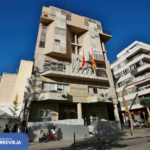
Torrevieja celebrates transparency. Credit: Ayuntamiento de Torrevieja.

Torrevieja has climbed to the top of the Valencian Community’s council transparency rankings and now sits seventh across Spain. The latest DYNTRA assessment gave the council an overall compliance score of 85.33 per cent, with particularly strong results for economic and financial transparency, urban planning and public works.

Torrevieja climbs to seventh place nationally

Torrevieja has been named the most transparent council in the Valencian Community and is now ranked seventh across Spain, according to the latest DYNTRA assessment.

The council achieved an overall compliance score of 85.33 per cent, meeting 157 of the 184 transparency indicators examined by the independent platform.

It marks a considerable climb through the rankings. Torrevieja has moved from 167th to seventh nationally and from 37th to first place within the Valencian Community.

As recently as April, the council was ranked 22nd nationally, meaning it has risen another 15 places in recent months.

Financial transparency achieves perfect score

Its strongest result came in economic and financial transparency, where it achieved 100 per cent.

Urban planning and public works scored 95 per cent, while service contracts reached 85.19 per cent.

Municipal transparency was rated at 81.82 per cent and public participation and collaboration at 76.92 per cent.

The figures show strong results across several areas examined by the assessment, although there are still categories where further improvements can be made.

Open data remains area for improvement

Open data remains an area for improvement, scoring 50 per cent.

Councillor for Innovation and Transparency Ricardo Recuero credited the overall improvement to coordination between council departments and the work of municipal employees responsible for keeping public information updated and accessible.

The council says it will now concentrate on improving its remaining indicators, particularly open data and public participation.

Residents can access council information online

Residents can view information covering budgets, accounts, public works, contracts and other council activities through Torrevieja’s Open Government Portal.

The latest ranking represents a significant improvement from Torrevieja’s previous positions, with the municipality moving from 167th to seventh place nationally while reaching first place among councils assessed in the Valencian Community.

Continue Reading

Trending

Copyright © 2017 Spanish Property & News