
ElPais
Raivis Melnis, Latvia’s Defense Minister: ‘We Are Preparing To Fight’


Raivis Melnis walks down a long corridor inside Latvia’s Ministry of Defense, located in an aging building in central Riga, the capital. He shows up all alone, a striking oddity for someone with government responsibility. Born 48 years ago in the Balvi municipality, about 20 kilometers (12 miles) from the Russian border, the Latvian army colonel has held the defense portfolio since late May. That was when several attack drones penetrated the Baltic country’s airspace without encountering any opposition. Two struck near an empty fuel depot. The crisis prompted then–prime minister Evika Silina to dismiss the defense minister and turn to Melnis.
A military adviser with deep knowledge of Ukraine; a veteran of the war in Afghanistan and trained at prestigious institutions such as King’s College London, Melnis seemed the right man, but then the prime minister fell, and with her his appointment. However, the new head of government, Andris Kulbergs, judged that there was no one better than the colonel to shield the country from the threats coming from the East.
Question. The strike by several drones in the country’s east triggered a serious government crisis five months ago. Is Latvia better protected now?
Answer. They no longer pose a major challenge. They remain a challenge, but one that we can manage. When I took up the position, we shot down the first one and then the second one. I set a deadline to build new military capabilities to bring to the border to intercept drones, and that has been done. By October we already had additional radar systems, drone interceptors and the corresponding software. We have developed quite capable systems along the border with Russia and Belarus. It ensures we can detect and intercept drones with equipment manufactured in Latvia. I cannot say the problem is completely solved. More will come; we will use our systems and we will have NATO’s support.
Q. But defending the eastern flank is more than countering drones.
A. The eastern flank belongs to NATO and the European Union; it is not only about Latvia but about Europe and the Alliance as a whole. For that reason I am grateful to all NATO countries that have deployed troops to Latvia, Estonia, Lithuania, Finland and Poland. At present we are focusing more on hybrid activities and threats. Drones are a key factor, but another big challenge is illegal immigration. We are taking action and supporting our border guards and have deployed military units.
Q. Do you have enough resources to face that hybrid war?
A. We must strike a balance: on one hand, deploy our forces to support the Interior Ministry and our security services in the fight against hybrid activities carried out by aggressive states, both Russia and Belarus; and on the other, keep our army prepared to fight in the event of war. Our resources are limited, but we must understand that the principal challenge is hybrid activity.
Q. Estonia has moved soldiers close to the Russian border — has Latvia done the same?
A. We have kept our forces near the border for years, with units permanently deployed, countering illegal immigration. We regularly conduct exercises with other NATO countries, such as Spain [with about 600 troops at the Adazi and Lielvarde bases]. That brings deterrence, reassurance and a clear message: our friends are here not only to train, but also to fight if necessary. It is a firm message to Russia and Belarus.
Q. You served as Latvia’s military liaison in Ukraine. Has your perception of the risk of Russian aggression changed in recent months?
A. Any possible attack against Latvia or our neighbors would be an attack against Europe, against NATO — which would mean a forceful response from the Alliance and EU countries. That is what our aggressive neighbor must take into account. It would be a strategic mistake for Russia to decide to attack a NATO country. For now, I do not see an imminent conventional threat. Russia is challenging us with other types of activities: drones, cyberattacks, illegal immigration, provocations, sabotage, propaganda. It has stepped up these activities; we are seeing more incidents of this kind.
What Russia seeks is to break our cohesion, our will to support Ukraine and to support one another. I trust Russia will not succeed, because we have shown strong unity. We are preparing in case we need to fight. I am not necessarily speaking of an immediate future, but there is a threat across the border and we need to work together.
Q. That perception is different in Spain.
A. Undoubtedly it is different, because we live next to the threat and you live somewhat farther away. However, I disagree that everyone perceives the threat differently, because Spanish soldiers see themselves as part of the country that lives with the threat. You do not live right on the border, but that is why we cooperate, hold dialogue, convey those messages and demonstrate that the threat exists and that we must be prepared.

Q. Some, including leaders of neighboring European countries, believe Russian aggression has already begun.
A. Do hybrid threats respect borders? No. Cyberspace? It has no borders. Drones? They can be launched and operated remotely. Incidents that happened in Leipzig, Germany, or in the United Kingdom can occur anywhere in Europe. We must cooperate to fight them. In conventional terms, we are closer, but there is no imminent threat. Russia has stalled in Ukraine. It has not achieved its objectives. The Ukrainians are counterattacking and managing to push Russian forces out of some areas. They are conducting successful offensive operations thanks to their fighting spirit. It is our duty to support them, because they are also fighting our battle. Russia intensifies these hybrid activities to erode our will to support Ukraine and to divert our attention and resources toward our own internal problems.
Q. The president of the United States, Donald Trump, has suggested they might establish a permanent base in Lithuania. What would that mean for the Baltic states and the defense of the eastern flank?
A. The United States is a strategic partner. They deploy forces in other regions to guarantee security, but they are also present in the Baltic region, providing capabilities, deterrence and the means for us to train together, integrate and, if necessary, fight. They have been in the region, they are there now and I am convinced they will remain. That is the message: deterrence; the message that the United States stands with us as a strategic partner, a key global actor and a solid NATO member that guarantees security. But, of course, EU countries and other NATO members must invest in our own capabilities; we have to allocate sufficient resources and funding to develop them rather than always expect the United States to come take care of everything.
Sign up for our weekly newsletter to get more English-language news coverage from EL PAÍS USA Edition













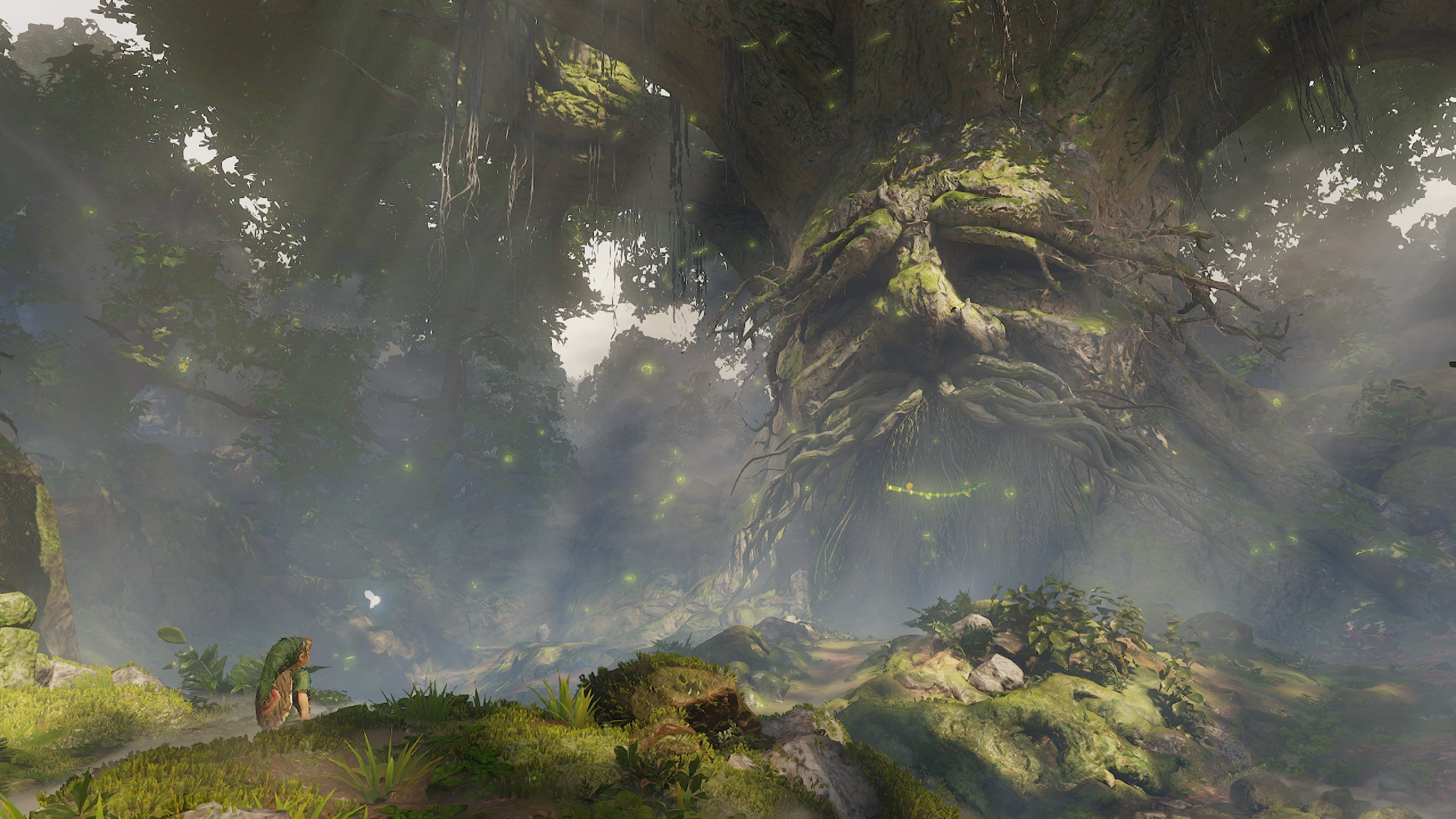
“Wake up, Link!” High in his treehouse, a pointy-eared boy named Link is roused by the call of a fairy. He is the only resident of the Kokiri Forest without a winged companion, until Navi bursts into his dreams to tell him that his destiny lies far beyond that sheltered corner of the woods. Thus begins a journey that will lead him to a princess, pit him against a threat determined to plunge the kingdom of Hyrule into darkness and, seven years later, task him with saving a world that has fallen into the clutches of evil.
This is The Legend of Zelda: Ocarina of Time, the game that revolutionized the medium in 1998 and remains, according to Metacritic, the highest-rated video game ever made. On November 14, Nintendo will release a remake that has become, since its surprise unveiling in June, the year’s most anticipated title, with the possible exception of Grand Theft Auto (GTA) VI.
EL PAÍS has had the chance to play it: beyond the game itself, the new Ocarina serves as a perfect example of an industry that must periodically revisit and update its masterpieces in order to preserve its legacy and introduce them to new audiences.
Salva Fernández, a video game journalist and the author of Zelda, detrás de la leyenda (Zelda: Behind the Legend), believes Ocarina of Time remains a landmark work in video game history. “Yes, I think it’s the greatest game ever made, because no other game has had that impact,” he says.
Comparing it with today’s titles, he cautions, is difficult given how much the technology has evolved. “But at the time it marked a before and after: it’s the first great 3D adventure and it revolutionized interaction with a 3D environment. It also introduced mechanics that would become industry standards for the medium, such as the use of music [through the ocarina] and lock-on targeting.” “It’s the bible of 3D games,” he concludes.
The remake, which EL PAÍS was able to play at Nintendo’s European headquarters in Frankfurt a few weeks ago, is, quite simply, the fulfillment of every dream held by players who completed the game back in that now-distant year of 1998. The world, the gameplay mechanics and the visuals have all been overhauled, yet it still preserves the unique essence of the original.
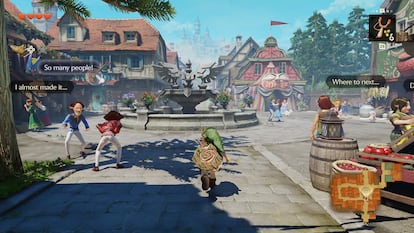
Ocarina of Time’s return comes at a particularly auspicious moment for the franchise, which is enjoying one of the most popular periods in its history. As The Legend of Zelda celebrates its 40th anniversary and prepares for a feature-film adaptation, its latest installments have posted extraordinary sales figures. Breath of the Wild (2017) has sold around 40 million copies, while Tears of the Kingdom (2023) has reached roughly 30 million. The renewed interest in the series has created an opportunity to introduce the classic to a new generation of players.
“It’s the best time to bring in new players,” Fernández says, calling it a smart move by Nintendo: “It’s like The Godfather or Citizen Kane — everyone has heard of it, even those who never played it.” He also notes that Shigeru Miyamoto, the creator of Mario and Zelda, has long defended remakes as a way of introducing classic games to new audiences.
No shame in remakes
Unlike in film, where remakes are often associated with creative bankruptcy or commercial opportunism, in the video game industry, they tend to serve a different purpose: introducing new generations to landmark titles whose technology, controls or design have become dated.
In recent years, a long list of classics has reached younger players through remakes. Among the most successful are Resident Evil 2 (2019), Final Fantasy VII Remake (2020), Mafia: Definitive Edition (2020), Dead Space (2023), Resident Evil 4 (2023), System Shock (2023), Super Mario RPG (2023), Silent Hill 2 (2024), Until Dawn (2024) and Dragon Quest I & II HD-2D Remake (2025).
Jaume Esteve, a communications scholar and video game expert, distinguishes between two ways of approaching remakes: those that merely reproduce the original, like a photocopy, and those that use it as a starting point for introducing changes. Esteve understands the argument that remakes can help bring classic games to new audiences, though he admits he is saddened by the idea “that new generations might not be capable of enjoying works from 30 years ago.”
He acknowledges that some titles have aged in technical and visual terms, but maintains that they remain perfectly enjoyable. “When you’re a pioneer, you blaze a trail, but you also pay a price, and many gameplay mechanics or visual elements become outdated,” he says.
Esteve also points to the significance of the industry’s transition from 2D to 3D, a technological and aesthetic frontier that conditions how new generations perceive older video games. Three-dimensional graphics are particularly important because they “allow a work’s visual presentation to be updated and brought into the present without necessarily abandoning its legacy.”
The challenge, he argues, is to find “the balance between modernizing a game and preserving what made it a benchmark.”
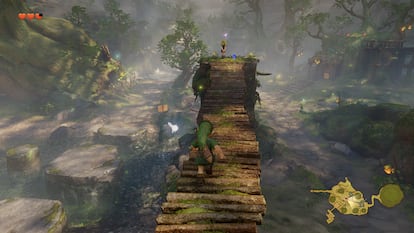
With remakes, he argues, there is always a risk that “too much tinkering with the original can end up distorting its nature.” He supports updating classic games, but “only as long as their essence is preserved.”
He is not the only one to sound a note of caution. “Remakes are a double-edged sword,” warns Salva Fernández. “There are two main approaches: either you stay very faithful to the original, or you completely reimagine it, as happened with Final Fantasy VII Remake. If you take the conservative route, the result may feel underwhelming; if you reimagine it, you can alter its magic.”
In the shadow of ‘Grand Theft Auto VI’
The release calendar is working in Nintendo’s favor, too. The arrival of Grand Theft Auto VI on November 19 has pushed a number of other major releases out of the month, leaving an unusual gap in the market. Fernández believes the Japanese company has no need to alter its strategy to compete with GTA.
“Nintendo does its own thing, and it’s doing very well,” he says. “It won’t change its strategy because of other games.”
What’s more, GTA VI will not be released on the console that hosts Zelda, the Switch 2, meaning the two titles will not be competing on the same platform.
“No one with a Switch 2 will skip buying the Zelda for GTA,” Fernández says. “Everyone else has cleared out of November, and there is a black hole. If anyone can take advantage of that month, it’s Zelda.”
In the popular imagination, Zelda and GTA may seem like polar opposites, but in reality they have more in common than it might appear. Fernández points to a remark by Dan Houser, the legendary co-creator of the Grand Theft Auto series, about the influence of Nintendo’s classics: “Anyone making 3D games who claims they haven’t borrowed something from Mario or Zelda is lying.”
Thirty years on, the question is no longer whether Ocarina of Time can once again be considered a masterpiece, but whether a new generation is ready to discover why it became one in the first place.
Sign up for our weekly newsletter to get more English-language news coverage from EL PAÍS USA Edition
ElPais
Medellín Begins Demolition Of A House Owned By Pablo Escobar Where Alleged ‘satanic Rituals’ Took Place

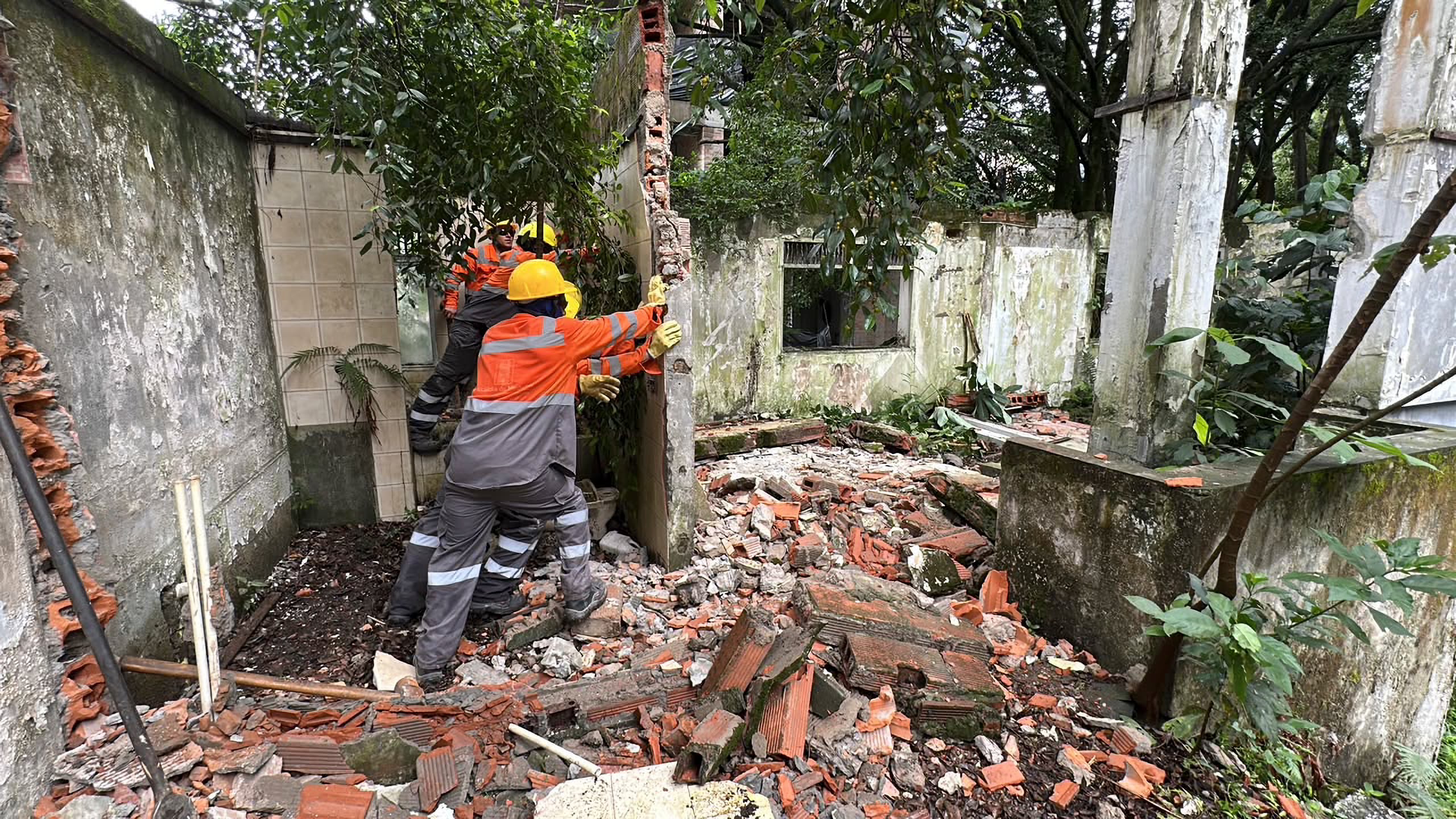
Medellín city hall has begun demolishing a house that once belonged to drug lord Pablo Escobar in the Diamante 2 neighborhood of the El Poblado district in the capital of Antioquia. The property, one of the many owned by the head of the Medellín Cartel, who was killed in 1993, had been abandoned, although authorities say it was being used to hold satanic rituals, for sexual activity, and for drug use. It had also become a security problem in one of the city’s most tourist-heavy neighborhoods. On Tuesday, the local administration began intervening on the site.
The property covers a total of 1,854 square meters and was acquired in 1979 by Escobar’s wife, Victoria Eugenia Henao. In 2004, 11 years after the criminal leader’s death in Medellín, it entered an asset-forfeiture process with the Prosecutor’s Office and, in 2018, it was transferred to the Fund for Rehabilitation, Social Investment and the Fight Against Organized Crime (FRISCO), managed by the Special Assets Society (SAE). Because the site was abandoned, it began to be used for activities that alarmed residents in that part of the city.
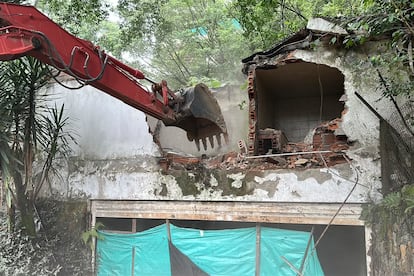
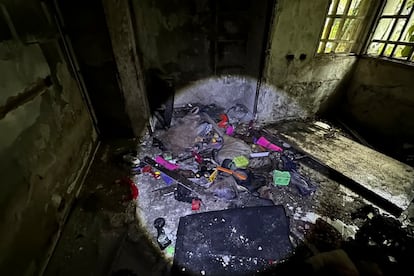
At the time of the intervention, authorities found inside the building remnants of damaged children’s toys, old shoes, used pillows, masks, a decapitated doll and pieces of wood and metal. The interior spaces of the house were for the most part eaten away by damp and filth, while the exterior areas were dominated by weeds and vegetation. On one wall there was a six-pointed star with a cross in the center, spray-painted in red. There was also a phrase, in the same color, that read: “Si lo miro, lo mato (If I look at him, I’ll kill him).” The severely degraded condition of the house and the misuse of the property led residents to repeatedly ask city authorities to intervene.
After demolition began, Medellín’s acting mayor and secretary of Security and Citizen Coexistence, Manuel Villa Mejía, said the intervention is another step by the city administration against places that recall and glorify its criminal past. “We are reclaiming the city and closing the door to any expression that seeks to turn our narcotrafficking past into an object of admiration,” he said. Villa Mejía added later: “We will not allow these places to continue serving as settings for activities that undermine the community’s peace.”
The demolition of Escobar’s house in El Poblado adds to other interventions at his properties in the city in recent years. One of the most notable was the destruction by implosion of the Mónaco building, also in El Poblado, in February 2019 during Federico Gutiérrez’s first term as mayor. That building, associated with the worst years of violence and drug-related crime in Colombia, served as Escobar’s residence in the city and was the target of an attack by the Cali Cartel in 1988. In its place the Parque Inflexión was built, in memory of the victims of narcotrafficking.
In 2023, under Mayor Daniel Quintero, the city ordered the demolition of the Pablo Escobar museum in the Loma del Indio area, which was run by Roberto Escobar, the drug lord’s brother. The intervention was ordered by a judge because the building did not have the permits required for a two-story structure. Underlying it all, however, was the city administration’s goal of eradicating so-called “narco-tours” and any form of tourism that glorifies the figure of the most notorious criminal in Colombia’s history — a case that, nonetheless, still has several unresolved issues.
Sign up for our weekly newsletter to get more English-language news coverage from EL PAÍS USA Edition


Terremoto Editorial: Isabel Allende Gana El Premio Planeta 2026 Con La Secuela De ‘La Casa De Los Espíritus’

Remaking ‘The Legend Of Zelda: Ocarina Of Time’: The Challenge Of Improving A Masterpiece

Raivis Melnis, Latvia’s Defense Minister: ‘We Are Preparing To Fight’


-

 Uncategorized2 weeks ago
F1 Bahrain Grand Prix will be live and FREE on TV this weekend
-
Blackout preparedness2 weeks ago
Brussels takes action against Spain over failure to update blackout plan
-

 Foreign demand3 weeks ago
Market Snapshot: German Market In Q2 2026
-

 Uncategorized2 weeks ago
Lewis Hamilton F1 wish could come true as stunning plans for new track revealed
-

 Housing access / crisis / affordability2 weeks ago
Radical Housing Decrees Defeated As Snap Election Talk Grows
-
Latest2 weeks ago
Spain’s Government Dealt Huge Blow As MPs Reject Housing Crisis Laws
-
EU2 weeks ago
EU nicotine crackdown sparks warning that ex-smokers could be driven back to cigarettes
-

 New Developments2 weeks ago
How To Get A Tourist Rental Licence In Andalusia (Spain) – Step-By-Step Guide 2025