Connect with us

European News

Swiss wallaby’s six-kilometre hop from Lucerne farm ends with dart from moving car

Published

on

Kids at a summer camp in Dietwil in Switzerland nearly choked on their lunch when a furry two-legged creature bounded out of the woods on Thursday. Some reckoned it was an oversized rabbit at first, but the long tail and proper leaping style soon put everyone straight. It was a wallaby, the smaller cousin of the kangaroo.

Camp staff tried tempting it with cucumber slices and lettuce leaves, yet the animal soon bounced off again. They rang Aargau cantonal police straight away. Officers checked around local farms and a regional zoo that keeps wallabies, but no one had reported anything missing. Three registered wallaby keepers operate in Aargau with eight animals between them, yet this one did not match any of those.

How a small hole sparked a media frenzy

Work on a water pipe had left a gap in the fence at a licensed wallaby farm in Inwil, just over the border in the canton of Lucerne. The marsupial squeezed through and covered roughly six kilometres before turning up near the youth camp. A short video of it hopping along the forest edge quickly spread online and kept Swiss journalists busy for a couple of days.

By Friday afternoon the search party, Aargau police, a vet and the owner – spotted the animal again in woodland only 300 metres from its enclosure. Christian Rapp, deputy head of the Swiss Large Animal Rescue Service, told regional broadcaster Tele M1 they managed to tranquilise it from a moving vehicle at a distance of about 17 metres. The wallaby is now safely back home.

Owner found and inquiries continue

Investigations tracked the owner to that licensed farm in Lucerne. Lucerne’s deputy cantonal veterinarian Tobias Frink confirmed checks are under way to establish exactly how the escape happened. Suitable steps could follow once the facts are clear.

This is not the first time an unusual animal has caused a stir in the area. Back in 2019 a fisherman reported what he thought was a caiman hunting ducks on Lake Hallwil. That turned out to be a large catfish with a water bird in its stomach.

Wallabies are still popular among a small number of private keepers as pets in Switzerland, though escapes like this one remind everyone how quickly things can go sideways if fencing is not perfect.

%

The Shocking Booking.com Scam Leaving Tourists With Nowhere To Stay

Published

on

the-shocking-booking.com-scam-leaving-tourists-with-nowhere-to-stay

The scale of the fraud is what makes the case extremely shocking. Photo credit: Kristi Blokhin/Shutterstock

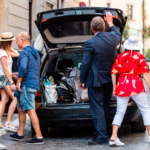
Imagine arriving in Rome after carefully planning your holiday, only to discover that the apartment you paid for does not exist, and that the apparently genuine Booking profile you trusted belonged to a completely different property. That is the nightmare facing travellers caught up in a sophisticated accommodation scam in Italy, where criminals allegedly took control of the online profile of a legitimate property in the Siena area and used it to sell bookings for a fictitious apartment in Rome.

The scam was well orchestrated as well as effective simply because the fraud did not begin with an obviously fake website or an unknown accommodation. Instead, the criminals reportedly exploited the credibility of a genuine property already listed on Booking, making the fake offer appear considerably more trustworthy to potential guests. The case has drawn attention to the increasingly sophisticated methods being used to target holidaymakers online, particularly at a time when travellers are making large numbers of bookings for summer trips.

A genuine Booking profile was allegedly hijacked

According to reports from Italian media, the criminals gained access to the Booking account of a real accommodation in the Siena area. They then used that legitimate profile to promote an apartment supposedly located in Rome. The accommodation being advertised to travellers did not actually exist, for someone searching for somewhere to stay in the Italian capital, however, there was little reason to immediately suspect that something was wrong.

The listing appeared through a recognised booking platform and was connected to an established accommodation profile. That gave the fraudulent property something many fake holiday listings struggle to obtain: credibility. The criminals were reportedly able to exploit that trust to generate a huge number of supposed reservations, with reports suggesting that the operation was handling around 200 bookings a day.

Travellers paid for an apartment that wasn’t there

The scale of the fraud is what makes the case extremely shocking. Rather than targeting one or two travellers with an isolated fake advert, the compromised account was reportedly being used on a much larger scale, potentially exposing hundreds of people to the same deception. For those who had booked, the danger was not just about losing money.

A traveller arriving in Rome without a genuine address, keys or host could suddenly find themselves in an unfamiliar city with nowhere to stay, potentially during one of the busiest periods of the tourist season. The incident also demonstrates why checking the name and appearance of a property alone is no longer necessarily enough to establish that an online accommodation is genuine.

Why the scam is particularly difficult to spot

Holiday accommodation fraud has become increasingly sophisticated, with criminals exploiting the familiarity and reputation of major booking platforms. Earlier this year, Booking.com acknowledged a cyberattack in which unauthorised third parties may have gained access to customer information associated with reservations, including names, contact details and other booking information. The company said banking information had not been compromised. 

The travel industry has also warned about a rise in fraudulent websites, phishing messages and attempts to impersonate Booking.com and accommodation providers. Security researchers reported a sharp increase in malicious websites connected to travel brands during the run-up to summer this year.  That makes the Italian case particularly worrying: the fraud relied not simply on copying Booking.com, but on exploiting a real accommodation’s existing presence on the platform.

What holidaymakers should watch for

Travellers should be particularly cautious if a supposed accommodation provider suddenly asks them to make a payment outside the normal Booking process, click an unfamiliar verification link or provide card information through email, WhatsApp or another messaging service. Booking.com has previously warned customers about attempts to impersonate the platform or individual properties, including messages claiming that a reservation will be cancelled unless payment details are confirmed.

The safest approach is to keep communications and payments within the official booking platform and to be suspicious of urgent requests for additional payment or personal information. A particularly cheap price can also be a warning sign, especially when combined with pressure to make a rapid payment.

The holiday that existed only online

The Siena case offers a particularly reminder of how much trust travellers place in booking platforms. For the people behind the fake Rome apartment, the attraction was not simply the money from individual reservations. It was the credibility attached to an existing property and a well-known platform. For the holidaymakers, meanwhile, the consequences could begin only when they arrived at their destination.

A booking confirmation can feel like the final guarantee that the difficult part of organising a holiday is over. But this particular situation proves that even an apparently legitimate online reservation can conceal something very different from what the traveller believes they have purchased. The apartment in Rome looked real on a screen, the problem was that there was nothing waiting for the guests when they arrived.

Continue Reading

%

Massive EU Airline Rule Changes: What Will Change For Bags, Seats And Delays

Published

on

massive-eu-airline-rule-changes:-what-will-change-for-bags,-seats-and-delays

New rules will change how airlines display cabin-bag fares and handle family seating and flight disruption. Credit: Peopleimages / Shutterstock

Paying extra just to sit beside a child is set to disappear on flights covered by EU law. The same overhaul changes cabin-bag pricing and makes delay claims easier, but one widely repeated luggage claim still needs unpacking.

After 13 years, the EU has settled its new flight rulebook

The final text brings an end to negotiations that began in 2013, settling some of the most frustrating parts of flying in Europe: families being charged to sit together, unclear cabin-bag prices, complicated compensation claims and return tickets being cancelled after a missed outward flight.

The European Parliament backed the overhaul by 646 votes to 12 on July 7, before the Council of the European Union granted final approval on July 13. It will cover every flight departing from Spain, regardless of where the airline is based. Flights arriving from the UK or another non-EU country will also be covered when operated by an EU-licensed airline.

Travellers cannot claim these new protections immediately. They will become applicable 12 months after the regulation enters into force, which happens 20 days after publication in the EU’s Official Journal. Until then, existing passenger-rights rules and individual airline policies continue to apply.

The changes passengers could see regarding cabin bags

Every passenger will be entitled to take one personal item into the cabin without an additional charge. The legal text defines this as an item measuring no more than 40 by 30 by 15 centimetres, or one that fits beneath the seat in front.

When the new rules are put into effect, airlines and booking websites will have to display flight fares that include a larger piece of hand baggage, such as a trolley bag, by default at the beginning of the booking process. However, they may still offer cheaper fares to people who voluntarily travel without that larger bag. The change is therefore largely about making the real price easier to compare before clicking through several booking screens. Airlines will also have to state their cabin baggage dimensions and weight restrictions clearly early-on.

If a personal item or cabin bag has to be placed in the hold because the aircraft lacks space, the airline will not be allowed to impose an additional charge. 

Children under 14 must be offered an adjacent seat free

An adult or other accompanying person travelling under the same booking as a child below the age of 14 must be offered an adjacent seat without paying extra. If neighbouring seats are no longer available, the airline must make an effort to help the pair sit together, although the text cannot guarantee that an adjacent seat will always be available on a full aircraft.

Similar protection will apply to people accompanying passengers with disabilities or reduced mobility, pregnant women and others with specified assistance needs.

The three-hour compensation threshold survives

Passengers will retain the established three-hour threshold for flight-delay compensation. Depending on the journey, payments will remain at €250 for distances up to 1,500 kilometres, €400 for longer intra-EU journeys and other flights between 1,500 and 3,500 kilometres, and €600 for remaining long journeys. The €600 payment may be reduced by half in certain long-haul cases where the passenger arrives no more than four hours late. Airlines can also refuse compensation where they prove that extraordinary circumstances directly caused the disruption and could not reasonably have been avoided.

Claiming should also become more straightforward. Airlines must send potentially eligible passengers information and instructions within 96 hours of the end of their journey. Travellers will have nine months to file a claim, after which the airline must pay or provide a substantiated refusal within 30 days.

Duty-of-care rules are also clarified, including refreshments every two hours, a meal after three hours and accommodation when an overnight stay becomes necessary. Where extraordinary circumstances caused the disruption, hotel provision can be capped at three nights.

Return flights, boarding passes and rerouting all gain protection

Airlines will no longer be able to cancel the return part of a booking or charge a penalty simply because a passenger missed the outward flight. One spelling correction or administrative name update must be provided free when requested at least 48 hours before departure. And airlines must also accept a clear, machine-readable printout of a digital boarding pass and provide a printed pass free once the passenger has checked in.

During serious disruption, an airline must offer rerouting under comparable conditions. If it fails to offer a suitable option within three hours after a passenger chooses to continue travelling, the passenger may arrange a necessary and reasonable alternative and seek reimbursement capped at 400 per cent of the original ticket price.

Passengers held on an aircraft at an EU airport must normally be allowed to disembark once a tarmac delay reaches two hours, unless safety, security, immigration or air traffic control restrictions prevent it.

For flights taken now, these additions can not yet be demanded at the airport. Publication in the Official Journal will start the countdown to their application.

Continue Reading

%

Two Firefighting Heroes Killed After Helicopters Collide Battling Greece Wildfire

Published

on

two-firefighting-heroes-killed-after-helicopters-collide-battling-greece-wildfire

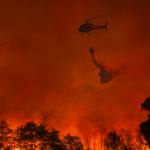
Fighting a wildfire is dangerous enough without the added threat of flying through thick smoke, extreme heat and unpredictable winds. But for two firefighting helicopter crews tackling a blaze near Athens, the danger became fatal. Two people have died and two others have been injured after two anti-fire helicopters collided in mid-air while carrying out operations over a wildfire in Greece’s Attica region. The aircraft were working to contain the flames near Psatha, west of Athens, when they crashed on Sunday, August 2.

One helicopter went down following the collision, killing its two crew members,  a Danish pilot and a Greek co-pilot. The second helicopter was also involved in the crash. Its two occupants, a British pilot and a Greek crew member, survived but were injured and taken for medical treatment. The accident has shocked firefighting teams and highlighted the risks faced by the crews who take to the skies every summer to battle some of Europe’s most dangerous wildfires.

A dangerous battle from the air

Helicopters are among the most important tools used during major wildfires, allowing firefighters to attack flames in areas that are difficult to reach from the ground, but the work comes with huge risks. Pilots must fly at low altitude, often close to trees, mountains and uneven terrain, while carrying out repeated water drops over active fires.

Smoke can suddenly reduce visibility, winds can change direction without warning and intense heat rising from the flames can make flying conditions extremely challenging. For crews operating above a wildfire, there is little room for error. The two helicopters involved in the Attica crash were carrying out those operations when they collided.

Greece battles another difficult wildfire season

The crash happened as firefighters were already struggling to contain a major blaze in the region surrounding Athens. The fire spread during a period of high temperatures and dry conditions, forcing emergency services to respond as flames threatened nearby areas. Attica is one of Greece’s most densely populated regions, meaning wildfires can quickly become a threat to both rural communities and urban areas.

Residents in affected locations were warned to remain alert as firefighters worked to stop the blaze spreading further. The wildfire season has once again placed enormous pressure on emergency crews across Greece, where hot, dry summers create ideal conditions for fires to grow rapidly.

The people behind the firefighting effort

While wildfires are often measured in hectares burned and homes evacuated, the response depends on thousands of people working in dangerous conditions. Firefighters on the ground face extreme heat and smoke. Aircraft crews take risks every time they fly over burning landscapes. Support teams work around the clock to keep operations running. 

For the helicopter crews, every mission involves flying directly into the heart of the emergency. The two men killed in the collision were carrying out that work when the accident happened. Tributes have began to pour in as authorities and fellow emergency workers remember those who lost their lives while helping protect communities from the flames.

Investigation begins into crash

Authorities have launched an investigation into what caused the two helicopters to collide. Investigators will examine flight paths, communication between the crews, weather conditions and the circumstances surrounding the operation at the time of the crash.

The priority will be understanding how two aircraft involved in the same firefighting mission came into contact while working above the fire, no official cause has yet been confirmed.

Growing risks across southern Europe

The tragedy comes during another difficult summer for countries across southern Europe, where wildfires have become increasingly frequent and intense. Greece, Spain, Italy and Portugal have all faced growing challenges as prolonged heat, drought and dry landscapes increase fire risks. For firefighters and emergency crews, the battle often begins long before flames reach homes.

They work to stop fires spreading, protect communities and keep disasters from becoming even worse. But the dangers they face are not limited to the ground. The crash has exposed the extreme risks faced by the crews battling wildfires from the air, where a split-second mistake or sudden change in conditions can have fatal consequences. For two helicopter crew members, that risk became a tragic reality while they were doing exactly that.

Continue Reading
Advertisement
Advertisement

Spanish Real Estate Agents

Tags

Trending

Copyright © 2017 Spanish Property & News