
ElPais
The Hunt For The Alleged Killer Of Spanish Student Claudia Tacoronte In Morelos

The residents were gathered Saturday afternoon drinking coffee inside the house when they heard the first screams. “Help, help!” A young woman had been mugged and stabbed beside the Casa de la Cultura in downtown Cuautla, in the state of Morelos in central Mexico. It was Claudia Tacoronte, a Spanish exchange student at the Autonomous University of the State of Morelos (UAEM). Security cameras in the building, footage from which EL PAÍS has seen, recorded a man wearing a white T‑shirt and carrying a black backpack. First he walks by and stops. Then he disappears from the footage for about a minute before being seen again, running. A camera from another angle captures that entire run. It is 8.50 p.m. At 10.12 p.m., a Facebook video from local outlet 45 Digital Noticias shows the young woman on the ground. The reporter calls for an ambulance and asks for help: “To any residents who see a person with a white jacket or sweatshirt and a black backpack on Los Pinos street heading toward Santa Inés, notify the authorities or detain them, please.”
Claudia Tacoronte had arrived in Mexico from Spain in mid‑August on an exchange program at UAEM. She was 21 and studying early childhood education at the University of Granada. She came to the Cuernavaca campus under an agreement between the two institutions that has been in place since 2023. That Saturday, she decided to travel with a classmate to Cuautla to attend a medicinal plants fair, an event of workshops and talks about 30 miles from the state capital, where she lived.
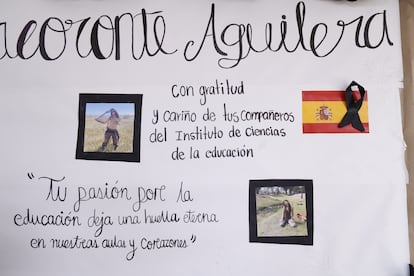
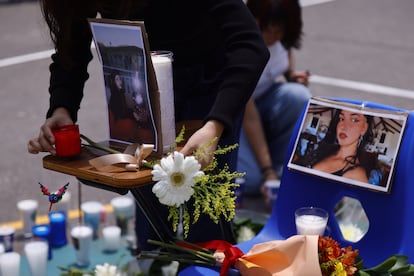
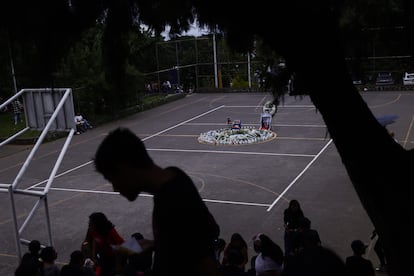
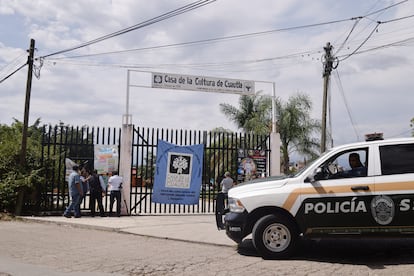
Local residents say that shortly after 8.30 p.m. the young woman was walking down a street in the city center when she was attacked. “They stabbed the girl and she managed to get into the Casa de la Cultura. It was a robbery. Neighbors here say it was a robbery or an attempted robbery,” the local reporter says in a live video, noting that the woman was able to run, take refuge in the public building and scream. That is when more people rushed to help her.
The reporter from 45 Digital Noticias adds that the attacker also ran off, that people tried to follow him, but “he had the advantage.” That is why the reporter repeatedly describes what he was wearing and in which direction he ran, hoping one of his 43,000 social media followers might help identify him: “He’s wearing a white sweatshirt. Dark backpack. He has just wounded a young woman.”
Besides asking for help, the reporter expresses outrage that authorities had taken “half an hour to respond” to the calls for assistance. “We kept calling the emergency numbers and they didn’t answer. They sent us to voicemail, put us on hold,” the reporter says. In the footage recorded that night, a body can be seen lying on the floor inside the Casa de la Cultura, with several people gathered around, protecting her. “The girl is in very bad shape,” the man acknowledges. During the seven minutes of the recording, an ambulance and a police patrol car are seen arriving.
Medical emergency personnel were unable to save Claudia, who has become the fourth UAEM student murdered in the past seven months. Her case has shocked both countries and authorities on both sides of the Atlantic have vowed “to see this through.” Meanwhile, a man in white with a black backpack remains wanted by police.
Sign up for our weekly newsletter to get more English-language news coverage from EL PAÍS USA Edition









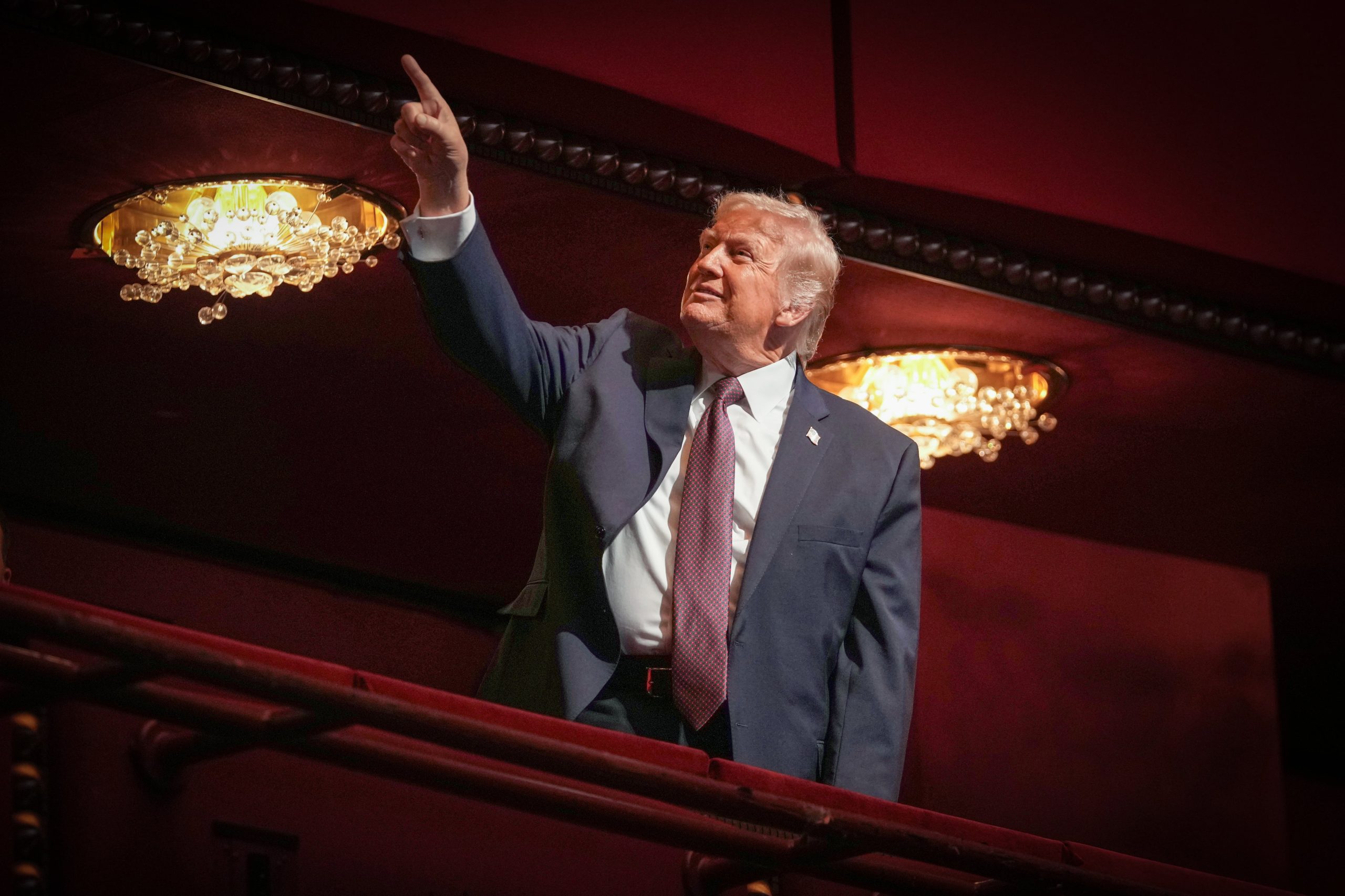
For the past 96 days, a huge tarp has hung over the facade of the Kennedy Center, a fitting symbol of Donald Trump’s assault on Washington’s cultural institutions.
Those attacks intensified on Wednesday with the announcement that Interior Secretary Doug Burgum is preparing to place a series of signs at the entrance to the National Museum of American History (NMAH) warning visitors about the “personal viewpoints” of those who curate its exhibitions. The White House accuses the museum, which is part of the Smithsonian network, of having “explicitly adopted an ideological framework that no longer treats the American story as a shared national inheritance to be taught or celebrated, but as a political instrument to divide, dispirit, and discourage” U.S. citizens.
Once installed, the signs, priced at $7,000 apiece, will join the tarp at the Kennedy Center as symbols of Trump’s determination to turn culture into a vehicle for advancing his MAGA agenda, burnishing his legacy and feeding his ego.
The tarp is a relic of the battle over Trump’s move to add his name to the Kennedy Center. A board of Trump loyalists had approved the name change, but in June, a judge ordered that the giant letters be removed. Dozens gathered to watch in person while tens of thousands followed online, expecting to see the white facade revealed once more. But the tarp never came down.
On Tuesday, the board voted, during a meeting that witnesses said ended with Trump shouting, to proceed with the closure of the institution that the president first announced in February. At the time, he argued that the center required a complete reconstruction because it was “tired, broken, and dilapidated.” Now, after the White House released a video apparently showing part of the grand foyer ceiling collapsing, Trump is threatening to withhold approval for the $257 million renovation unless the institution once again displays his name alongside that of John F. Kennedy, the president in whose honor the center opened in 1971.
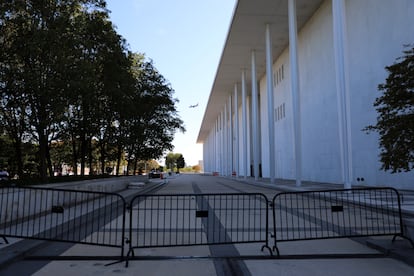
On Wednesday, with the Kennedy Center closed since the previous afternoon, a new symbol had been added to the growing list of evidence of Trump’s cultural crusade: barriers workers erected around the institution to block access to the complex on the banks of the Potomac.
The latest chapter in the saga comes less than 50 days before the midterm elections. Polls suggest voters would rather see Trump focused on issues such as inflation and gasoline prices than on the skirmishes of his culture war.
‘Ideological cleansing’
It also comes just a week after Lonnie Bunch III, president of the Smithsonian Institution, announced his resignation. He cited personal reasons, but his departure followed a year and a half of pressure from the Trump administration on the Smithsonian network of 21 national museums and a zoo. The White House set its sights on the institution in March last year with an executive order titled Restoring Truth and Sanity to American History, which called for what critics described as an “ideological cleansing” of the Smithsonian.
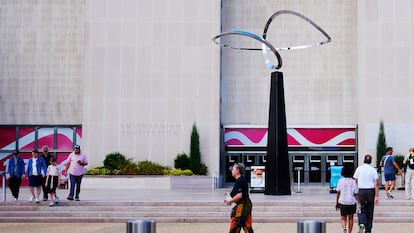
Days after Bunch’s departure, Trump, who had already successfully pushed the National Portrait Gallery to alter how it presented him, ordered the Smithsonian to replace Infinity (1967), José de Rivera’s abstract sculpture outside the National Museum of American History, with a 10-meter-tall statue of George Washington.
In an unprecedented blurring of the roles of president and museum curator, Trump also demanded in a social media post that the institution mount an exhibition devoted to the first U.S. president and keep it on display for “five years.”
Beyond its artistic value, Infinity is a symbol of Washington’s modernization. It was the first work of modern sculpture to break into the then overwhelmingly neoclassical landscape of the National Mall, an aesthetic Trump has repeatedly sought to revive.
Nor is it the only piece of public art in the capital to make political headlines in recent days. The order to dismantle and remove Joel Shapiro’s Blue (2019) from the plaza outside the Kennedy Center earlier this month provided yet another example of the president’s hostility toward modern and contemporary art.
The warnings that Burgum is preparing to place at the entrance to the NMAH stem from a 160-page report, complete with 500 footnotes, released on July 4, the nation’s 250th birthday. Its anonymous authors accused the museum of focusing too heavily on the Founding Fathers’ contradictions, slavery and the genocide of Native Americans. They also faulted it for presenting an unflattering account of Christianity’s role in the nation’s founding and for engaging in activism “against white people” and in favor of transgender people and “illegal” immigrants.
In a phone interview, M. J. Rymsza-Pawlowska, a public historian at American University in Washington, described the White House report as “ridiculous and absurd” and Trump’s attacks on cultural institutions as “classic authoritarian tactics.” “In the Smithsonian’s case, they also show ignorance about how it functions,” she added.
“NMAH exhibitions host an immense range of ideological viewpoints,” the expert said. “And during their development they undergo multiple peer reviews and consultations with communities and stakeholders. They are never at the whim of curators, who, moreover, are historians of the highest caliber who leave positions at prestigious universities to serve the public.”
Rymsza-Pawlowska also rejected the need for an exhibition about Washington. “There is already a museum entirely dedicated to him, Mount Vernon, a twenty-minute drive away,” she noted.
She also trusts that NMAH visitors will understand how much of Trump’s attacks are “political pantomime.” For regulars of the Kennedy Center — an institution with which many of the city’s music lovers have almost emotional ties — it is already too late.
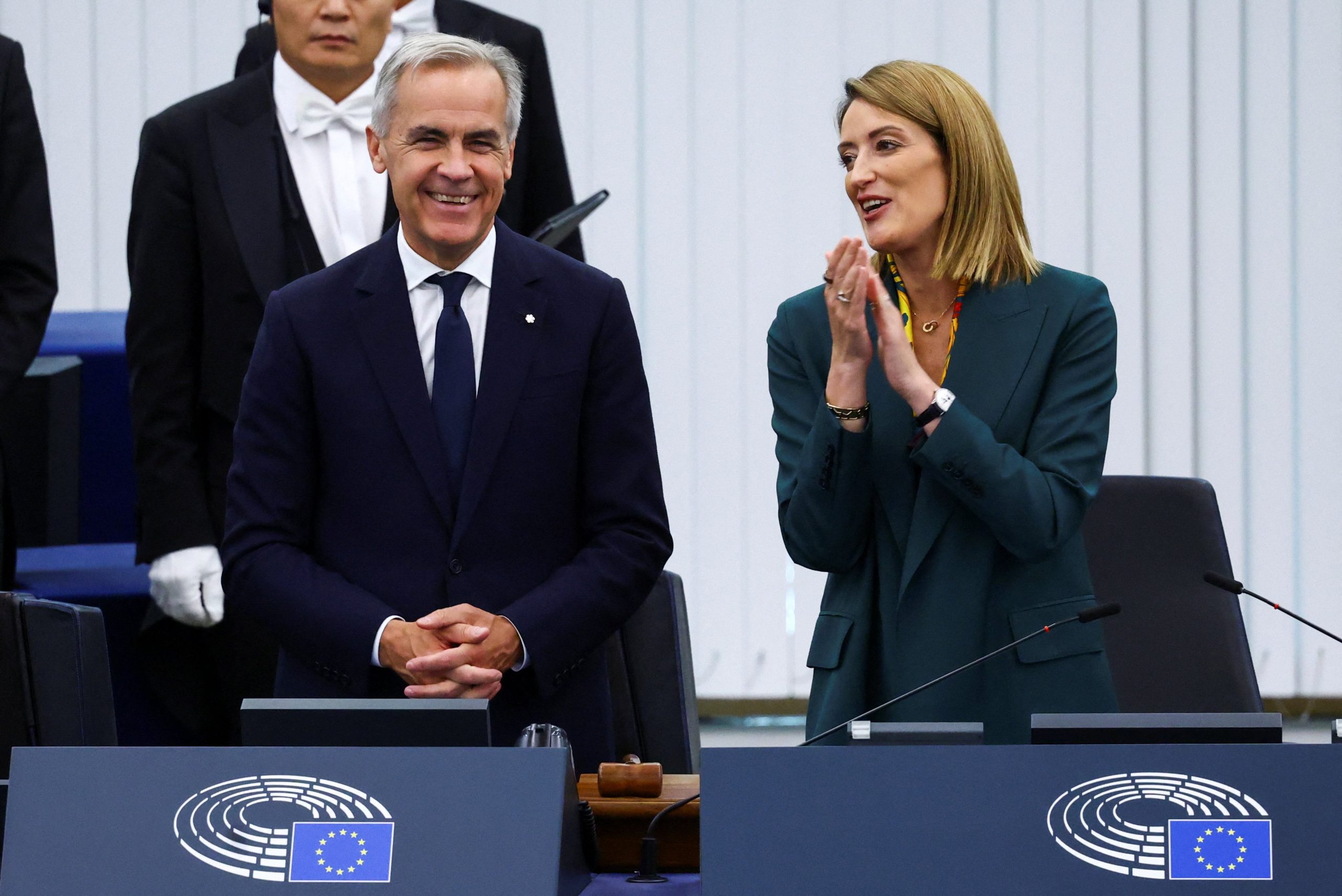
Shortly after returning to the White House, Trump moved to put the center at the service of MAGA ideals. He dismissed its board, installed himself as chairman and replaced members with loyalists with no experience in cultural management or philanthropy. He then added his own name to the center’s. And when boos during visits by Trump and members of his administration, together with artist boycotts, subscriber cancellations and falling ticket sales, compounded the turmoil, he concluded that the institution should be shut down for a sweeping renovation, one he now says depends on the courts ruling in his favor.
Toni Codinas, one of such patron, says that over these 18 months he has felt, in order, “incredulity,” “anger” and “sadness.” Incredulity “at how easily he took control of the center” with “brazen disregard for norms and a politics of faits accomplis.” Anger when he turned it “into a MAGA party venue and an example of his administration’s rampant corruption, using the opera to screen Melania’s documentary or to throw a FIFA party [for the World Cup draw].”
The sadness, says Codinas, a board member of the Washington Bach Consort, stems from seeing how Trump “has pummeled the remnants” of the Kennedy Center, whose facade remains shrouded, 96 days later, by a giant tarp that stands as a reminder of Trump’s attacks on the capital’s cultural institution.
Sign up for our weekly newsletter to get more English-language news coverage from EL PAÍS USA Edition
Donald Trump
The Federal Reserve Defies Trump With A Unanimous Rate Hike Six Weeks Before The Midterms

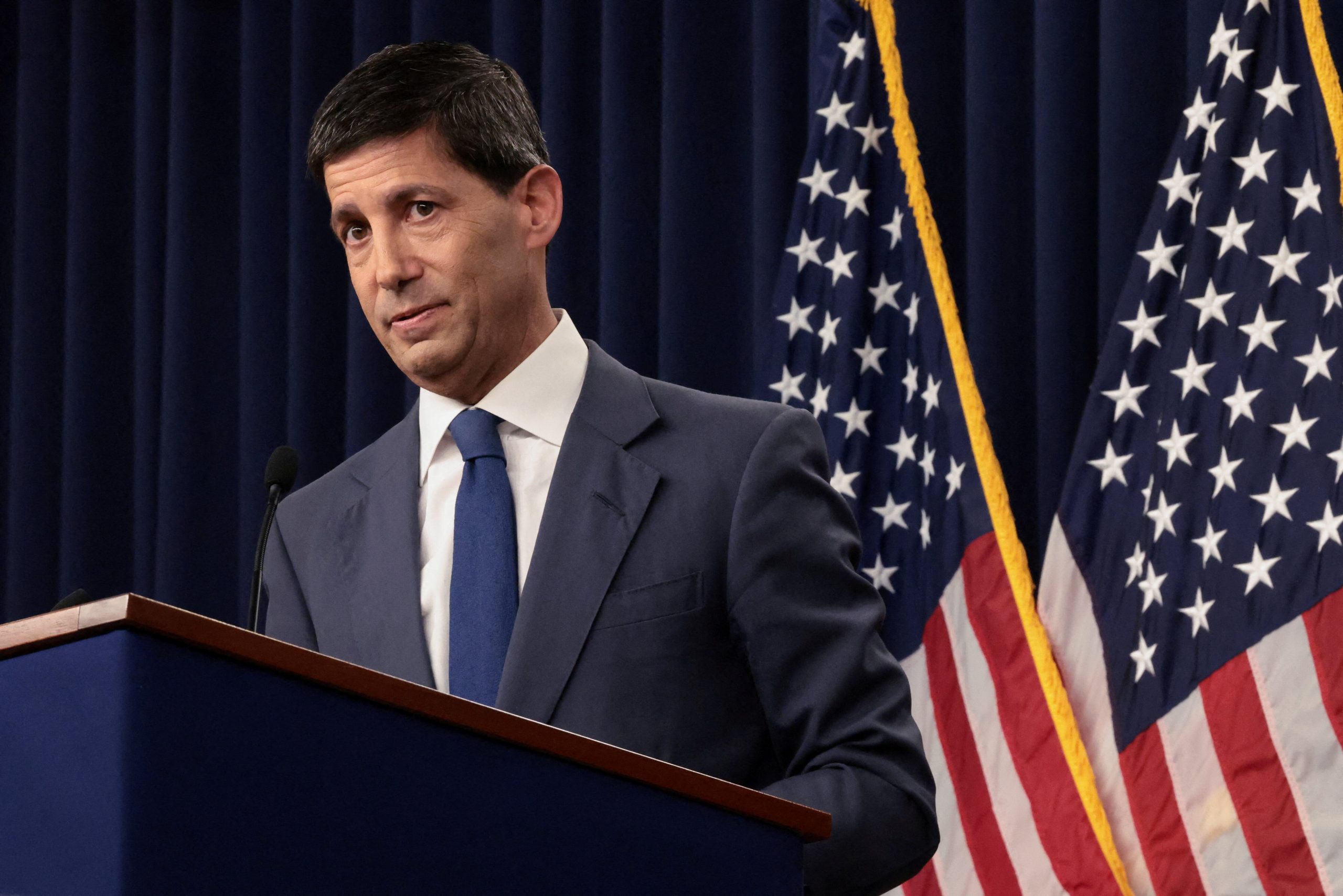

Mark Carney, After Trump’s New Tariff Threats: ‘Europe And Canada Are Stronger Together’

Trump Escalates His Campaign Against Washington’s Cultural Institutions
Crisis En Ceuta Y Actualidad Política, En Directo | Feijóo Pide A Europa “reconocer El Fracaso Del Gobierno De España” En Ceuta Y “presionar Para Que La Crisis No Se Enquiste”

One Critically Injured And Nine Others Hurt After Carbon Monoxide Leak Aboard Ship Docked In Barcelona Port

Max Verstappen works with new race engineer at Italian Grand Prix

EXPLAINER: Inside The Row Over The Right-Wing Mayor Of Madrid’s €6m Penthouse – And Why It Could Offer A Lifeline To Pedro Sanchez


-
 Barcelona2 weeks ago
One Critically Injured And Nine Others Hurt After Carbon Monoxide Leak Aboard Ship Docked In Barcelona Port
-
 Uncategorized2 weeks ago
Max Verstappen works with new race engineer at Italian Grand Prix
-
 Chamberi2 weeks ago
EXPLAINER: Inside The Row Over The Right-Wing Mayor Of Madrid’s €6m Penthouse – And Why It Could Offer A Lifeline To Pedro Sanchez
-

 ElPais2 weeks ago
A Traveling Circus For The Horror Of Gaza
-
Central European Time2 weeks ago
Spain’s 2026 plan to end clock changes has failed, and the next change is already locked in
-
bravery2 weeks ago
10-year-old jumps from burning French farmhouse, saves two dogs and teddy
-

 Uncategorized2 weeks ago
Max Verstappen hails
-
Holiday rentals7 days ago
Ibiza council hits illegal tourist rental with €793,000 fine – but will the owner pay that much?