
ElPais
The Mystery Of Muse: If Almost No One Likes Them, Why Do So Many People Go To Their Concerts?

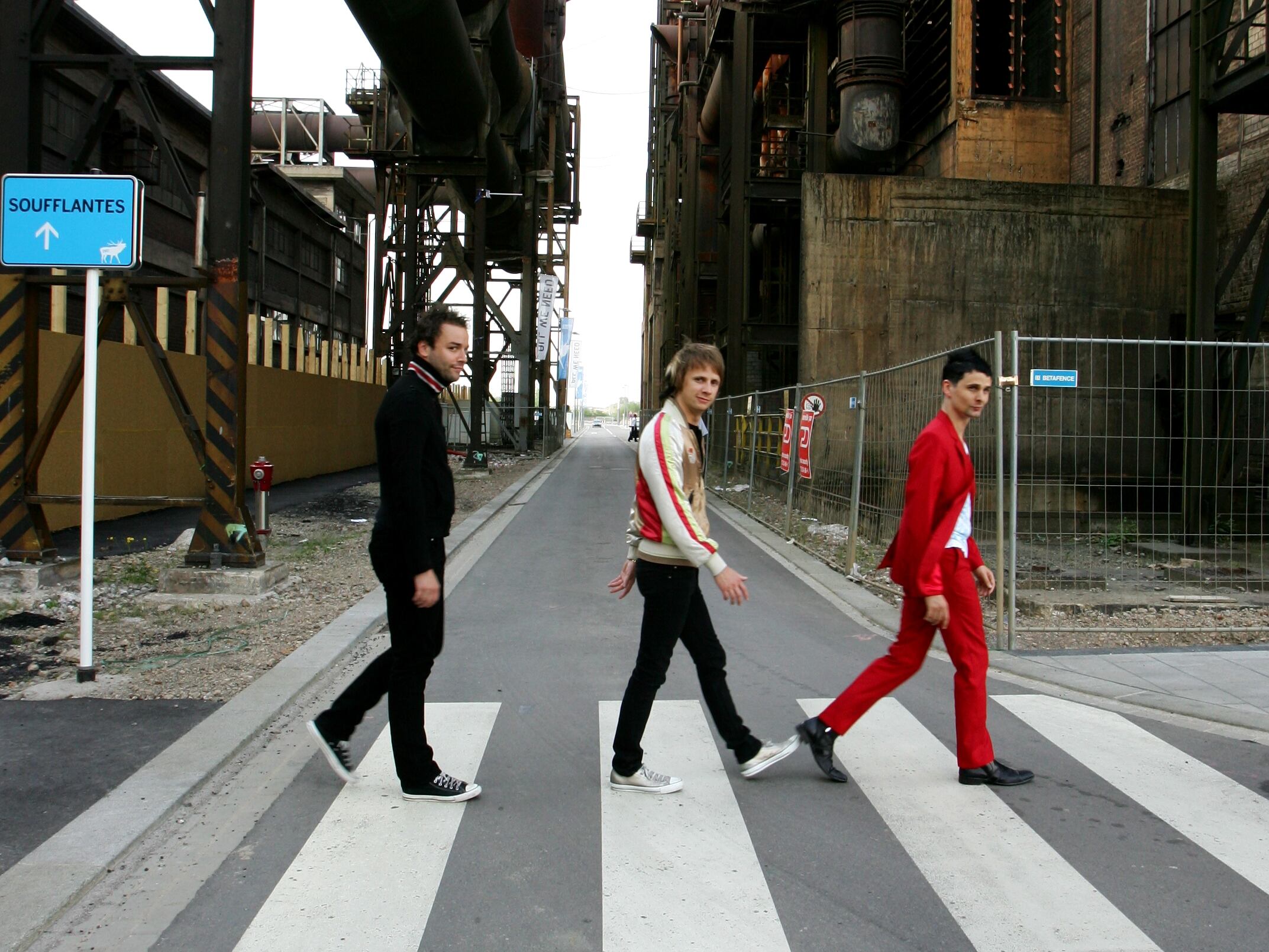
Few musical confessions are as awkward as admitting you like Muse. The British band has spent more than two decades filling stadiums and writing some of the most recognizable anthems of 21st-century rock, yet it has never achieved something that, on paper, should have been much easier: prestige. For Muse, success has never served as an argument in their favor. Quite the opposite. The bigger the band has become, the easier it has been to ridicule them.
What’s striking is that this rejection has rarely had much to do with Muse’s vocalist and leader, Matt Bellamy. Unlike other stadium-rock frontmen, his figure hardly provokes any hostility offstage. What makes people uncomfortable about Muse is the band’s very nature. They have never felt the need to tone down their ambition. Their songs are heroic, theatrical and excessive. They address surveillance, conspiracies, artificial intelligence and apocalypse with a conviction that now feels almost anachronistic. While much of rock has learned to avoid grandiosity, Muse have never stopped embracing it.
And yet that gamble has never hurt them. Almost three decades after Showbiz, Muse still sell out tickets, headline festivals and place their records among the U.K.’s best-sellers. The Wow! Signal confirms that their drawing power remains intact. What’s unusual is that their success has never been accompanied by critical consensus. Each new album reopens the same debate: for some, Muse represent one of contemporary rock’s most singular propositions; for others, they are repeating the same old excesses.
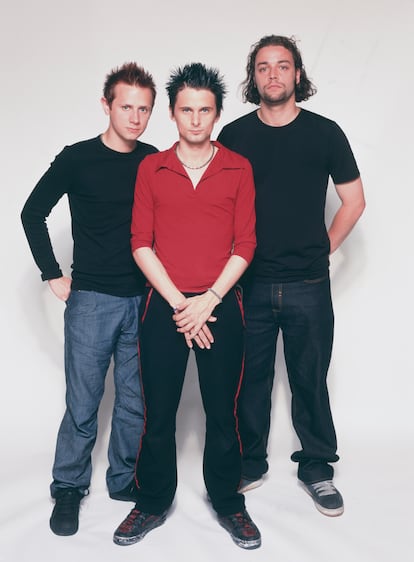
That split is somewhat paradoxical. Everything Muse has been mocked for over the years — Bellamy’s impossible falsetto, the influence of Queen and Rachmaninov, their theatricality and their messianic lyrics — is precisely what their fans consider indispensable. What some dismiss as bombastic, others experience as an almost cathartic encounter.
The problem has never been only the content of their songs, but the way the band presents itself. Bellamy is far from the classic rock archetype. He sings in an almost operatic register and turns each song into a small spectacle. Often it seems like Muse are parodying themselves, but the reality is their approach contains not a shred of irony — they are completely earnest.
The Wow! Signal does not tone down any of the traits that have made Muse such a divisive band. The mammoth guitars, the impossible falsettos, the stadium-sized melodies and a concept that looks to the heavens are all still there. The title refers to the mysterious radio signal detected in 1977 that some interpreted as a possible extraterrestrial message. At first glance, The Wow! Signal looks like another house-brand exercise in science fiction.
That choice is no accident. Bellamy has long described Muse as an attempt to make sense of emotions he himself did not fully understand. “The most difficult points in your life are when you don’t have any answers and you don’t know what to do or what the future looks like,” he recently told NME, speaking about the origins of The Wow! Signal. In another interview in The Guardian he recalled that Muse started out ”as an emotional expression of unknown anxieties” and that, over time, they have tried to understand what emotions lay beneath all of that. More than a political discourse or a collection of conspiracy theories, Muse was born as an attempt to name an anxiety Bellamy still didn’t know how to explain.
That need to find explanations goes back a long way. Bellamy has said his mother often reminds him that when he was four or five and learning to write, he would throw his pen to the floor and ask again and again: “But why?” He says he has never stopped doing it. “I’ve always needed an explanation for why things happen. I want to decipher the motivations and who benefits from them.”
Perhaps it is that need for answers that explains much of Muse’s imagery. Secret societies, mass surveillance, authoritarian governments and extraterrestrial signals operate less as conspiracy theories than as a way to make sense of a world Bellamy perceives as confusing. Rather than writing about conspiracies, he writes about anxiety using the language of conspiracies.
In fact, one of his most revealing confessions points precisely in that direction. “I tend to go down the route of paranoia anxiety or the impending doom of technology and anxiety about the future of the world and so on,” he acknowledged in a 2020 interview. “I think some of that stuff actually comes from the fact that that’s what the music itself makes me feel when I’m listening to it.” Emotion comes before story. First comes the feeling of urgency, threat or uncertainty; then the conspiracies, the cosmic language and all the images Bellamy uses to shape and understand those emotions.
Bellamy never distances himself from the anxiety he describes. He gives himself over to it completely. The result is hyperbolic, utterly paranoid songs, but never cynical or ironic. Paranoia, in Muse’s songs, is nothing more and nothing less than the truth. Perhaps that is why Muse have never been a particularly cool band.
That reading is not accidental either. Uprising, probably their best-known song, uses the language of social revolution, but the threat it describes is never identified — it remains open to interpretation. That ambiguity allows each listener to project their own obsessions: governments, corporations, the media or any other form of power. More than a political argument, the song sketches the feeling that there are forces too large to fully comprehend.
It is enough, however, to look more closely at their songs to see that they rarely speak about what they seem to describe. Bellamy has explained that The Wow! Signal, an album full of extraterrestrial references, actually springs from his breakup with his children’s mother. “Love revealed our failed rebellion,” Matt sings in Hexagons. The same is true of Supermassive Black Hole: beneath an avalanche of astronomical images there lies, simply, a love song. Even tracks like Plug in Baby or Hysteria, which appear to be about manipulation, control or loss of freedom, arise from far more personal emotions. Bellamy does not ground his feelings; he projects them onto the cosmos. He turns them into planets, alien invasions or black holes. It is the same emotional impulse as any romantic composer’s, only expressed on a cosmic scale.
Perhaps that is part of the source of the rejection Muse still provokes. Their songs deal with love, fear, desire and loss just like many others. The difference is that Bellamy never expresses those emotions in everyday terms: he turns them into science-fiction films. That aesthetic choice, as excessive as it is sincere, has always occupied an awkward place in a rock canon that has tended to value restraint, irony or confessional realism.
Far from correcting that tendency, Muse have turned it into their identity. The grandiosity first glimpsed on Origin of Symmetry has grown with every record. From Black Holes and Revelations to The Resistance, the conceptual Drones or that double-Muse album that is Will of the People, Bellamy has never seemed concerned with appearing excessive. The band has preferred to keep expanding its universe rather than tone down its ambition to win prestige.
That aesthetic clash is no accident either. Muse emerged when rock was moving in the opposite direction. In the early 2000s, while The Strokes or The White Stripes championed authenticity, restraint and unadorned guitars, Bellamy looked to the heightened drama of Queen, Pink Floyd and classical music. While indie aspired to sound like a garage band, Muse dreamed of filling stadiums by writing songs that felt like cinematic superproductions.
The difference was not limited to the music. Bellamy has never fit neatly into rock iconography. He is not a tortured hero, a style icon or a conventional sex symbol. Onstage he has always conveyed the sense of a musician fascinated more by physics, synthesizers and classical music than by the traditional rockstar persona. Even when he delivers one of contemporary rock’s most spectacular falsettos, he seems less intent on seducing the crowd than on pushing a musical idea to its limit.
Unlike much of rock, Muse have never distrusted pop. Their catalog pairs metal-leaning riffs with songs as melodic as Starlight, Madness or Panic Station. For Bellamy, a great melody has always trumped any rock orthodoxy. Perhaps that is why Muse have achieved something rare: appealing simultaneously to fans of hard rock and to pop listeners. Paradoxically, that same ease at moving between both worlds has, for years, fueled suspicion among some critics, for whom sounding too accessible has always been cause for doubt.
It is unlikely that The Wow! Signal will change the minds of those who have spent two decades seeing Muse as an exaggerated band. Nor does Bellamy seem particularly interested in convincing them. By now it is obvious that Muse have never wanted to correct what makes them recognizable. They keep writing small operas for stadiums. They keep elevating emotions to the size of a black hole. And they keep doing it with the same conviction they did 20 years ago.
Maybe that is Muse’s real secret. For years we have argued about whether their songs were about conspiracies, aliens or revolutions, when in reality they have always been about the same things the rest of popular music addresses: fear, desire, love, uncertainty and loss. The difference is that Bellamy has chosen to express those emotions with the language of science fiction, physics and dystopias. Maybe that is why Muse still divides so much. Or maybe simply because rock has not yet reconciled itself with those who dare to feel big.
Sign up for our weekly newsletter to get more English-language news coverage from EL PAÍS USA Edition




“In Europe, Madrid was playing in a lower league than it deserved. The major European capitals are Paris and London. And then, there’s another tier: Berlin, Milan, Amsterdam… [but] Madrid wasn’t even there.”
“[he city] finally had the opportunity to grow up. And I think the fact that [Spain’s economy] is doing well has also played a big role, since money attracts money,” explains Andrés Rodríguez, sitting in the lobby bar of Forbes House, a five-story private club (plus rooftop and basement). He’s the director, founder and mastermind of the establishment.
In an interview with EL PAÍS, he tries to answer the following question: what has had to happen in Madrid for so many private clubs to suddenly spring up like mushrooms?


Rodríguez explains how, for decades – and until just a year-and-a-half ago – the world of private clubs in Madrid was divided into two types. “The traditional clubs, which, with all due respect, were like our parents’ clubs: Nuevo Club, Club Financiero Génova, Puerta de Hierro,” he lists. “And then, there was the Matador Club, geared toward a creative crowd.”
However, in 2025, Forbes House arrived on the scene. And, this year, Club Metrópolis has emerged, located in one of Madrid’s most emblematic buildings. “It is the second-most photographed after the Puerta de Alcalá,” the club promoters affirm, referring to the triumphal arch that Madrid is known for.
The promoters – Sandro Silva and Marta Seco – lead the Paraguas Group, a set of six fine dining establishments. They’ve spent more than 20 years leading the biggest success story in Madrid’s restaurant industry, including an international expansion to London, Dubai and Monte Carlo.
“Many of the clients we’ve had over the years are the ones who put their trust in us to set up this club, even before we even started construction,” they state. Conceived as an exclusive, international private club, Metrópolis houses seven different dining spaces, including a restaurant specializing in lobster and a terrace under its famous dome. There’s also a luxury boutique hotel for clients and VIPs.

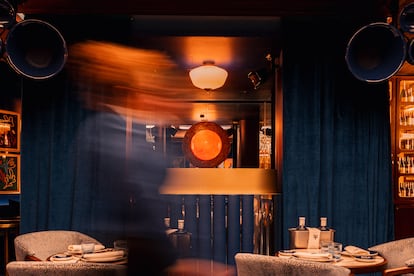
The latest arrival is Club Vega, in the Salamanca district. Its public face is Iñigo Onieva, the “bad boy” with a heart of gold. He’s beloved by the tabloids for his marriage to Tamara Falcó. The daughter of socialite Isabel Preysler and aristocrat Carlos Falcó, she is the singer Enrique Iglesias’ half-sister.
Onieva’s explanation for the shift in Madrid begins in London. He studied there, experiencing a lifestyle in which many personal, professional and social interactions take place within private clubs. When he returned to Madrid in 2018, he considered importing the model, but he ultimately concluded that the city wasn’t ready yet. Now, he affirms, it is.
“Madrid is finally ready for this,” he repeats several times, during his conversation with EL PAÍS.
Over the past few years, Madrid has been changing so rapidly that it seems as if nobody has had time to realize it. For decades, it was a reasonably large and important capital. But suddenly, it began appearing in international investment rankings. Luxury hotels multiplied. Major brands began competing for prime locations along the so-called “Golden Mile.” Investment funds set up shop on the Paseo de la Castellana, a major thoroughfare. “Latin American students arrived, attracted by the business schools. And then, their parents came,” Rodríguez notes.
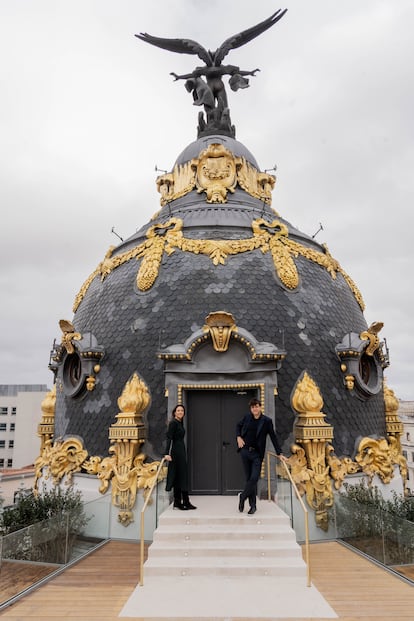
Vega is a prime example of the new Madrid: it occupies a huge space on Lagasca Street, surrounded by luxury boutiques, law firms and asset management companies. The club combines a restaurant, event space and meeting rooms, giving the impression that it’s essentially a place for celebrities to have fun, without fear of appearing in the press. This must be what Onieva means when he constantly talks about “community.”
He explains that they want a mix of businesspeople, artists, athletes, designers, politicians and executives. Spaniards and foreigners, youngsters and older folks. “We don’t want it to be a business club or a creative club. We want diversity,” he emphasizes.
But not diversity when it comes to finances, of course. Membership in these clubs costs around €4,000 a year, or $4,500. And that’s just for entry: drinks are extra. And exclusivity isn’t so much in the price as in the selection process. To get in, you have to be recommended by a member and accepted.
Rodríguez insists that Forbes House isn’t a club for the rich. Rather, he clarifies, it’s a club for success. The difference seems minor, but for him, it’s fundamental. “In Spain, there’s still a certain idea that success has to be invisible,” he explains. “Here, there’s no shame in saying that you want to boost your business, your personal brand, or meet interesting people.”
For members only
The three projects are distinct. And yet, they share an intuition. Madrid no longer behaves like the open and relatively egalitarian city that it once was. Or, at least, not only like that. There have always been clubs for Madrid’s elite, but leisure activities mostly revolved around the bar: a democratic space, open to everyone (in principle). The new clubs reflect the expansion of the elite social class and replicate its principle of exclusion. Forbes House has an admissions committee. Vega has a selection process. And, at Metrópolis, memberships sold out before the club even opened. These are places where who gets in is just as important as who gets left out.
Sign up for our weekly newsletter to get more English-language news coverage from EL PAÍS USA Edition
AFD
The European Country With The Highest Number Of Renters Looks For A Solution To The Housing Shortage




One day, someone will look back on these strange times as the age of maxxing — the phenomenon driven by an obsession with maximizing some aspect of one’s life or body. There’s looksmaxxing, ballmaxxing… and now fibermaxxing, which has turned fiber into the new protein amid growing interest in gut health.
There is even a device that analyzes your stool, prompting some content creators who once shared sleep metrics to now proudly post the analyses this gadget generates after a trip to the bathroom. There is even a hashtag, #hotgirlshaveibs, in reference to irritable bowel syndrome (IBS).
“POV [Point of View]: you’re a hot girl with IBS about to crush your colonoscopy,” one woman writes in a video in which she enters the clinic in slow motion, as if filming her arrival at a beauty center for a cosmetic treatment. If anyone ever joked that influencers would eventually show us even how they go to the toilet, that joke has now become reality.
The device in question is called Dekoda, and it provides information about gut health, hydration and the presence of blood in the toilet bowl.
“The bathroom stands as an untapped hub of vital health data and information. Every day, we flush away insights that could help us better understand our bodies and our health,” the company says.
Dekoda is installed inside the toilet and, for $449 — plus $70 per year for the Kohler Health app — it records every use of the toilet and uses artificial intelligence to analyze the contents. Until recently, celebrities such as Gwyneth Paltrow and Kim Kardashian shared data about their sleep through the Oura Ring, a smart ring that tracks biometrics such as sleep quality, heart rate, stress levels, body temperature, and physical activity. Now, some influencers are sharing data about their bathroom habits thanks to devices like Dekoda or Throne, a smart sensor that attaches to a toilet and automatically monitors gut health, hydration, and urinary health. There are even toilets on the market that include systems for monitoring stool and logging the results in an app.
“In an optimization-obsessed world, stool-gazing has become nearly as popular as sleep-tracking or counting steps,” Alaina Demopoulos writes in The Guardian.
Hannah Marriott, also writing in The Guardian, says “a fascination with faeces — or stool-gazing as it is sometimes known — is burgeoning on the internet.”

Dr. Karina Cuiñas, author of Tripas en acción: Vence el estreñimiento y mejora tu salud intestinal (Guts in Action: Beat Constipation and Improve Your Gut Health), believes it is very positive that people are starting to pay more attention to their stools, but she warns that the devices and apps currently gaining popularity are not infallible.
“Consistency is useful for knowing how our intestinal transit is doing and rectal bleeding is a sign that should never be ignored, but gut health goes far beyond that,” she explains. “If what we want is to record our bowel habits, it would also be important to assess the time we spend sitting on the toilet, the straining required to evacuate, pain during defecation and the feeling of complete emptying afterward.”
“Constipation is not only having hard stool,” she continues. “These smart cameras can tell you your consistency is optimal when in reality every visit to the bathroom is torture. Frequency is not a good indicator of gut health either: you can go every day and still be constipated. And stool volume depends largely on diet: without knowing what each person eats, that isolated data point tells you little. I also see a bias problem. It’s more likely that people already worried about their bowel habits will buy this type of device, and in my clinic I often see that this kind of monitoring increases hypervigilance about digestive symptoms, which can be counterproductive.”
Dr. Malena García Arredondo, founder and director of MGA Healthy Digest, believes that for the vast majority of people, simply learning to look is enough.
“The human eye can detect the really relevant changes: blood, black stool, very pale stool, persistent diarrhea, prolonged constipation or a major change in bowel habits,” she says. “Artificial intelligence can be an interesting tool for research or for very specific patients who need objective follow-up, but at the moment there is not enough evidence to recommend this kind of device as part of routine care for a healthy person.”
She concludes: “My message is simple: it’s useful to know which aspects of stool are important and which changes should prompt a consultation, but we shouldn’t obsess over them every day.”
“It’s a wellness product; it’s not a diagnostic,” warns Kash Kapadia, CEO of Kohler Health, the company that owns Dekoda. “This is another frontier of insights they didn’t have access to, which they now do.”
Dr. Arredondo welcomes the fact that, for whatever reason, people are beginning to talk about fiber, the microbiome, fermented foods, and exercise as pillars of digestive health.
“That shift in mindset has enormous preventive potential,” she says. “What worries me is that, alongside scientific interest, an industry has emerged that conveys the idea we must constantly monitor our gut. And that is not supported by the evidence. The goal is not to have perfect stool every day. It is to have a gut that functions well, without warning symptoms, within each person’s normal variability. Technology will be welcomed as long as it provides useful, proven information.”
“I think we’re losing focus and chasing one fad after another: from anti-inflammatory diets to blaming SIBO [Small Intestinal Bacterial Overgrowth] for all our digestive problems,” Dr. Cuiñas adds. “We need to return to basics — what we know works for gut health: a diet based on plant foods, regular physical activity, stress management and seeking help when something is wrong.”
In principle, it seems as simple as going to the bathroom.
Sign up for our weekly newsletter to get more English-language news coverage from EL PAÍS USA Edition

Members Only: Private Clubs For The Wealthy Take Over Madrid

‘A Fascination With Faeces’: How Stool-Gazing Became A Social Media Trend

The European Country With The Highest Number Of Renters Looks For A Solution To The Housing Shortage
Axarquia wildfire cause emergency response across Archez, Competa and Canillas de Albaida
Buyers are pushing back against high house prices in Spain

El Escurreplatos De Dos Niveles Que Libera Espacio En La Cocina Está Rebajado Más De Un 50%


-
andulacia wildfires2 weeks ago
Axarquia wildfire cause emergency response across Archez, Competa and Canillas de Albaida
-
House prices2 weeks ago
Buyers are pushing back against high house prices in Spain
-
 Amazon2 weeks ago
El Escurreplatos De Dos Niveles Que Libera Espacio En La Cocina Está Rebajado Más De Un 50%
-

 España2 weeks ago
Lotería Nacional: Comprobar Sorteo Del Jueves 16 De Julio
-

 New Developments2 weeks ago
Inside The Most LUXURIOUS Apartment Building In Spain!
-
Are dogs allowed on trains in SPain2 weeks ago
Renfe opens all trains to dogs weighing up to 40 kg
-

 Audiencia Nacional2 weeks ago
La Directora De La Guardia Civil Y Su Jefe Operativo Declaran Como Imputados En La Audiencia Nacional Por El ‘caso Leire Díez’
-

 Uncategorized2 weeks ago
F1 press conference shut down over Red Bull driver transfer rumours