Connect with us

%

The Red Turtle Car – Part III

Published

on

the-red-turtle-car-–-part-iii

And there it is. The red turtle car. Credit: ozkan ulucam/Shutterstock

Last week, I left you going around in circles – quite literally – trying to understand Spanish roundabouts.

But just when I thought I had figured them out, another driving adventure was waiting: a toll booth, a missing credit card and one very slow red turtle car.

You might have thought that was the end of my driving adventures.

You would be wrong.

Take toll roads. You’re driving happily when suddenly you encounter one. Thirty kilometres an hour. Maybe forty if the driver is feeling adventurous. You know you are late. Finally, you overtake. You pass the turtle and watch as the red turtle-on-wheels car disappears into the distance.

You smile. “Finally! I can get there on time.”

Ah, yes. The toll booth – where the relaxing Costa del Sol drive suddenly becomes a frantic episode of:

Where’s the card?

You reach for your credit card. Where is it? You know you had it two minutes ago. Not there. Maybe the other pocket. Meanwhile, the machine raises an eyebrow and silently judges you as an impatient queue builds behind you.

“Please insert card.”

Yes, I know. I’m trying.

You find the card, insert it – and somehow drop it. Of course. Now you’re leaning halfway out of the window, trying to retrieve a tiny piece of plastic without rolling into the barrier. My career as a contortionist has officially begun.

You pick it up. Try again. Nothing. Now you’re sweating. You can almost hear them: “Come on, buddy. This isn’t your first toll booth.”

Finally, the machine accepts the card.

Victory!

The barrier rises and you pull away like someone who has just completed an Olympic event. You merge onto the motorway and look in the rear-view mirror.

And there it is. The red turtle car. The same red car you overtook ten minutes ago.

Somehow, he has paid his toll, passed through the booth and caught up with you while you were conducting a full financial transaction, gymnastics routine and minor emotional breakdown.

What exactly did you accomplish by overtaking him?

Nothing. Absolutely nothing.

Sound familiar? Isn’t that life sometimes? We rush, hurry and overtake, convinced we’re getting somewhere faster – only to discover a few minutes later, we’re alongside the person we were trying to overtake.

You spent petrol, raised your blood pressure, risked your dignity at the toll booth – and now you’re travelling together again.

And around and around we go – the great roundabout of life, where we race ahead, overtake, get stuck, take the wrong exit and somehow end up behind the same red turtle car.

Perhaps that’s the lesson.

Life isn’t a race. It’s a roundabout.

And frankly, I’m beginning to suspect the turtle knows the way better than I do.

And frankly, I’m loving it.

See you there!

%

Daily Aspirin Guidance: Is Taking An Aspirin Every Day Still Safe?

Published

on

daily-aspirin-guidance:-is-taking-an-aspirin-every-day-still-safe?

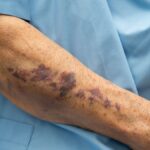
Unwanted skin bruising and internal bleeding are key reasons medical guidance has moved away from routine daily aspirin for primary prevention. Credit: surprisestock/Shutterstock

For decades, taking a daily low-dose aspirin was widely regarded as simple, effective insurance against heart attacks and strokes. However, evolving clinical research, updated guidelines from NICE, and new 2026 medical consensus statements have shifted how doctors evaluate this common habit. While daily aspirin remains vital for patients with a history of cardiovascular events, taking it purely for primary prevention can carry a risk of internal bleeding that outweighs its protective benefits.

I thought I’d mention this because it is something people have been asking me about recently.

If you are getting older, have high blood pressure or cholesterol, or simply want to reduce your chances of having a heart attack, a daily low-dose aspirin has been regarded as a fairly harmless bit of insurance. I suspect quite a few people reading this have a packet of 75mg or 100mg aspirin somewhere in the bathroom cabinet.

But there is a problem with that apparently simple little tablet.

As I’m sure you know, aspirin can cause bleeding. And as our understanding of cardiovascular disease has improved, doctors have increasingly had to ask a rather uncomfortable question: Is the benefit of taking aspirin every day actually greater than the risk?

The answer depends very much on who you are.

Primary vs. Secondary Prevention: Who Actually Benefits from Aspirin?

The first thing to understand is the distinction between what doctors call primary and secondary prevention. If you have already had a heart attack, a stroke, or certain other forms of cardiovascular disease, aspirin may be prescribed to reduce the risk of another event. That is secondary prevention, and aspirin remains an important drug for many patients in that situation.

The controversy is about primary prevention – taking aspirin when you have never had a heart attack or stroke, but are taking it in the hope that it will stop one happening. And this is where the medical advice has changed.

In the UK, NICE (the organisation that looks at the use of medicines) no longer recommends routinely using aspirin for primary prevention. European guidance has also moved away from routine aspirin in people who do not already have cardiovascular disease because of the increased risk of major bleeding. But before those of us living in Spain start feeling smug about the British changing their minds, there is another twist.

Spain is moving in much the same direction. In 2025, the Spanish Society of Family and Community Medicine, reported on a review of 38 clinical guidelines and identified routine aspirin use for primary prevention as a practice of little or no preventive value because of the increased risk of bleeding.

So, this isn’t really a case of Britain saying one thing and Spain saying another. The science behind prescribing is changing in both countries. The problem is that medical practice doesn’t always change overnight.

How Aspirin Works in the Bloodstream and Causes Bleeding Risks

The reasoning behind aspirin was perfectly logical. Aspirin interferes with platelets – the tiny components of our blood that help form clots. A clot forming inside a coronary artery can block the blood supply to the heart and cause a heart attack. So, if aspirin makes the blood less likely to clot, surely it should reduce heart attacks?

Yes, it does.

The difficulty is that the same mechanism can also cause unwanted bleeding.

Aspirin doesn’t know whether the clot it is preventing is a dangerous one blocking an artery or the perfectly useful clot that would normally stop a small blood vessel in your stomach or intestine from bleeding. Consequently, aspirin can increase the risk of gastrointestinal bleeding and, more rarely but more seriously, bleeding inside the brain.

For somebody who has already had a heart attack, preventing another potentially fatal clot may be worth accepting that risk.

For somebody who has never had cardiovascular disease, the calculation is very different.

And that is the bit that has changed.

Ageing, Cardiovascular Prevention, and Updated 2026 Guidelines

There is another irony here. Many of us were originally told about daily aspirin as we got older because our risk of heart disease increases with age. But age also increases the risk of bleeding.

So, the very group that might theoretically gain more protection from aspirin is also the group in which the unwanted effects become more important.

Modern cardiovascular prevention has also changed the equation. We are much better at controlling blood pressure and cholesterol than we were several decades ago. Statins, better treatment of hypertension, smoking cessation and improved management of diabetes have all reduced cardiovascular risk.

That means the additional benefit obtained by giving aspirin to somebody who is otherwise receiving good preventive treatment may be relatively small.

A large body of evidence shows this rather neatly: aspirin can reduce some heart attacks and strokes in people without previous cardiovascular disease, but it also increases major bleeding, and it has not been shown to reduce overall mortality in this setting. A 2026 American College of Cardiology scientific statement describes the benefit as modest and stresses that aspirin should not be used routinely for primary prevention, particularly in older people.

In other words, we have become better at preventing heart attacks without necessarily needing aspirin to do it.

Should You Stop Taking Aspirin? Important Medical Considerations

This is where I would strongly urge caution.

If you are already taking aspirin because you have previously had a heart attack, stroke, coronary stent or another cardiovascular event, do not simply stop taking it because you have read this article. The reason you were prescribed it may be very important.

Equally, if you have been taking aspirin for years because someone once told you that it was a good idea “at your age”, it is reasonable to ask your doctor whether that advice still applies to you.

There is no universal answer.

Your doctor needs to consider your cardiovascular risk alongside your bleeding risk. Have you had cardiovascular disease before? Do you have high blood pressure, diabetes or high cholesterol? Do you smoke? Do you have a history of stomach ulcers or gastrointestinal bleeding? Are you taking other medicines that increase bleeding risk? These are much more important questions than simply asking whether you are over a particular age.

And please don’t confuse aspirin with anticoagulant medicines such as warfarin or the newer direct oral anticoagulants. They work differently and are prescribed for different reasons.

Deprescribing Trends and Modern Medical Practice in Spain

For those of us living here, there is an important practical point. Spain has not suddenly announced that everybody taking aspirin should stop.

Rather, Spanish medical organisations are increasingly saying that routine aspirin for primary prevention is not justified because the potential harm from bleeding can outweigh the cardiovascular benefit.

There is even Spanish research published in 2026 looking specifically at deprescribing aspirin – in other words, helping patients who were taking it for primary prevention to come off it when there was no longer a good reason for doing so.

That tells us something quite important. The question is no longer simply whether aspirin works. It clearly does.

The question is whether you are likely to gain enough from it to justify the risks.

Evolving Science: Asking Your Doctor the Right Questions

I think there is a wider lesson here that applies to much of modern medicine. Sometimes treatments become part of medical culture.

Doctors prescribe them. Patients expect them. We get used to taking them. And after twenty or thirty years it can be surprisingly difficult to question whether they are still necessary. But medical science doesn’t stand still. What was sensible advice in 1985 may not necessarily be sensible advice in 2026.

That doesn’t mean the doctors who prescribed aspirin all those years ago were wrong. They were working with the evidence available to them at the time.

Nor does it mean aspirin has become a dangerous or useless drug. Far from it. For some people it remains an extremely important medicine. What has changed is our understanding of who is most likely to benefit.

So, if you are taking a daily aspirin, don’t panic and don’t throw the packet in the bin. Instead, ask a much more useful question at your next appointment:

“Why am I taking this, and does the benefit still outweigh the risk for me?”

That, ultimately, is what good medicine should be about – not giving everybody the same answer, but making sure that the treatment is right for the individual.

And perhaps that little white tablet deserves rather more thought than we once gave it.

The information provided in this column is for educational and informational purposes only, and does not constitute medical advice. It is not a substitute for a professional medical consultation, diagnosis, or treatment. Always seek the advice of your own physician or other qualified health provider with any questions you may have regarding a medical condition.

Dr Marcus Stephan

Continue Reading

%

Spain Payslip Change Coming In January 2027

Published

on

spain-payslip-change-coming-in-january-2027

Workers in Spain will see their MEI contribution rise from January 2027. Credit : Quisquilia, Shutterstock

Workers in Spain will see a small deduction from their paychecks starting in January 2027. This is due to an annual increase designed to help fund the country’s pension system.

Intergenerational Equity Mechanism (MEI) is a Social Security tax that you probably have noticed in your monthly paycheck deductions. Beginning on January 1, 2027, the employee’s share of this social security tax will increase from 0.15 per cent to 0.17 per cent of the contribution base. The change is part of a schedule set in Spanish social security law, not a new tax announced for 2027.

For most workers, the change will be modest. Someone who contributes €2,000 per month will pay €3.40 per month in 2027, compared to €3 in 2026. That’s 40 cents less each paycheck, or 4.80 per year, assuming the contribution base does not change.

But how much will be deducted from your salary, and where on your payslip do you find the figure?

Spain payslip changes in 2027: how much will you actually pay?

The amount is determined by the Social Security contribution base and not just the net salary you get in your bank account.

For the employee’s contribution to the MEI for 2027, use the contribution base for common contingencies as stated on the employee’s payslip and multiply it by 0.0017.

For example, a worker with a €1,500 monthly contribution base will pay €2.55 a month, up from €2.25 in 2026. At €2,000, the deduction increases from €3 to €3.40. A €2,500 contribution base means a rise from €3.75 to €4.25, while someone on a €3,000 base will see the contribution increase from €4.50 to €5.10.

The 0.17 percent is the worker’s total MEI contribution for 2027, not the rate of increase. The yearly increase in the MEI is 0.02 percent.

For an employee who maintains a €2,000 contribution base throughout the year, they will pay €40.80 for their MEI in 2027. In 2026, the cost of the MEI was €36.

And employees are not footing the entire bill.

Employers will contribute considerably more. The combined MEI rate will rise from 0.90 per cent in 2026 to 1 per cent in 2027, divided between 0.83 per cent paid by the employer and 0.17 per cent by the employee. Spain’s official legislation confirms that scheduled split.

On a contribution base of, for example, €2,000, the employer would pay €16.60 and the employee €3.40, resulting in a total MEI contribution of €20.

The employer’s share does not come out of the worker’s take-home salary.

Why Spain is taking more from workers’ payslips for pensions

The MEI has been in operation since 2023 and aims to enhance the long-term sustainability of Spain’s Social Security system.

The money goes into the Social Security Reserve Fund, also known as the pension piggy bank in Spain. The country is gearing up for the coming boom in the pension system as large generations come to retirement. However, the contribution does not increase the individual worker’s pension benefits.

And the January 2027 increase will not be the last. According to the plan, the employee’s contribution is to reach 0.18 per cent in 2028 and 0.20 per cent by 2029. In 2029, the combined employer-employee contribution will be 1.20 per percent, which is slated to stay until 2050.

For those wondering where their money is going, the MEI will normally appear on the pay stub under social security contributions and deductions. Sometimes it will be explicitly stated as MEI or Mecanismo de Equidad Intergeneracional.

Will your take-home pay actually fall in January 2027?

Not necessarily.

Although the MEI deduction will be higher, this does not mean that the amount you receive in January will be less than what you received in December.

The increase in salary, change in working conditions, or personal income tax deduction changes may affect the final calculation. The most effective way to measure the impact of the MEI is to compare the contribution base and the MEI deduction on the December 2026 and January 2027 pay stubs.

For most employees, this increase is just a few dozen cents per month and not a drastic cut in take-home pay. But given how closely families are already monitoring their budgets, this is another thing that may get noticed when people get their first paycheck of 2027.

And unlike many January surprises, this one is already written into the calendar.

Continue Reading

%

Literary Stars Descend On Mallorca

Published

on

literary-stars-descend-on-mallorca

American writer Anna Todd explores Mallorca before her appearance at FLEM festival Credit: Instagram/AnnaTodd

Bestselling American author Anna Todd was among the biggest names at this year’s FLEM literary festival, joined by British writers as Magaluf put books and culture centre stage.

Anna Todd brings Mallorca novel home

Anna Todd returned to Mallorca this week to present Sunrise: The Last Sunrise, her latest novel and the first of her books to be set on the island.

The American author, best known for her global After series, appeared at the Festival de Literatura Expandida de Magaluf (FLEM) on Saturday, October 3, in what was her only appearance in Spain this year.

Sunrise, published in 2026, follows 23-year-old Oriah Pera, who travels to Mallorca with her mother and finds herself at a turning point in her life. A trip to the beach leads to a meeting with Julián, a local Spanish man, and a summer romance that becomes part of Oriah’s journey into adulthood.

Mallorca is therefore far more than a backdrop in Todd’s latest work. The island provides the setting for Oriah’s summer, her relationship with Julián and the experiences that force her to reassess her life.

The novel also touches on some of the tensions surrounding modern Mallorca, including the contrast between the island’s appeal to international visitors and the concerns of people living there. Todd discussed the book during her FLEM appearance, which came as she returned to an island that has become increasingly important to her work.

From After to Mallorca

Todd shot to international fame with After, which began as fan fiction before becoming a publishing phenomenon.

The series has been translated into 35 languages and sold more than 12 million copies worldwide, making Todd one of the most commercially successful authors of her generation. She has also worked as a producer and screenwriter on film adaptations of her books.

Her other work includes The Brightest Stars, The Spring Girls and the After graphic novels, while The Last Sunrise marks her latest move into a story rooted in Mallorca.

That connection gave FLEM a particularly strong local hook, with readers able to hear directly from an internationally successful author about a novel inspired by the island.

British authors join international line-up

Todd was not the only international literary star at FLEM 2026.

The festival’s programme included British novelist Anna Hope, author of Expectation, Wake, The Ballroom and Albion. British writer and journalist Lara Pawson also appeared, taking part in a conversation with Mallorcan author Aina Fullana.

Another British name on the 2026 programme was Ben Brooks, who appeared in conversation with German-Afghan writer and poet Aria Aber.

The international line-up helped make the sixth edition one of FLEM’s biggest yet, with more than 30 writers, artists and creators taking part.

Magaluf’s literary transformation

Held from October 1 to 4, the 2026 festival moved to a new home at INNSiDE Wave Calvià, bringing literature, music, podcasts, art and live events together under one roof.

FLEM is organised by independent Palma bookshop Rata Corner and INNSiDE by Meliá, with the aim of bringing literature to new audiences and challenging the traditional image of a literary festival.

The 2026 programme also introduced the new FLEM-Magaluf Novel Prize and a literary residency, adding a stronger focus on supporting emerging writers.

More than 13,000 people attended this year’s four-day festival, according to post-event coverage, an eight per cent increase on 2025.

For four days, Magaluf became an unlikely meeting point for bestselling authors, emerging writers and readers, with Anna Todd’s Mallorca-set novel providing one of the clearest links between the island and the international literary world.

Continue Reading

Trending

Copyright © 2017 Spanish Property & News