Connect with us

ElPais

Héctor Márquez, The Mexican Fisherman Missing For A Week, Rescued At Sea

Published

on

hector-marquez,-the-mexican-fisherman-missing-for-a-week,-rescued-at-sea

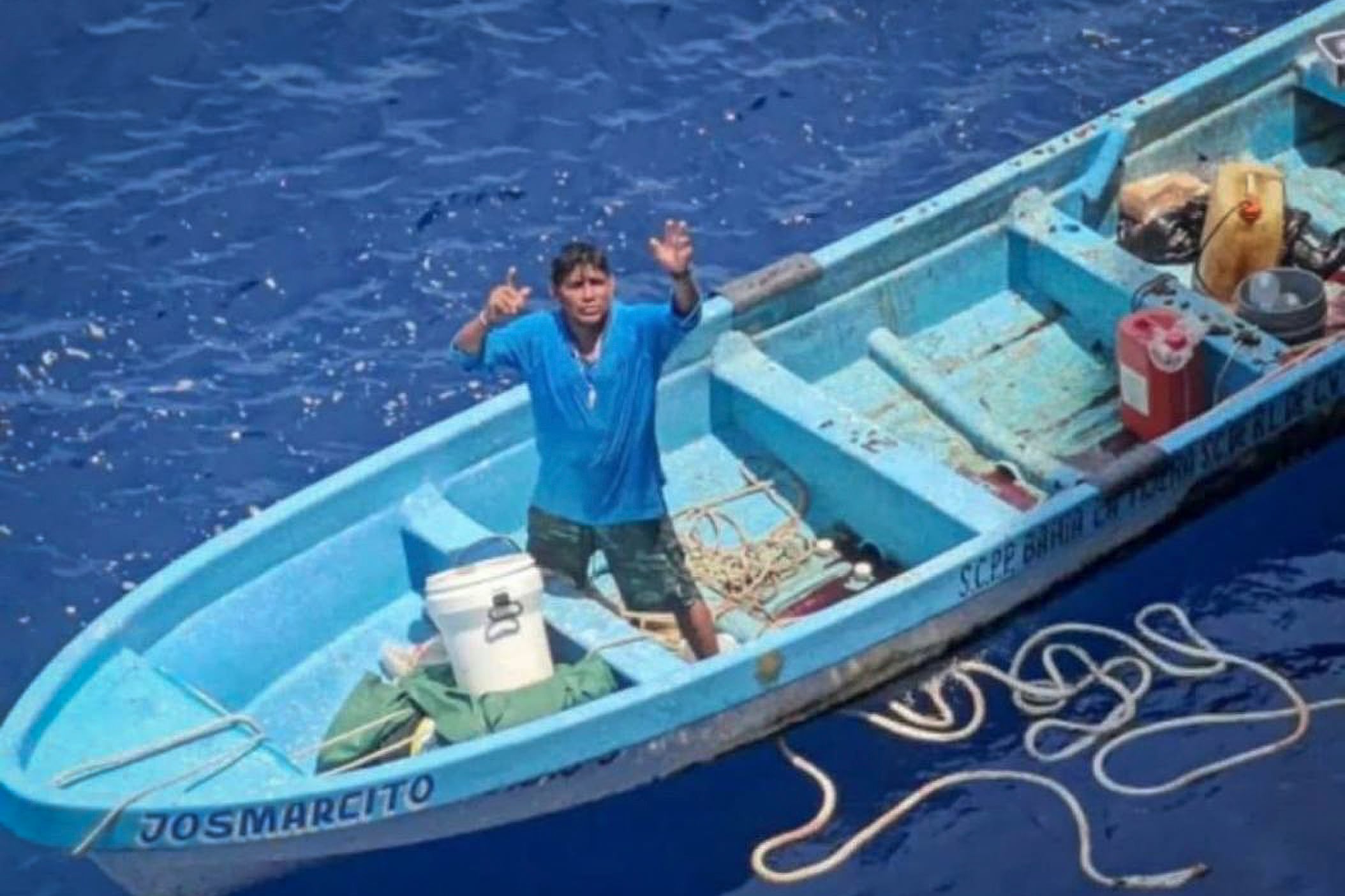
Héctor Márquez, aka “Chico,” went out very early on Monday, August 31 to fish aboard his small motorboat, which he named Josmarcito, off the coast of Puerto Ángel, in the southern Mexican state of Oaxaca. He had only enough fuel for the routine trip, no more than a few hours. This Monday marked a week since he went missing. Fishermen from his community had gone out to search for him every day. Family and friends kept vigils on the shore awaiting news of Chico. Later in the day, on September 7, Chico was located and rescued by a vessel from the Mexican Navy, sources at the institution confirmed to EL PAÍS.

Good news had arrived a day earlier. According to local media, a cargo ship sighted him at sea on Sunday, photographed him, and recorded his coordinates, which it later shared with the community. The facts are somewhat unclear as to why they did not rescue him there and then. Media reports say Chico refused to leave his boat and preferred to wait for a rescue from his own community. The cargo ship provided him with fuel and some supplies. “So we have to get to that point and start tracking him, because he didn’t want to get on the ship. He stayed, and we have to go help him,” a fisherman said in a video posted on social media by people from Chico’s community.

The photo of Márquez, in which he appears to be making a kind of upward salute with a calm expression on his face, triggered a flood of news items suggesting the castaway had been rescued. But relatives of the fisherman clarified on their social media that he remained missing and called for the search to continue. Other accounts asked the public to help by donating provisions and gasoline to the fishermen who had been out looking for him.

“I ask you, please: to all those people who are posting that my brother is already safe, I want to tell you that as his family we know he is alive, but no ship has picked him up, it only gave him provisions, and no rescue vessel has taken him aboard. Let us continue praying that the boats that left Puerto Ángel will find him,” two of Márquez’s brothers posted on Facebook before the Mexican Navy intervened.

There had been no official information on whether any authority, the Secretariat of the Navy or the state government of Oaxaca, had been assisting in the search for Chico. His relatives uploaded videos showing several fishermen pushing their own boats into the water with jerrycans of fuel on board, heading out to sea. Meanwhile, dozens of people stood on the sand looking at the horizon. “We will find him, we will find him,” a fisherman is heard saying in one of the videos. On Monday, finally, Chico was located and rescued.

Sign up for our weekly newsletter to get more English-language news coverage from EL PAÍS USA Edition

Alexandria Ocasio-Cortez

Why Alexandria Ocasio-Cortez’s Egg Freezing Is One Of 2026’s Most Interesting Political Moves

Published

on

why-alexandria-ocasio-cortez’s-egg-freezing-is-one-of-2026’s-most-interesting-political-moves

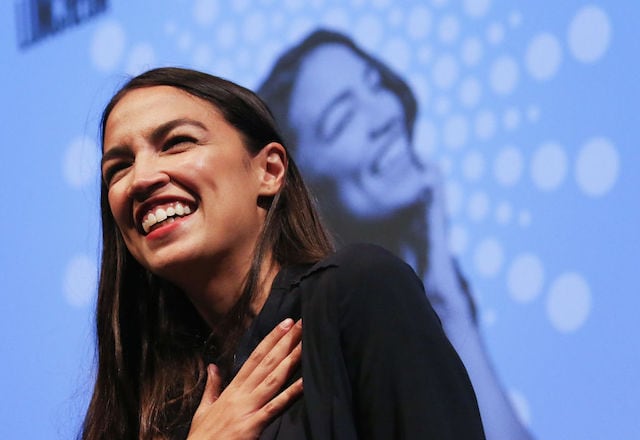
U.S. Congresswoman Alexandria Ocasio-Cortez is enjoying a moment of popularity. She is running to renew her seat in the November midterms, but all signs indicate she won’t stop there. The question about her medium-term future is whether she will jump to the Senate or fight in the Democratic primaries to run for the White House in 2028. AOC, as she is known, will soon turn 37 and, according to several outlets, has separated from her former fiancé. Her career and personal life are converging as time passes, and in that context she has made the same decision many other women have: to freeze her eggs to postpone possible motherhood.

The difference is that she documented the process on Instagram, where she has nearly 10 million followers, and turned it into a political message. That message exposes a brewing phenomenon within reproductive health and speaks to a society that still views not having children as an electoral weakness.

A clinical egg vitrification cycle lasts between 12 and 14 days. It consists of hormonal injections and medical checkups until the time comes for sedation and extraction. AOC posted a video showing how she felt on each of those days, plus two days of recovery.

The congresswoman is part of the Democrats’ most progressive wing and one of President Donald Trump’s main antagonists. She followed that line for this project: when she began it in mid-August she wrote that she was doing it because “Fertility is a loaded topic – from costs, privilege, and class to the way society casts judgement on virtually any choice or outcome a woman has in her life, no matter what that choice seems to be!” The videos are informal, informative and personal. She is shown injecting a syringe into her abdomen on a television set, and she repeatedly says she feels very bloated because her ovaries, normally the size of walnuts, swell to the size of oranges. She says she started saving for this when she was working as a waitress, and has reflected on how it could be made more accessible for everyone. The procedure will initially cost her about $9,000 — €7,500 — plus an annual maintenance fee.

Egg freezing rarely makes major headlines, but this summer it did in the United States because of AOC, and in Spain because the Royal Spanish Football Federation announced it will facilitate the treatment for its female players.

An example of why representation matters

In the United States, the Democratic congresswoman has opened a debate. Some see her decision as a form of personal autonomy; others believe she is trivializing the issue. In Spain there is also a debate, but with different cultural nuances. Many feminists, such as the athlete Ana Peleteiro, consider the popularization of egg freezing a capitalist mechanism that pushes women to postpone motherhood. Others criticize clinics for profiting freely from the phenomenon. Experts agree on one point: while it is progress, it is not the solution to the birth-rate crisis nor a magic recipe, because it starts from a misleading promise: it is sold as an opportunity to “buy time,” to extend reproductive life, but the only guarantee is that, when the time comes (and after paying again), there will be a chance to attempt using those oocytes. No one can guarantee a viable embryo. That is the first thing Dr. Rocío Núñez Calonge, a biologist and coordinator of the SEF’s Ethics Group, notes. Regarding AOC, Núñez Calonge says it can be positive that egg freezing is being made visible, but it should be “spoken about clearly in terms of its chances and consequences.” In other words, “with information and without marketing.”

What Calonge describes matches what the Democratic politician has done: show the reality of the process, with its lights and shadows, certainties and doubts. From a political-analysis perspective, her decision broadens the reproductive health agenda, which until recently was relegated to the private sphere. The news headlines in reproductive health historically have been about abortion, contraception and maternal health; in recent decades, as sexual rights have become more established, measures such as work–life balance, assisted reproduction, menopause and surrogacy have also entered the debate.

But egg freezing is newer and more narrowly defined. For Silvia Clavería, a political scientist specializing in gender at the Carlos III University in Madrid, the fact that AOC is putting it on the agenda — and doing so in the first person — is a clear example of why diversity in positions of power matters: “She is making visible a problem that other women share. A man couldn’t do this, nor could a woman of another age.”

The politics of the ‘childless cat ladies’

Context also gives AOC’s decision another dimension. In political science it has long been thought that voters of all stripes view candidates with conventional family lives more favorably. That perception is especially strong in the United States, a country where in 2021 Vice President JD Vance tried to disqualify Ocasio-Cortez and former candidate Kamala Harris by calling them “childless cat ladies.” It is from the MAGA movement led by Vance and Trump that the most ferocious criticisms of AOC typically come. It so happens that her cycle coincided with the resignation of 29‑year‑old Trump adviser Karoline Leavitt, who said she wanted to spend more time with her children — a model of womanhood that that radical sector finds far more acceptable.

AOC, who according to polls has a real chance of entering the race for the White House in the coming years, appears not to want to be a mother for now, but by showing how she freezes her eggs she can project the image of a modern woman who also cares about building a family of her own. Political scientist Silvia Clavería frames it that way, as does Sergi Santiago, a journalist and social media expert who has run digital campaigns for former Barcelona mayor Ada Colau. Santiago has followed the Democrat’s August project enthusiastically and calls it “a total communication win in political terms.” He believes she may have won over many women, even some conservatives, who are asking themselves the same questions, and that she has known how to set boundaries: she has withheld information about her alleged separation from her fiancé, and about the number of eggs she may have frozen. But above all, Santiago says, AOC sent a positive message: “She made it clear she’s fine with other people having children young — she simply chose something different. It’s an example of the classic progressive motto that says ‘in their world there’s no room for me, but they do fit in mine.’”

Sign up for our weekly newsletter to get more English-language news coverage from EL PAÍS USA Edition

Continue Reading

Adolf Hitler

Argentine Court Orders Return Of Nazi-Looted Painting To Victim’s Family

Published

on

argentine-court-orders-return-of-nazi-looted-painting-to-victim’s-family

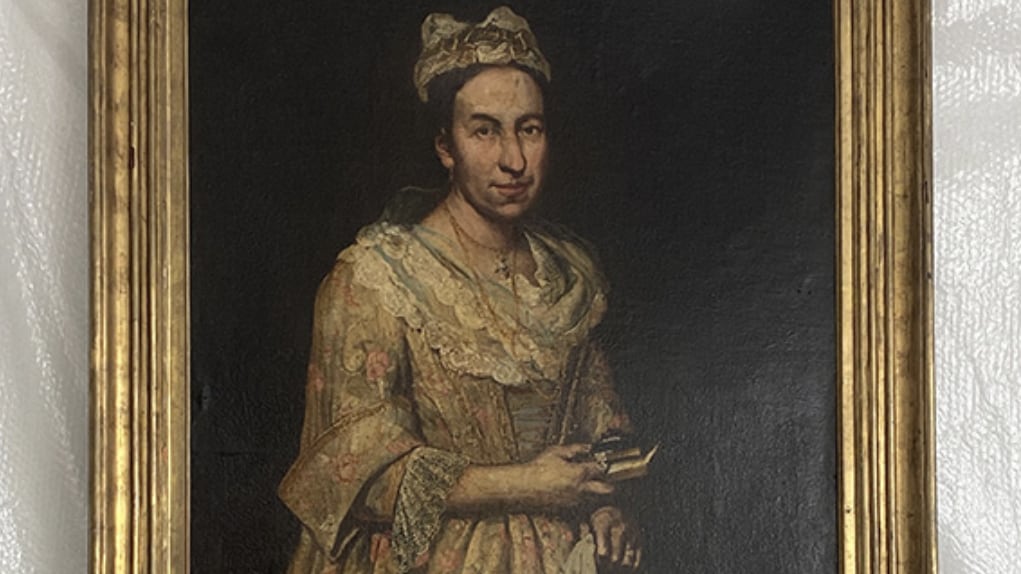
After almost 90 years, a painting stolen by the Nazis in the Netherlands will be returned to the heirs of the victims. Argentine courts ordered the restitution of the Portrait of a Lady to the family of Jewish gallery owner Jacques Goudstikker (1897–1940). The work, painted in the 18th century by Italian artist Giacomo Ceruti (1698–1767), had been missing since World War II and was found last year in the city of Mar del Plata, about 250 miles from Buenos Aires. It hung in the home of one of the daughters of Friedrich Kadgien, who was known as the Nazi regime’s “finance wizard.” Kadgien, a prominent associate of war criminal Hermann Göring, later moved to South America, where he lived out his life without ever facing justice.

In the case heard by the federal courts in Mar del Plata, Patricia Kadgien and her husband, Juan Carlos Cortegoso, were charged with possessing and concealing artwork stolen in the context of a genocide. After initially claiming to be the lawful owners of an inherited painting, the couple ultimately accepted an agreement reached between prosecutors and their defense attorneys to avoid a trial. As part of the deal, they irrevocably waived any rights or claims to the artwork.

The painting will now be returned to Marei von Saher, Goudstikker’s daughter-in-law, who, together with her daughters Charlene and Chantal von Saher, has devoted years to tracking down and recovering works looted by the Nazis. Through her lawyers, Von Saher, the heir of the art dealer who died in 1940 while fleeing the Nazis, said she would not accept “86 years of plunder,” but added that she was seeking neither revenge nor compensation, only the return of the painting that once belonged to her father-in-law.

According to her legal representatives, the family’s intention is for Portrait of a Lady to be exhibited on loan at a museum in Buenos Aires before it is returned, in order to raise awareness of the Nazi regime’s systematic looting of artwork. For now, the painting remains in the custody of Argentina’s Supreme Court in Buenos Aires.
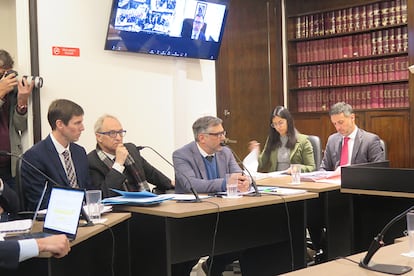
The painting’s return was finalized on Friday during a hearing presided over by Federal Judge Santiago Inchausti, with representatives of the Attorney General’s Office, Von Saher’s legal team, the defendants and their attorneys in attendance. During the proceedings, prosecutor Carlos Martínez said the resolution amounted to “a form of historical reparation for the victims.” As part of the agreement, the defendants must donate 4.8 million pesos (about $3,200), which will go to a charitable foundation supporting a maternal and children’s hospital in the district.

The discovery of the painting

Portrait of a Lady is an oil-on-canvas measuring 119.5 centimeters high by 89 centimeters wide. Its trail had gone cold in Amsterdam after Adolf Hitler’s regime looted the art gallery of Jacques Goudstikker, whose collection contained more than 1,100 works. In Goudstikker’s records, the painting was attributed to Giuseppe Ghislandi (1655-1743), but an expert examination carried out by Argentina’s National Academy of Fine Arts confirmed what several specialists had suspected over the years: the work was actually painted by Giacomo Ceruti, known as Il Pitocchetto. The painting is now estimated to be worth around €250,000 ($290,000).

The artwork’s rediscovery was the result of a chance development during a journalistic investigation into Nazi official Friedrich Gustav Kadgien (1907-1978). In August 2025, as part of coverage marking the 80th anniversary of the end of World War II, the Dutch newspaper Algemeen Dagblad sent correspondent Peter Schouten to Mar del Plata to try to contact Kadgien’s daughters.

Schouten was unable to reach anyone at the house, but he noticed a for-sale sign outside the property. Later, while browsing the real estate firm’s website, he found the listing. Among the photographs showing the interior of the home, he spotted the long-lost painting hanging prominently in the living room. Kadgien’s daughter and her husband were detained for 72 hours before surrendering the artwork to authorities.

“He is a snake of the lowest sort,” a U.S. intelligence report from 1945 said of Kadgien. A member of the SS, Kadgien had served as a financial expert for the Nazi regime since 1938. He played a key role in foreign-currency operations and in the plunder of territories occupied by Germany during the war. One of his responsibilities was extorting Jewish merchants in Amsterdam to help finance the Nazi war machine. After the Allied victory, he fled first to Switzerland, then to Brazil and ultimately, like many other war criminals, to Argentina, where he reinvented himself as a businessman.

Contemporary intelligence reports indicate that Kadgien escaped with diamonds and numerous works of art. For at least one of those works — the portrait of an Italian countess named Colleoni — something resembling justice has finally been served.

Sign up for our weekly newsletter to get more English-language news coverage from EL PAÍS USA Edition

Continue Reading

Delcy Rodríguez

They Have Sold Venezuela With Venezuelans Still Inside

Published

on

they-have-sold-venezuela-with-venezuelans-still-inside

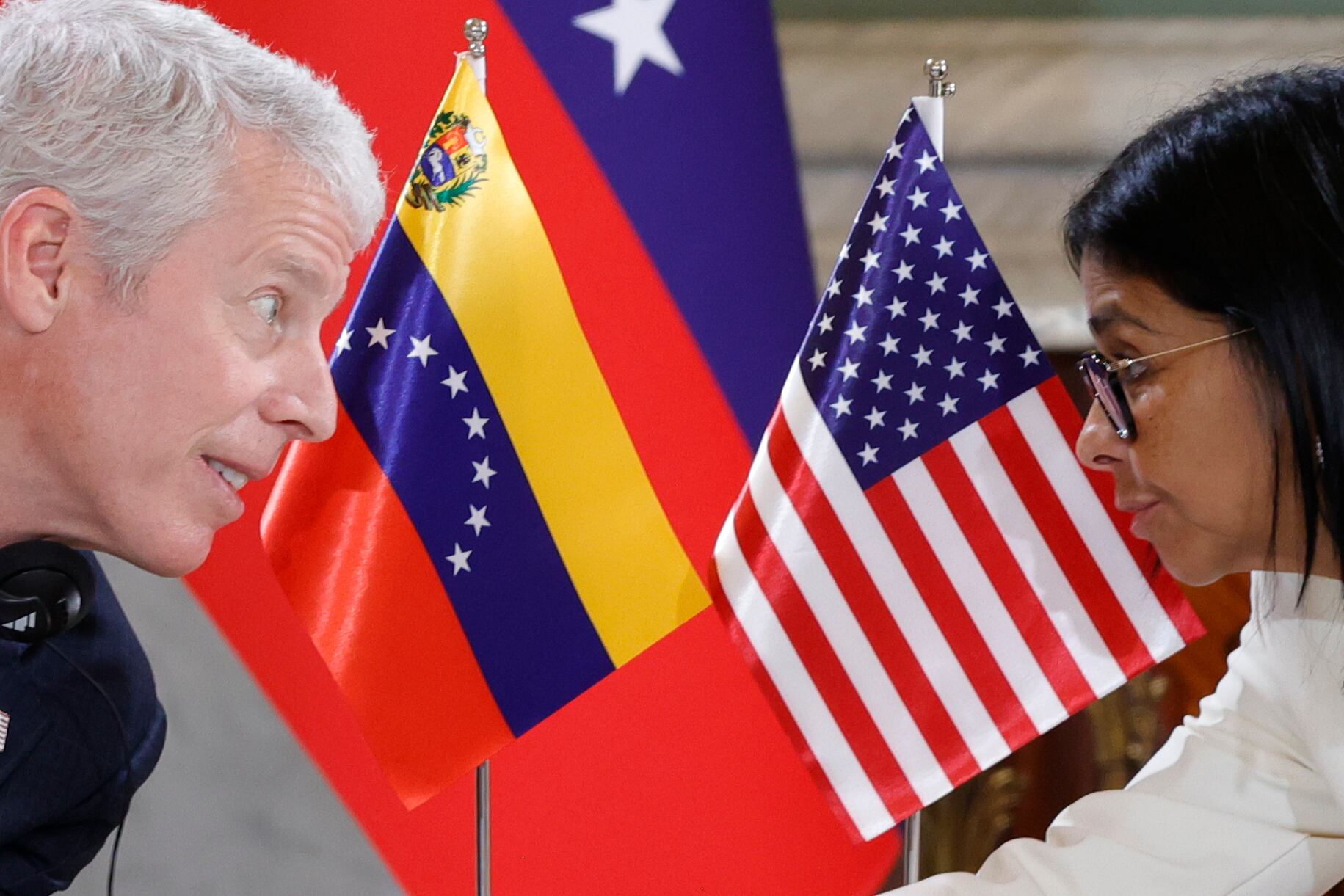
The “biggest oil deal in world history” between Donald Trump and Delcy Rodríguez, brokered through the controversial businessman Alejandro Betancourt, marks a pivotal moment in Venezuela’s history. And it does so for all the wrong reasons: the scale of what was negotiated, the opacity of the process, the lack of democratic legitimacy of those who negotiated it, and the extraordinary powers it grants Washington over Venezuela.

Although it will very likely bring a multibillion-dollar inflow of investment to Venezuela, it is a bad deal. So bad that, for the first time in more than two decades, the opposition and dissident members of Chavismo (the ruling movement founded by the late president Hugo Chávez) have joined in condemning it. From what little has leaked, a troubling conclusion can be drawn: handing the United States 35% of 55% of Venezuelan oil and another 20% at steep discounts, “at no cost to U.S. taxpayers,” and for the space of a century, is an absurdity and a burden that will weigh on generations to come.

They have sold Venezuela with Venezuelans still inside.

More than an oil agreement, this is a Faustian pact. The ruling Chavista government gets what it most needs: political survival. Washington gets what it most desires: privileged access to one of the world’s largest oil reserves and unprecedented oversight over the Venezuelan economy. The immediate benefit may be the recovery of a devastated country. The historical cost, however, is far harder to calculate: a cession of sovereignty on an extraordinary dimension.

That appears to be the agreement’s underlying logic. U.S. Secretary of State Marco Rubio confirmed last week that the United States must control Venezuela’s oil revenues to prevent rulers and elites from stealing the country’s resource wealth again. The irony is obvious: those rulers and elites are the very same people who have been in power for nearly three decades. But Rubio is not seeking to break that continuity; he is seeking to manage it. Because to control Venezuela’s oil wealth, the Trump administration must control the political conditions surrounding it, and that requires stability, not change.

It is a spurious agreement from beginning to end and must be denounced for what it is: the counterpart to the U.S. tutelage over Venezuela that has enabled Washington to control the country’s wealth since Nicolás Maduro’s removal.

But there is more. It is the beachhead for a broader influx of Trump-linked oil, financial and telecommunications companies into the country, a network of allies and business associates that includes figures who have served in his administration and donated to his campaigns. That includes the companies Sable and Primavera, as The Financial Times has reported.

That tutelage has only been possible because the Chavista troika has guaranteed its operation on the ground. The hidden side of the oil agreement is a second, political pact that allows Chavismo to remain in power with the blessing of the White House. In other words, the Rodrigato — the government of acting President Delcy Rodríguez and her brother, Jorge Rodríguez, who is head of the National Assembly — is handing over the country in exchange for power.

Alejandro Betancourt occupies a singular place in this story. The most prominent of the so-called bolichicos, the young businessmen who became extremely wealthy through contracts with the Chávez government, is not a mere intermediary: he is the bridge between the corruption of old Chavismo, the survival of a post-Maduro order and Washington’s interests. According to Marc Caputo in Axios, it was Betancourt who connected Delcy Rodríguez with Marco Rubio in the early hours of January 3, while U.S. troops stormed Fuerte Tiuna. Other Venezuelan sources maintain that his ties to Trump’s circle go back much further. If the Qatar talks at the end of 2025 had already revealed that Delcy was being positioned as Maduro’s successor in a negotiated transition, we now know who helped close the circle, and who has an interest in ensuring that circle is never broken by an election.

Trump confirmed this point when, asked about presidential elections in Venezuela, he replied that “they’re not ready.” The remark was both cynical and revealing. An overwhelming majority of Venezuelans support holding elections in the near term, but elections would introduce precisely the uncertainty that the new architecture of power in Venezuela was designed to avoid.

Therein lies the paradox of the agreement: it may attract the investment Venezuela’s economy needs to emerge from ruin while simultaneously entrenching a system that denies Venezuelans the right to determine their own future and deepens the country’s dependence on Washington under Chavista rule.

Trump has shown little regard for Venezuelan democracy. What matters to him is business and the advantages he can extract from it. If Venezuelans are already happily dancing in the streets, as he has repeatedly claimed, why would they need elections or democracy? Faustian bargains always offer something desirable. That is why they are so seductive. Venezuelans may well see short-term economic improvements. But the hidden cost is existential: it has been achieved through alliances with anti-democratic forces, and it will ultimately be paid for in sovereignty, institutions and the capacity for self-determination.

Venezuela’s ruling elite has already signed on. It has abandoned the defense of national sovereignty and the anti-imperialist struggle that for years served as the ideological justification for its political project. In return, it received a survival bonus.

After several days of silence, María Corina Machado condemned the opacity of a negotiation conducted behind closed doors by a government lacking democratic legitimacy, but stopped short of questioning the Trump administration’s role as the other party to the agreement. That caution is understandable. It is also a mistake: denouncing only one of the signatories is tantamount to accepting the other.

Machado therefore risks becoming trapped within the logic of the Faustian bargain. If Chavismo has traded sovereignty for political survival, she cannot simply wait for Washington to correct the problem whenever it sees fit. Trump is interested only in preserving a power structure that allows him to advance his own interests.

Machado would do well to understand that there are only two ways to emerge unscathed from a relationship with Trump: through absolute submission or by wielding as much power as he does. The first may win favors, but it offers no guarantees. Machado already tried the diplomacy of deference when she presented Trump with her Nobel Peace Prize diploma after the January 3 snub, when the MAGA leader humiliated her by describing her as weak and undeserving of respect. It failed because Trump does not want her. And because he does not want her, he does not see her as the central figure in his Venezuelan project.

There is a third way of dealing with Trump: standing up to him. The best recent example is Canadian Prime Minister Mark Carney, who responded to Trump’s tariffs despite knowing the economic cost to Canada would be significant. Canadians understood that some concessions come at too high a price, and they rewarded Carney with their support.

Machado does not have the power necessary to challenge Trump on equal terms in any arena. But she has something no one else has: the support of a majority of Venezuelans. That is why she should defy him, return to the country immediately, reunite a fractured opposition, re-energize politics and mobilize the public to demand the renewal of the electoral authority and free presidential elections. She must challenge both the Rodrigato and the system of tutelage that sustains it.

But first, she must understand her role in what is at stake and recognize that this may be her last chance. Only then will Venezuela keep alive the hope of reclaiming its freedom and renegotiating the biggest oil deal in world history, rather than going down in history as a de facto colony that never even becomes the 51st state of the Union. And only then will she remain worthy of the responsibility Venezuelans entrusted to her when they chose her as opposition leader with 93% of the vote. The challenge before her is not simply to defeat Chavismo. It is to prevent the Faustian bargain from becoming Venezuela’s permanent destiny.

Sign up for our weekly newsletter to get more English-language news coverage from EL PAÍS USA Edition

Continue Reading
Advertisement
Advertisement

Spanish Real Estate Agents

Tags

Trending

Copyright © 2017 Spanish Property & News