
ElPais
Tortured And Jailed Without A Conviction: Three Innocent Men Freed In Mexico After 24 Years In Prison

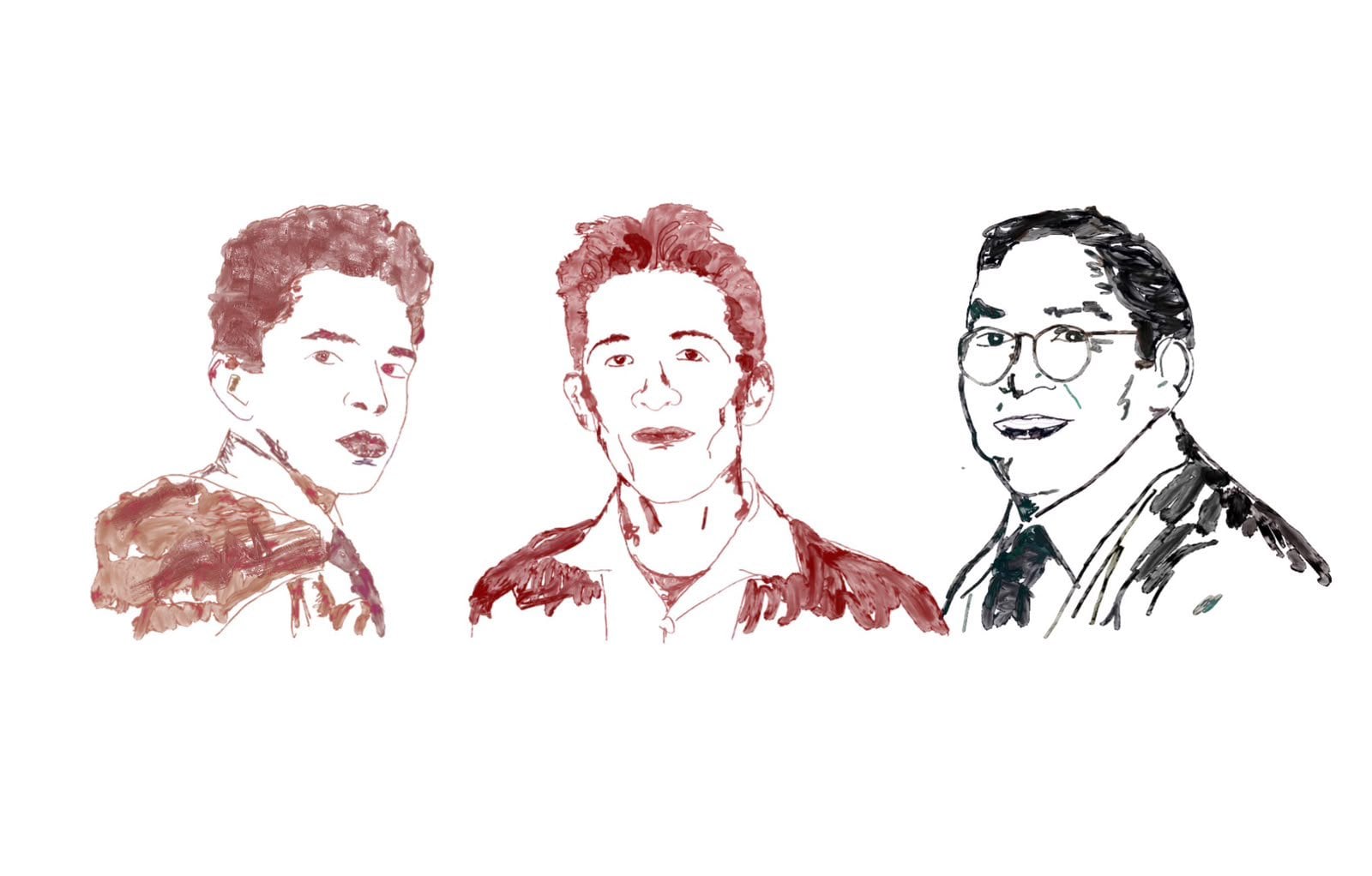
Ricardo Almanza was 25 when he was arrested. On Thursday, when he walked out of the Preventive Detention Center in the San Mateo Xalpa neighborhood of southern Mexico City, he was 49.
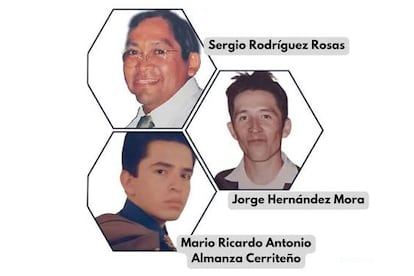
Along with Sergio Rodríguez and Jorge Hernández, Almanza was arbitrarily detained in the State of Mexico in August 2002 and accused of kidnapping and organized crime. Together with three other people, they were charged as members of a gang known as Los Kempes, which authorities linked to two kidnappings that allegedly yielded ransom payments of 12 million pesos (roughly $650,000 at the time) each.
On Wednesday, however, a judge in the state of Tlaxcala, where the crimes were allegedly committed, ordered the immediate release of the three men after 24 years behind bars. Nearly a quarter of a century later, they have been cleared of crimes they never committed. Their prosecution and imprisonment were built on torture, threats and fabricated evidence.
The victims of the so-called Tlaxcala case were never convicted by a final court ruling despite spending more than two decades entangled in legal proceedings marred by serious judicial irregularities, fabricated evidence and chronic delays in the justice system. In 2023, the United Nations Working Group on Arbitrary Detention concluded that their imprisonment was arbitrary and called for their immediate release.
Framed and tortured
According to a report by the U.N. Human Rights Office, on August 13, 2002, Sergio Rodríguez, then 43, was informed that one of his sons had been detained. He searched for him at several police stations in the State of Mexico before being told that he might be at the Justice Center in the municipality of Ecatepec.
As Rodríguez headed there with another of his sons, their vehicle was intercepted by an unmarked truck. Three armed men forced them out, covered their faces and pushed them into the vehicle. Once inside, with their hands tied behind their backs, they were beaten.
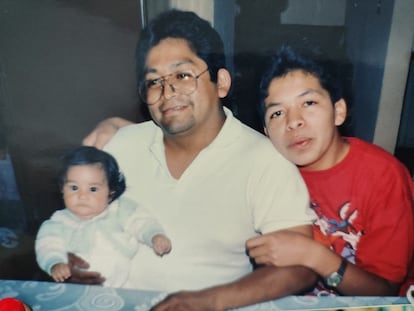
When Rodríguez arrived at the prosecutor’s office, the son he had been searching for was already being tortured. Rodríguez was forced to strip naked and thrown to the floor, where officers stomped on him, suffocated him and kicked him in the ribs. The beating stopped only when the officers noticed a surgical scar. He was later paraded before the media at the same facility as a kidnapper, alongside several others.
He was then taken to a cell and forced to read a confession aloud while his voice was recorded. Afterwards, he was made to sign documents under the threat that, if he refused, his sons would be killed.
Hernández was framed in much the same way. He was 21 when, later that same day, three men violently detained him outside his home in the State of Mexico and held him for several hours. He was taken to the state prosecutor’s office, where officers tried to force him to sign a set of documents. When he refused, they tortured him for hours. He was beaten, suffocated with a plastic bag and subjected to various forms of water torture.
Like Rodríguez, he was displayed at the same press conference as a kidnapper. When he continued to resist, a commander transferred him to a cell, pressed a gun to his head and forced him to sign the documents and record a confession.
Almanza was dating one of Hernández’s sisters. After witnessing Hernández’s arrest, he was approached by an officer who asked whether he was “Alejandro,” the name that appeared on an order to bring someone in for questioning. Almanza replied that Alejandro was a 10-year-old boy.
Concerned by what he saw as the excessive use of force and the arbitrary nature of the arrest, he accompanied the officers. But once they reached the prosecutor’s office, he was prevented from leaving the vehicle. Officers detained him on the spot and told him that, since the child they were looking for was not there, he would “take his place.” He was beaten, tortured with electric shocks for hours and ultimately implicated in the crime.
Alongside Hernández, Almanza and Rodríguez, three other men were arrested in the State of Mexico: Oswaldo Rodríguez, who spent 14 years in prison; Hugo Rodríguez, who spent eight months behind bars; and José María Cirilo, who died in custody in 2013. None of them was arrested in Tlaxcala, roughly 75 miles away, where the kidnapping was allegedly committed.
Agustín Acosta, the lawyer representing the three men who have now been released, says authorities were determined to find culprits at any cost. “The investigation was so poorly conducted that they were actually looking for an Alejandro Hernández, but he was a 10-year-old boy. When they were told he was a minor, they took Jorge, his older brother, instead. They were arrested despite having absolutely nothing to do with the crime,” he said in a telephone interview.
The investigation was led by Edgar Bayardo del Villar, then Tlaxcala’s anti-kidnapping prosecutor, who was later accused of ties to the Sinaloa Cartel. He was gunned down in a Mexico City café in 2009.
In 2002, Luis Cárdenas Palomino was head of police investigations at the now-defunct Federal Investigative Agency, which assisted in the arrests. Cárdenas Palomino was later convicted in a separate torture case. Several officers involved in the operation now face criminal charges and arrest warrants for torture.
In March 2019, a court ruling concluded that Los Kempes never existed. The defendants were acquitted of organized crime charges, and each was cleared of one of the kidnappings attributed to the alleged gang. On March 1, 2022, arrest warrants were issued for nine participants in the operation on suspicion of torture.
Enchiladas to celebrate freedom
The first thing Almanza did after walking free on Thursday, following 24 years in prison, was join his family for a glass of orange juice and a plate of green enchiladas. He had expected to be released on Tuesday night, but a bureaucratic mix-up involving official notifications delayed the process. After nearly a quarter of a century behind bars, he admits that being free again “feels different,” but says that as he made his way home, he felt “a lot of happiness.”
Almanza spent eight years in Mexico City’s South Prison before being transferred in 2010 to the former federal prison in Perote, Veracruz. Over the next 19 months, he was moved between prisons in Huimanguillo, Tabasco, and Guasave, Sinaloa. After four years in northern Mexico, he was transferred again, first to Durango and eventually back to the capital.
“We were collateral damage from structures like those built by Genaro García Luna,” he says, referring to the former Mexican security chief convicted in the United States in 2024 on drug-trafficking and organized-crime charges. “And from corrupt police officers. Now all we want is some peace, to work and move forward with our lives.”
“You leave prison with nothing. The only thing I want is to thank all the people who took an interest in helping bring our innocence to light,” Almanza says.
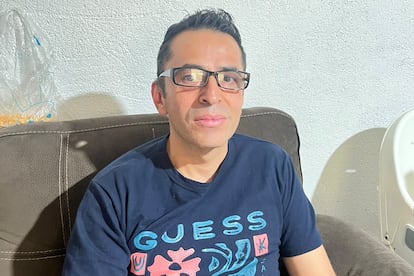
Each prison transfer was a traumatic experience for Almanza. He recalls that during air transfers, prison guards shackled inmates’ hands and feet and forced them to keep their heads bent down onto their knees throughout the flight.
“It was very painful and traumatic,” he says by phone. “Many people soiled themselves, vomited or fainted, and everyone was treated the same. I was shuttled all over the country, visiting federal prisons labeled as a kidnapper, enduring screams, beatings, and abuse. But thank God we made it through; we’re still alive and we’re still giving it our all now that we’re free.”
He remembers the harshest conditions being at the federal prison in Villa Aldama, Veracruz, which he describes as “constantly cold.” “When we arrived, they didn’t give us mattresses, shoes, blankets or jackets. It was about four or five days of sleeping on cardboard and newspapers, with illnesses and very scarce food. If they gave us 10 beans, that was a lot,” he recalls.
Before his arrest, Almanza worked as a sales promoter, organizing events and marketing products for a private company. In 2019, after being transferred back from Durango to Mexico City’s South Prison, he learned sewing and upholstery. “My sister and I are thinking of opening an upholstery shop; that’s what I liked and learned there,” he says.
Sign up for our weekly newsletter to get more English-language news coverage from EL PAÍS USA Edition








ElPais
Paul Banks Of Interpol: ‘Quitting Drugs And Alcohol Wasn’t That Hard. It Was Time And I Was Ready’

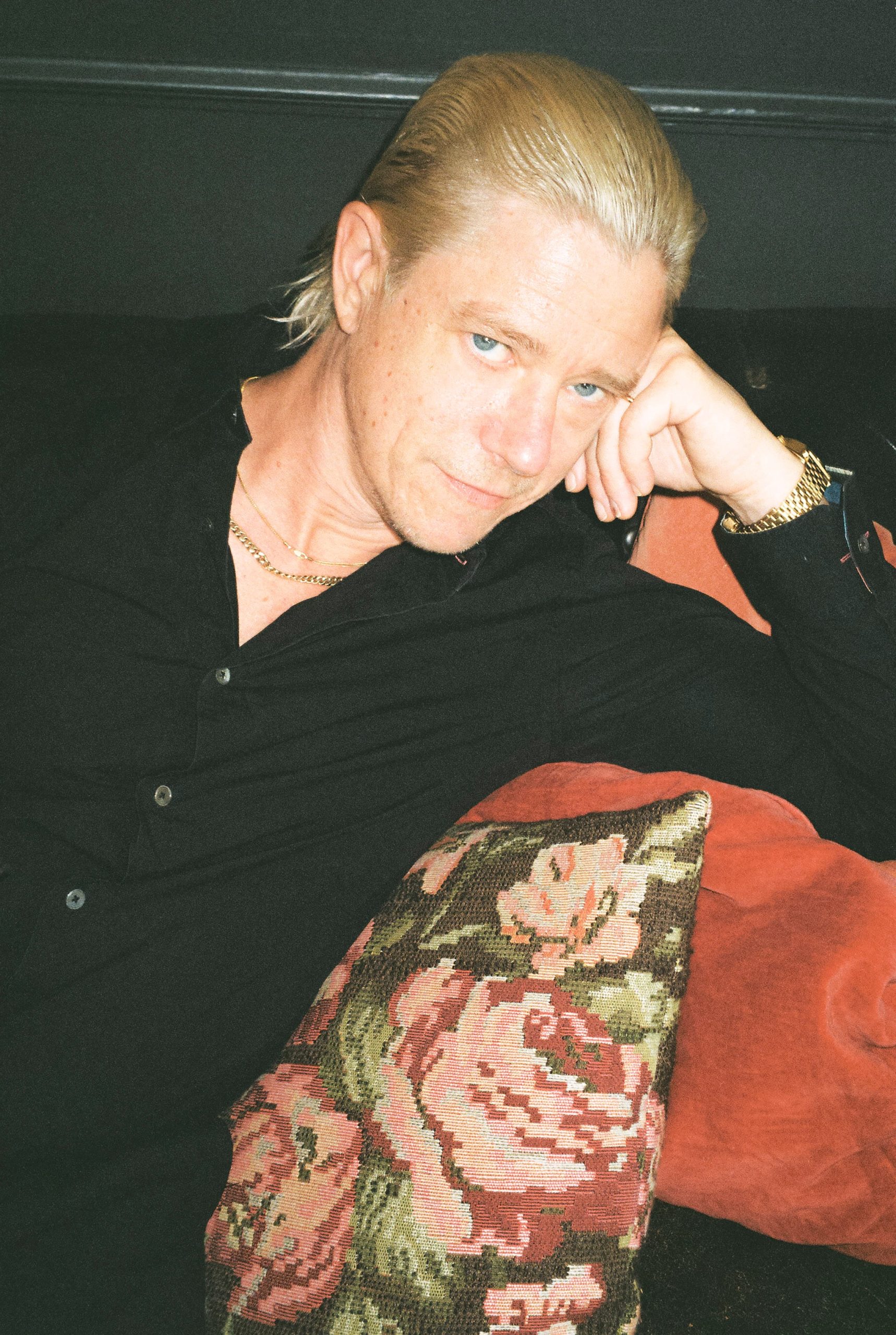
Sitting in the suite of an upmarket hotel with an iced latte in hand, Paul Banks (Essex, 48) shows few visible aftereffects of the intoxicated lifestyle that nearly sent him to the other side. The Interpol singer looks happy in middle age. His band, which shone in early-2000s New York amid the post-punk revival, is now enjoying a second youth, lifted up by a generation that once again reveres the archetype of the tormented indie figure à la Ian Curtis, with whom Banks has long been compared.
He is in Madrid to present This Mirror Weighs a Ton, the band’s eighth album. He knows the city well. He lived in the Spanish capital from the ages of 11 to 16. He still has friends and visits them every time he comes. He says he fell in love with Madrid and learned that, with time and the right attitude, he could live anywhere. “When I got here I was on a BMX and playing basketball. I left at 16, but by then we were drinking, smoking and going to clubs and stuff. The last moments of pure happiness and the first moments of adulthood were in Madrid.”
He grew up with skaters in the downtown Plaza de Colón because his father, an automotive executive, came to Madrid for a job at Volkswagen. Later the family moved to Mexico and then to New Jersey. “When you talk to people who talk about having families and moving around a lot, I think a lot of people frame it from a negative standpoint, you know, maybe the child won’t be able to develop roots or have a sense of home. The way it worked for me was sort of on the contrary: I think it allowed me to just be a citizen of the world with no notions of one thing being above another and that every place has its charms.”
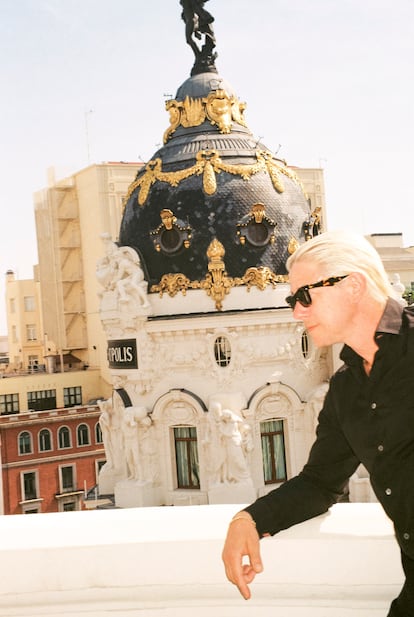
Banks studied literature in New York. It was the era of rock’s rebirth, with bands such as The Strokes, Yeah Yeah Yeahs, The Rapture, and LCD Soundsystem. In 1997 he joined Daniel Kessler, Carlos Dengler and Greg Drudy to form Interpol. Five years later, with Sam Fogarino replacing Drudy, they debuted with Turn On the Bright Lights, a key album of that scene. But as Interpol grew commercially, its members began to show signs of wear. In 2010, Dengler left the group. For Banks, those years were marked by substance use. He says he quit when he realized he wouldn’t last much longer on that road. “I was open about the fact that I was getting to the point where I think I was getting close to mortal situations. And then I just went to get treatment.”
He moved to New Jersey, to a house that was far from the bars and clubs and from some of his friends, whom he didn’t see again for a long time. “If you say, okay, this table’s my life and I’m going to move the beer over there to the far side of the table, that’s not going to work if you’re trying to stop drinking. It has to be off the table. Once something is genuinely off the table, there’s not really that much left to do. It was hard; I had to go through a major chemical rebalance, and I think I went into some pretty profound depressions at the time. I couldn’t quit cigarettes for a long time after that. But the drugs and alcohol wasn’t that hard because it was time and I was just ready for it.”
Despite everything, he has fond memories of that year and a half of recovery, during which he exercised a lot and threw himself into music. “[In 2013] I did this crazy mixtape called Everybody on My Dick Like They Supposed to Be. I don’t know if you know about it; it’s only on YouTube. It was just something I did for fun. I learned to use Logic [a music-production program], and it was the first time I realized, oh, I could write with horns or trumpets or trombones. I can create any sounds I want. It was pure creativity at a time when I really needed it.”
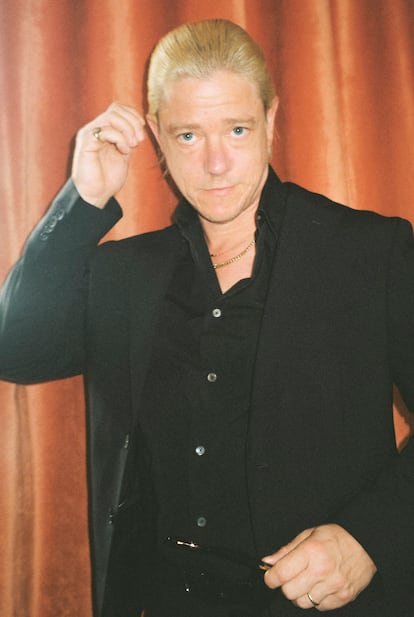
Like many artists who get used to creating under the influence, Banks needed time to discover he could do it sober. “I’ve never felt that booze or weed — and I do smoke weed still — is somehow helping the creation. You’re telling yourself that it’s this sort of ceremonial preamble to the process of creation. So you can do without them and instead sit for a few minutes and quietly tell yourself you’re going to channel your creativity and try to make something beautiful.”
He changed his lifestyle and found in surfing and boxing two activities to fill the “void of excitement” drugs had once provided. While standing on a board in the middle of the ocean he applied the same principle he used to stop drinking. “There’s not really a middle ground because anything in the middle, you can just keep leaning into panic and then just fucking slide that way. If you’re on a surfboard and you start thinking, ‘What if there’s a shark?’ It can become overwhelming. Instead you have to realize: ‘I’m not on the menu; I’m sure the universe is not upset with me for being out in the ocean on this non-polluting floating object.’ So if the universe wants a shark to get confused and come bite me, then what am I gonna fucking do about it?”
The end of the process culminated in the birth of his two children, who have changed how he works and conceives his career. “I think about what I’d want my son to think: Not so much would he like these lyrics, but would he like the effort that I’m making? Would he admire the sort of commitment to my craft? I think that becoming a father fully activated my soul. It’s not that the love you normally feel goes from a ten to an eleven. It’s something else. It’s like a room that you didn’t know was in your house, and now you discover this room, and someone turns the light on, and now there’s this extra space, and that’s how it feels emotionally.”
At the end of the interview he takes out his phone and proudly shows a photo of his children. They don’t yet know their father’s story, but one day they will. Is he worried about what they might think of him? “Do you mean because some of the themes are a bit weird, or that they’re sort of dark? I’ve thought about that. But from what I’ve heard from other artists who talk about their kids, they don’t care much who their parents are in the art world. Robert Downey Jr. will talk about his kids watching The Avengers, but they don’t care that dad is Iron Man: they like Thor. You just want to make sure that it doesn’t get in the way of any part of their life or that it doesn’t impact them negatively.”
Sign up for our weekly newsletterto get more English-language news coverage from EL PAÍS USA Edition

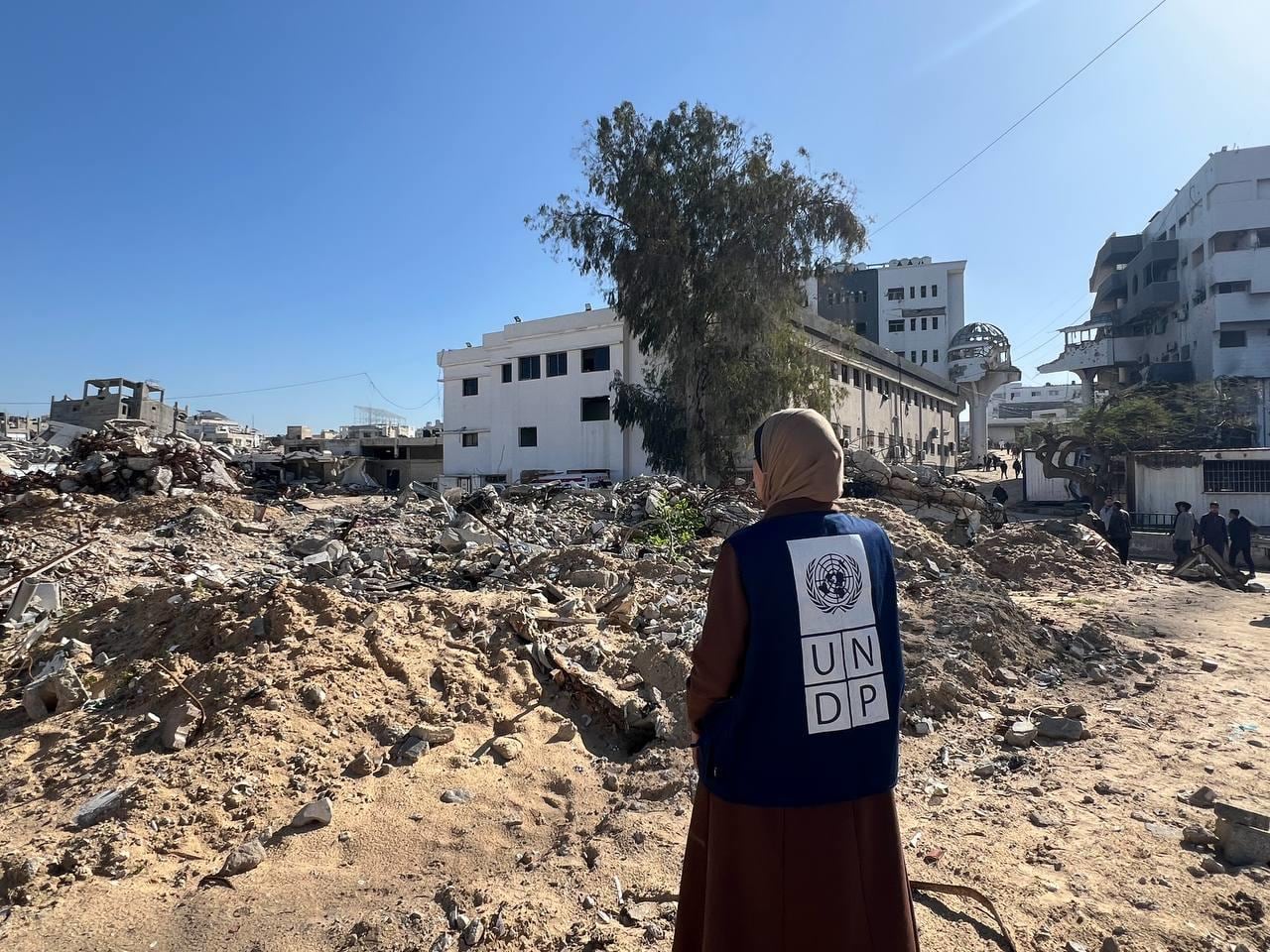
Three years after the start of the war in Gaza, thousands of families still do not know what happened to their loved ones. Some vanished beneath buildings bombed by Israel; others remain unaccounted for. The destruction of territory, the displacement of millions of people and the lack of resources to recover and identify remains make it increasingly difficult to reconstruct their stories. The longer time goes by, the greater the risk of losing the evidence that could lead to them.
According to estimates from the Palestinian National Team for Monitoring Missing Persons, more than 10,000 people are missing in the Gaza Strip, and it is believed that over 8,000 remain under the rubble. The team has individually documented more than 9,500 cases, including 4,700 women and children.
For Omar Al‑Assouli, strategic adviser to the United Nations Development Programme (UNDP) in Palestine, the experience of Colombia’s Unit for the Search for Persons Declared Missing (UBPD) provides an answer—drawn from the Colombian reality—to the question of how to launch searches for missing people without waiting for the conflict to end.
“The first time we talked about this issue it was almost impossible to start the work, because people always think you have to end the war or have a peace agreement before starting the process of searching for the missing. But contact with the UBPD gave us the key, which is that we have a humanitarian approach. That gave us a lot of motivation to start, without making the mistake of waiting for the peace process or for transitional justice,” Al‑Assouli says from Bogotá, where he is taking part in an international symposium organized by the Search Unit.
In Colombia, that unit was born out of the 2016 Peace Agreement as a humanitarian, extrajudicial entity tasked with searching for people who disappeared in the context of the armed conflict. It includes those who may still be alive and those who died, whose remains must be recovered, identified and returned to their families. Because it does not seek to determine criminal responsibility, the search can advance without relying on judicial processes.
That is precisely something that could work in Gaza, Al‑Assouli says. “People are suffering and every day counts. They do not need a process of transitional justice now, nor do they need to be waiting for one; they do not need to see the people who made their relatives disappear go to prison. What they are seeking immediately is the truth and information about them,” he says.
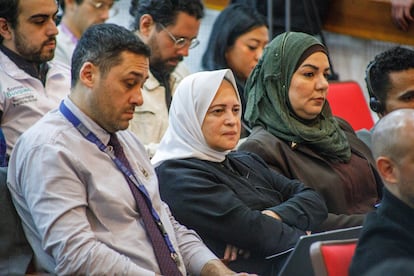
Contact with the Colombian experience has also led him to consider how to centralize all available information, as the UBPD does. He explains that families can hand the same data to different organizations and agencies, a repetition that wears on those who are searching and increases the risk that information becomes scattered. “We think it is very important to have a comprehensive information‑collection system. We can collect the data that NGOs, international organizations or the Red Cross already have,” he explains.
Another point of convergence between the Palestinian and Colombian experiences is a collective dimension to the search. In Colombia, the UBPD has built on and strengthened the work of families and searchers—mostly women, who have their own protection and accompaniment law—social organizations, specialists and professionals from different disciplines. In Gaza, Al‑Assouli says, families are part of that work, although the conditions make it harder. The challenge is for that search to have coordination, technical support and mechanisms to preserve the information.
The obstacles to finding the missing in Gaza
The challenges, however, go further. Al‑Assouli points out that a significant portion of the territory is outside the control of Palestinian authorities and that, even in places where access is possible, resources to examine bodies are lacking. Searches take place amid destruction that makes both recovering remains and reconstructing the circumstances of disappearance difficult.
“In areas under Palestinian control, search methods are very primitive. There are no, for example, large excavators,” he says. The critical scenario is compounded by a shortage of DNA tests and forensic laboratories. In some centers samples are kept and remains are registered as unidentified, awaiting conditions that would allow testing.
But while time there may sound like hope, it also worsens the shortages. Bodies that remain beneath destroyed buildings can deteriorate. Some of those recovered have been in a condition that requires expertise in forensic anthropology and other disciplines. Those technical skills are scarce on the ground.
Displacement adds another difficulty. Around two and a half million people lived in Gaza, and about two million of them have had to flee their homes. Reconstructing who lived in each building, who was there when it was destroyed and who has been missing since then is far harder given those movements. “It is another source of information that we do not have,” the expert says.
While institutions try to organize the search, some families return to places they can enter and dig with their own hands or rudimentary tools. They try to find any evidence that would let them know whether their relatives are still there and recover the bodies to bury them.
The expert describes that search as a response to uncertainty, one that the Colombian experience shows could be reduced with organization and resources, even without waiting for all conditions to be adequate.
Sign up for our weekly newsletter to get more English-language news coverage from EL PAÍS USA Edition

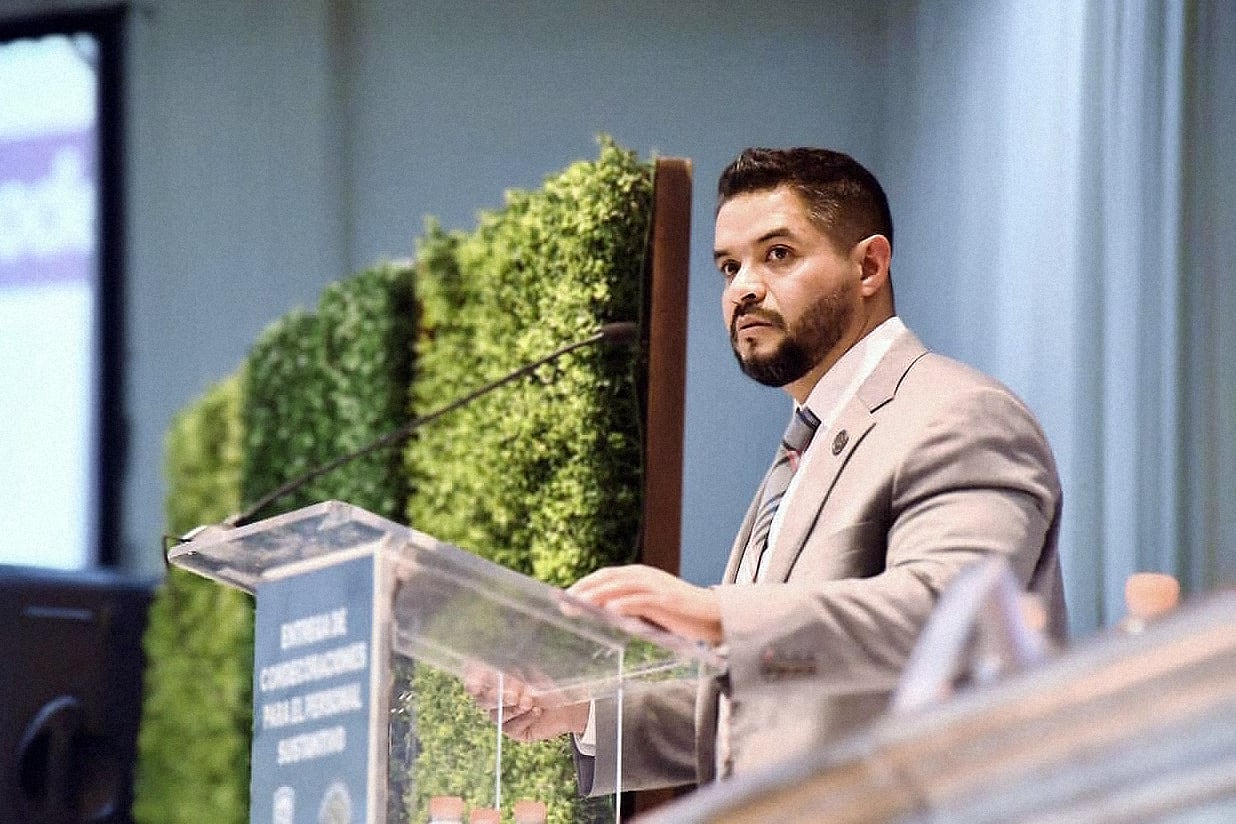
The scandal over alleged U.S. interference in security operations in the Mexican state of Chihuahua has taken another turn. It was not two but four CIA agents who took part in an April anti-drug operation in the community of El Pinal, in the municipality of Morelos, Chihuahua.
Authorities have maintained that the CIA agents played no direct role in the dismantling of the drug laboratory targeted in the operation. But nor were they strangers to staff at the Chihuahua Attorney General’s Office then headed by César Jáuregui Moreno. In the preceding months, they had taken part in activities ranging from training and instruction to operational planning.
Much of that involvement stemmed from their close relationship with Guillermo Arturo Zuany Portillo, then the state’s special prosecutor for strategic operations, who is said to have given them broad access to the institution. The former official has been missing since mid-May, when he resigned and emptied his office. He is now wanted on charges of unlawful exercise of public office and making false statements to authorities. Zuany, a central figure in understanding the extent of alleged U.S. involvement in Chihuahua’s security apparatus, remains a fugitive.
Details of Zuany’s actions before and after the El Pinal operation are laid out in the investigative file that led to the arrest of César Jáuregui. Jáuregui faces the same charges at the state level and, in addition, a charge of treason brought by Mexico’s Attorney General’s Office.
Sources familiar with the investigation have shared portions of the case file with EL PAÍS. The documents identify Zuany as the key facilitator of CIA involvement in operations conducted by Chihuahua’s Attorney General’s Office, at least six months before the operation that ended in tragedy, leaving two CIA agents and two Chihuahua officials dead, and triggering one of the most serious political crises of the administration of Mexican President Claudia Sheinbaum.
Zuany took office on September 5, 2025, when Chihuahua Governor María Eugenia Campos promoted him from the State Investigative Agency to the Specialized Prosecutor’s Office for Strategic Operations. Both institutions were under the authority of César Jáuregui, who at the time was the head of Chihuahua’s Attorney General’s Office.
Announcing the appointment, Chihuahua’s Attorney General’s Office highlighted his credentials: “Zuany Portillo is a person with an extensive career, particularly in matters related to the investigation of kidnapping and extortion, since he began his career as an investigator in the Anti-Kidnapping Group that eradicated this crime in the state of Chihuahua.”
Just 90 days after taking up the post, however, Zuany became embroiled in controversy when the United States revoked his visa. The move prompted Governor Campos to remove him from office. Two months later, Zuany recovered his visa and was reinstated as head of the specialized prosecutor’s office.
The reshuffle within Jáuregui’s team also brought a new director to the State Investigative Agency: Pedro Ramón Oseguera Cervantes. Months later, Oseguera was killed alongside two CIA agents in the road accident that occurred as they were returning from the operation in El Pinal.
The special investigative unit created by Campos on April 25 to look into the incident spent five months collecting documents, videos, photographs and testimony from 45 officials.
According to the case file, the four CIA agents regularly entered and left Chihuahua, sometimes as tourists and at other times as “embassy personnel,” the term used by Ronald Johnson, the U.S. ambassador to Mexico, when he publicly mourned their deaths in a social media post on April 19.
Investigators gathered documentary evidence showing the agents’ presence from as early as January at the Chihuahua State Attorney General’s Office complex in downtown Chihuahua City. The file also contains images recorded on April 17, when the CIA agents departed for the operation in El Pinal, a community in the municipality of Morelos, more than a 10-hour drive away.
They were wearing tactical gear, not bearing CIA insignia but the uniforms of state security forces. They were armed and carrying equipment cases, as one of them was a drone operator. In one of the videos, according to sources familiar with the investigation, Zuany can be seen arguing with Jáuregui inside the Chihuahua Attorney General’s Office. Neither man took part in the operation in El Pinal, but Pedro Oseguera, the head of the State Investigative Agency, did. He left in a vehicle with two CIA agents, while the other two traveled in escort vehicles.
According to the investigation, the operation took place between Friday, April 17, and Saturday, April 18. The Chihuahua Attorney General’s Office described it as a joint effort involving its Specialized Prosecutor’s Office for Strategic Operations, the State Investigative Agency and personnel from Mexico’s Defense Ministry. Military authorities were reportedly notified only after state agents had reached the area and were asked to provide perimeter security.
In a statement issued on April 19, the Chihuahua Attorney General’s Office said that agents operating in the municipality of Morelos had discovered two “camps” housing six clandestine laboratories used to manufacture synthetic drugs. “It is one of the largest ever found in the country,” Jáuregui boasted during a press conference. He acknowledged that the site was not formally secured until federal authorities were notified and Mexico’s Attorney General’s Office (FGR) took over the case.
Jáuregui made no mention of the presence of CIA agents, or of personnel linked to the U.S. Embassy, during the operation. And despite what authorities described as a major blow against organized crime, the agents encountered no resistance on arrival. The site appeared largely abandoned. They entered, secured the laboratories, alerted federal forces and then left the area under the protection of the Mexican Army.
It was on the return trip to Chihuahua that the vehicle carrying the head of the State Investigative Agency and two CIA agents plunged off the road in an area known as Polanco, in the municipality of Batopilas, which borders Morelos.
The vehicle fell about 200 meters down a ravine and, because it was carrying gasoline containers for refueling in the remote mountain region, exploded on impact. One of the bodies was burned beyond recognition. The crash killed CIA agents Richard Leiter Johnston III, 35, and John Dudley Black, 43.
According to the investigation, the other two CIA agents and the personnel traveling in a second vehicle climbed down into the ravine to recover the bodies, which were later flown to Chihuahua City. Zuany allegedly ordered the recovery of the deceased U.S. agents’ personal belongings from the crash site.
Mexican President Claudia Sheinbaum then confronted Chihuahua’s governor, Maru Campos, from the National Action Party (PAN), over the involvement of CIA agents in an anti-drug operation and the fact that it had been carried out without informing Mexico’s federal Security Cabinet.
The incident quickly spiraled into a political crisis between the federal government and the state of Chihuahua, and between the ruling Morena party and the opposition PAN. Accusations of treason flew from one side, while allegations of collusion with organized crime came from the other.
Campos met with Security Secretary Omar García Harfuch and, on April 25, established a special investigative unit to examine the events. Two days later, Jáuregui resigned as state attorney general, acknowledging responsibility for failing to disclose the presence of foreign personnel in the operation.
Zuany remained in office for another two weeks. His resignation was announced on May 13, by which point the investigations were underway and the political dispute had escalated nationwide, with calls for Campos’s impeachment and protests by Morena supporters in Chihuahua.
Since then, his whereabouts have been unknown. Local media reports have placed him in the United States. It was not until October 16, five months later, that Judge Luis Alberto Simental issued an arrest warrant for him, as well as for his former superior, César Jáuregui Moreno.
According to sources familiar with the investigation, however, Zuany has not yet been charged by the FGR with treason, the offense for which Jáuregui is already being held in pretrial detention at the maximum-security Altiplano prison. The two key figures behind the El Pinal operation have effectively vanished from the picture: Pedro Ramón Oseguera is dead, and Arturo Zuany is a fugitive.
Sign up for our weekly newsletter to get more English-language news coverage from EL PAÍS USA Edition
German supermarket grows 900,000 salads a year on its own rooftop
EROSKI issues food alert after glass fragments found in ricotta sauce
Spain targets 8,318 holiday rental listings under new 31-day rule

F1 Bahrain Grand Prix will be live and FREE on TV this weekend

How To Get A Tourist Rental Licence In Andalusia (Spain) – Step-By-Step Guide 2025
Brussels takes action against Spain over failure to update blackout plan


-
 Uncategorized3 weeks ago
F1 Bahrain Grand Prix will be live and FREE on TV this weekend
-
 New Developments3 weeks ago
How To Get A Tourist Rental Licence In Andalusia (Spain) – Step-By-Step Guide 2025
-
Blackout preparedness3 weeks ago
Brussels takes action against Spain over failure to update blackout plan
-

 New Developments3 weeks ago
Luxury Villas For Sale, Estepona – ProjectL1
-
EU3 weeks ago
EU nicotine crackdown sparks warning that ex-smokers could be driven back to cigarettes
-

 Uncategorized3 weeks ago
Lewis Hamilton F1 wish could come true as stunning plans for new track revealed
-

 Foreign demand4 weeks ago
Market Snapshot: German Market In Q2 2026
-
 Housing access / crisis / affordability3 weeks ago
Radical Housing Decrees Defeated As Snap Election Talk Grows