Connect with us

%

Sánchez Speech On Minister’s Resignation Raises Eyebrows

Published

on

sanchez-speech-on-minister’s-resignation-raises-eyebrows

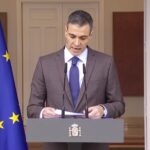
Pedro Sánchez addresses the nation. Credit: Moncloa

Pedro Sánchez is facing questions over his handling of Spain’s railway crisis after his defence of former Transport Minister Óscar Puente appeared to contradict the Prime Minister’s earlier position on his colleague’s departure.

Following Puente’s resignation on Tuesday, November 3, Sánchez praised his decision as an act of “dignity” and “respect” for the victims of the Urda railway disaster. However, his comments have reopened debate about political responsibility, public confidence and whether the Government is doing enough to address serious problems affecting Spain’s railway network.

The controversy comes just days after Sánchez acknowledged that confidence in Spain’s high-speed railway system had been broken.

Sánchez previously defended Puente’s position

One of the most striking points concerns the Prime Minister’s change of position. Following the October 28 collision near Urda, which killed 69 people, Sánchez initially stood firmly behind his Transport Minister. On October 30, Puente revealed that he had offered to put his position at Sánchez’s disposal, but the Prime Minister had reportedly considered his departure unfair.

However, Puente subsequently announced his departure without informing Sánchez until shortly before making it public. Spanish press revealed that even the Prime Minister’s closest team had been taken by surprise. Now Sánchez has described the resignation as an example of political dignity, saying it demonstrates that not all politicians behave in the same way.

The apparent change raises questions about why the Prime Minister initially considered Puente’s departure unjust but now presents it as the right thing to do.

Can a minister’s resignation restore public confidence?

Sánchez praised Puente for facing questions and providing solutions, adding that his resignation demonstrated respect for the victims. He said: “Con su renuncia Óscar ayuda a que España recupere la confianza en el sistema ferroviario”. Translated, this means Puente’s resignation would help Spain recover confidence in its railway system.

However, critics may question how the departure of one minister can restore confidence when the underlying safety concerns have yet to be fully investigated. The two disasters in Adamuz and Urda have claimed 115 lives in total. Their causes and the possible failures in railway management, infrastructure and safety procedures are still subject to investigation.

EWN previously examined questions surrounding railway safety, including the unfinished safety upgrade on the Madrid-Andalucia high-speed line.

Criticism of political opponents raises eyebrows

Another controversial part of Sánchez’s comments concerned political polarisation. The Prime Minister complained about what he described as an atmosphere of political noise and extraordinary dehumanisation. He also suggested that some people wanted everything to fall apart because they benefited from confrontation and fear.

Critics could question whether attacking the motives of political opponents sits comfortably with an appeal for less polarisation. PP leader Alberto Núñez Feijóo was quick to respond. Referring to Sánchez’s praise of Puente for resigning on grounds of dignity, he told the Prime Minister to apply the same argument to himself.

Feijóo’s response added another dimension to the political dispute, with the opposition questioning why responsibility should end with the former Transport Minister.

Carlos Cuerpo takes temporary charge

Sánchez confirmed that First Deputy Prime Minister Carlos Cuerpo would temporarily take over responsibility for the Transport Ministry. He commended Cuerpo’s management abilities and said he would continue the reforms introduced by Puente.

That announcement raises another question: if the Government believes the existing reform programme is the right approach, what changes will now be made to address the problems exposed by the two disasters?

For families who lost loved ones, and passengers worried about travelling by train, political statements will count for little without clear answers and demonstrable improvements in railway safety.

The investigations must establish what went wrong. Meanwhile, Sánchez’s comments have ensured that questions about political accountability are not going away.

%

100kg Wild Boar Smashes Into French Funeral Parlour

Published

on

100kg-wild-boar-smashes-into-french-funeral-parlour

Wild boar runs amok in village funeral parlour. Credit: archive image

A giant wild boar weighing around 100kg caused chaos in a small French village after charging through the streets, smashing its way into a funeral parlour and leaving two people terrified after a face-to-face encounter.

The extraordinary incident happened in Salviac, in the Lot department of south-west France, on Sunday, November 1, when the animal was apparently startled during a hunting expedition and headed towards the village instead of escaping into the surrounding countryside.

According to French newspaper La Depeche du Midi, people sitting outside the village’s La Poste bar had to rush indoors as the enormous animal came charging down the street.

Boar crashes into funeral business

The animal then crossed the road and repeatedly charged at the entrance to a funeral business, eventually smashing through its glass doors. Owner Catherine Figeac was inside meeting a client when the boar burst into the reception area. The pair suddenly found themselves face to face with the animal, which was so large that its back repeatedly struck the top of her 90cm-high desk.

Terrified, Catherine climbed onto her chair and shouted warnings to people outside as the boar charged through the premises. Although it damaged the entrance and some equipment, neither she nor her client was injured.

The animal subsequently headed towards a nearby restaurant, where it also attempted to force its way through the entrance before eventually fleeing towards the Dégagnac road. Members of the local hunting association later visited the funeral business and arranged for its insurance to cover the damage.

Wild boar increasingly close to homes

The incident has also drawn attention to the growing presence of wild boar around residential communities. A follow-up report by La Depeche on November 12 quoted the president of the Lot Departmental Hunters’ Federation, Michel Bouscary, who said encounters between the animals and residents were becoming increasingly common.

The problem is not confined to France. Wild boar have become a familiar sight in parts of Spain, particularly around the Costa del Sol, where easy access to food and water has encouraged them into built-up areas. Euro Weekly News has previously reported on wild boar running along the A-7 motorway in Mijas, as well as growing concerns over their presence in Fuengirola.

The Spanish government’s national hunting management strategy advises people who encounter wild boar not to run, approach the animals or feed them. Instead, they should leave an escape route and alert the authorities if necessary. Its guidance is particularly relevant to anyone walking dogs or living close to woodland and open countryside.

The Salviac incident ended without injuries, but it was a frightening reminder of what can happen when large wild animals suddenly find themselves in the middle of a residential community.

Continue Reading

%

Glasses Under Scrutiny: Congress Backs Tougher Checks On Cheap Spectacles For Driving

Published

on

glasses-under-scrutiny:-congress-backs-tougher-checks-on-cheap-spectacles-for-driving

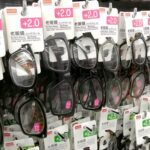
Cheap pre-mounted glasses. Credit: COOOA

Thousands of people in Spain buy inexpensive ready-made glasses from pharmacies, supermarkets and other shops, but a new parliamentary decision could bring greater scrutiny to how these products are sold.

Spain’s Congress of Deputies has backed calls for stronger road-side inspections and monitoring of spectacles, including ready-made glasses, prescription glasses and contact lenses sold online or outside specialist healthcare establishments.

The plan was approved by the Committee on Social Rights and Consumer Affairs on May 26, receiving 33 votes in favour and four against. It was subsequently published in the Congressional Bulletin on June 10.

The proposal, put forward by the Socialist parliamentary group, calls on the Government to work with regional authorities and European institutions to strengthen controls over the sale of optical products.

However, the decision does not introduce an outright ban on ready-made glasses or make them illegal to buy outside opticians.

Why cheap glasses are under scrutiny

Ready-made glasses, known in Spain as gafas premontadas, are sold in standard magnifications rather than being individually prescribed. Unlike prescription spectacles, they do not require individual adaptation by an optician and can legally be sold outside specialist healthcare establishments, provided they meet the applicable safety and quality requirements.

The parliamentary initiative argues that stronger checks are needed to ensure these products are stored, handled and sold in suitable conditions. It also raises concerns about prescription glasses and contact lenses purchased online, particularly where customers have not received the necessary professional assessment.

DGT warning puts drivers in the spotlight

The issue also has implications for drivers, particularly older ones who may rely on inexpensive glasses purchased without an eye examination. Spain’s Directorate-General for Traffic (DGT) has previously warned that ready-made glasses are not a substitute for properly prescribed driving glasses. They are designed for close-up vision and may not correct problems affecting distance vision, astigmatism or differences between the two eyes.

Drivers who need corrective lenses to meet the eyesight requirements for driving must comply with the conditions recorded on their licence. As explained in EWN’s guide to the €200 penalty for driving without required glasses or contact lenses, failing to follow a visual-correction restriction can result in a fine.

Drivers can check their requirements using the codes recorded on the reverse of their Spanish driving licence, as explained in EWN’s previous DGT warning about glasses and contact lenses.

The latest parliamentary decision does not create a new driving offence or introduce an automatic fine for wearing ready-made spectacles. Instead, it puts pressure on the Government to strengthen consumer protection and oversight of the optical products being sold to the public.

Continue Reading

%

Torrox Migrant Hotel Row Over Illegals

Published

on

torrox-migrant-hotel-row-over-illegals

El Morche hotel at centre of debate. Credit: Jesús López FB

Four-star Costa del Sol accommodation sparks debate as Spain records almost 33,000 irregular arrivals in 2026.

A viral Facebook post about the Urban Beach Hotel in El Morche has reignited debate over migrant accommodation in the Axarquia, as figures reveal almost 33,000 irregular arrivals in Spain during the first ten months of 2026.

Shared by Jesús López on Friday, November 13, the post claimed around 200 migrants had arrived at the former four-star hotel and questioned the impact on local businesses. It also suggested asylum applicants cannot work while their cases are processed.

Spain’s migrant arrivals increase

According to the Spanish Interior Ministry’s latest irregular migration figures, 32,942 people entered Spain illegally between January and October, an increase of 8.9 per cent compared with the same period last year. Of these, 28,155 arrived by sea and 4,787 by land. Arrivals by sea on mainland Spain reached 7,615, up 15.5 per cent year-on-year.

Recent transfers from the Canary Islands have brought additional pressure on mainland reception services. According to regional reports on migrant accommodation in Malaga, around 300 people had been transferred to the province by November 14.

Where are migrants being housed?

The Red Cross was assisting around 275 people in Malaga city and Torrox, including approximately 200 at the Urban Beach facility. CEAR was accommodating another 17, with a further 15 expected. Its accommodation network has a capacity of 835 places across Malaga city and Antequera.

The Torrox centre has operated since October 2023. In 2025. Red Cross figures showed that more than 160 of its 362 residents had found employment, mainly with local fruit and vegetable businesses.

What about the impact on Torrox?

Facebook contributors have challenged the suggestion that the town depends almost entirely on tourism, pointing to its agricultural sector and demand for migrant labour.

Spanish regulations also allow asylum applicants to work six months after their applications are admitted for processing, subject to legal requirements.  Questions have also been raised about reported accommodation costs of around €60 per person daily, although no contract or breakdown of services has been provided. Rumours of another reception centre opening in Cartama have circulated, but no official confirmation has been located.

The debate is not new. Torrox councillors previously questioned the use of tourist accommodation for migrant reception, as reported in Euro Weekly News’ coverage of the local migration debate.

Meanwhile, Granada province has organisations including Cruz Roja, CEAR and Granada Acoge providing migrant assistance, although their presence does not establish that they operate comparable emergency reception centres.

The debate raises questions about how Spain distributes responsibility for migrant accommodation, supports local communities and helps newcomers move into employment.

Continue Reading

Trending

Copyright © 2017 Spanish Property & News