
Abelardo de la Espriella
Venezuelan Women Continue To Have Secret Abortions As Colombia Threatens To Close Its Borders To Them

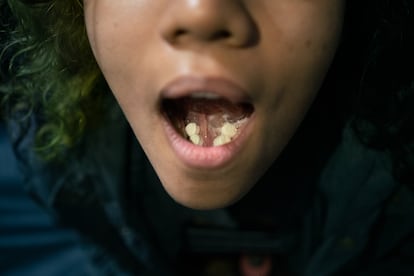
It is 2022. In a neighborhood in western Caracas, Yolanda (a fictitious name) walks through a checkpoint manned by hooded police officers. In her pocket, she carries a small transparent bag containing several misoprostol pills – the second part of the treatment recommended by the World Health Organization (WHO) for a safe medical abortion.
She walks quickly, without looking back. Any nervous movement could lead to her arrest. That package could land her in jail: in Venezuela, abortion is punishable by up to two years in prison, while assisting in an abortion could get you a two-and-a-half year sentence.
The country has changed a great deal since then, especially since U.S. forces captured Nicolás Maduro on January 3, 2026. However, women’s reproductive health isn’t on the agenda. Laws are being reformed at breakneck speed to exploit oil and gold, while Venezuelan women – who can only legally get an abortion if their life is in danger – continue to resort to clandestine networks.
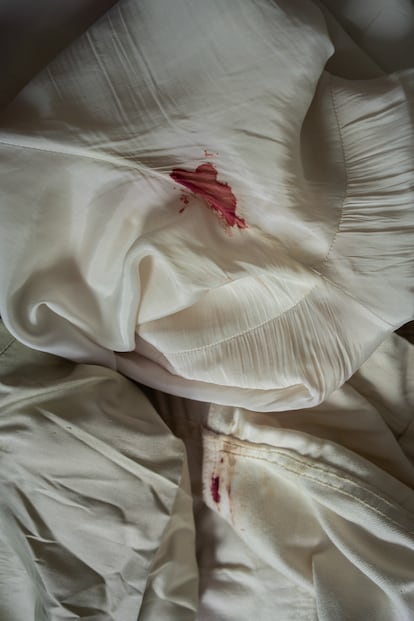
Oftentimes, not wanting a child is a matter of survival. “It’s not that I don’t want to be a mother. It’s that, right now, I can’t afford diapers, baby formula, or doctors. I just can’t,” Tatiana (a fictitious name) laments. She’s the recipient of the pills.
In almost one out of every three Venezuelan households, there isn’t sufficient income to even cover food needs. This is according to the 2025 National Survey of Living Conditions (ENCOVI).
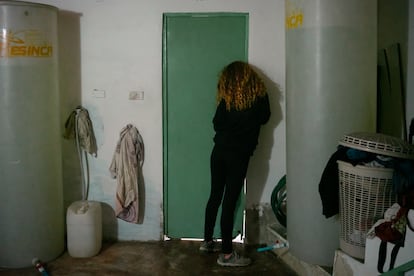
Tatiana, a 22-year-old dancer at the time, had already taken the mifepristone, the first part of the treatment. When she was speaking with EL PAÍS, she was taking the first dose of misoprostol. And, just 15 minutes later, she ran to the bathroom to vomit up what little she had eaten for lunch. Yolanda followed her, held back Tatiana’s curly hair and closed the door.
That house, narrow and full of stairs, hadn’t had running water for years. Next to the bathroom, a garbage can that had been converted into a 50-liter tank served as a place to get water to bathe, flush the toilet and brush your teeth. Yolanda asked Alberto, Tatiana’s partner, to boil some water. That way, he’d be able to keep his trembling hands busy.
In Venezuela, what happens in that room has been happening in secret for decades. In the latest survey conducted by the Venezuelan Association for Alternative Sexual Education (AVESA), in which 500 women took part, 5.1% admitted to having had a abortion by taking medication.
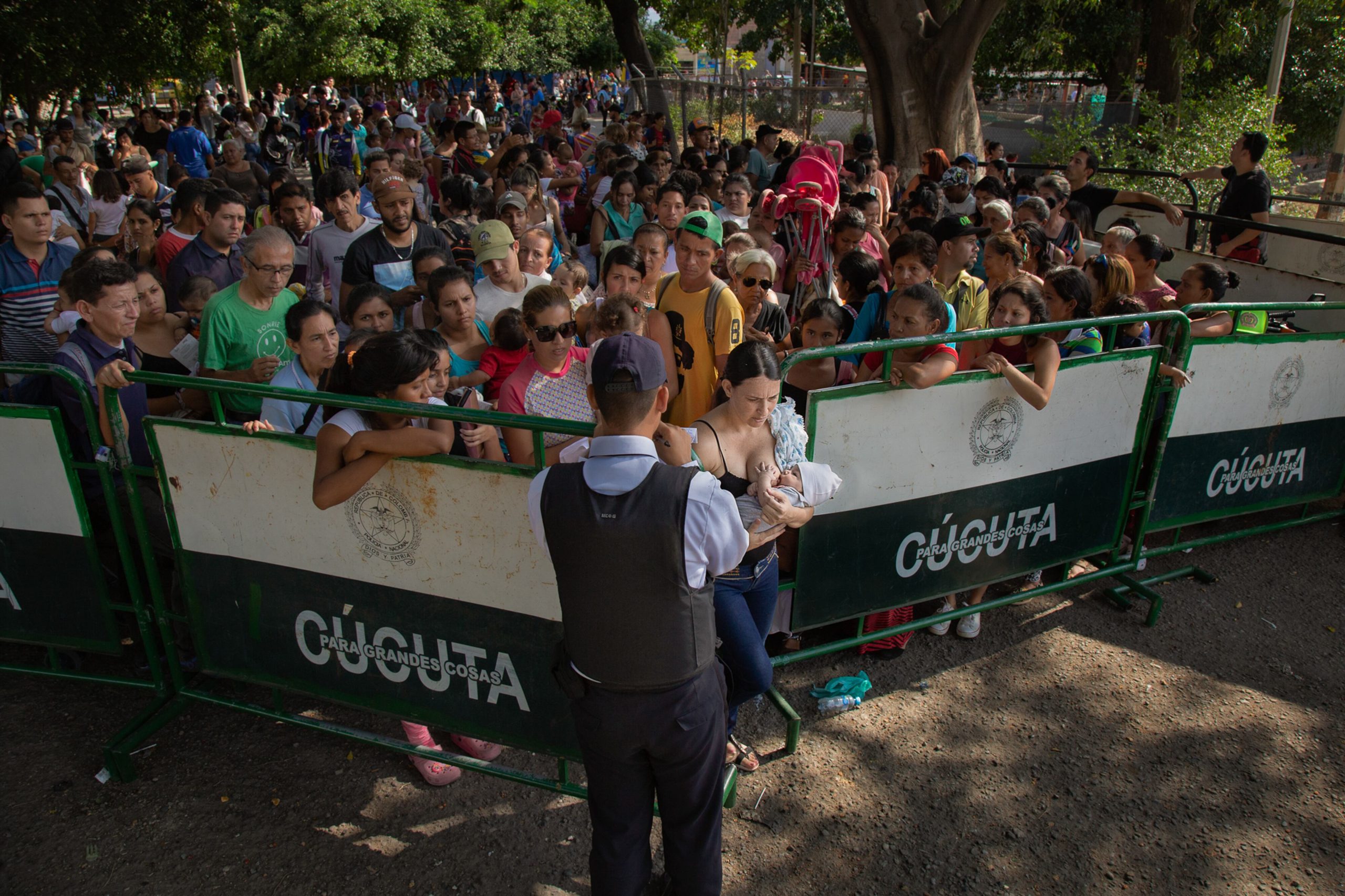
Women and girls with fewer resources buy the pills on the black market, where they’re often scammed. Wealthier women pay more than $800 at clandestine clinics in Venezuela. And others cross the border: in Colombia, abortion is legal up to the 24th week of pregnancy, even for migrants. But that door is threatening to close. This is due to a constitutional reform that seeks to prohibit abortion. Washington’s foreign aid cuts have also affected Colombia-based organizations that attend to migrants’ reproductive needs.
Four years after Tatiana’s procedure, abortion doulas continue doing the same work, now in a country with hospitals that have been overwhelmed since the double-earthquake of June 24. One of these healthcare aides is currently supporting a woman for whom carrying her pregnancy to term could be fatal.
On paper, this is the only case in which Venezuelan law permits abortion. But her doctor insists that she have the baby anyway. This woman hasn’t been able to get the pills. And, weighed down emotionally, she’s alone: her partner left her when he found out about the pregnancy. “Many men have opinions about abortion and [feel that they have the] right to make decisions about our bodies… but the truth is that many women are abandoned during pregnancy,” the support worker says.
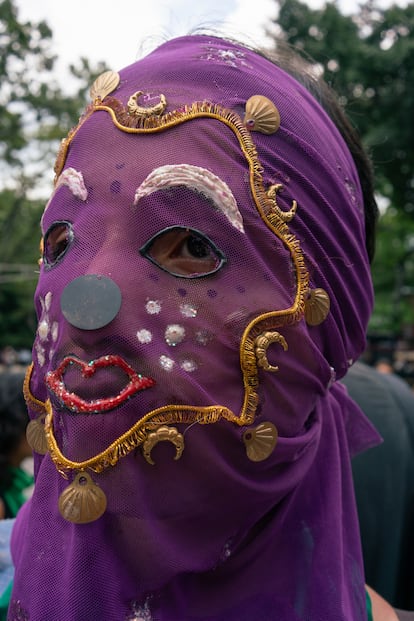
Daniella Inojosa – director of the feminist organization Tinta Violeta (“Purple Ink”) – explains that the existing exception that permits abortion in Venezuela “is practically nonexistent.” It only covers abortions that are performed by a doctor to save the mother’s life. It doesn’t consider her physical or mental health, and, since there’s no established procedure for applying it, it’s left to the doctor’s discretion. “This leaves women completely defenseless,” Inojosa points out. Only a few countries in the region such as El Salvador, Nicaragua, Honduras and the Dominican Republic are even more restrictive: they prohibit abortion without exception.
Suspicion also extends to miscarriages. “If you show up at a hospital with an ongoing miscarriage, [you’re automatically criminalized], based on the assumption that you’ve had an abortion,” Inojosa continues. She asserts that some women are imprisoned for having abortions, although her organization has no way of knowing how many.
The same Venezuelan Penal Code that ignores women’s health does, however, consider the notion of honor: sentences are reduced by between one-third and two-thirds if the perpetrator of a crime acts “to defend their honor” or – in the case of men – the honor of their wife, mother, sister, or daughter.
Heads of their households
The figures vary depending on the study, but more than half of Venezuelan households are headed by women. And, in these households, poverty reaches 80%, or 11 points higher than in those headed by men. “If I’m overwhelmed with unpaid care work, I don’t have time to have a paid job,” says Suzany González, a lawyer and executive director of the Center for the Study of Sexual and Reproductive Rights (CEDESEX). “The crisis has reinforced gender roles in relation to childcare and housework,” warns the researcher Laura Cano.
We go back to 2022. Inside the house, Tatiana’s contractions begin. Yolanda sits her on the toilet, so that she can expel the contents of her uterus. She repeats: “You can do this. You’re strong.” Tatiana moans. When it’s all over, the petite Yolanda carries her to the bed, even though Tatiana is much taller and heavier than she is.
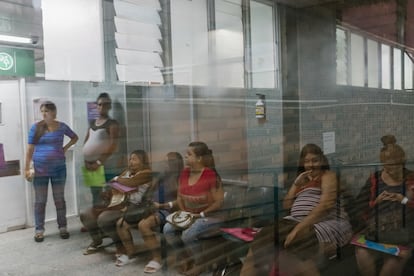
Tatiana had someone by her side, but many other women face this ordeal alone. In Venezuela, there’s no recent official data to measure what’s happening to this population of women, although the last epidemiological bulletin – published in May of 2017 – recorded 756 maternal deaths in 2016, or 65.8% more than the previous year. And abortion was the fifth-leading cause of death. According to United Nations estimates, in 2020, 259 women died in Venezuela for every 100,000 live births, almost triple what the rate was in 2000. This was the largest increase in the world during that period of time.
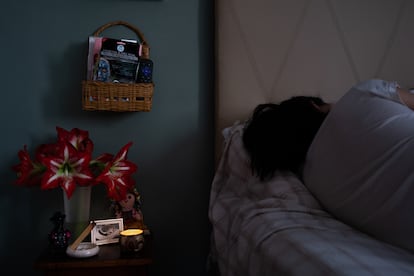
With Tatiana already in bed, Yolanda lights purple candles on the windowsill and prays. Not to the saints, as is customary in Venezuelan homes, but to her female ancestors. She opens the refrigerator, but there’s nothing to settle Tatiana’s stomach. Instead, she prepares a herbal tea, which Tatiana drinks while sitting up on her pillow, her eyes watering. Through the barred window, the candle flames and threadbare curtains sway in the breeze.
Praying to the ancestors runs counter to the wave of evangelization in the country, which various humanitarian crises have only served to intensify. According to Inojosa, since 2014, evangelical churches have become guardians of morality in Venezuela. And, she notes, “all the churches share a common fight against the legalization of abortion.” Without sex education in schools, information about contraceptives – including emergency contraception – barely reaches women and girls. This, according to researcher Laura Cano, “creates an atmosphere of secrecy and unsafe practices.”
The Colombian gateway
“While women living on the border face complex realities, they’re actually the fortunate ones in [Venezuela], because they can cross the border and receive care,” says lawyer Suzany González. Since 2022, a ruling by the Constitutional Court of Colombia has allowed voluntary abortion up to the 24th week of pregnancy. Additionally, health regulations guarantee abortion access to migrants. And, regardless of their immigration status, the authorities are not notified.
Even so, according to Cristina Rosero Arteaga, a senior legal advisor at the Center for Reproductive Rights, many women don’t seek care for fear of deportation, while some government entities along the border violate the law and even threaten them.
In Colombia, however, there’s now a new president, Abelardo de la Espriella, who opposes abortion. And there’s a constitutional reform being pushed by the pro-life bloc in Congress that seeks to protect life from the moment of conception. No previous attempt has succeeded, but pro-choice activists say that they’ve never felt such a reactionary wave before. And the pressure is also coming from Washington: according to lawyer Selene Soto, several organizations that attend to migrants have stopped offering abortion services since Trump reinstated the 2025 ban on U.S. funding to NGOs that perform abortions or provide information about abortion.
In Nariño, a Colombian departmento (state) bordering Ecuador that acts as a transit point for migrants, Yanni Caicedo, from the feminist organization Unidas Para Avanzar (“United to Move Forward”), explains that many Venezuelan women depend on the Catholic Church for support, because there isn’t a single public shelter for migrant women. And that same Church, she says, judges them: “They aren’t listening to those of us who are part of the Church because we’re having abortions… yet, at the same time, we [still believe] in God.”
Since many migrants are evangelical Christians, her organization’s members have trained in feminist theology, in order to speak to them from a faith-based perspective: “There’s a merciful Christ who would surely march with us on September 28,” she notes, referring to International Safe Abortion Day.
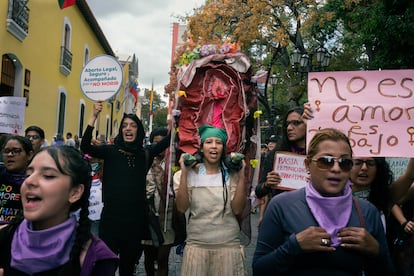
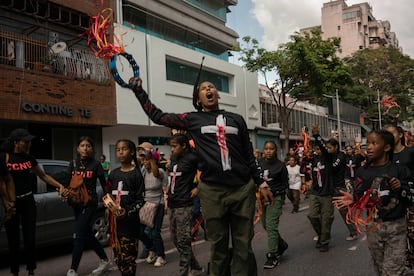
This past September 28, hundreds of women marched in Bogotá. In Caracas, a few dozen people gathered in the rain in Plaza Venezuela to demand the decriminalization of abortion.
Today, Tatiana is 26 years old. And she still dances. She believes that she made the right decision, although she admits to having “some pangs of a guilty conscience.”
“I’m grateful that I’m not a mother right now… especially after the earthquake. If everything was chaotic before, now, it’s even worse,” she sighs. “My God, if I can’t even take care of myself, imagine if I had to take care of someone else?”
What she remembers most about that afternoon is that she wasn’t alone… and, because of that, she didn’t end up “in a bad place.” Like the women Caicedo describes, Tatiana also speaks from a place of faith: “I’m grateful that my companion crossed my path. I know God put her there for me.”
Translated by Avik Jain Chatlani.
Sign up for our weekly newsletter to get more English-language news coverage from EL PAÍS USA Edition





Abelardo de la Espriella
US Moves Spy Drones From Africa To Colombia And Ecuador To Combat Drug Trafficking


Abelardo de la Espriella
¿Qué Hacer Con Los Hipopótamos De Pablo Escobar? De La Eutanasia A Un “Jurassic Park”


Pablo Escobar, el afamado narcotraficante colombiano, creó en su Hacienda Nápoles, a 150 kilómetros de Medellín, un zoológico privado con rinocerontes, elefantes y otros animales comprados en el mercado ilegal internacional. Entre ellos, cuatro hipopótamos que tras la caída del “patrón” escaparon de la hacienda y empezaron a reproducirse alrededor del río Magdalena, el más grande del país.

Locals Alert Speed Traps Increasing In Alhaurin De La Torre

EXCLUSIVE: ‘We Are Being Robbed’ – Inside The Granada Tent City Where Housing Protesters Inspired By Maricarmen Vow To Stay Until Rents Fall

Mijas Unveils ‘El Burrito’ Retirement Park To Give Town’s Notorious Donkey Taxis A Place To Rest


-

 Uncategorized3 weeks ago
F1 Bahrain Grand Prix will be live and FREE on TV this weekend
-
EU2 weeks ago
EU nicotine crackdown sparks warning that ex-smokers could be driven back to cigarettes
-
Blackout preparedness2 weeks ago
Brussels takes action against Spain over failure to update blackout plan
-

 Uncategorized2 weeks ago
Lewis Hamilton F1 wish could come true as stunning plans for new track revealed
-

 Foreign demand3 weeks ago
Market Snapshot: German Market In Q2 2026
-

 Housing access / crisis / affordability2 weeks ago
Radical Housing Decrees Defeated As Snap Election Talk Grows
-

 New Developments3 weeks ago
How To Get A Tourist Rental Licence In Andalusia (Spain) – Step-By-Step Guide 2025
-
Latest1 week ago
The Changes To Spain’s IRNR Non-Resident Property Tax In 2027