Connect with us

%

Sánchez Speech On Minister’s Resignation Raises Eyebrows

Published

on

sanchez-speech-on-minister’s-resignation-raises-eyebrows

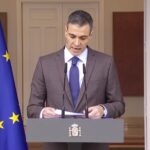
Pedro Sánchez addresses the nation. Credit: Moncloa

Pedro Sánchez is facing questions over his handling of Spain’s railway crisis after his defence of former Transport Minister Óscar Puente appeared to contradict the Prime Minister’s earlier position on his colleague’s departure.

Following Puente’s resignation on Tuesday, November 3, Sánchez praised his decision as an act of “dignity” and “respect” for the victims of the Urda railway disaster. However, his comments have reopened debate about political responsibility, public confidence and whether the Government is doing enough to address serious problems affecting Spain’s railway network.

The controversy comes just days after Sánchez acknowledged that confidence in Spain’s high-speed railway system had been broken.

Sánchez previously defended Puente’s position

One of the most striking points concerns the Prime Minister’s change of position. Following the October 28 collision near Urda, which killed 69 people, Sánchez initially stood firmly behind his Transport Minister. On October 30, Puente revealed that he had offered to put his position at Sánchez’s disposal, but the Prime Minister had reportedly considered his departure unfair.

However, Puente subsequently announced his departure without informing Sánchez until shortly before making it public. Spanish press revealed that even the Prime Minister’s closest team had been taken by surprise. Now Sánchez has described the resignation as an example of political dignity, saying it demonstrates that not all politicians behave in the same way.

The apparent change raises questions about why the Prime Minister initially considered Puente’s departure unjust but now presents it as the right thing to do.

Can a minister’s resignation restore public confidence?

Sánchez praised Puente for facing questions and providing solutions, adding that his resignation demonstrated respect for the victims. He said: “Con su renuncia Óscar ayuda a que España recupere la confianza en el sistema ferroviario”. Translated, this means Puente’s resignation would help Spain recover confidence in its railway system.

However, critics may question how the departure of one minister can restore confidence when the underlying safety concerns have yet to be fully investigated. The two disasters in Adamuz and Urda have claimed 115 lives in total. Their causes and the possible failures in railway management, infrastructure and safety procedures are still subject to investigation.

EWN previously examined questions surrounding railway safety, including the unfinished safety upgrade on the Madrid-Andalucia high-speed line.

Criticism of political opponents raises eyebrows

Another controversial part of Sánchez’s comments concerned political polarisation. The Prime Minister complained about what he described as an atmosphere of political noise and extraordinary dehumanisation. He also suggested that some people wanted everything to fall apart because they benefited from confrontation and fear.

Critics could question whether attacking the motives of political opponents sits comfortably with an appeal for less polarisation. PP leader Alberto Núñez Feijóo was quick to respond. Referring to Sánchez’s praise of Puente for resigning on grounds of dignity, he told the Prime Minister to apply the same argument to himself.

Feijóo’s response added another dimension to the political dispute, with the opposition questioning why responsibility should end with the former Transport Minister.

Carlos Cuerpo takes temporary charge

Sánchez confirmed that First Deputy Prime Minister Carlos Cuerpo would temporarily take over responsibility for the Transport Ministry. He commended Cuerpo’s management abilities and said he would continue the reforms introduced by Puente.

That announcement raises another question: if the Government believes the existing reform programme is the right approach, what changes will now be made to address the problems exposed by the two disasters?

For families who lost loved ones, and passengers worried about travelling by train, political statements will count for little without clear answers and demonstrable improvements in railway safety.

The investigations must establish what went wrong. Meanwhile, Sánchez’s comments have ensured that questions about political accountability are not going away.

%

Hannah Murray: The Familiar Voice Winning Hearts On The Costa Del Sol

Published

on

hannah-murray:-the-familiar-voice-winning-hearts-on-the-costa-del-sol

The voice of the Costa del Sol, Hannah Murray. Credit: HM

From interviewing famous faces to entertaining listeners across southern Spain, radio presenter Hannah Murray has built a loyal following among English-speaking residents on the Costa del Sol. Whether on Talk Radio Europe, discussing books with well-known authors or appearing on Good Morning Spain, she has become a reassuring presence for many. Behind the microphone is a broadcaster who has crossed paths with celebrity chefs, Hollywood personalities and more than a few unexpected moments.

We caught up with Hannah to talk about her career, the people she has interviewed and what keeps her busy on the Costa del Sol.

Learning the art of interviewing

You started at Talk Radio Europe as a producer and researcher before stepping in front of the microphone. What did that journey teach you about interviewing people, and what do you know now that you wish you’d known at the beginning?

Starting as a researcher and producer was really great grounding, and I’m so grateful for it. Mary Harboe was the best person to learn from. Getting guests for other presenters gave me a real understanding of what the presenter wanted, and didn’t want. Producing outside broadcasts, before I ended up doing them regularly myself, also taught me the importance of constant communication between the person in the studio and the person on location.

I remember watching Mary and asking her how she knew what to ask someone if they didn’t have much to say. She told me something I’ve never forgotten: “The key to being a good interviewer is to be a good listener.” People think it’s all about knowing what to say, but if you’re actually listening, the conversation flows naturally. That’s how an interview should sound. I never prepare questions beforehand, just like you don’t in life.

Famous faces and unexpected answers

You’ve interviewed some famous names over the years. Has there been a guest who completely surprised you?

I’ll never forget chatting to the late Gary Rhodes. I mentioned some of his career highlights, from cooking for Manchester United to cooking for the Royal Family, and asked him what he was most proud of. He said, without hesitation: “Without question, I am most proud of marrying my wife.” What a nice man he was.

Food critic Michael Winner was also a real character. Off air, before interviews, he could be quite abrupt and would say “Five minutes!” before hanging up, even though the timings had been confirmed the day before. When I eventually got him on air, he was so charming, calling me darling, and happily said, at my request: “Calm down dear, it’s just a radio show!”

The interview she would love to do

If you could spend an entire day shadowing any fictional character, historical figure or celebrity, with no restrictions on time or budget, who would you choose, and what would you most want to find out about them?

The person who springs to mind is Nadia Comăneci, the Romanian gymnast. I did gymnastics as a child and watched the film Nadia over and over again. I would love to have been there when she achieved the first-ever perfect 10 at the 1976 Montreal Olympics. It was quite a moment – people thought she had been given a score of one because they had never seen a 10 before. I’ve tried many times over the years to interview her properly but haven’t managed to. I did get her on as a guest before I was a presenter myself. I called in from home and went on air, asking her if she was still friends with her former teammate Teodora. After I hung up, I burst into tears. Thankfully, that’s the only time that’s happened.

A surprising side to the familiar voice

What is something about you that would genuinely surprise people who listen to you regularly?

Something people might not know is that I’ve jumped out of a plane … twice. I did a skydive on my 21st birthday in Australia, and another about a week before my 30th birthday in Seville. I was hoping I’d enjoy it more the second time around, but nope. I’ll stick with just doing it twice, thanks.

What’s next for Hannah Murray?

Where’s Hannah going from here?

I’m pretty busy. I’m back to booking my own guests for my radio shows … TRE in the Afternoon and The Book Show … which is fun to do again. I really enjoy joining Nicole King on Good Morning Spain each week. My husband and I also host a weekly podcast called Marbella with Him & Her about our lives here. I still host a weekly quiz at The Hogan Stand in San Pedro every Thursday, something I’ve been doing for nearly 16 years.

I love singing in the choir, The Del Sol Singers, and being an active member of the International Theatre Studio. I’m also excited about going to Sri Lanka next year with The Sisterhood, an amazing group of women I went to India with last year. We’ll be driving tuk-tuks across the country, raising money for women and girls. When we did the India trip, we raised over £100,000, which was incredible. I’m looking forward to doing more with these women and getting more involved with event hosting in the UK.

Where to hear Hannah

You can catch Hannah every Monday to Thursday on Talk Radio Europe from 4pm to 6pm, with The Book Show every Friday from 2pm, repeated on Sundays from 1pm. Her weekly podcast, Marbella with Him & Her, is free to listen to and download on all major podcast platforms. You can also follow her on Instagram at @radiohannah.

Continue Reading

%

Wizz Air Launches New Bases In Madrid And Valencia With Millions Of Seats And New Routes

Published

on

wizz-air-launches-new-bases-in-madrid-and-valencia-with-millions-of-seats-and-new-routes

Wizz Air expands Spanish operations with new bases, routes and connections. Photo Credit: Paréj Richárd / Unsplash

Wizz Air, the popular low-cost Hungarian airline, launched two new operational bases in Spain this week in Valencia and Madrid, as part of a growth and expansion plan. The airline will also add another base in Santiago de Compostela beginning in December, giving residents and visitors in Spain a chance to travel for the winter holidays.

Wizz Air opens its first Spanish bases

The company opened its first-ever base in Valencia on Monday, November 2, and followed up with a new operational base in Madrid-Barajas on Tuesday, November 3. The latter boasts two Airbus A321neo, in order to increase the airline’s capacity to meet demand in the Spanish capital.

Madrid gains new routes and flight capacity

Along with these new bases, Wizz Air has put 2.6 million seats up for sale, distributed across 27 routes. Madrid is now connected with 12 different countries through the airline, and according to Wizz Air, the Madrid base is expected to generate more than 80 direct jobs.

In the Madrid base, the domestic routes include flights to Asturias; Palma de Mallorca; and Santiago de Compostela.

Madrid has been a particular focus for the initiative of this airline. According to the general director of Wizz Air Malta, Mauro Peneda: “Madrid occupies a fundamental place in Spain’s tourism and business landscape, and we want to make it easier for its residents to travel to more European destinations, while attracting a greater number of visitors to the city.”

Valencia: Connecting residents, expats and holidaymakers to the Spanish hub

In Valencia, the airline will operate a total of 23 routes to eight different countries, increasing capacity by 76 per cent at the Valencia airport and reaching 3.6 million seats offered. More than 80 direct jobs are expected to be created thanks to this new base as well.

The Valencian base opened with domestic routes to Asturias, with five weekly frequencies; Santiago de Compostela, with four; Brașov, with three; and Santander, with two. In December, Bilbao, Palma de Mallorca and Naples will be added, totalling seven destinations.

Wizz Air’s summer of success in Spain

The launch of these bases is a direct result of Wizz Air’s successful first half of the year; the airline transported 8.6 million travellers and carried out an impressive 28,000 operations in Spain from January to June 2026. Additionally, the airline just closed a record peak season in Spain, moving 3.8 million travellers during the summer, representing a 51 per cent increase compared to the summer of 2025.

Over its 22 years of operation, the low-cost airline has transported more than 15 million passengers. Currently, the airline is present in 16 Spanish airports, with a network of 151 routes connecting 15 countries, although this is the first time the Hungarian company has operated a base from Spain.

Thanks to these new bases and connections, residents will have more direct access to a greater number of destinations, while tourists and business travellers have new options to fly to the Spanish hubs of Madrid and Valencia.

Wizz Air’s Santiago de Compostela base is expected to open on December 17 and will permanently station an aircraft operating seven routes: five domestic and two international.

Standing in solidarity with victims of Spanish railway tragedy

In addition to these exciting new ventures, Wizz Air is also standing in solidarity with the people in Spain affected by the recent railway tragedy: the company will launch two new domestic routes that will link Madrid with Malaga and Sevilla starting on Friday, November 6. Two daily frequencies will be operated on each connection, allowing more options for those who need to meet with their families, travel for work reasons or make other essential trips. These trips will begin at €45.99, and will not exceed €99.99.

Continue Reading

%

United Nationalities Of Marbella Summit – “We Are Here For You”

Published

on

united-nationalities-of-marbella-summit-–-“we-are-here-for-you”

Nicole King and guests reassure the expat community. Credit: EWN

Marbella’s international residents were given a reassuring message on Tuesday, November 3, when the city’s police and emergency services came together to explain just how much work goes into keeping the community safe.

The United Nationalities of Marbella summit, held at the Hard Rock Hotel, brought together representatives from the Policia Nacional, Policia Local, Guardia Civil, firefighters and Civil Protection, alongside charities, local councils and organisations supporting foreign residents. The event followed an earlier Marbella international safety summit announcement.

The overwhelming message was that Marbella really is a comparatively safe place to live, its international community is wholeheartedly valued, and the authorities want residents to feel confident approaching them whenever they have concerns.

Representatives of the National Police stationed in Marbella particularly stressed that keeping the city safe is a community effort. They want to build relationships with residents, listen to their concerns and work together to prevent problems before they develop.

For British and other international residents who sometimes feel uncertain about dealing with Spanish authorities, the message was particularly encouraging: they are welcome, they are fully part of the community, and help is available.

Planning for emergencies before they happen

One of the most informative presentations came from emergency services representatives explaining Marbella’s preparations for major incidents, including flooding, wildfires and other situations requiring evacuations.

Nicole King, organiser of the summit, helped explain how emergency planning takes account of people who might struggle to look after themselves during a crisis.

Authorities are currently working on identifying vulnerable residents who may be unable to evacuate independently, making sure emergency teams know where assistance will be needed. This includes people with mobility difficulties, older residents and those requiring medical equipment or other support. Schools, nurseries, hospitals and care homes are also identified as priority locations in emergency plans.

Residents may be directed to temporary council-run safe spaces, known as “albergues municipales”. These could include sports centres or community buildings where people can receive information and assistance, including those who do not have internet access, such as was the situation in the recent Benahavis wildfire in which communications towers were left out of action.

Importantly for pet owners, emergency planning also takes account of people who need to evacuate with their animals. Designated facilities are being considered so that residents do not have to choose between their own safety and that of their pets.

Nicole stressed that keeping in contact with emergency services is essential, even if residents decide to stay with relatives rather than use an official shelter. Updates through the 112 Andalucia emergency service will explain which areas are safe and when people can return home.

She also called on anyone living in the countryside or in an area at risk of flooding to understand the dangers and find out what to do before an emergency occurs.

Marbella has already demonstrated its commitment to emergency preparedness, including a major tsunami emergency exercise on El Faro beach.

Help does not stop when the emergency ends

Another reassuring message from emergency services was that their responsibility does not finish once an immediate danger has passed. Representatives explained how teams continue supporting affected communities until normal life is restored.

During previous emergencies, this has included delivering drinking water and providing generators to vulnerable residents whose homes have lost electricity. This can be particularly important for people dependent on oxygen equipment or other electrical medical devices.

The message was simple: emergency services will stay together with affected residents and help them through the recovery process.

Marbella’s Civil Protection and emergency services also explained their important role in preparing for emergencies, supporting evacuations, helping locate missing people and providing practical assistance at public events. Their trained volunteers work with the police, firefighters and other emergency teams throughout the year.

A lifeline for women escaping domestic violence

The summit also gave valuable attention to the work of Soroptimist International Costa del Sol, which is celebrating its 20th anniversary. The organisation, which works to improve the lives of women and girls, used the occasion to explain its Safe House project and raise funds for women escaping domestic violence.

Its current initiative provides emergency assistance during the first three days after a woman leaves an abusive home, whether alone or with children.

Support can include hotel accommodation, food vouchers, clothing, toiletries and other essential personal items. Volunteers can also help with translation and communication, particularly for foreign women who may struggle to navigate the Spanish support system.

The longer-term ambition is to establish a dedicated safe house where women can recover and rebuild their lives. The organisation stressed that domestic violence affects Spanish and international women, with language barriers sometimes making it particularly difficult for foreign victims to seek assistance.

For women who need help, there is also a useful guide to domestic violence support services in Spain, including English-speaking organisations such as Soroptimist International Costa del Sol.

A community coming together

The summit attracted representatives from across Marbella and the wider Costa del Sol, including members of the press, Marbella Council, Mijas Council, Age Concern Marbella-San Pedro, La Cala de Mijas Lions Club, AVOI and numerous other charities and organisations offering assistance to expat residents.

It was also an opportunity for expats to discover ways of getting involved in their local communities, rather than simply finding out where to turn at the moment they need help.

Special recognition is deserved by Georgina Shaw, who tirelessly translated the presentations from Spanish into English throughout the summit, making sure that language was no barrier to understanding the important information being shared.

Organiser Nicole King encouraged attendees to collect emergency contact information, leaflets and fridge magnets displaying essential telephone numbers.

Perhaps the most important number to remember is 112, Spain’s emergency telephone number, available around the clock. It looks an easy number to remember, but in moments of extreme stress, the simplest of numbers can escape one’s recollection.

By bringing residents, authorities and voluntary organisations together, the summit delivered a reassuring reminder that Marbella’s international community is not on its own. Its safety is a shared responsibility, and the people working to protect the city want its residents to know that they are there for them, always.

Continue Reading

Trending

Copyright © 2017 Spanish Property & News