Connect with us

China

Congress Demands Answers Over Nvidia Espionage Allegations And Jensen Huang Scandal

Published

on

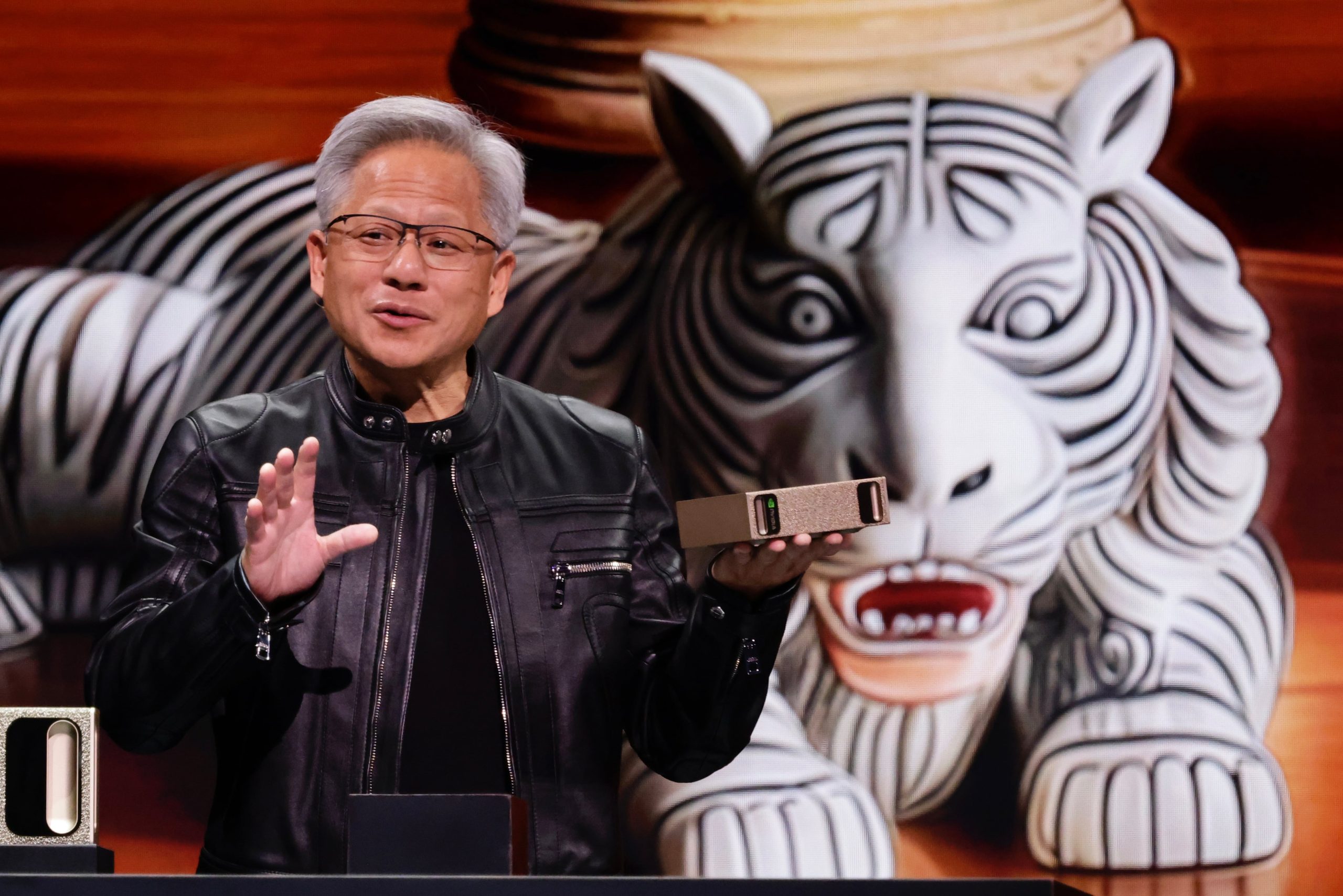
The removal of Jensen Huang as CEO of Nvidia, the company he led for 33 years, taking it to the top of Wall Street, has sent shockwaves through the global tech industry. Nvidia is the company that supplies 90% of the chips used in data centre servers, where the most sophisticated AI models are trained. The scandal has emerged amid a race between the world’s major powers to gain supremacy in a technology set to transform the world as we know it.

Huang’s affair with a businesswoman who reportedly worked for the Chinese government, together with his close ties to both Beijing and U.S. President Donald Trump, has set off alarm bells in Washington and raised questions about the company’s role in activities sensitive to national security. In an effort to get answers, lawmakers from both parties are rushing to demand explanations from the U.S. president and from Huang over the espionage allegations hanging over Nvidia. As Huang’s image takes a hit, he is coming under growing political scrutiny.

Republican Senator John Thune of South Dakota, who leads the Republican majority in the Senate, acknowledged that Congress would have to investigate Jensen Huang’s relationship with an alleged Chinese spy. “It would make sense because of the nature of the association,” he said.

Several Republican members of the House of Representatives said on Thursday that they were in talks to have Jensen Huang testify before Congress in the coming days, in a hearing that is likely to be held behind closed doors. Republican Congressman Brian Mast of Florida, who chairs the House Foreign Affairs Committee, and his Republican colleague John Moolenaar of Michigan, who chairs another House committee focused on China, acknowledged that they were working to set a date for Huang’s appearance.

Mast, who has called for tighter controls on the sale of chips to other countries, said that he was preparing a subpoena to compel the former Nvidia executive to testify before his committee. “Jensen and I have been very at odds, as some of you already know, but Nvidia is a very important company to the United States of America,” he said on Capitol Hill. “I don’t want to see anything hurt Nvidia, but he has some very serious questions to answer.”

Meanwhile, two Democratic senators, Elizabeth Warren from Massachusetts and Chris Coons from Delaware, called on the White House to preserve all documents relating to Nvidia. Trump’s close relationship with Jensen Huang has raised considerable suspicion.

The Republican president made Nvidia’s founder his chief adviser on artificial intelligence. He frequently invited him to the White House for briefings and state dinners. He also invited Huang to accompany him to the summit held in South Korea last autumn, where Trump met Chinese leader Xi Jinping. Last May, Huang accompanied the president on an official visit to China, and a couple of months ago he was among the guests of honor at a White House reception hosted by Trump in honor of Xi Jinping.

Throughout this period, Huang used his close ties to Trump to pressure him to ease restrictions on exports of U.S. technology to China and allow Nvidia to sell more advanced microprocessors to Chinese companies. His argument was that otherwise Beijing would develop its own national champions and no longer depend on the United States for its technology, as it does now.

During this same period, Trump was briefed at least twice about a Chinese spy’s relationship with the senior Nvidia executive. But when asked about it during an impromptu press appearance last Monday, he said he didn’t remember and hadn’t paid attention, while arguing that Jensen Huang “is an honorable guy.”

Despite Jensen Huang’s resignation, Congress must demand answers from Mr. Huang and others at Nvidia about how they may have put U.S. national security at risk.
 
The Trump administration must also answer for what it did once it learned about Mr. Huang’s relationship with a…

— Chuck Schumer (@SenSchumer) November 12, 2026

Senate Minority Leader Chuck Schumer said in a social media post that Congress must “demand answers” from Huang and Nvidia officials about “how they may have put U.S. national security at risk.” He added that the Trump administration “must answer for what it did once it learned about Mr. Huang’s relationship with a suspected Chinese intelligence asset.” In a post on X, he wrote: “Were government officials told not to investigate because of Trump’s relationship with Mr. Huang? What did Trump know when he personally invited Mr. Huang aboard Air Force One?”

Meanwhile, House Minority Leader Hakeem Jeffries said Huang’s resignation was not enough to allay concerns about the potential threat. “Now we have to get to the bottom of whether America’s national security has been compromised,” he said.

Senator Elizabeth Warren, the top Democrat on the Senate Banking Committee, said that Jensen Huang’s resignation “does not absolve him, other executives or the company as a whole of responsibility for putting our national security at risk or for any possible violations of our laws.”

Jensen Huang’s decision to resign from NVIDIA does not absolve him, other executives, or the company as a whole of responsibility for putting our national security at risk or for any potential violations of our laws.

They still owe Congress answers.

— Elizabeth Warren (@SenWarren) November 12, 2026

In a statement, she said that both the Trump administration and Huang “still owe Congress answers.” She called on Commerce Secretary Howard Lutnick and his deputy, Jeffrey Kessler, to provide further explanations. “[They] must explain why they have not closed export control loopholes and act today to ensure our advanced technology is not fueling China’s military,” she stressed.

Calls are growing for Lutnick, one of Trump’s closest allies, to resign over his stance on the U.S. trade blacklist. Lutnick had refused to add a dozen Chinese companies to the list of firms barred from doing business in the United States.

On Thursday, Republican Senator Tim Scott from South Carolina sent letters to both Huang and Lutnick urging them to testify before the Senate. “Recent reports raise serious concerns about our national security and the protection of sensitive U.S. technology,” Scott wrote in a social media post, adding: “The American people deserve answers.”

Recent reports raise serious concerns about our national security and the protection of sensitive U.S. technology.

I am requesting that NVIDIA CEO Jensen Huang and Commerce Secretary Howard Lutnick testify before the Senate Banking Committee.

The American people deserve… pic.twitter.com/Xu1kiNzkhW

— Senator Tim Scott (@SenatorTimScott) November 13, 2026

Democratic Senator Ron Wyden of Oregon and fellow party member Richard Neal, a congressman from Massachusetts, sent Lutnick a letter on Thursday informing him that they were investigating the approval of sales of Nvidia’s advanced AI chips to Chinese companies “with concerning links to the Chinese government, military and sanctioned entities.”

Huang’s ouster has enormous significance for the global corporate world. The scandal is set to go down as one of the biggest corporate debacles in history, triggered by revelations that an executive had multiple affairs. Huang turned Nvidia into the company around which the entire AI universe revolves. It holds a near-monopoly on the manufacture and distribution of the most advanced semiconductors used to develop the new autonomous technology. But he also promoted cross-financing deals with customers and suppliers, weaving a complex and dangerous web of shared interests. This strategy helped fuel the dizzying boom in AI.

Moolenaar, Mast and another Republican, Rick Crawford, chairman of the House Intelligence Committee, had already requested a meeting with Huang after the alleged plot linking him to a suspected Chinese spy named Alice Huang came to light. Revelations about Huang’s reckless behavior have increased pressure on lawmakers on Capitol Hill to tighten controls on chip exports to China through an amendment to a defense bill that Republicans are advancing in Congress.

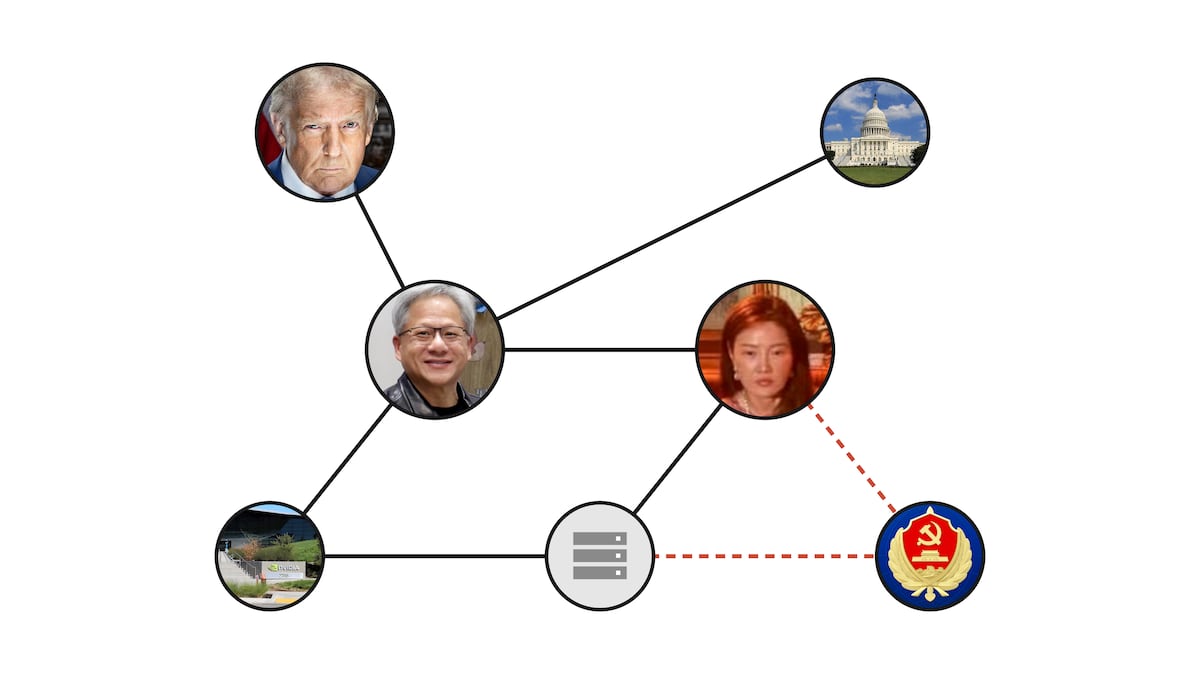
Alice Huang, also known as Huang Le, is a Chinese-born businesswoman who runs a company called Megaspeed, based in Singapore. Although married, she used her close relationship with Huang to turn her company, which grew out of a Chinese video game business, into one of Nvidia’s biggest customers in Asia. U.S. officials have been monitoring the company for more than a year amid suspicions that it may be a key part of a network smuggling Nvidia’s most advanced semiconductors into China.

Beyond Moolenaar and Mast’s requests, the espionage scandal involving Huang and his close relationship with Trump have prompted several bipartisan demands for information on Capitol Hill. Republican Senator Kevin Cramer of North Dakota was among the most forceful. On Tuesday, before it emerged that Huang had had two other mistresses, Cramer, a member of the Senate Banking Committee, which oversees U.S. export control programs, called for Huang’s resignation.

Meanwhile, the FBI is investigating the espionage case involving Huang, according to Trump, who revealed the probe this week. And the Justice Department is looking into whether other companies linked to Alice Huang were involved in attempts to smuggle products made by chipmaker Super Micro Computer (SMC) into China.

Sign up for our weekly newsletter to get more English-language news coverage from EL PAÍS USA Edition

America

‘Theft, Deception, And Concealment’: Other Industrial Espionage Scandals That Echo The Nvidia Case

Published

on

‘theft,-deception,-and-concealment’:-other-industrial-espionage-scandals-that-echo-the-nvidia-case

Behind the sensational details surrounding Nvidia CEO Jensen Huang’s admission of an extramarital affair is an alleged Chinese espionage plot to gain access to the technology giant’s most advanced chips.

The United States has been investigating the powerful executive, who is close to President Donald Trump, for nearly a year. But it was a letter from Huang that brought the matter into the headlines last Sunday. The 63-year-old admitted in a letter to Nvidia’s board that he had been unfaithful to his wife with a woman named Alice Huang, who is suspected of being a Beijing spy. The Chinese government has denied the allegations, and Trump himself weighed in, saying the FBI was investigating the matter but that he did not believe the head of the world’s largest chipmaker had any reason to worry.

The alleged scheme recalls other industrial espionage cases that have rocked prominent companies. This week, a case in which the United States government accuses Chinese company Huawei of being a “criminal” enterprise that “stole” from American companies to establish itself as a telecommunications giant was heard in court.

US accuses China’s Huawei of theft

“Theft, deception, and concealment” were three words used by Justice Department attorney Taylor Stout during a November 9 hearing in a New York court.

“For 20 years, that’s how Huawei, a massive Chinese telecommunications company, victimized American companies and abused the American financial system, all in an effort to dominate the telecommunications industry around the world,” Stout argued, according to Reuters. The alleged misconduct attributed to Huawei by the United States included a conspiracy to steal trade secrets from several American companies, including Cisco Systems and T-Mobile.

The company’s defense rejected the allegations. “It’s about competition, not conspiracy. Innovation, not theft. Ordinary business dealings, not criminal conduct,” attorney Brian Heberlig said, according to Reuters.
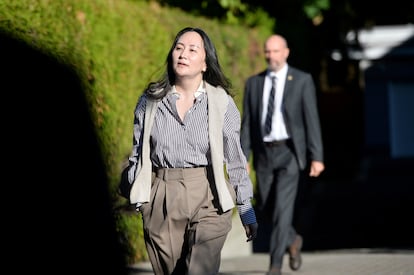
The case dates back to 2018, when the United States accused Huawei and its chief financial officer, Meng Wanzhou, of fraud and alleged violation of U.S. sanctions. Prosecutors said the company had misrepresented its business dealings in Iran to circumvent the sanctions and move money through the U.S. financial system. The allegations later expanded to include the alleged theft of trade secrets, which Huawei maintains was limited to “actions by individual employees” that were addressed at the time.

The case also made headlines in 2018 when Wanzhou was arrested in Vancouver at the request of the United States. The executive fought extradition for three years and was able to return to China following a diplomatic agreement among the three countries involved. The charges against her were dismissed in 2022 as part of an agreement, but her statements are expected to be used as evidence in the current case against Huawei.

Wind turbine manufacturer nearly bankrupted after losing its technology

When wind turbine manufacturer AMSC did business with Chinese company Sinovel Wind Group, it could not have foreseen an outcome that would bring it to the brink of bankruptcy. In 2018, Sinovel was found guilty in a U.S. court of stealing trade secrets from AMSC and was handed the maximum fine allowed by law: $1.5 million. That figure was negligible compared with the more than $550 million in losses AMSC suffered, according to a court in Madison, Wisconsin.

“Rather than pay AMSC for more than $800 million in products and services it had agreed to purchase, Sinovel instead hatched a scheme to brazenly steal AMSC’s proprietary wind turbine technology, causing the loss of almost 700 jobs,” the U.S. Department of Justice said in a statement at the time.

The scheme was carried out with the help of Dejan Karabasevic, the former head of the engineering department at an AMSC subsidiary in Austria. Two executives from Sinovel’s research and development division persuaded him to join their company and take with him the source code used in AMSC’s turbines.

Karabasevic downloaded the code from a computer in Wisconsin, United States, onto a computer in Klagenfurt, Austria. Sinovel subsequently commissioned several wind turbines from AMSC and copied the stolen code into them, completing the theft for which it was later held responsible in a U.S. court.

The ‘Spygate’ scandal that rocked Formula One

In this case, the fine was considerably higher: $100 million. The penalty was imposed on McLaren in 2007 after the team was found to possess confidential information belonging to its competitor, Ferrari.

At the home of Michael Coughlan, McLaren’s chief designer at the time, investigators found a dossier of approximately 780 pages containing detailed technical information about the design, engineering, construction, testing, and development of a Ferrari Formula One car. The dossier also included information about the vehicle’s weight distribution, aerodynamics, and fuel systems, according to a document outlining the decision by the International Automobile Federation (FIA).

The investigation also found that Coughlan had held dozens of telephone conversations and exchanged more than 100 text messages with Nigel Stepney, who was then employed by Ferrari.

P&G contractors rummage through Unilever’s trash

The two consumer goods giants became embroiled in a dispute in 2001 after Procter & Gamble acknowledged that contractors had searched through and taken documents from Unilever trash bins outside its offices in Chicago, Illinois.

Procter & Gamble agreed to pay nearly $10 million and allowed an independent auditor to monitor the company, assuring its competitor that it would not use the nearly 80-page hair-care business plan that the contractors had retrieved from the trash.

No further details of the out-of-court settlement were disclosed at the time. Procter & Gamble said the contractors had not broken the law but had violated the company’s ethical policies. The company itself informed Unilever that the contractors had improperly obtained the plan related to its hair-care division, according to an article in The New York Times.

Continue Reading

China

Who’s Who In The Nvidia Scandal

Published

on

who’s-who-in-the-nvidia-scandal

The chipmaker’s CEO has admitted to having a relationship with a woman suspected of spying for China. Here’s a guide to the key players and how they fit into the story

Mapa del Pacífico con la ruta de los chips de Nvidia: de Santa Clara (California) a Singapur y, en rojo, la sospecha de desvío hacia Pekín

Javier Figueroa

Archived In

Continue Reading

China

Alice Huang, La Espía China De Pasado Misterioso Que Llegó Hasta El Consejero Delegado De Nvidia

Published

on

China ha rechazado este lunes las acusaciones de que Alice Huang, vinculada sentimentalmente al consejero delegado de Nvidia, Jensen Huang, trabajara para sus servicios de inteligencia. “Las afirmaciones sobre una supuesta espía china son puras especulaciones sin fundamento y constituyen calumnias y difamaciones”, ha declarado Guo Jiakun, portavoz del Ministerio de Exteriores, en una comparecencia rutinaria. Pekín responde así a las informaciones que han llevado al gigante de los chips a abrir una investigación independiente, anunciada el domingo, mismo día en que su fundador reconoció haber sido infiel a su esposa.

Seguir leyendo

Continue Reading

Trending

Copyright © 2017 Spanish Property & News