
Guardia Civil
Spain’s elite Guardia Civil unit welcomes a new colleague with a wild side

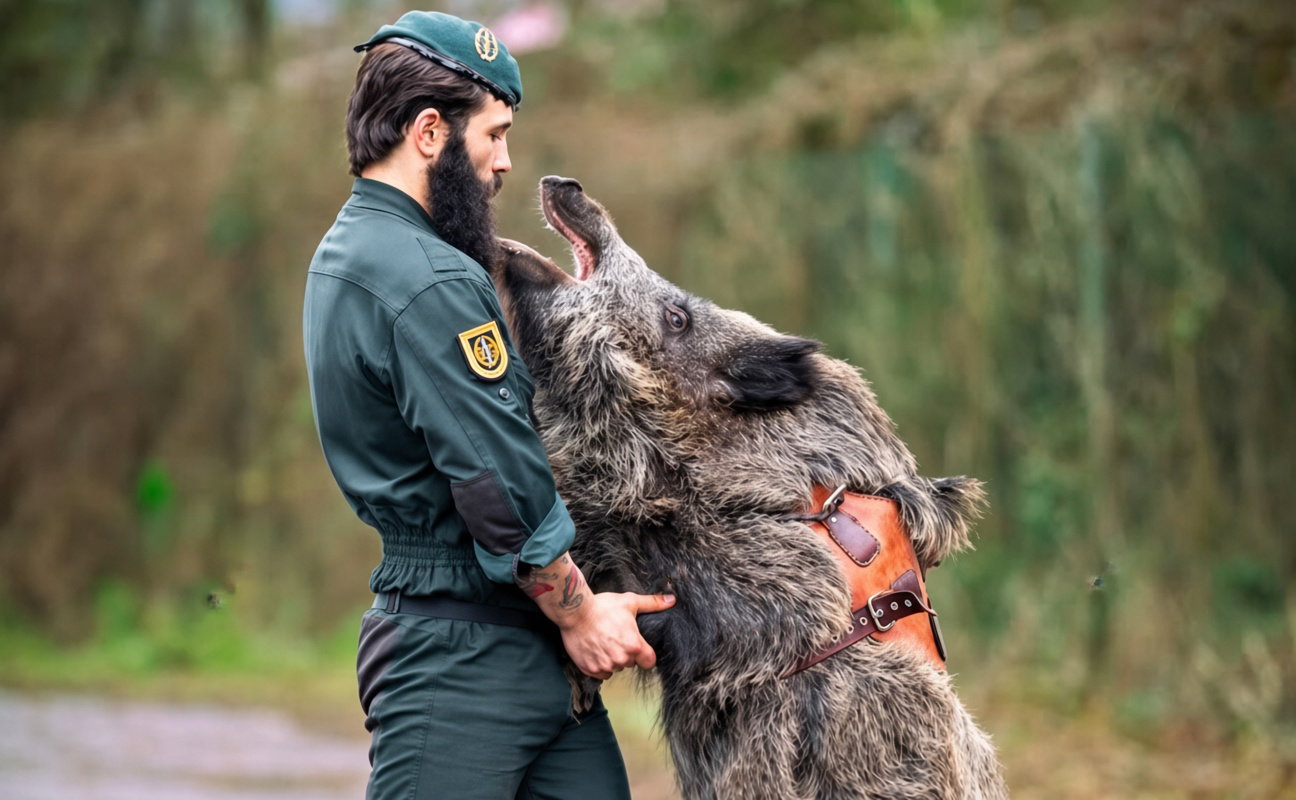
The unusual mascot is part of a tradition that stretches back more than four decades. Photo credit: Guardia Civil on Instagram
Forget the usual police dogs and ceremonial horses. Spain’s Guardia Civil has a rather more unusual character representing one of its specialist units: a wild boar called Iratxo, described by the force as “as faithful as he is imposing”. The Guardia Civil recently introduced Iratxo on social media, sharing a photograph of the animal standing on his hind legs beside a uniformed officer.
The force says he can be a little stubborn, but adapts to any terrain and always moves forward with a firm step. Iratxo is associated with the Unidad de Acción Rural (UAR), or Rural Action Unit, which coordinates specialist units including the Grupo de Acción Rápida (GAR), or Rapid Action Group. The GAR carries out counter-terrorism work and high-risk operations requiring a rapid response.
Why does Spain’s Guardia Civil have a wild boar?
The unusual mascot is part of a tradition that stretches back more than four decades. The Guardia Civil’s association with wild boars began in 1981, coinciding with the first anniversary of the GAR’s territorial deployment. Several animals have represented the unit since then, including Itza and Basati, who appeared at public events and military-style parades. Basati, whose name means “wild” in Basque, was among the previous mascots. In 2024, he appeared during celebrations marking Spain’s National Day in the Intxaurrondo neighbourhood of San Sebastián.
The choice of a wild boar is more than a quirky tradition. Its imposing appearance, toughness and ability to adapt to different environments make it a fitting emblem for a unit associated with demanding operations. Iratxo’s name adds another layer of meaning. In Basque mythology, an iratxo is a mischievous spirit or goblin, not necessarily evil, sometimes associated with acting as a guardian or justiciar and of course it is a perfect name for a mascot that combines a formidable appearance with a folkloric identity.
Pigs are far cleverer than many people realise
Wild boars and domestic pigs belong to the same species, Sus scrofa, and pigs have demonstrated impressive learning and cognitive abilities in scientific studies. Research has found that pigs can learn to navigate tasks, remember information and adapt their behaviour when circumstances change. Studies have also examined their social cognition, including how early social experiences can influence later social skills.
Their intelligence is not just about remembering where food is kept. Pigs can learn to associate particular cues with rewards, distinguish between familiar individuals and develop strategies for solving problems. Their ability to learn from experience has made them an interesting subject for animal cognition research.
That intelligence also makes pigs capable of learning through training. With consistent, reward-based methods, they can learn routines, respond to cues and work out how to complete tasks. Food rewards can be particularly useful when teaching new behaviours, while repetition and consistency help reinforce what they have learnt. However, intelligence does not automatically make every pig easy to handle. Individual temperament, previous experiences and the environment all matter. Wild boars also retain behaviours and instincts that can make them much more challenging to manage safely than domestic pigs.
A mascot with a long-standing role
While the Guardia Civil uses specially trained dogs for tasks such as detecting drugs and employs horses for particular duties, Iratxo represents the UAR in a different way. He is part of the unit’s identity and traditions, connecting its modern work with a history of wild boar mascots that stretches back to the early 1980s. The animals have become recognisable symbols associated with the unit and its public appearances.
For a force known for its serious operational responsibilities, Iratxo offers a more unexpected public face. The mascot gives the unit a distinctive character beyond its equipment, uniforms and specialist operations, while reflecting qualities such as resilience, determination and adaptability. And while the wild boar may seem an unlikely choice, the combination of strength, intelligence and a name rooted in Basque folklore makes Iratxo a memorable representative of one of Spain’s specialist Guardia Civil units.





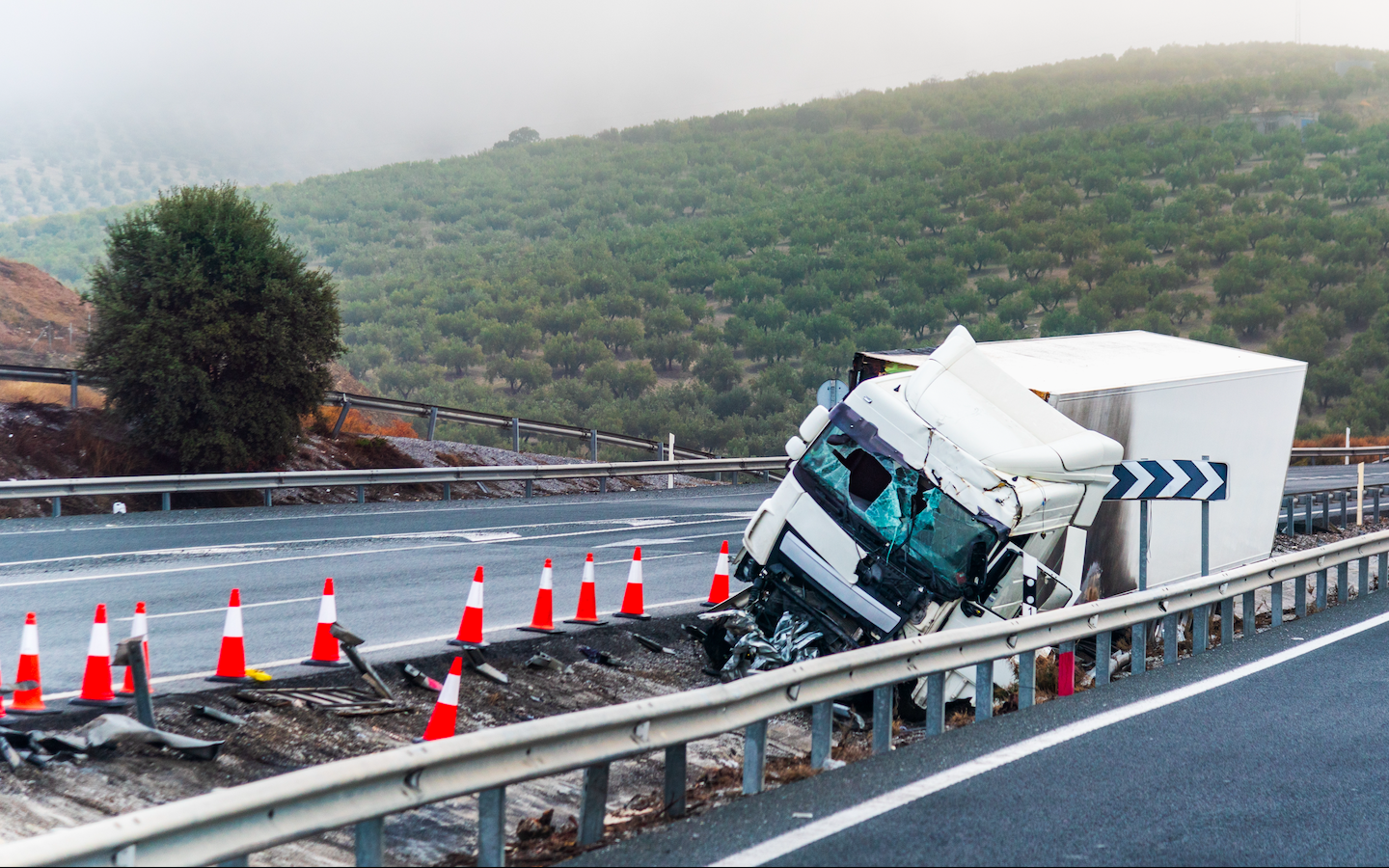
Recovery can cost thousands of euros. Photo credit: Miguel Perfectti/Shutterstock
A broken-down lorry can bring parts of Málaga to a standstill, leaving commuters trapped in traffic, workers late and families struggling to get where they need to be. Yet when a heavy goods vehicle is involved in an accident on the province’s main roads, there is no dedicated Government recovery service ready to remove it.
The problem is not simply a shortage of recovery vehicles, the Government has actually acknowledged that there is no specific protocol for removing heavy goods vehicles from roads such as the A-7, leaving the operation dependent on insurance cover, private companies and the availability of specialist equipment.
Why can removal take so long?
Unlike a regular car, a loaded lorry cannot necessarily be moved with a standard breakdown truck. Depending on its weight, position, cargo and damage, operators may need heavy-duty vehicles, cranes or machinery and a specialist team. The Guardia Civil can secure the scene, manage traffic and contact recovery companies, but it has no fleet of heavy recovery vehicles.
The DGT also has no public roadside assistance service for removing broken-down or accident-damaged lorries. The process can slow down when the haulage company has no recovery cover. The insurer may need to authorise the work, a company must be found and a price agreed. Some operators are reluctant to take jobs involving foreign-registered lorries if payment is uncertain.
The cost of leaving a lorry stranded
Recovery can cost thousands of euros. In complicated cases, the bill can reach €20,000, according to industry sources cited in reporting on Málaga’s roads. The Government says removal is arranged through compulsory insurance, with response times depending on availability, vehicle type and condition. The consequences reach beyond the driver and haulage company.
A lorry blocking a motorway can close lanes or force a diversion, pushing traffic onto surrounding roads. Commuters lose hours, deliveries are delayed and businesses wait for staff or supplies. A recent incident in the Carlos Haya tunnel, where an overturned lorry landed on a taxi, showed how difficult recovery can be in confined conditions. Two specialist companies were needed, and the cargo had to be removed before the vehicles could be cleared. The crash and its impact on the taxi driver can be read here.
Calls for a different system
The issue was raised after lorry breakdowns caused long queues on Málaga’s roads in 2025. The PP asked the Government why there was no dedicated service for removing heavy vehicles. The Executive replied that there had never been a specific protocol. The DGT has said it was studying alternatives, including agreements with private recovery firms.
However, motorists have no clear timetable for when any arrangement might be introduced. Málaga’s traffic volumes make the question pressing. When a heavy vehicle cannot be shifted quickly, disruption spreads beyond the stretch of road where the incident happened. Until a reliable system is in place, drivers may continue to face lengthy delays whenever a lorry becomes stranded on a key route during the morning rush hour.


More Than 450 Barcelona Restaurants And Bars Slash Their Prices For Foodie Black Week – But Diners Will Have To Be Quick

Campaña Elecciones 29N Y Actualidad Política, En Directo | Sánchez Pide “el Voto De Todos Los Que Quieren Más Europa” Para Frenar A Abascal

Toto Wolff Mercedes exit plan revealed as F1 commentator tips successor


-
DGT4 weeks ago
Viral video in Spain sparks fury over drivers who ‘have no idea how to drive’
-

 New Developments3 weeks ago
How To Get A Tourist Rental Licence In Andalusia (Spain) – Step-By-Step Guide 2025
-

 New Developments2 weeks ago
Luxury Villas For Sale, Estepona – ProjectL1
-
Age Concern Marbella - San Pedro3 weeks ago
Halloween lunch sells out as 51 join Marbella get-together
-
Consumer Rights Spain4 weeks ago
EU offers extra year of warranty on phones, but Spain faces delays
-
 %4 weeks ago
Santa Pola Museo Del Mar
-
Barcelona riots3 weeks ago
Looting and street violence hit Barcelona as El Corte Inglés customers are trapped
-
 %3 weeks ago
Spain Orders Replacement Of Eight Million Gas Meters: New Rules, Costs And Deadlines