
Abelardo de la Espriella
Colombia’s Peace Tribunal Chief Warns Government Cuts Could Trigger International Criminal Court Scrutiny

In Aeschylus’ Oresteia, Orestes kills his mother to avenge his father, whom his mother had murdered after he sacrificed their daughter. The Furies, goddesses of vengeance, pursue Orestes until Athena establishes a court to put him on trial, breaking the cycle of retribution.
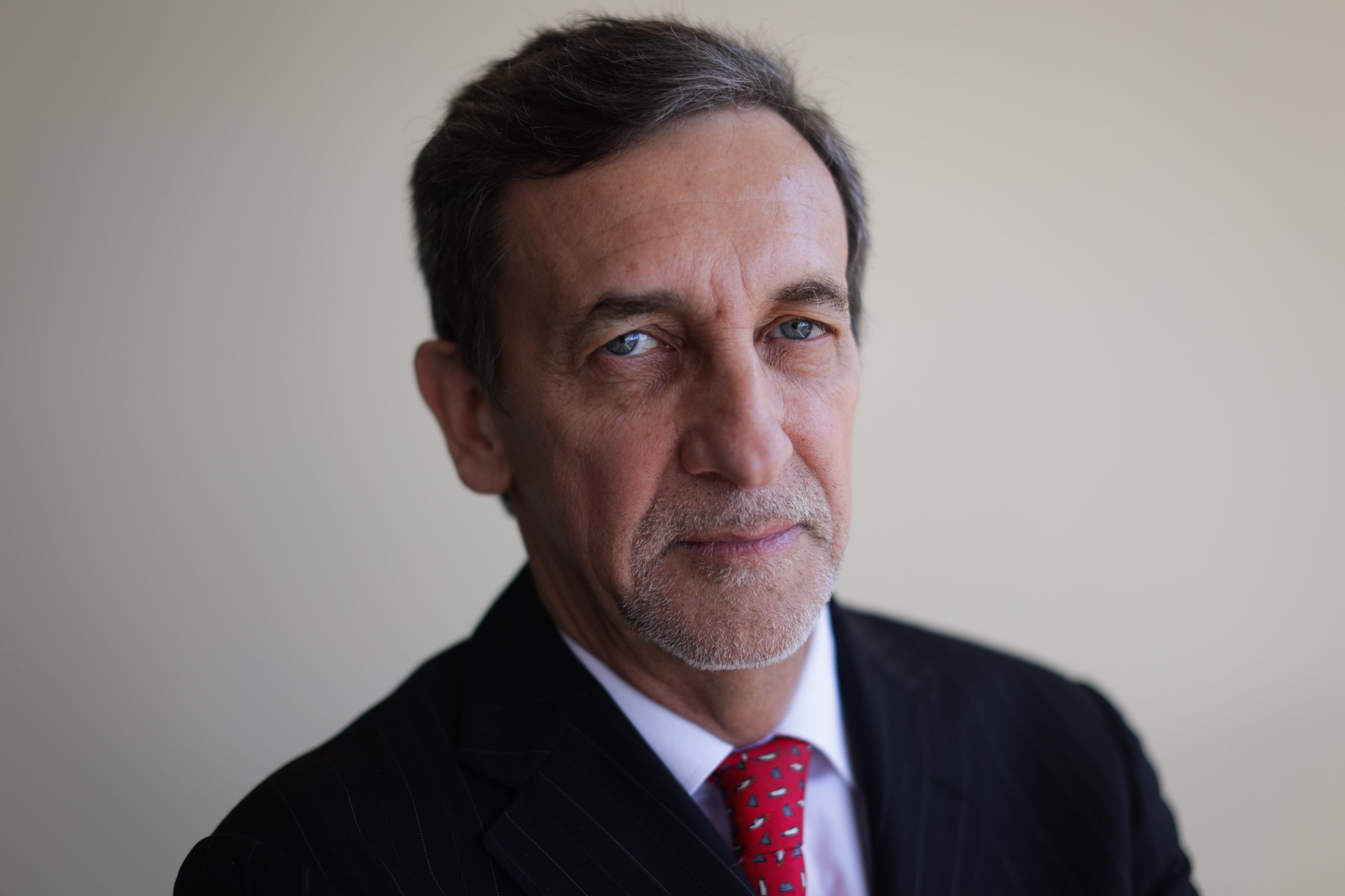
Last week, Danilo Rojas Betancourth, 65, chose this myth for his inaugural speech as president of Colombia’s Special Jurisdiction for Peace (JEP), the tribunal established under the 2016 peace agreement between the Colombian government and the Revolutionary Armed Forces of Colombia (FARC), the now-defunct guerrilla group. For him, this is the ultimate purpose of justice: to put an end to vengeance.
But he takes office at the worst possible moment for the institution. The government of Colombian President Abelardo de la Espriella has cut its budget by 170 billion pesos (around $52 million), forcing the JEP to leave its headquarters, move to remote working and scale back protection for victims, witnesses and judges. Meanwhile, a constitutional reform bill is making its way through Congress that would shut the tribunal down in 2028.
Who are the Furies today? The judge, a former president of Colombia’s Council of State, prefers not to name them. “I wish I knew who was behind it.”
Question. You have been chosen to lead a jurisdiction that the government has effectively marked for closure. Are you here to run the JEP or to manage its winding down?
Answer. Both. The JEP is already beginning to plan for its closure. It has resolved nearly 1,000 amnesty cases involving former guerrilla fighters and granted 1,070 decisions not to prosecute members of the military. By December 15, it will have issued its final indictments in the 11 major cases it is investigating. Next year, those indicted will decide whether or not to acknowledge responsibility. Those who do will face trials resulting in restorative sanctions. Those who do not will go to trial and could face prison sentences of up to 20 years.
Q. Can the JEP function with a budget cut of 170 billion pesos and 85% fewer contracts?
A. It is the most devastating blow the JEP has received in all these years. It forces us to undertake a complete restructuring. We will vacate these premises in March, with remote working becoming the norm and staff working on a rotating basis. We will have to scale back activities that were very important for victims. We have to change strategy.
Q. Did you expect such an aggressive assault?
A. No, of course not. But the JEP has a longstanding legitimacy problem, because the peace agreement lost the referendum. It was much like Brexit: it was close, but it lost. Since then, anything that happens at the JEP is accepted by half the country and resented by the other half.
Q. Is there an element of revenge in this offensive — in the budget cuts and the attempts to undermine the JEP’s legitimacy?
A. I don’t know whether revenge is the right word, but there has been a merciless ad hominem attack: the focus has been more on the person than on the arguments. My colleagues have been subjected to attacks that are false and malicious. The dignity of many people here has been undermined.
Q. Who is behind it?
A. I wish I knew. Some politicians have spoken out about it, but it’s very hard to know who might be behind it.
Q. The budget cuts affect security arrangements for the judges themselves, who are also targets of these attacks, as well as for victims, witnesses and those appearing before the JEP. How many people will lose their protection?
A. We are talking about almost 250 people whose security arrangements will have to be scaled back and reassessed. I don’t think they will be left without protection altogether; that would be very risky. I have repeatedly told the government that it must take responsibility for this.
Q. Almost 10 years on, there have been just two rulings. Was the JEP too ambitious?
A. I acknowledge that it was. In its effort to ensure that no one escaped justice, the JEP took on a broader remit. In my view, it could have been somewhat narrower. But when you reduce the number of people under investigation, you increase the scope for impunity. Our two rulings — on kidnapping and false positives [civilians killed by Colombian military personnel and falsely reported as guerrillas killed in combat] — cover an enormous number of incidents: the kidnapping ruling alone covers 21,000. It is not a ruling on a single case, but on thousands. There have also been decisions that are equivalent in substance to rulings, even if they are not formally called that: the 1,000 amnesties and the 1,070 decisions not to prosecute.
Q. With today’s perspective, what would you have done differently?
A. I would have opened only four cases: the FARC case, the security forces case, the case of civilians involved in the war and the case of state agents such as congresspeople, governors and mayors. Those appearing before the JEP and the victims would not have had to attend different cases, but just one. But the qualitative aspects are harder to measure. This process produces genuine reconciliation. Admitting responsibility is not easy. Doing so in front of a victim, in relation to serious harm inflicted on them, is immensely valuable.
Q. What do you say to those who believe that planting trees or painting a mural is not a punishment enough for crimes such as kidnapping and false positives?
A. The JEP did not invent these sanctions; they were established in the peace agreement. No state can bring every perpetrator of mass harm to justice, so a transitional arrangement has to be agreed: a small number are tried, and they answer for all the crimes. That is what could happen in Ukraine or Gaza when the time comes to establish accountability. Here, the decision was: no prison, but a sanction that restricts freedom and restores lives. What is sometimes so readily dismissed — a mural, a tree-planting project, a mine-clearance operation — is very transformative for the victim, because that is the kind of sanction they asked for.
Q. Do all victims see it that way?
A. No, and that is entirely understandable. There are victims who have every right to say: “What I want is for this person to rot in prison.”
Q. Some of your colleagues argue that the real aim of shortening the JEP’s mandate is to prevent the trials of the 29 military officers who refused to acknowledge their crimes, almost all of them generals. Do you share that view?
A. There is a group of generals who did not admit responsibility, and our small prosecution office has until March 14, 2028, to charge them. I would seriously doubt that this project seeks to obstruct that, because doing so would mean empowering the ordinary justice system and changing everything the peace agreement set out to achieve. And if charges could not be brought because the timeframe had been cut short, the International Criminal Court’s preliminary examination could be reopened. That is a risk.
Q. The JEP is constitutionally guaranteed to remain in place until 2033. If Congress passes the bill, will you take the matter to the Constitutional Court?
A. I would hope it would not have to reach the Constitutional Court, that Congress would stop the process. A law that shortens the timeframe and changes the court with jurisdiction over the cases is not consistent with the peace agreement. But if it passes, I am in favor of going to the Constitutional Court.
Q. And would you appeal to international bodies, even if that put a strain on relations with the government?
A. Scrutiny by the Office of the Prosecutor of the International Criminal Court will be unavoidable. The government of Iván Duque signed a cooperation agreement with the ICC prosecutor that expressly states that the JEP’s budget must not be affected and that its legal framework must not be changed. That is precisely what has been done in budgetary terms and what they are now seeking to do in legal terms.
Q. Anyone looking at Colombia today would see anything but the end of a war. Where are we now?
A. The FARC disappeared. There has not been a single attack by that guerrilla movement in 10 years. Dissident groups, deserters and criminal groups such as the Clan del Golfo remain, which have gained ground because the state failed to take control of those areas. It is a new war, but completely different from the one waged by the FARC, which did aspire to seize power.
Q. Will the government’s hard-line approach to bringing armed groups under its authority work?
A. I hope it works. But the bill on the submission of armed groups to justice draws heavily on the restorative justice system, which is our area of expertise. It does not provide for prison sentences behind bars, but rather detention in agricultural colonies, and it sets conditions requiring perpetrators to tell the truth and help locate the disappeared.
Q. Colombia’s ambassador to the United Nations, Mauricio Gaona, said the peace agreement is not a model for the world. Was it necessary to go that far?
A. Gaona was simply doing what his role requires, in line with the government. All the countries that intervened before were generous, including the United States. The discrepancy is glaring.
Q. Are you concerned that, when the JEP closes, its legacy may not be what you hoped for?
A. Over time, it will become clearer. It seems we may need to go through another experience for people to see how well we did things here. The victims were treated very well: not only did they take part in the process, but the psychosocial support provided to people who had suffered so much was also very important. And I am convinced that this model can be useful beyond Colombia. There are heads of state responsible for mass atrocities who will never go to prison. When they operate at that level, a way forward has to be found. And that way forward is: no prison, but they must accept responsibility. Accepting responsibility is not easy.
Sign up for our weekly newsletter to get more English-language news coverage from EL PAÍS USA Edition







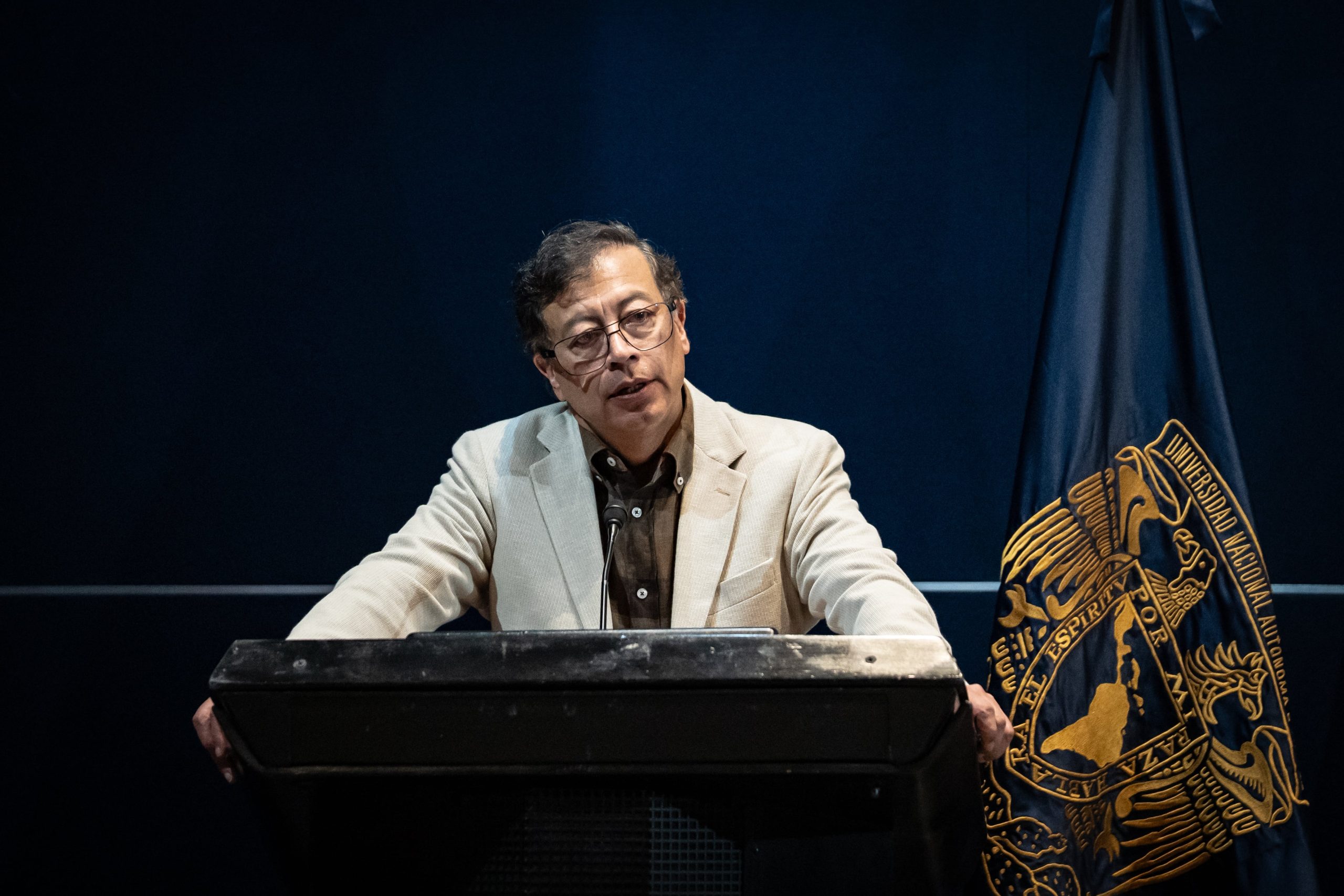
Abelardo de la Espriella
Bombings, Extraditions, And Militarized Cities Mark De La Espriella’s First 90 Days In Charge Of Security

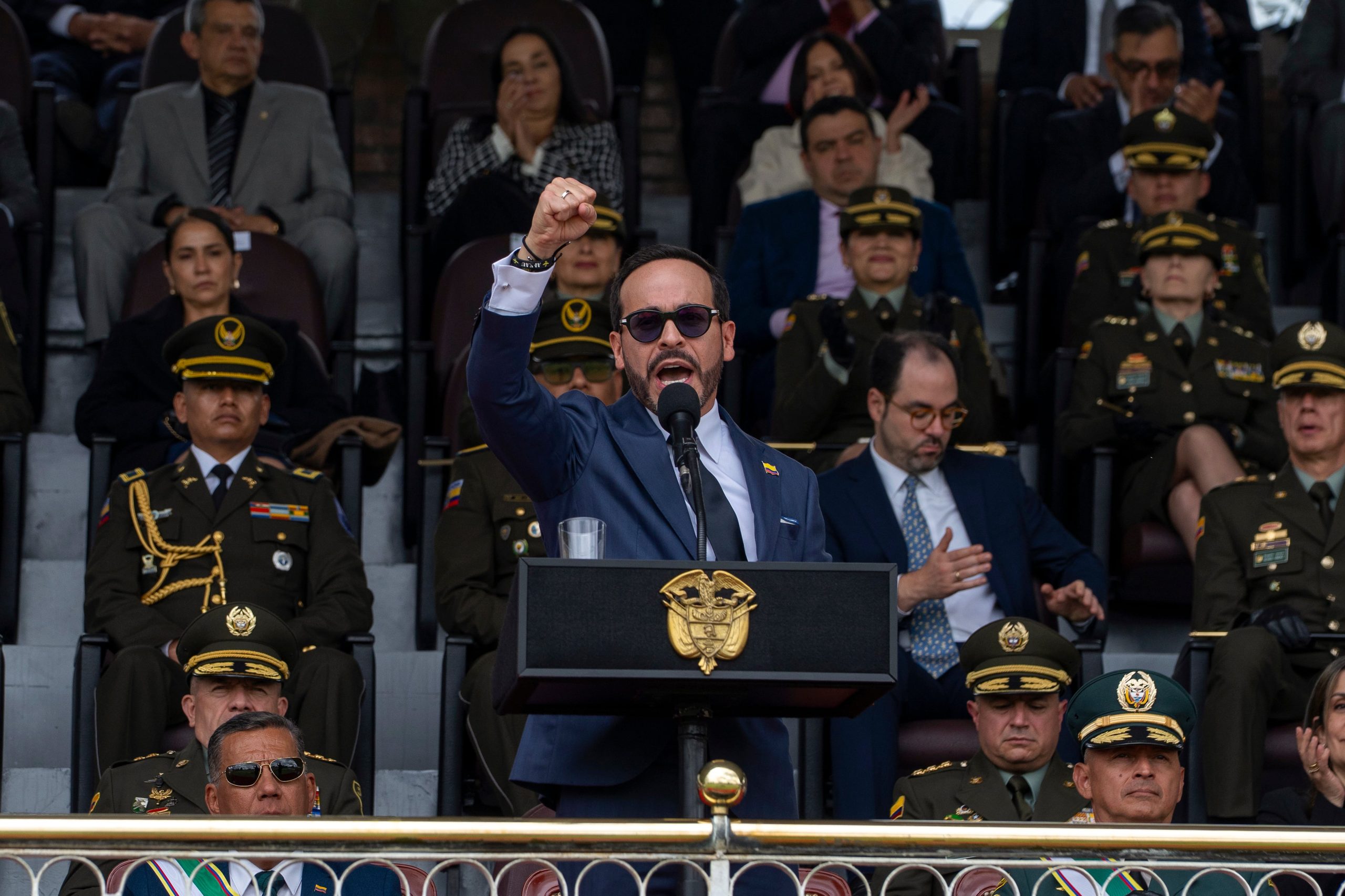
Abelardo de la Espriella
The US Takes Its Anti-Narcotics War Onto Venezuelan Soil With A Drone Strike Against The ELN

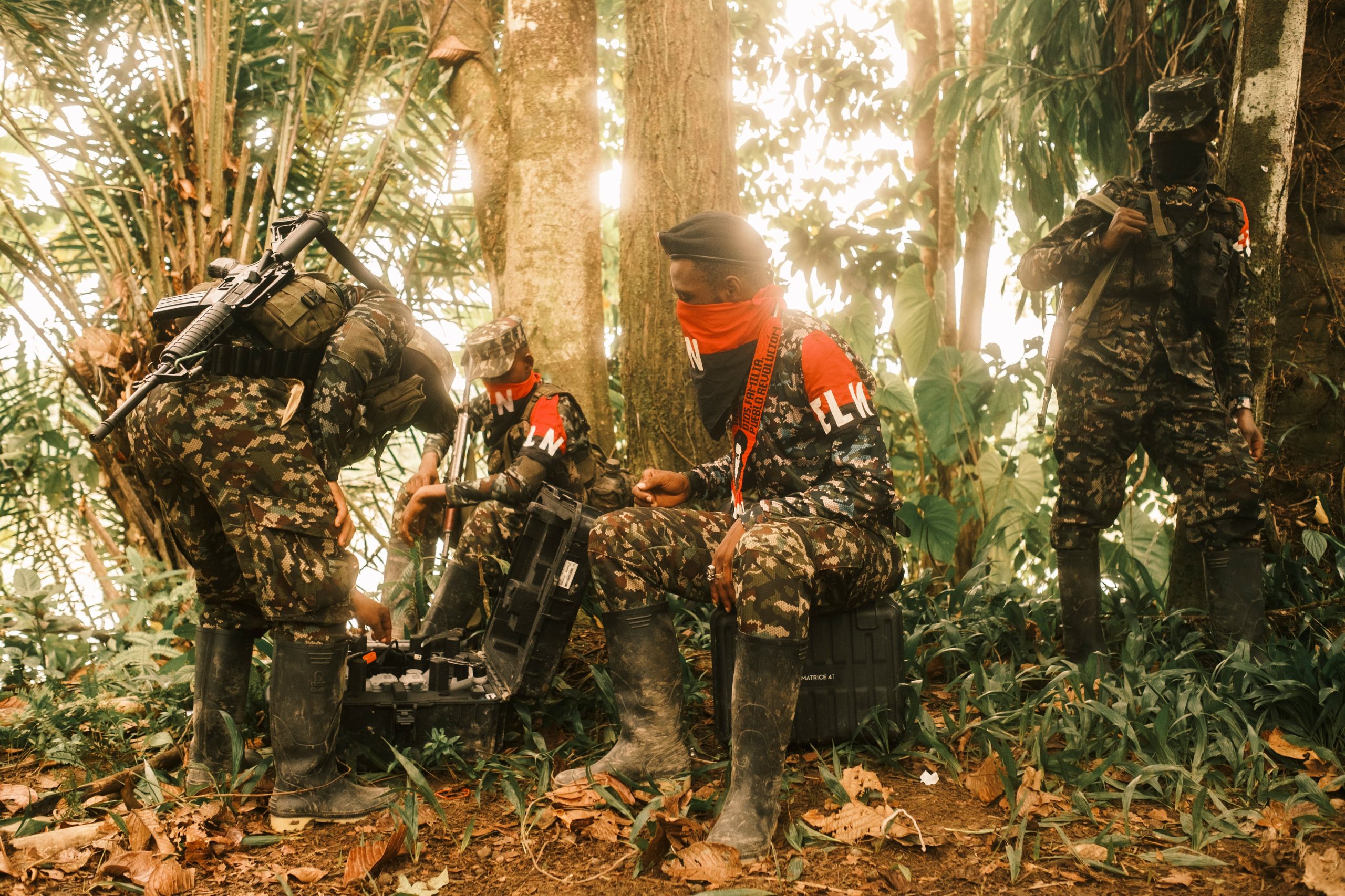
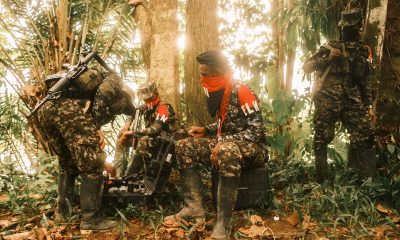
Last Friday, an operation was carried out against alleged members of the Colombian National Liberation Army (ELN) guerrilla organization in the Venezuelan state of Apure, near the border with Colombia. In the absence of official confirmation, human rights organizations working in the area, such as Fundaredes, reported at least 20 deaths. On Tuesday, The New York Times revealed that the United States participated in the strike, carried out with drones, in a direct offensive against the irregular Colombian groups that for years have established operations in Venezuela amid inaction by the authorities.
According to four U.S. officials quoted by the newspaper, the operation took place last Friday with U.S. intelligence and drone support. A senior Venezuelan military officer also confirmed the attack. Residents in Puerto Páez, an area controlled by the ELN, described a bombing, and photographs of some of the dead circulated in WhatsApp groups. Local reporters from Alianza Rebelde Investiga were able to identify eight of the dead, including two Colombians and four Mexicans, using information gathered from the morgue, the hospital, and San Fernando de Apure cemetery, around 250 miles from Caracas. Fundaredes, the first organization to raise the alarm, counted 23 dead and an undetermined number of wounded in attacks on an ELN base used as a cocaine distribution center, according to testimony the Times collected from survivors and local residents.
If confirmed, it would mark the second operation of this type, after an airstrike in June that killed the leader of the Tren de Aragua criminal organization, Héctor Guerrero Flores, aka “Niño Guerrero,” in the gold mines of Bolívar state, as Donald Trump claimed on his social media the day after local residents reported security operations in the area. The joint operation highlights how since last year the Trump administration has deployed a militarized strategy against drug trafficking in Latin America. Attacks on vessels off the coasts of Venezuela and Colombia have escalated to ground operations. The New York Times also revealed that Washington and Caracas were evaluating the possibility of deploying U.S. troops in Venezuela, as part of the tutelage the United States has exercised since January 3, when it captured former president Nicolás Maduro and his wife, Cilia Flores.
Venezuelan authorities have not reported on the incident. The interior and justice minister, Diosdado Cabello, merely said he had deployed the scientific police to the area to investigate some “strange deaths.” He also announced the dispatch of troops to the border with Colombia, in response to the militarization of the Norte de Santander department ordered by Colombian President Abelardo de la Espriella. “We do not want internal conflicts in Venezuela, especially those that are not ours,” Cabello said.
In recent years the ELN has been withdrawing into Venezuela. According to investigative reporting, it has between 900 and 2,000 fighters in at least 38 border municipalities in the states of Apure, Amazonas, Táchira, and Zulia, where it controls clandestine airstrips for drug trafficking and is also involved in fuel and mineral smuggling and extortion. For years the chavista regime was accused of sheltering ELN guerrillas and dissidents who broke away from the 2016 peace agreement with the FARC on its territory, although the government has always denied it.
FARC dissident groups have also penetrated some territories, and in 2021 Maduro’s government launched an operation against the guerrillas that displaced more than 5,000 people to Arauca, Colombia. Venezuelan authorities then fought groups from the defunct FARC who were contesting territory with the ELN, against whom they had so far avoided taking action. During that incident, one of the most serious in recent years, activist Javier Tarazona of Fundaredes was detained over his complaints about the presence of irregulars; he was released this year amid the political opening forced by the United States.
In the criminal indictment Maduro now faces in a New York court he is accused of being an ELN ally in the smuggling of cocaine to the United States. The ELN has also been accused of controlling mines in Venezuela’s south and of operating as an armed group allied with the Armed Forces to confront other criminal organizations, according to reports by the International Crisis Group.
Sign up for our weekly newsletter to get more English-language news coverage from EL PAÍS USA Edition

Concrete Falls From Los Boliches Railway Bridge

Dog Biscuits Containing Cannabis Expose €600,000 Illegal Laboratory In Barcelona

Chaparral 7 Walkers Arrive Home
Viral video in Spain sparks fury over drivers who ‘have no idea how to drive’

How To Get A Tourist Rental Licence In Andalusia (Spain) – Step-By-Step Guide 2025
Halloween lunch sells out as 51 join Marbella get-together


-
DGT4 weeks ago
Viral video in Spain sparks fury over drivers who ‘have no idea how to drive’
-
 New Developments2 weeks ago
How To Get A Tourist Rental Licence In Andalusia (Spain) – Step-By-Step Guide 2025
-
Age Concern Marbella - San Pedro2 weeks ago
Halloween lunch sells out as 51 join Marbella get-together
-

 New Developments2 weeks ago
Luxury Villas For Sale, Estepona – ProjectL1
-
Council tax (IBI)4 weeks ago
Barcelona plans 150% property tax increase on tourist flats ahead of 2028 ban
-
Consumer Rights Spain4 weeks ago
EU offers extra year of warranty on phones, but Spain faces delays
-

 %4 weeks ago
Santa Pola Museo Del Mar
-
Guardia Civil4 weeks ago
Spain’s elite Guardia Civil unit welcomes a new colleague with a wild side