Connect with us

%

“At Least We Have The Falklands”: Argentina’s World Cup Defeat Sparks Global Backlash

Published

on

“at-least-we-have-the-falklands”:-argentina’s-world-cup-defeat-sparks-global-backlash

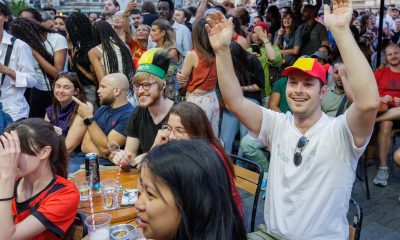
For many Argentina supporters the World Cup is about far more than football. Photo credit: A.RICARDO/Shutterstock

Argentina’s World Cup heartbreak has taken a dramatic turn after Leandro Paredes’ sister sparked an international backlash with a comment that dragged the long-running Falklands dispute back into the spotlight. As Argentina came to terms with missing out on another World Cup triumph, Bárbara Paredes attempted to comfort disappointed supporters with a message of national pride, but her words quickly became the centre of a heated debate.

“We don’t have the fourth star, but at least we have the Falklands,” she said. Within hours, the comment had spread across social media, dividing opinion between those who saw it as a patriotic statement and those who accused her of turning a painful sporting defeat into a political controversy.

A consolation message that sparked outrage

For many Argentinan supporters, the World Cup is about far more than football, the national team represents pride, identity and history, and defeats at major tournaments often produce emotional reactions. But critics argued that invoking the Falkland Islands after a football loss crossed a line and drawn politics into a sporting event.

Some accused Bárbara Paredes of using one of the most sensitive issues in Argentine and British history as a way to soften the disappointment of losing the final. Others went further, describing the remark as “ignorant” and spiteful arguing that a conflict involving centuries of history and the loss of lives should not be reduced to a football consolation. The criticism quickly became as loud as the original comment itself.

Why the Falklands remain such a sensitive issue

The Falkland Islands have been at the centre of a sovereignty dispute between Argentina and the United Kingdom for generations. Argentina claims the islands as its own and refers to them as Las Malvinas, while the United Kingdom maintains that the islanders have the right to decide their own future. The issue became even more deeply entrenched after the 1982 Falklands War, when British and Argentine forces fought for control of the islands.

Hundreds of lives were lost during the conflict, and memories of the war continue to influence attitudes on both sides today. That history is why any public reference to the Falklands can quickly trigger strong reactions.

Football rivalry meets political history

The controversy is another example of how football can become intertwined with national identity. World Cup victories and defeats rarely remain confined to the pitch. They become moments that reflect a country’s emotions, pride and sense of belonging. Argentina has experienced this more than most nations.

The country’s World Cup victories in 1978 and 1986 became defining moments in its history, while the national team’s performances continue to carry huge emotional weight. But this time, the conversation after the final was not about tactics, missed chances or players, it was about a single sentence.

Supporters divided over the remark

While many criticised Bárbara Paredes, others defended her comments, saying they reflected a sentiment shared by many Argentinians. For those supporters, the Falkland Islands are not simply a political issue but a deeply rooted part of national identity.

 They argued that her words came from a place of emotion following a painful defeat, rather than an attempt to provoke controversy. However, critics said the timing was the problem. A football match may unite millions, but it can also reopen historic disagreements that remain unresolved decades later.

A controversy that will continue beyond the final whistle

For Leandro Paredes and Argentina’s squad, the World Cup will be remembered for the disappointment of falling extremely short, the lack of shots at goal and the the shocking foul play. But the fallout has created another chapter away from the stadium. A comment intended as comfort for defeated fans has instead reignited a debate that has existed for more than 40 years. 

The final whistle ended the match, it did not end the arguments, nad once again, the world’s biggest sporting event has shown that football is rarely just about football.

%

Santa Pola Castle Fortress Reopens

Published

on

santa-pola-castle-fortress-reopens

Temporary scaffolding installed at Santa Pola Castle. Credit: Ayuntamiento de Santa Pola.

Visitors can once again enter Santa Pola’s historic Castle Fortress through its main gateway after a temporary protective structure was installed to allow safe access. The reopening marks an important step in preserving one of the town’s best-known landmarks while preparations continue for restoration work on the historic clock tower.

Main entrance welcomes visitors once again

Visitors can once again use the main entrance to Santa Pola’s Castle Fortress after a temporary protective structure was installed to allow it to reopen safely.

The entrance has been closed since January after cracks were discovered in the clock tower, known locally as “La Peineta”. During that time, anyone visiting the Chapel of Our Lady of Loreto, the Sea Museum or the Tourist Office had to enter through the rear entrance.

The temporary scaffolding has now been installed while the Town Hall waits for approval from the Regional Heritage Department to begin restoration work on the historic tower.

The protective structure allows the main gateway to reopen safely until a permanent solution is put in place.

Restoration plans move forward

Reopening the entrance also means cultural events can once again be held in the castle’s central courtyard. Civic and religious events linked to Santa Pola’s patron saint celebrations in September can now go ahead, having previously been affected because emergency evacuation requirements could not be met while the entrance remained closed.

Over the coming days, the scaffolding will be covered with a printed canvas designed to match the section of the castle hidden behind the structure, helping to preserve the appearance of the historic building while restoration work is prepared.

The Castle Fortress remains one of Santa Pola’s most important historic attractions, welcoming residents and visitors throughout the year. The temporary measures ensure that public access can continue safely while work progresses towards the long-term conservation of this landmark building.

Continue Reading

%

Woman Nearly Hit On Puerto De Mazarrón Crossing Residents Say Has Been Ignored For Six Years

Published

on

woman-nearly-hit-on-puerto-de-mazarron-crossing-residents-say-has-been-ignored-for-six-years

The crossing sits outside one of the busiest supermarkets in Puerto de Mazarrón. Photo credit: rootstock/SHutterstock

A routine trip to the supermarket almost ended in tragedy, after a woman was nearly knocked down while using the pedestrian crossing outside the Consum supermarket on Avenida Doctor Meca in Puerto de Mazarrón, reigniting residents’ anger over what they say is a dangerous problem that has been ignored for years.

According to neighbours, the zebra crossing has not been repainted for around six years. The once-bright white markings have faded so badly that, from behind the wheel, they are now barely distinguishable from the road surface. For those living nearby, the latest near miss came as no surprise. Their concern is no longer that drivers are refusing to stop. They say many motorists simply don’t realise they are approaching a pedestrian crossing until the last moment.

‘You can barely see it from a car’

The crossing sits outside one of the busiest supermarkets in Puerto de Mazarrón, used every day by families carrying shopping, elderly residents, children and visitors unfamiliar with the area. Residents say they have watched the markings disappear year after year, leaving what should be one of the road’s most visible safety features almost invisible.

With thousands more vehicles arriving during the summer holidays, they fear the danger only increases. What should be one of the safest places to cross the road has, they say, become one of the most worrying.

Six years of complaints

The latest incident has reignited calls for the crossing to be repainted without further delay. Residents argue that restoring the road markings is neither a complex nor expensive job, yet they claim the crossing has continued to deteriorate despite years of concern.

Their frustration is fuelled by the belief that the problem is entirely preventable. A few hours of maintenance, they say, could dramatically improve visibility for approaching drivers and reduce the risk of a serious collision. Instead, another pedestrian has narrowly escaped injury.

Summer traffic leaves little room for error

Puerto de Mazarrón changes dramatically during the summer months. Its streets become busier, supermarkets fill with holidaymakers and traffic along Avenida Doctor Meca increases throughout the day.

That also means more people crossing the road. Locals say many visitors are unfamiliar with the area, while drivers are often concentrating on traffic, parked cars and finding directions. If a pedestrian crossing cannot be clearly seen until the last second, they argue, the margin for error disappears, near misses become more likely.

A legal duty, not a cosmetic one

Under Spain’s road traffic regulations, local councils are responsible for maintaining municipal roads, including ensuring that road markings, pedestrian crossings and traffic signs remain clearly visible and properly maintained. These markings are not simply painted lines on the road.

They are legal traffic signals designed to warn motorists, protect pedestrians and reduce the risk of collisions. When they become worn to the point that drivers struggle to recognise them, residents argue the protection they are meant to provide is weakened.

‘Don’t wait until someone is killed’

For neighbours, this is no longer just a complaint about faded paint, it is a plea for action before a preventable accident changes lives forever. The latest woman walked away unharmed, next time, residents fear, someone else may not.

As Puerto de Mazarrón enters its busiest weeks of the year, locals are calling on Mazarrón Town Council to repaint the crossing outside Consum before another near miss becomes the tragedy they say has been waiting to happen for far too long.

Continue Reading

%

Could La Manga Become The Next Spanish Resort To Push Cars Aside?

Published

on

could-la-manga-become-the-next-spanish-resort-to-push-cars-aside?

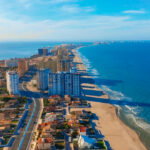
Anyone who has visited La Manga during July or August knows the frustration. Photo credit: aerophoto/Shutterstock

For decades, summer in La Manga has followed a familiar pattern, the beaches fill before midday. The restaurants buzz. Then the traffic begins. Long queues of vehicles crawl along the Gran Vía, parking spaces disappear and pedestrians squeeze along pavements built for a very different era. Now, a growing number of business leaders and local organisations believe it is time to ask a question that would once have seemed unthinkable: does La Manga need fewer cars? 

The debate has been launched by representatives of business and community associations from La Manga and Cabo de Palos, who recently met with Spanish MEP Marcos Ros to discuss what the resort should look like over the next 20 to 30 years. Rather than focusing on short-term fixes, the meeting explored how one of Spain’s best-known holiday destinations could become easier to move around, more sustainable and better prepared for the future. 

A different vision for La Manga

No decisions have been taken, and no formal plan has been approved. Instead, the meeting marked the beginning of a wider conversation about whether La Manga can continue relying so heavily on private cars during the busy summer months. Among the ideas discussed were reducing vehicle dependence, improving public transport, creating more space for pedestrians and cyclists, expanding green areas and rethinking how residents and visitors move around the narrow strip of land that separates the Mediterranean from the Mar Menor. 

Supporters argue that the resort’s popularity has outgrown its infrastructure. Every summer, tens of thousands of visitors arrive, placing huge pressure on roads, parking and public spaces. Congestion has become an accepted part of the holiday experience, but many believe it does not have to stay that way.

Looking beyond the next summer

Rather than introducing isolated projects, those involved want to create a long-term strategy that could guide La Manga’s development for decades. The proposal could bring together public administrations, urban planners, mobility experts and the Universidad Politécnica de Cartagena to design a model capable of attracting European funding while improving quality of life for residents and visitors alike. 

The discussion also examined how the resort manages its capacity during peak season. Improving collective transport, reorganising parking and making walking a more attractive option were all identified as possible ways of easing pressure without harming tourism. 

A challenge every visitor recognises

Anyone who has visited La Manga during July or August knows the frustration. A journey of only a few kilometres can take far longer than expected as traffic builds along the Gran Vía, while pedestrians often compete with vehicles for limited space.

The issue has already prompted closer cooperation between the municipalities of Cartagena and San Javier this summer, with local authorities strengthening coordination on traffic management, road safety and emergency planning during the busiest weeks of the holiday season.  For many residents, the latest debate recognises something they have experienced for years.

A resort at a crossroads

La Manga has reinvented itself before, from its rapid development in the second half of the twentieth century to its growing focus on sustainable tourism, the resort has continually adapted to changing demands. Now another question is emerging, should the future belong to more cars, or more people? 

The answer remains some way off, and any major changes would require years of planning, consultation and investment. But one thing is already clear, the conversation has begun, Whether it leads to greener streets, better public transport or wider pedestrian areas, the discussion could shape how millions of people experience La Manga for decades to come.

Continue Reading

Trending

Copyright © 2017 Spanish Property & News