Connect with us

America

Carolyn Rodrigues-Birkett, Candidate To Lead The United Nations: Not Choosing A Woman Would Send ‘a Very Bad Message’

Published

on

carolyn-rodrigues-birkett,-candidate-to-lead-the-united-nations:-not-choosing-a-woman-would-send-‘a-very-bad-message’

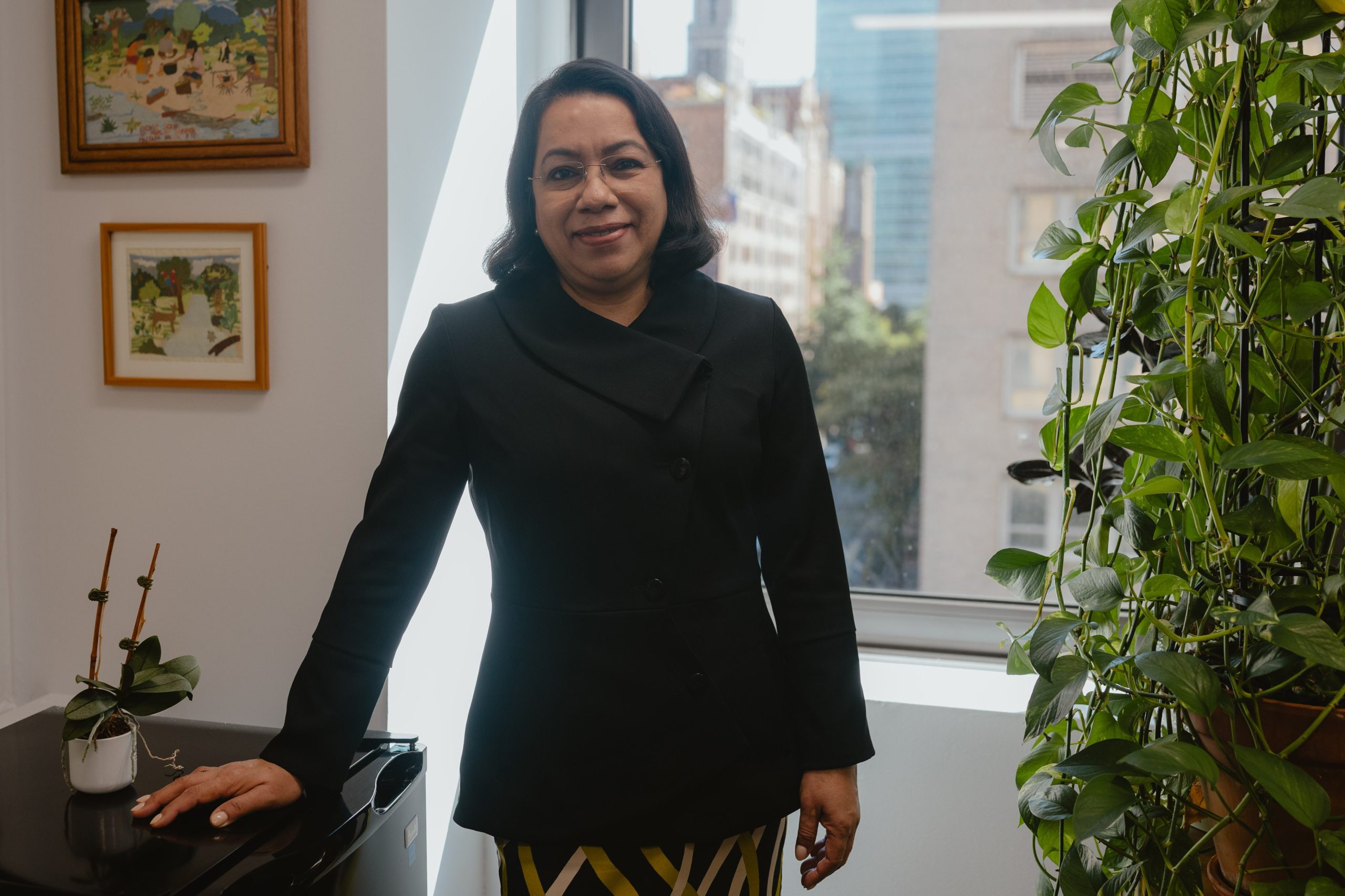
The race to succeed António Guterres as head of the United Nations (UN) from next January 1 is a long-distance one with very few certainties. Among the seven current candidates, Carolyn Rodrigues-Birkett, a former minister of Guyana and that country’s ambassador to the United Nations, stands out alongside Costa Rica’s Rebeca Grynspan and, to a lesser extent, Argentina’s Rafael Grossi. Rodrigues-Birkett, who received EL PAÍS in her New York office last Tuesday, avoids speculation but does speak of a campaign against her that caused her to lose ground in the last vote.

In addition to her résumé, this woman—born 53 years ago in an Arawak indigenous community in Santa Rosa—brings to the race a story of personal triumph over adversity. She grew up in a home without running water or electricity in Guyana, a small country of barely one million inhabitants and the only South American nation whose official language is English. But she prefers to talk about other matters: “My story is not unique. It is similar to that of many people in this world. In some continents, 40% of the population still lacks access to electricity.”

The battle for the UN enters a decisive phase this Friday, with a vote in which, for the first time, the five permanent members of the Security Council—the ones that call the shots—will show their preferences. Guyana’s representative prefers not to discuss the risk of a deadlock or whether the United States is keeping the option of waiting for new candidates because none of the current ones convinces it. She only hopes that, if one of those surprise candidates speculated about does emerge, they will be scrutinized with the same attention as the official candidates. She also says that if, in the end, a woman is not chosen, it would be a very negative signal for the cause of equality.

Question. In the first four ballots, Grynspan and you held the top two positions. But in the last round you fell to third place, behind Grossi. Are you losing support because of recent articles that recalled your criticism of Israel?

Answer. I have advocated for a two-state solution in which both states live in peace and security. I have said many things. But if there is a campaign against me, they will pick what they want to pick. But as a small country, Guyana has always been clear that we defend international law and the United Nations Charter. Not only in the case of Gaza, but in Sudan or anywhere else. If standing up for the Charter and international law is going to work against me in this contest, I’m happy to choose that any day.

Q. Do you think there is a campaign against you?

A. You have seen those articles and I have seen them too. But I am also aware of other outreaches that have been made and that I will speak about at the appropriate time, not today.

Q. It is likely that in Friday’s vote every candidate will receive at least one vote against them from the five veto-holding countries: the United States, China, the United Kingdom, France and Russia.

A. I do not want to speculate. I think the current candidates include people capable of holding the post of secretary-general. We have been subjected to intense scrutiny by the General Assembly and the Security Council. I hope that this procedure is preserved. All candidates should be subjected to the same level of scrutiny.

Q. Diplomats talk about the possibility of a deadlock—that on January 1 the UN might not have a new leader.

A. That would be one of the best ways to reduce the United Nations’ credibility. It would show that we do not take the organization seriously. I hope we do not reach that point.

Q. How important is it to you that the principle of rotation be respected, under which it is now Latin America and the Caribbean’s turn to provide a candidate?

A. That principle was established to guarantee a degree of certainty and fairness. If we start to dismantle these informal processes that are in force, what will come next?

Q. But some voices recall that when Guterres was chosen it was Eastern Europe’s turn.

A. Then, since that happened, should we diminish it further now? I do not think so. We have five candidates from that region. And the informal straw polls point to the possibility that one of them could be chosen. That is a good sign.

Q. For the first time in its more than 80-year history, the UN could be headed by a woman. Is this finally the moment?

A. The resolution on the appointment of the secretary-general constantly refers to “he.” But now it is 2026 and no one questions women’s competence. I am not presenting this candidacy because I am a woman; I am running on my ability and my competence. But if there is one place that should lead by example on gender equality, it is the United Nations. The time has come for the other half of humanity to have the opportunity to hold that office as well. Although, ultimately, it will be mostly men who make that decision.

Q. What message would be sent if, after two women led the process, a man were ultimately chosen?

A. The world would respond to that. It would be a very bad message. The women in this race have stood before this world. I do not believe that at this stage the world has concluded that none of us fit the bill.

Q. Why do you believe you are the right person for the job?

A. I believe I have the necessary experience. I do not come solely from the diplomatic community; I have worked in the fields. I served as a minister for 14 years and as a legislator—roles that require negotiating skills. I have also worked in the international civil service. The secretary-general plays a key role in building bridges. That has also been the theme of my life: bringing people together and building bridges to achieve real change on the ground.

Q. The selected person will head a United Nations subjected to multiple crises and threatened with losing relevance in resolving the world’s major conflicts. How do you respond to that?

A. The United Nations, founded after World War II, has played a central role in peacebuilding.

Q. But right now that is not happening…

A. And we should examine why. The secretary-general always has room to act, even when there is a split among certain Council members. The secretary-general must be brave and bold in proposing paths to a solution. You have to try. There is no alternative if you want to restore the UN’s central role in peacebuilding.

Q. Has Guterres done that? What do you think he has done well and badly?

A. I will not judge. History will take care of that. But much more needs to be done than what we are doing now, for example, in peacekeeping operations. These missions were supposed to be a means to an end: deploy peacekeeping forces while political solutions were achieved. However, we have peacekeeping missions that have been active for decades without significant political progress. We must work to achieve political solutions; that would be the true measure of success for these operations.

Q. We see every day how the international order that emerged after World War II is crumbling. Is the UN doomed to play an increasingly minor role?

A. Diminishing the UN poses a risk. The UN remains the bulwark of multilateralism, which is our only guarantee of peace and security. If we fragment or weaken the UN, we will return to a scenario we do not want to revisit—the law of the jungle. We can consider working in smaller groups to find certain solutions, but to globalize or legitimize these solutions there is no forum other than the UN.

Q. Another crisis the UN faces is financial. What is your prescription?

A. Forty-two percent of the United Nations’ budget is financed by two countries. I do not think that is sustainable.

Q. Should middle-income countries then pay more?

A. That should be debated. There are areas where we can improve and gain efficiency on the ground, but I do not think that tinkering on the edges will solve the foundational problem. The UN had 51 members when it was created and today it has 193. Yet we still operate with the structures of 1945. Many countries are demanding reforms: in the secretariat to make it more efficient; in the funds and programs to improve our work on the ground; and in the Security Council.

Q. There is always talk of reforming the veto power of the five permanent members, but at least in the short term that does not seem very realistic.

A. In politics, anything is possible. From discussions with countries two very clear messages emerge: support for expanded representation and for accountability from the Security Council. The challenge lies in achieving both. The Security Council risks becoming irrelevant. If the world and the majority of member states perceive that it is incapable of resolving or preventing conflicts, they will seek other ways to address them. And I suppose no one wishes to fall into irrelevance. The time will come for a reformed Security Council, but for that member states must move forward.

Sign up for our weekly newsletter to get more English-language news coverage from EL PAÍS USA Edition

America

Ephemeral Companies And $100 Million In The Bank: The Mysterious Fortune Of The Owners Of The House Of Horrors


Published

on

ephemeral-companies-and-$100-million-in-the-bank:-the-mysterious-fortune-of-the-owners-of-the-house-of-horrors

Google Maps still shows a prosperous image of Pacific Place, a business center on the busy Valley boulevard in a suburb east of Los Angeles, California. But that picture no longer matches reality. The windows of a mental health clinic and a real estate agency have been boarded up to protect the premises from vandalism. One by one, shops pulled down their shutters until the mall was almost deserted. Several businesses belonging to an enigmatic figure also closed: Guojun Xuan, a wealthy Chinese immigrant who is at the center of a chilling case involving the alleged mistreatment of 21 children at his Arcadia mansion.

Xuan, 66, and his partner, Silvia Zhang, 39, were arrested days ago in a police operation in response to a serious child abuse allegation. As Los Angeles County sheriffs escorted them to patrol cars that would take them to local jails, agents from the Federal Bureau of Investigation (FBI) searched every corner of their luxurious two-story mansion, which has nine bedrooms, ten bathrooms and a swimming pool. On the California real estate market, the property is valued at $4.5 million.

The FBI is keeping the focus of its investigation confidential. “The affidavit supporting the search warrant has been sealed by the court and, therefore, I cannot comment on the nature of the investigation,” an agency spokeswoman said in a statement sent to EL PAÍS.

The enigmatic Xuan and Zhang filled their mansion with children through a sophisticated scheme that paid up to $135,000 to women who rented their wombs. Some accepted the money without asking many questions; others barely knew their clients were “a Chinese couple” who wanted to fulfill the dream of having children. Behind the operation was Mark Surrogacy Investment, a surrogacy company in which Xuan was listed as an executive and whose corporate headquarters was the Arcadia mansion.

Mansión de Silvia Zhang y Guojun Xuan en Arcadia, California.

The company operated legally for only a few months, from February to June 2025, according to the California Secretary of State. Its closure coincides with the police investigation that exposed alleged beatings that Xuan, Zhang and a group of nannies who lived with them inflicted on children aged between two months and four years. The children are now in the care of the local government.

Another red flag was that Mark Surrogacy Investment did not generate profits; rather, it was a financial burden for its owners. “It was not that the company was financing them. They were the ones who, in fact, financed the surrogate mothers to have these children,” said Nathan Hochman, Los Angeles County prosecutor, at a press conference in which he revealed harrowing details about what he called “the house of horrors.”

“The number of children who were subjected to this alleged horrific abuse is unprecedented. The alleged corporal abuse of these children is appalling and revolting, especially at the hands of those who were supposed to protect them,” Hochman told reporters. “The motivation to have all these surrogate children is part of an ongoing investigation,” he added.

200 bank accounts

Without a fortune backing them, the pair would hardly have been able to sustain a family of that size. Xuan had access to around 200 bank accounts and at least 70 corporate accounts, whose combined value exceeded $100 million, prosecutors said at a hearing. Authorities asked that bail be set at amounts commensurate with the resources available to the couple. A judge, however, set bail at $20 million for each of them.

“The amount is absurd. It’s $100 million per each defendant,” protested Mitchell Krems, the couple’s defense attorney, in a statement quoted by ABC7. “He’s being unfairly scrutinized because he has so many children. There’s no law against having all these children, none at all, so my client is not abusive whatsoever,” the lawyer said.

Krems declined to grant an interview to EL PAÍS. He also did not answer a series of questions the newspaper sent him through a consulting and digital marketing agency. The questions addressed Xuan’s businesses, his properties in California, the large payments to the women who carried the children and the child abuse accusations.

The 15-page complaint does not focus on the couple’s financial resources. It only mentions them when detailing payments of at least $45,000 to the women who carried their children and the salaries of those who helped care for the youngsters. “Xuan took ten bundles of cash from a bag in his office, after which the defendant Zhang went to pay the nannies who lived there in cash,” Prosecutor Hochman recounted during the conference.

Another mansion in Arcadia is linked to the couple. It is on First Avenue, less than two miles from the residence searched by the FBI and the sheriffs. Court documents list it as one of the addresses registered by Silvia Zhang. The property has two floors, six bedrooms and six bathrooms. Its melon-colored façade contrasts with the white trim. Four Roman-style columns adorn the main entrance. In the front yard, a fountain with goldfish welcomes visitors. Built in 2001, the luxurious residence is valued at $3 million by Realtor.com, 16% higher than its estimated value in 2022.

A more modest property, located on a hill in Pomona, is listed as the headquarters of Hope Surrogacy, a surrogacy company that was active from March to June 2021 and that, according to California Secretary of State records, was run by Zhang. Pomona, a predominantly Hispanic suburb 30 miles east of Los Angeles, contrasts with the opulence of Arcadia.

The house on Tonner street is small compared with the couple’s mansions, but it sits in a neighborhood with privileged views and away from denser, lower-income areas. Despite its appearance, the rise in property prices puts its value at a figure that may seem disproportionate: $1 million.

Ephemeral businesses

At Pacific Place in El Monte, Xuan and Zhang’s businesses had short lives: some remained active for only a few months; others, at most, a couple of years. One company operated under the same name during two separate periods before closing permanently in January 2023.

El centro de negocios Pacific Place en El Monte, California.

The list of companies registered at that commercial center that list Xuan and Zhang as principals is extensive: Yudao Management, Future Spring Surrogacy, Hongxing Investment, Shangdao Management, Renquan Investment, Future Management, YZA Investment, Heavenly Way Investment and Rain Prosperity Investment.

In some of these firms, Xuan and Zhang alternated in executive roles. On a few occasions is she listed as the principal responsible party.

The Pacific Place businesses operated between April 2019 and May 2025. Although their owners did not specify to the California Secretary of State the activity of each company, court documents indicate some were related to the real estate sector.

In Mark Surrogacy Investment, the surrogacy agency headquartered at the Arcadia mansion, Xuan was listed as chief executive and Zhang as manager. Several of the children who lived in the residence were born through that company. According to authorities, Xuan and Zhang were the only clients.

Sign up for our weekly newsletter to get more English-language news coverage from EL PAÍS USA Edition

Continue Reading

America

El “desastroso” Estreno De La Portavoz De La Casa Blanca Provoca Apuestas Sobre Su Permanencia

Published

on

el-“desastroso”-estreno-de-la-portavoz-de-la-casa-blanca-provoca-apuestas-sobre-su-permanencia

El estreno de Katie Zacharia como portavoz del presidente Donald Trump ha dado pie desde el martes a una catarata de comentarios estupefactos en los medios de un país en el que un razonable dominio de la oratoria se da por descontado en Washington. También surgieron las sospechas sobre el currículo de la recién llegada, una abogada que después de todo nunca se colegió en Estados Unidos. Incluso madrugaron los primeros mensajes internos, basados en fuentes anónimas, que le auguran una corta carrera en su nuevo puesto.

Seguir leyendo

Continue Reading

America

La Embajadora De Estados Unidos En Grecia Dimite Por Corrupción Presionada Por Trump

Published

on

By

la-embajadora-de-estados-unidos-en-grecia-dimite-por-corrupcion-presionada-por-trump

Bastaron poco menos de dos horas para que la embajadora de Estados Unidos en Grecia, Kimberly Guilfoyle, dimitiera este martes en vista de las presiones de la Casa Blanca para que lo hiciera. Anunció su decisión con una publicación en X.

Seguir leyendo

Continue Reading

Trending

Copyright © 2017 Spanish Property & News