
Alexandria Ocasio-Cortez
Duel In Kansas: A Preacher And An Obstetrician Square Off In One Of The Midterms’ Surprise Battles

Cottonwood Falls, in the heart of Kansas, is a small town surrounded by prairie as far as the eye can see and dotted with idyllic farms and red barns. This ranching community of roughly 850 people proudly hosts a tiny museum whose centerpiece is a perfectly preserved settlers’ wagon. Next to it is the “House of God,” a café that also functions as a church, or vice versa. The cobblestone main street features at one end a hotel where what may once have been a saloon is now a bar. At the other end stands a startling stone building in French Renaissance style: one of the oldest courthouses still in operation west of the Mississippi River. Currently, it also serves as an early voting polling place for next Tuesday’s midterm elections.
Robert, who runs an antique shop, voted the day before speaking to EL PAÍS. “Blue (the Democrats’ color) in every box, for the first time in my life,” says the retiree with a patriarchal beard, a faded T-shirt and wide denim overalls, who says he voted Republican for most of his life but is now “sick” of the direction the country is headed: “High prices, corruption, war, and a government turned into a cult. I want those in power gone, and in the meantime I want the Democrats to win so there’s a bit of balance between the branches of government — right now there are no checks on those in charge. And the pastor seems like a reasonable guy.” “A lot of people around here think the same as I do,” he adds.
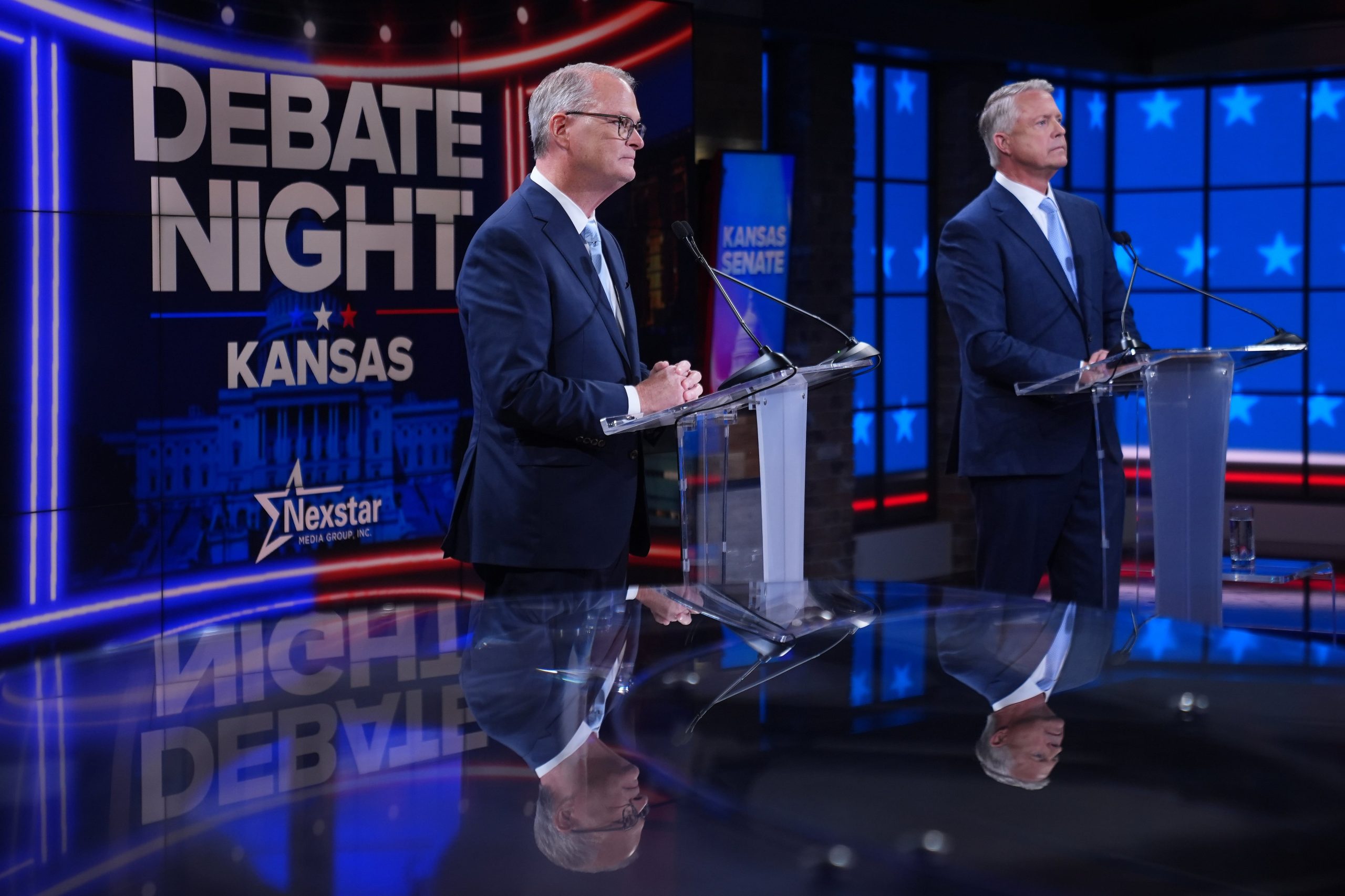
“The pastor” is the Democratic nominee for the U.S. Senate in Kansas, Adam Hamilton, 62, who founded the Church of the Resurrection at 25 and has led it ever since. It is the largest United Methodist congregation in the United States, with more than 25,000 members. Hamilton aims to unseat Republican Roger Marshall, an obstetrician-gynecologist who has held the Senate seat since 2020 after winning with the backing of President Donald Trump. Polls show the race is a statistical tie in this state, the geographic heart of the United States.
Whoever wins between the two could determine which party controls the U.S. Senate starting next January. The matchup is the big surprise of these elections: Kansas is traditionally conservative and votes almost uniformly Republican — the exceptions, two blue spots on an intense red map, have been Topeka, the capital, and Kansas City, the metropolis shared with Missouri — which in the 2024 presidential race backed Trump by 16.1 percentage points and has not elected a Democratic senator in 94 years.
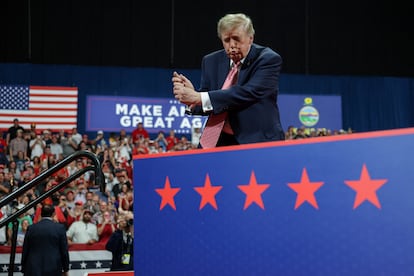
Now, according to polls, Hamilton has a very real chance of taking that seat. Republicans’ concern is evident: Trump visited the state last week to back Marshall at a rally, and Vice President J. D. Vance did the same on Monday. Now the Republican National Committee has just announced that the president will return to Kansas this Saturday, barely 10 days after his previous trip and only three days before the election.
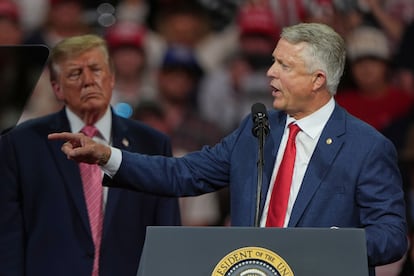
That the contest between the preacher and the physician is so fierce is the result of a large combination of factors in this agricultural, sparsely populated, wide-open state, where young people often adopt their parents’ political affiliation and where churches are frequently the pillar of communities. But a third of the electorate identifies as independent — neither Democrat nor Republican — and Washington feels very far away.
Support for Trump, which seemed unshakeable a year and a half ago, has eroded as the farm economy has been hit by rising diesel and fertilizer prices. The White House announcement of an increase in beef imports to combat high meat prices has raised suspicions among farmers.
“People are very worried about the war in Iran and about the pressure it puts on fuel prices, which adds to a cost-of-living crisis that already had people on edge,” explains Bob Ross, president of the Topeka Chamber of Commerce. “There’s also a lot of concern among our members about immigration policy, visa access and the workforce and talent pipeline. We have a good economy in Kansas, we’re creating jobs, but we need people to come, and it’s now harder to attract the best from around the world. Then there’s housing: this is one of the most affordable places in the country, but interest rates are rising and it’s increasingly difficult for young people to get the American dream.”
Added to the general economic unease is the type of candidate, which has made the contest even tighter. Senator Marshall, who won easily in 2020, initially assumed the same would happen again and was slow to mobilize his full campaign. Hamilton, who has built a substantial support base through decades of clerical work and who was once a Republican before becoming a Democrat, presents a centrist message that appeals in Kansas.
“He appeals to independents and moderates with the message that he can offer a different kind of Democratic Party than the one that generations of Kansans have viewed with suspicion,” Ross says, noting that his Republican rival “was very popular in the western part of the state (where he comes from and practiced medicine) even before he was elected.”
‘Leading from the center’
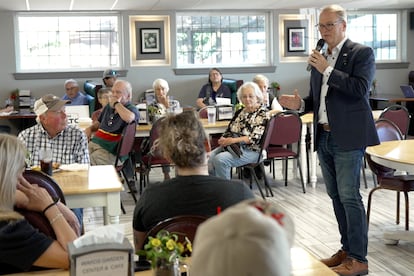
Last Saturday, dozens turned up with signs and T-shirts supporting Hamilton in the parking lot of an industrial park in Olathe, on the outskirts of Kansas City. One business proclaims it sells the best firearms in the state. Another is a gunsmith. It is the spot the Democratic candidate chose to start his closing tour, which will take him across the state, including some of its deepest red areas. Exactly at noon, as scheduled, the pastor arrived on his campaign bus, decorated with his slogan: “Leading from the center.”
Neatly turned out, he began speaking with ease. Years of pulpit practice have made him a skilled orator. “For me, leading from the center is listening to people on both sides. There are many things I’m not very good at — I’m a terrible golfer, for example — but the thing I do know how to do well is listen, bring people together and care about them. And I think that’s what we need right now: people who will bring Democrats and Republicans together. That’s how our system is supposed to work; through compromise and cooperation,” he told a small group of reporters on the sidelines.
“It’s important that he’s a pastor in a state as conservative as Kansas. And a pastor for more than 30 years, of a really big church. Someone with empathy who talks about being kind and welcoming the stranger. And who was previously a Republican. He’s centrist, which also matters: here in Kansas, a progressive candidate in the mold of Alexandria Ocasio-Cortez (the New York congresswoman and emblem of the Democratic left wing) wouldn’t go very far. And Hamilton knows how to speak the language of people here: appeal to centrism, to working together,” says Israel Sánchez, a Cuban-born digital media specialist who has lived in Topeka for 15 years.
Meanwhile, his Republican rival has been rocked by a series of scandals in the campaign’s final weeks. First it emerged that he owns a mansion in Sarasota, Florida, raising questions about how much time the senator really spends in Kansas; he has not held a town hall — a meeting with voters of all stripes to answer their questions, a format American lawmakers typically use to be accountable to constituents — in more than 600 days, after abruptly ending one he deemed too politically motivated and uncomfortable.
That appearance of distance, fueled by a campaign that has limited most of his appearances to events for supporters, may have hurt him particularly with young people, says Caleb Soliday, director of Forge Young Talent, which among other initiatives mobilizes youth voting in Topeka on a nonpartisan basis. “Young people want a candidate who will engage with them, and in this Senate battle there’s one candidate described as someone who doesn’t show up in many places. At the same time, there’s another who is a bit more engaged, and that will likely play a role when young people vote.”
An investigation by The New York Times revealed that while Marshall practiced medicine he sued nearly 700 of his patients for unpaid bills, some as small as $50. The senator says he spends most of his time between Kansas and Washington. Regarding the Times report, he says that once his patients’ debts went to professional collection firms, he “no longer had anything to do with the process.” More recently he was hit by an allegation that he never paid an $800 invoice from a bakery that provided rolls at a campaign event in 2020. He paid it immediately, claiming he did not know how the oversight occurred.
Hamilton has also had to answer questions. In his case, over an alleged case of child sexual abuse at a church summer camp two decades ago. At the time, the church itself reported the case to police, and after an investigation authorities decided there was insufficient evidence to bring charges.
The race for the Senate seat has already become the most expensive in Kansas history. The candidates’ campaigns and supporting groups have spent nearly $85 million, according to advertising analytics firm AdImpact. Fundraising has skyrocketed for Hamilton: by mid-October he had raised $11 million, compared with Marshall’s $800,000.
The last stop of the day on Hamilton’s bus tour is Holton, the seat of Jackson County, a traditionally Republican area in the northern part of the state. As the candidate prepares to speak in the park, a few hundred meters away in the neat main square — if Cottonwood Falls evoked the most rural America, this area calls to mind the town from Back to the Future — Annalisa Noe, 40, reads a book on a café terrace enjoying the afternoon sun. She says she used to be a Democrat and worked in the Indiana state Senate. But since moving to Kansas she has changed her registration.
“The Democratic Party no longer represents my values, my beliefs, or what I think is right, good, and true for the country’s future. So I’ll vote Republican in the upcoming elections,” she says. “They say a Democratic wave is coming. But I think Republican voters care more about the issues, and they may turn out in greater numbers to build a wall against that supposed wave.”
Sign up for our weekly newsletter to get more English-language news coverage from EL PAÍS USA Edition









Abdul El-Sayed
Islamophobia, Free Healthcare, And A Final Blow: The Battle For Michigan Will Determine Just How Far To The Left The United States Can Shift

Mensaje Enviado
Spain Under Weather Warning For Storms And Hurricane-Force Winds

False Leads And Road Checks: Search Continues For Fugitive Responsible For Explosive That Killed A Police Officer In Spain
Viral video in Spain sparks fury over drivers who ‘have no idea how to drive’
Spain’s pet owners face fines of up to €200,000 for animal welfare offences
EU offers extra year of warranty on phones, but Spain faces delays


-
DGT4 weeks ago
Viral video in Spain sparks fury over drivers who ‘have no idea how to drive’
-
Keeping cats and dogs outside4 weeks ago
Spain’s pet owners face fines of up to €200,000 for animal welfare offences
-
Consumer Rights Spain3 weeks ago
EU offers extra year of warranty on phones, but Spain faces delays
-
Age Concern Marbella - San Pedro2 weeks ago
Halloween lunch sells out as 51 join Marbella get-together
-
Council tax (IBI)4 weeks ago
Barcelona plans 150% property tax increase on tourist flats ahead of 2028 ban
-
airports4 weeks ago
Travelling between Spain and Italy? The extra border checks could soon end
-

 %4 weeks ago
Santa Pola Museo Del Mar
-

 New Developments2 weeks ago
How To Get A Tourist Rental Licence In Andalusia (Spain) – Step-By-Step Guide 2025