Connect with us

Donald Trump

MAGA Turns On Homeland Security Secretary Markwayne Mullin After US Systems Outages

Published

on

maga-turns-on-homeland-security-secretary-markwayne-mullin-after-us-systems-outages

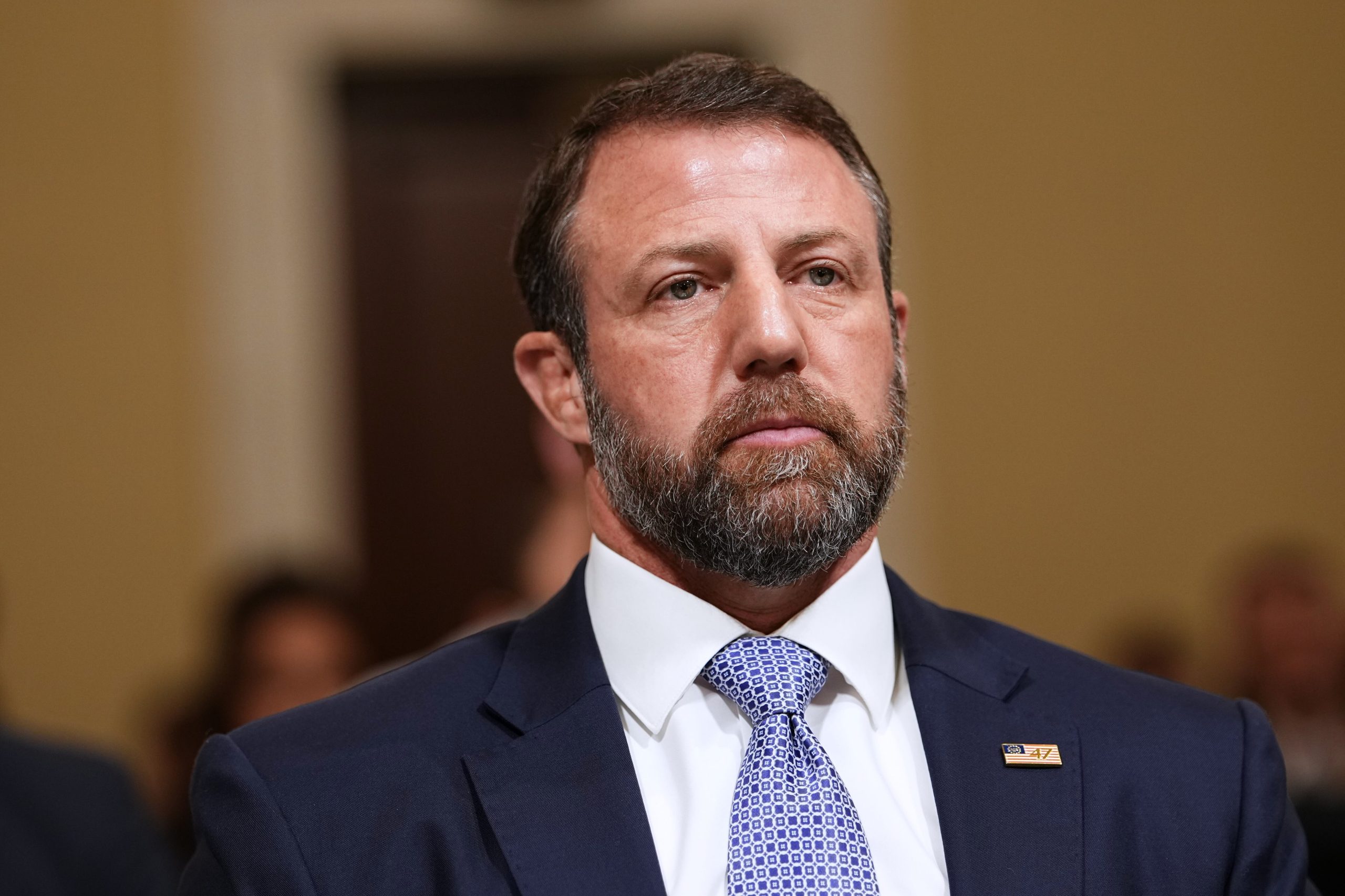
While the Federal Aviation Administration (FAA) was trying last week to fix the problem that had grounded thousands of flights across the United States, Homeland Security Secretary Markwayne Mullin was attempting to explain the cause at a White House press conference. His counterpart at the Department of Transportation, Sean Duffy, had just attributed the disruption to the system’s antiquated infrastructure. Mullin contradicted him, perhaps without realizing it, and appeared to place the blame on his colleague instead.

“Secretary Duffy and FAA was going in and putting patches into the system, they were putting new equipment and new technology, and that new equipment, new technology was overwhelming the older system,” he said. Duffy could barely conceal his look of astonishment.

The following day, while the aviation network was still struggling to recover from the outage and hundreds of thousands of travelers were trying to reach their destinations after being stranded for hours in airports across the country, Mullin chartered an official government aircraft to attend an American football game.

The head of the Department of Homeland Security (DHS) is facing what may be the most serious crisis of his tenure. In recent days, criticism from within Trump’s political movement has mounted over his television appearances, whether discussing the administration’s response to the wave of outages that has affected infrastructure and businesses nationwide since last week or addressing immigration, which falls under his department’s remit. That is no minor issue. Success in front of the cameras is one of the main yardsticks U.S. President Donald Trump uses to judge the performance of his advisers.

Mullin, 49, is still relatively new to the job. He has been in the position for just eight months, since President Donald Trump appointed him to replace Kristi Noem after Immigration and Customs Enforcement (ICE) agents killed two U.S. citizens in Minneapolis. The appointment capped a meteoric rise. A plumber by trade and an unwavering Trump loyalist with a passion for martial arts, Mullin was elected senator for Oklahoma in 2022, just as Trump was beginning his campaign to return to the White House.

The harshest attacks have come from influencer Laura Loomer. That is particularly troubling for Mullin: the activist is a trusted figure in Donald Trump’s inner circle, and in the past a single complaint from her has been enough to prompt the U.S. president to dismiss senior officials.

“He should resign,” she wrote on X. “His performance on The Hill this morning was embarrassing,” she added, referring to Mullin’s appearance before the House Homeland Security Committee on Wednesday, where he was questioned about the outages as well as the national-security implications of the Nvidia controversy, specifically CEO Jensen Huang’s relationship with an alleged Chinese spy.

During that hearing, Mullin stated, among other things, that he had received no prior intelligence regarding Huang until the matter became public, after Huang acknowledged his infidelity in a public statement. Democratic Representative Seth Magaziner of Rhode Island challenged that claim: “That’s surprising to me, because it’s been reported that Secretary [of State Marco] Rubio knew months ago, [Secretary of Commerce Howard] Lutnick, the president knew apparently over a year ago. But you’re the Homeland Security secretary. Why weren’t you read in on this?”

‘An embarrassment’

“Mullin is such an embarrassment to our country. It’s so embarrassing that he is DHS Secretary. I can’t think of anyone more unqualified than this dope. The world is laughing at us. And the homeland is unsafe with Markwayne as DHS Secretary,” Loomer wrote after that hearing in a post on X, one of a long string of attacks she has directed at the former senator.

Another influential voice in MAGA circles agreed. “I’m sorry, no offense to Markwayne Mullin, but he seems like an idiot. I just have zero faith in this man,” Megyn Kelly, one of the most prominent figures in Trump-aligned media and a former Fox News host, said on her show Tuesday.

The discontent has also reached the White House, where the new chief of staff, Stephen Miller, is eager to put his stamp on the administration. Miller, the architect of Trump’s immigration agenda, has made clear that he wants a tightly disciplined West Wing, one with no leaks to the press and where everyone delivers the same message.

This week, the senior official was travelling through Asia with Trump on a tour whose marquee event was the first trilateral summit between the U.S. president and his Russian and Chinese counterparts, Vladimir Putin and Xi Jinping.

The U.S. delegation was in Manila when videos began circulating of a Mullin appearance on Fox News. The goal was for the DHS secretary to reassure Americans about the series of computer-system outages that had disrupted services in recent days, disruptions the administration insists were not caused by either a cyberattack or a failure of artificial intelligence.

But during the interview, Mullin suggested that artificial intelligence might in fact be responsible for the outages or, as the White House calls it under Trump’s directive, “superintelligence,” or “SI.”

“I talked to one guy in the tech industry, he asked not to mention his name, it’s not Elon [Musk, the founder of SpaceX]. I asked, what could be causing these outages? He said ‘I believe it’s SI, because these programs aren’t designed to work as fast as SI is.’”

The DHS secretary also sought to justify his use of a government aircraft to attend the football game. Had he chosen not to travel, he argued: “That would show maybe distrust that we’re not even willing to fly.”

The remark immediately caused astonishment inside the White House. According to the digital news outlet Politico, messaging groups used by presidential staff quickly filled with incredulous reactions. From Manila, Miller ordered that Mullin be replaced in television appearances on the outages by Rubio and Director of National Intelligence Jay Clayton, according to three sources close to the White House cited by the publication.

“Despite the mixed messaging from Mullin, the administration was able to take the reins — even overseas — and put together a coordinated response to inform the American people,” a White House spokesperson told Politico.

According to the outlet, the decision to sideline Mullin from public-facing media appearances and place him under closer White House supervision had been taking shape for days before becoming final. The previous week, he had already drawn the ire of the MAGA movement, this time over immigration. Speaking at a meeting of the National Governors Association, he said he was open to immigration reform that would provide a pathway to legal status for some immigrants who arrived in the United States as children. For the U.S. hard right, that position was unacceptable.

Podcaster Jack Posobiec quickly joined the attacks on the DHS secretary. “There is a growing wave among MAGA to find a DHS secretary who puts deportations first,” he told Politico at the time.

“Mullin is the wrong guy at the wrong time for the wrong job,” said former Trump strategist Steve Bannon, who remains a highly influential figure in the movement’s hardline conservative wing. “[At] A time when we need focus on ‘mass deportations,’ we get an amnesty advocate.”

According to Bannon, Trump is considering removing Mullin and replacing him with loyal ally Bill Pulte, the former housing-policy chief and the outgoing director of National Intelligence.

For now, the White House says it continues to support the senior official. “The president has confidence in Secretary Mullin and his entire Administration to carry out the agenda the American people voted for,” a spokesperson said.

Sign up for our weekly newsletter to get more English-language news coverage from EL PAÍS USA Edition

Costco

‘Apocalyptic Fears’: String Of Technology Failures Triggers Rush For Emergency Supplies In The United States

Published

on

‘apocalyptic-fears’:-string-of-technology-failures-triggers-rush-for-emergency-supplies-in-the-united-states

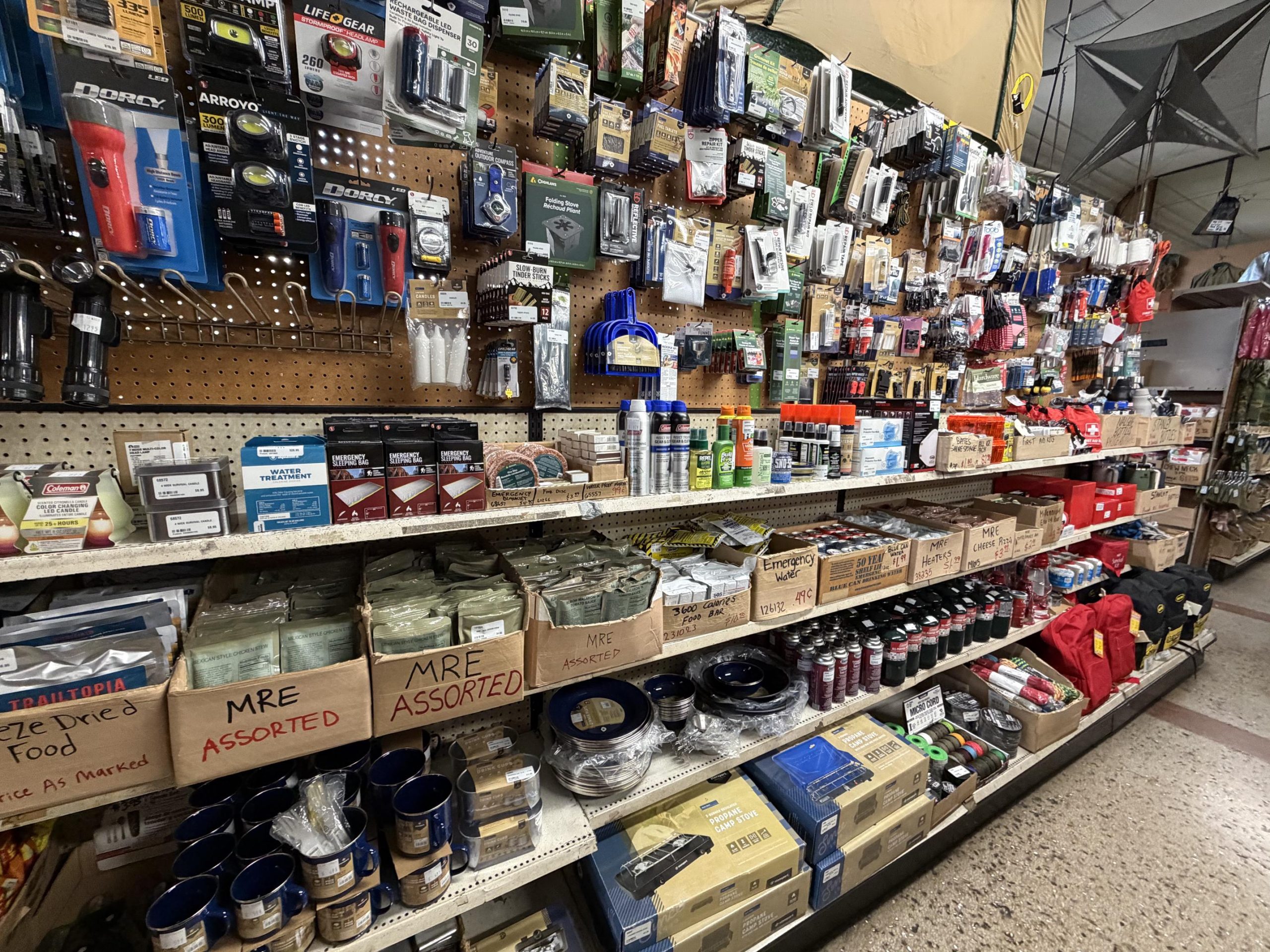
Sales of emergency kits containing food, radios, batteries, water-purification tablets and even drinking water with a 50-year shelf life have risen over the past week at Surplus Store in Venice, a beachfront neighborhood of Los Angeles, California. “There are a lot of people who are worried,” says manager Jaime Naylor.

At the shop, which specializes in camping gear and emergency supplies, Naylor says sales typically surge after natural disasters, when customers start preparing for the possibility of another catastrophic event.

This latest spike, however, has nothing to do with nature. Instead, it is being driven by digital systems. The uncertainty created by a string of technological failures across the United States is prompting more people to stockpile supplies out of fear of a digital collapse. “The planes, the Microsoft thing, different things have people thinking, ‘I don’t know what’s going to happen’ or ‘what’s next,’” Naylor says by phone.

In the United States, people who actively prepare for a possible catastrophe or societal breakdown, whether digital or natural, are known on social media as preppers. Some have spent years sharing advice on how to prepare for a major emergency or blackout that could leave people disconnected from the modern world. They stock canned and frozen food, basic supplies, flashlights, candles and even gas masks.
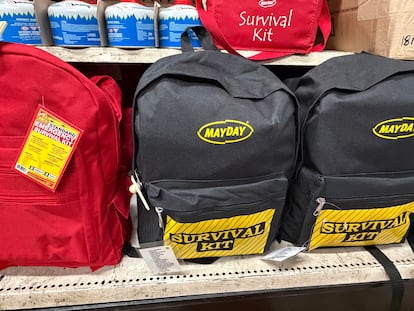
ArtĂ­culos en venta en la tienda Surplus Store, en Venice, California.

Among the recommendations promoted by experts such as Beth Sanner, a former CIA analyst and CNN contributor, are keeping cash on hand, memorizing the phone numbers of close relatives and agreeing in advance on a meeting place.

Those warnings, from both preppers and experts, have gained renewed traction in the United States amid the misinformation that surrounded a November 17 test of the Federal Emergency Management Agency’s (FEMA) Alert System. Public concern grew during that period, fuelled by a succession of technical failures that occurred within a short span of time.

First came the outage of Microsoft services, including its email platform, in an incident the company attributed to flaws in a series of updates it had been developing for months. Then, on Friday afternoon, flights across the United States were suspended for more than four hours, disrupting one of the busiest periods of the country’s air-traffic schedule. According to the government, the shutdown was caused by an equipment failure, not a cyberattack.

On Monday, United Airlines suffered a systems outage that delayed departures because of problems with its web-based systems, affecting crew communication tools. On the same day, customers at some of the largest U.S. banks reported temporary difficulties accessing their accounts. Finally, a highly classified communications network used by the National Security Agency (NSA) for internal communications also went down temporarily.

‘Panic buying’ at Costco and Walmart

Amid the string of technological problems, the surge in demand that Naylor has observed at Surplus Store has also been reflected at two of the largest retailers in the United States: Costco and Walmart.

“Consumer anxiety after Microsoft Outlook’s outage, the grounding of all flights in the United States and apocalyptic fears spreading on social media have contributed to an increase in sales of emergency-preparedness items at Costco,” said analyst David Bellinger of brokerage Mizuho in a report shared with EL PAÍS. By Sunday night, he added, 21 of the 26 highest-priced generators sold online by Costco had already sold out.

According to another report by Bellinger, both Costco and Walmart had been experiencing what retailers describe as “panic buying” since late October. The analyst partly attributes the trend to reports about government calls for citizens to prepare for potential emergencies.

The British government, for example, urged residents to stockpile enough water and food for at least three days and to keep extra batteries for cellphones as well as a traditional battery-powered radio on hand in case of a severe weather event or technological sabotage.
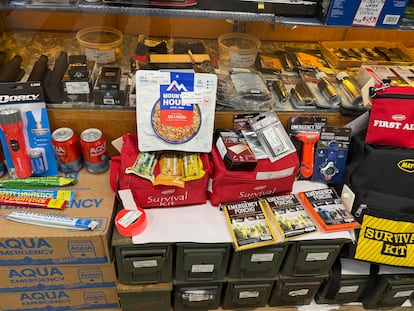
ArtĂ­culos de un kit de emergencia en la tienda Surplus Store, en Venice, California.

“We believe this has unleashed pandemic-style buying behavior, including the purchase of food and essential household supplies. That perception has reached the United States, as we saw in our review of Costco […], where traffic looked considerably stronger and items such as solar generators sold out,” Bellinger wrote in the report dated November 2.

Concerns intensified further with the succession of system failures in the United States, which in some ways seemed to confirm the worst fears of the prepper community.

The Trump administration, however, has said there is “zero evidence” that those incidents were related. “We have no indication, no evidence, and no reason to believe at all that any of these incidents are related to each other,” said Secretary of State Marco Rubio. “We have zero evidence or any reason to believe that any of these isolated or individual instances have anything to do with nefarious actors.”

Chris Krebs, a former director of the Cybersecurity and Infrastructure Security Agency (CISA), said in an interview with CBS that the outages appear to be the result of large-scale technology upgrades being carried out simultaneously across the United States with the help of artificial intelligence.

“It sure does look like all these events are connected, but all the available evidence suggests that they’re not,” he said. “The more we connect things, the more technology we use in day-to-day life, the more opportunity there is for disruption, particularly in this age of artificial intelligence. I’m not [saying] that AI is out there hacking everything. I’m saying that we’re using AI to improve the software, to improve the technology we’re using, and sometimes that means you have to patch things. And the scale we’re doing that right out, it can destabilize some processes, and I think that’s at least some of what we’ve seen in the last couple of days.”

Sign up for our weekly newsletter to get more English-language news coverage from EL PAÍS USA Edition

Continue Reading

Donald Trump

Show Up Or Risk Deportation: The Dilemma Facing Dozens Of Migrant Families Summoned To A Texas Detention Center

Published

on

show-up-or-risk-deportation:-the-dilemma-facing-dozens-of-migrant-families-summoned-to-a-texas-detention-center

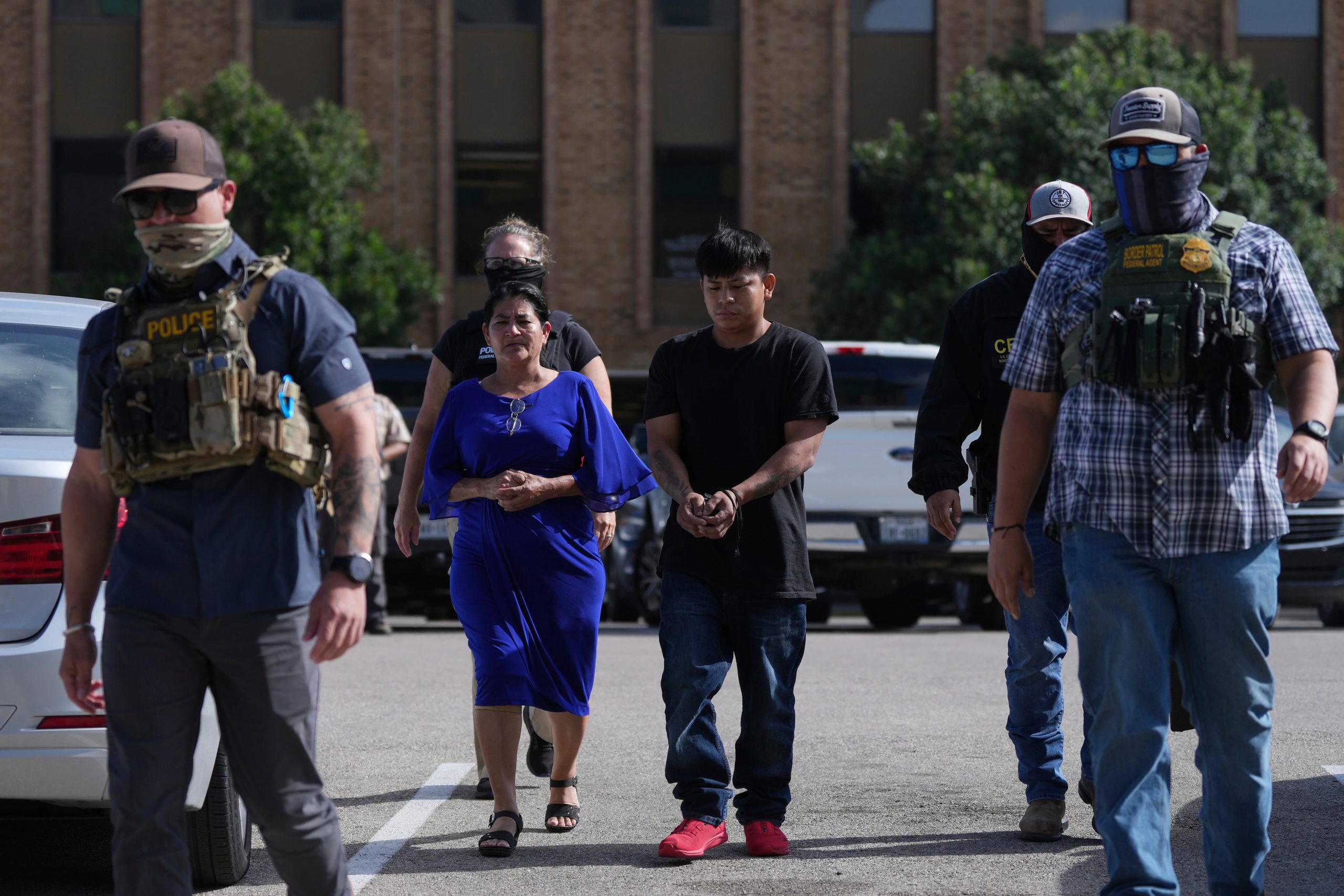
LP began crying uncontrollably when she learned that her immigration hearing had been moved up and transferred from the court in San Antonio, Texas, to a family detention center. Her mind raced: “They’re going to arrest me,” she thought. “What’s going to happen to my daughters?” The 30-year-old Venezuelan woman, who asked not to be identified for fear of reprisals, had six days to decide whether she would attend.

She had been summoned to the South Texas Family Residential Center, better known as “Dilley” after the remote Texas town where it is located. The facility is an hour and 20 minutes by car from her home in San Antonio.

In July, Congressman Joaquín Castro, together with 111 fellow lawmakers, sent a letter to the federal government demanding Dilley’s closure. “Children have reported that their food is often contaminated with worms and mold and that they feel sick after drinking tap water,” they wrote. They also cited families unable to sleep because the lights remain on throughout the night; inadequate and insufficient medical care; detention periods exceeding legal limits; and children who were “depressed” and unable to understand “why their lives suddenly went from spending their days at school learning and playing with their friends to being imprisoned at Dilley.”

After the November 3 midterm elections, in which Democratic candidates won key statewide offices in Texas, more families like LP’s began receiving similar summonses directing them to the detention center, a complex built from tents and shipping containers. In her case, a hearing originally scheduled for 2028 was moved forward to early November 2026.

The organizations consulted agree that the individuals summoned to appear in Dilley are people who are not in custody, who have regularly appeared in court, who do not have attorneys, and whose preliminary hearings had been held in San Antonio courts.

Laura Flores-Dixit, an attorney with immigrant-rights group American Gateways, told EL PAÍS that she knows of families summoned to Dilley who live in Waco, Texas, nearly a five-hour drive away. Kristin Etter, director of legal services at the Texas Immigration Law Council, said their first thought on seeing these summonses was that they were “fraudulent.” They later met more families in the same situation and realized they were real.

Alongside Florida, Texas is one of the states where local law enforcement agencies have been required by state law to cooperate with the administration of Donald Trump in the detention of immigrants. Laura Flores-Dixit condemns the fact that families must travel for hours on Texas highways to reach Dilley, exposing themselves to possible encounters with immigration agents: “You cannot have due process when someone is afraid to go to their hearing and be arrested on the way, or is afraid of being arrested when appearing in court.”

Families summoned to Dilley have two options: fail to appear and automatically receive a deportation order in absentia, or comply with the summons and risk being detained at the facility.

EL PAÍS asked both the Department of Homeland Security (DHS), which oversees Immigration and Customs Enforcement (ICE), and the Department of Justice (DOJ), which manages the immigration courts, about the hearings being held in Dilley. An ICE spokesperson confirmed that hearings are being held inside Dilley’s courtroom and that DHS “is working quickly and overtime to remove those foreigners to their final destinations: their homes.”

A decision

LP tried to get an attorney to help change the hearing to a video appearance, but all of them told her that six days was not enough time to arrange the switch. She decided to report to Dilley.

She did not sleep the night before. During the drive there, in a car driven by an acquaintance, intrusive thoughts consumed her. Upon arriving, a guard checked her name against a list. There were not many others marked the same way. She entered nervously.

She was told to leave all her belongings — including her cellphone — in a locker. She waited until she was taken to a small room that contained nothing but a screen. A guard stood behind her, watching. The judge appeared on the monitor, asked her a series of questions, and instructed her to obtain a lawyer and update her asylum application with additional evidence.

When she came out, three immigration agents were waiting: “Sit here,” they told her. “I thought it was all over at that point,” she said. The agents fitted her with an ankle monitor so they could track her location at all times: “I cannot move more than 70 miles from home.” In late November, just before the U.S. Thanksgiving holiday, LP must report to agents at an Immigration and Customs Enforcement (ICE) office.

LP’s experience mirrors that of around 20 people who received the same type of summons to Dilley, according to accounts gathered by EL PAÍS from lawyers, activists and migrants who were called to appear there.

“There is no other purpose here by the government than to terrorize and traumatize the families summoned,” said Etter. She believes that many families with children will fail to appear because they did not receive the notice in time, did not believe it was genuine, were terrified by the prospect of being detained in Dilley with their children, or could not afford to spend hundreds of dollars on an Uber ride to get there.

“It is clearly designed both to intimidate and to guarantee a high number of deportations and rulings against those who do not appear,” she added. “It imposes an extraordinary logistical and psychological burden on people who are complying with the legal process.”

However, Etter says that, so far, they have not encountered any families who were actually detained.

The fear

Pastor Dianne García, whose church is in San Antonio, told EL PAÍS that after the Democrats’ victory in the midterm elections, she had hoped ICE would ease its targeting of the immigrant community, but that has not happened. Since Trump began his second term, the Excel spreadsheet on which she tracks members of her community who have been arrested or deported, as well as separated families and children left behind, has continued to grow. Measures such as holding immigration hearings in Dilley, she believes, have only made matters worse.

LP feels the pressure has intensified over the past five months. Since then, she has stopped delivering food for Uber and no longer takes her daughters, aged 12, 8 and six, to the park, a restaurant or a shopping mall. They have shut themselves in: the girls go from home to school by bus — and back — and she goes from home to work without making any stops.

LP says she now has “the same fear” she felt in Venezuela, where she was pursued and threatened by the military. “But I hope things change faster here than in Venezuela. That government is never going to fall,” she says, referring to the administration of Delcy Rodríguez, the Chavista leader who took charge of the country after the U.S. military operation in which Nicolás Maduro and his wife were arrested.

Her next Dilley hearing is in early December. She has not yet found a lawyer nor managed to update her asylum claim. She says she is terrified by what may happen next: she believes she got lucky at the previous hearing, but fears that at the next one she could be detained in Dilley and separated from her daughters.

Sign up for our weekly newsletter to get more English-language news coverage from EL PAÍS USA Edition

Continue Reading

Argentina

Peter Thiel Expands Investments In Vaca Muerta’s Largest Oil Exporter

Published

on

peter-thiel-expands-investments-in-vaca-muerta’s-largest-oil-exporter

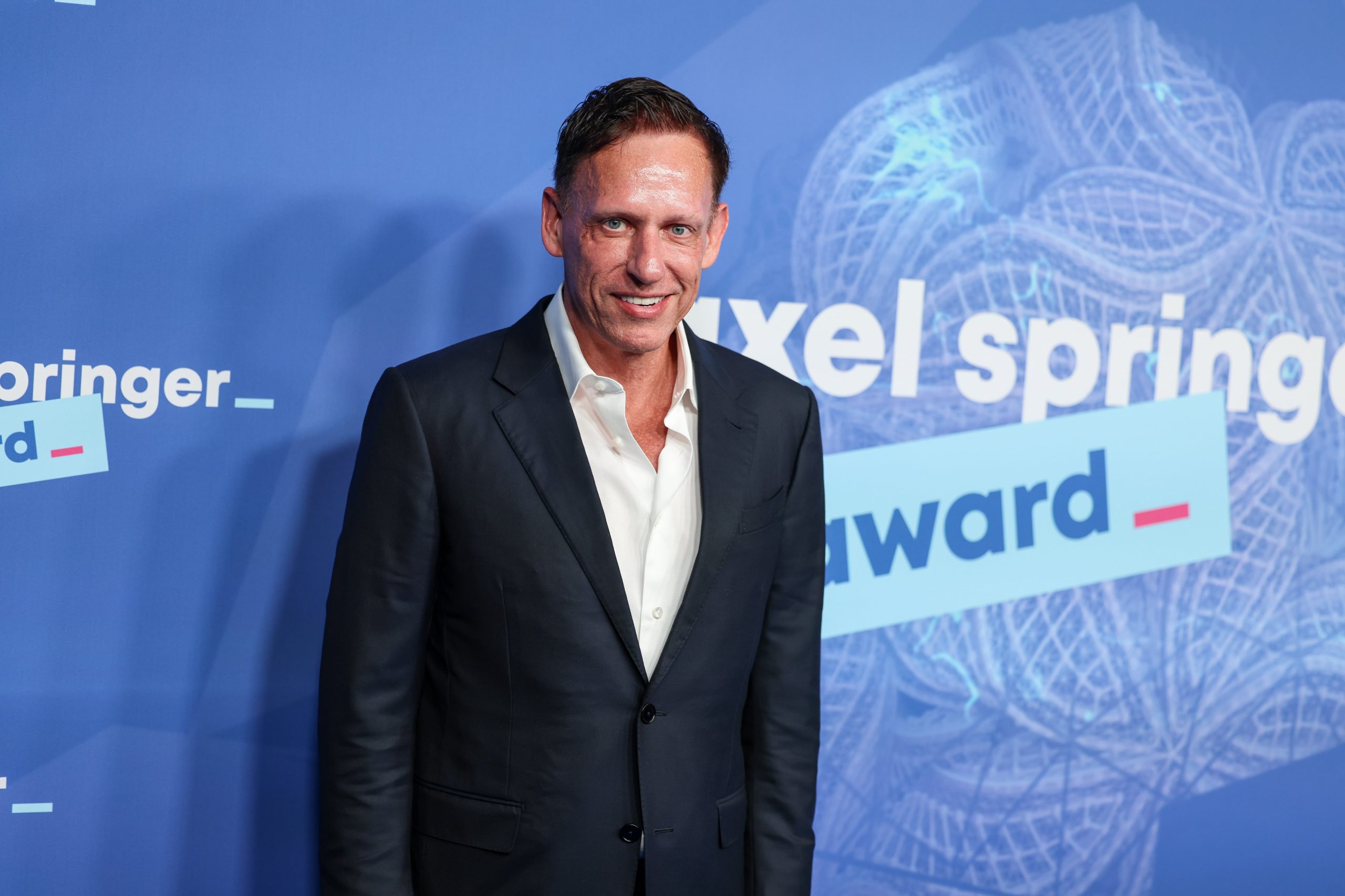
Tech billionaire Peter Thiel, founder of PayPal and Palantir, has increased his investments in Argentina. According to filings with the U.S. Securities and Exchange Commission (SEC), Thiel acquired additional shares in Vista Energy, the largest oil exporter operating in Vaca Muerta, the strategically important shale formation in Patagonia. Through his firm Thiel Macro LLC, he now owns 1,886,835 shares of Vista, valued at $123 million.

The influential German-American entrepreneur, who has openly expressed ideological affinity with the ultra-conservative government of Argentine President Javier Milei, arrived in Argentina this year and purchased a mansion in Buenos Aires.

In the second quarter of the year, Thiel Macro LLC added 1,189,792 shares of Vista Energy, equivalent to 1% of the oil company, to its investment portfolio for nearly $76 million. According to the latest SEC filing, its stake increased by 58.5% in the third quarter, reaching 1,886,835 shares.

As a result, Thiel Macro LLC’s two largest holdings are now Amazon and Vista Energy, each valued at roughly $123 million and accounting for nearly 27% of the firm’s portfolio.

Vista Energy, an Argentine company listed on the stock exchanges of Mexico and New York, was founded in 2017 by engineer Miguel Galuccio, the former chief executive of state-run oil company YPF, together with a group of partners. In less than a decade, it has become the leading exporter of crude oil from Vaca Muerta, home to the world’s second-largest reserves of unconventional natural gas and fourth-largest reserves of shale oil. The company reported net profits of $293.5 million in the third quarter of the year.

With a fortune estimated at more than $23 billion, Peter Thiel is one of the richest people in the world. If his interest in Argentina already existed, it has only grown since the South American country came under the leadership of far-right President Javier Milei. Like Milei, the tech billionaire is an anti-woke crusader and a political ally of U.S. President Donald Trump.

Thiel met with Milei in Los Angeles in 2024 and did so again this year at the Casa Rosada, the presidential palace in Buenos Aires, when he arrived in the country with his family.

Thiel is not the only U.S. billionaire increasing his holdings in Argentina’s oil sector. According to the same SEC filing, Duquesne Family Office LLC, the investment firm of billionaire Stanley Druckenmiller, acquired 403,000 shares of YPF in the last quarter, raising its holdings to 3,541,897 shares, a stake valued at about $177 million. At the same time, it sold the small position it held in Vista Energy.

Meanwhile, Discovery Capital Management, led by Rob Citrone, increased its holdings in YPF to 694,892 shares and in Pampa EnergĂ­a to 77,000 shares, while also initiating a position in Vista Energy with 149,285 shares. Its combined investment in the sector now totals around $50 million.

Sign up for our weekly newsletter to get more English-language news coverage from EL PAÍS USA Edition

Continue Reading

Trending

Copyright © 2017 Spanish Property & News