
Delcy Rodríguez
Miami’s Venezuelan Community Demands Answers From Lawmakers Over ICE Detentions






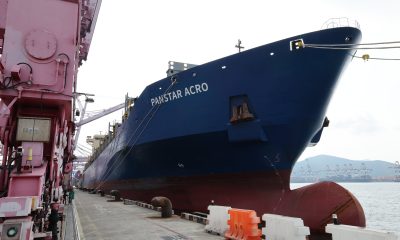

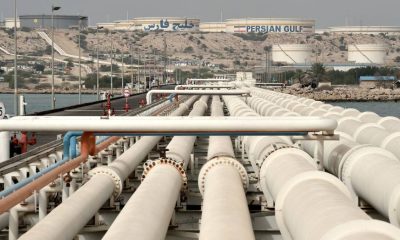



Ataque Estados Unidos a Venezuela
La Eterna Espera De Los Damnificados En Venezuela Que Viven En Refugios Y Albergues Desde Hace Más De 15 Años

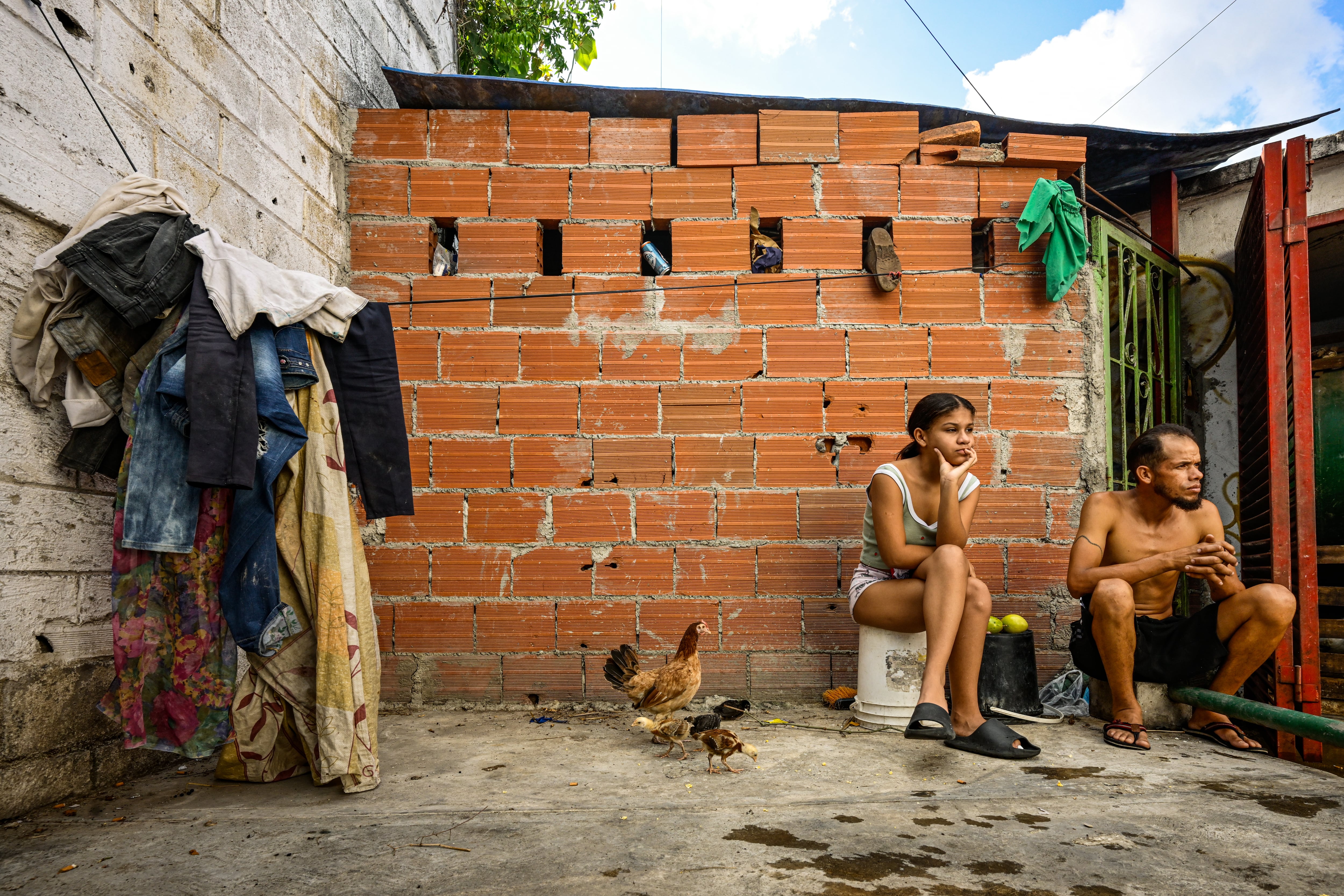
Hace unos años que Magdalena compró una vajilla que soñaba estrenar en la vivienda que pudiera otorgarle el Estado después de haberse quedado sin casa en 2012, cuando se deslizó la tierra en Catia, al oeste de Caracas, a causa de las lluvias, y su hogar se derrumbó junto con los de otras 60 familias. En ese momento fue a parar a un edificio abandonado de la avenida José Ángel Lamas, que ya era refugio de otras familias damnificadas. Algunas de ellas accedieron a una vivienda —incluso en La Guaira, que volvieron a perder después del terremoto—, pero Magdalena nunca pudo salir de ahí. En 2025, después de 13 años, murió en la espera, con su caja de platos aún sin estrenar.


The oil agreement announced between the United States and Venezuela has been touted with great fanfare for the many benefits it is supposedly set to deliver. At the same time, it has been met with surprise, skepticism and disappointment by public opinion in both countries.
In some sectors of Venezuelan politics, concern is growing over the strengthening ties between the United States and the Venezuelan government. The unease remains largely personal and has yet to find organized political expression. There is a growing perception that Washington is maneuvering to shore up the political status quo and has little interest in Venezuela’s opposition leadership.
Discontent is also evident among dissident supporters of the ruling United Socialist Party of Venezuela (PSUV), who have voiced frustration with the government’s decisions. The government and the PSUV party establishment, led by Diosdado Cabello, have closed ranks in a characteristically disciplined show of support for the agreement.
What does the agreement involve?
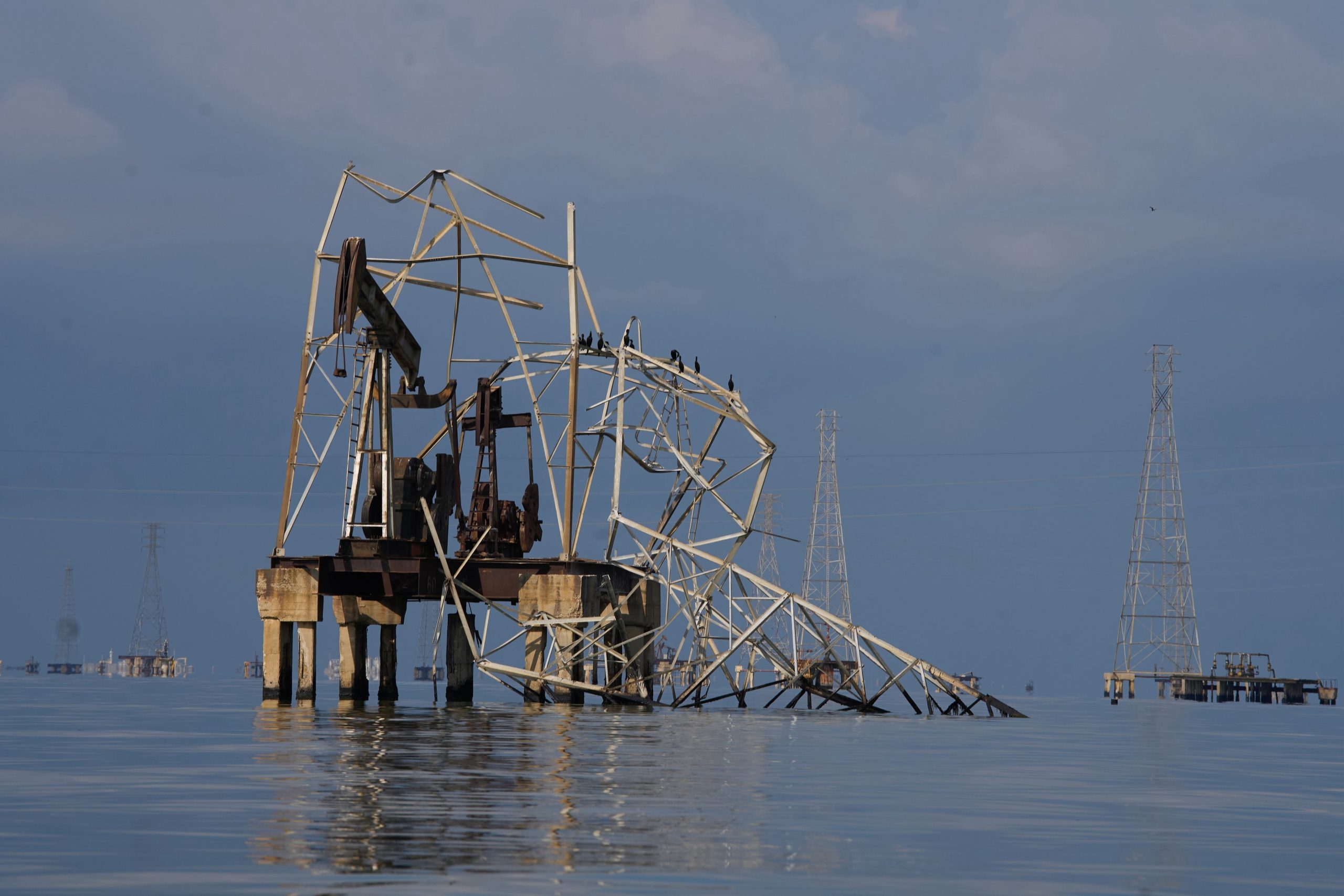
The United States has announced a deal to develop 17 Venezuelan oil fields containing an estimated 65 billion barrels of proven reserves, a figure equivalent to roughly 22% of the country’s total reserves based on the Venezuelan government’s estimate of around 300 billion barrels.
The arrangement takes the form of a long-term grant of development rights. However, the duration is disputed. Venezuela’s government, led by acting President Delcy Rodríguez (Nicolás Maduro’s former vice president), has described it as a preferential 25-year concession, while Washington maintains that the rights will extend for 100 years.
The figures cited so far include about $100 billion in investment and an estimated $209 billion in royalties and tax revenues for the Venezuelan state during the first 25 years of the project.
Economist Leonardo Vera, from the Central University of Venezuela, acknowledges that, if realized, these investments could be very positive for the national economy. However, he warns: “We are so desperate for investment in Venezuela that even a deal like this — murky, flawed, and takes the country back to forms of contracting with foreign interests that had already been left behind — is being welcomed by some people.”
Who is Alejandro Betancourt and why is NABEP central?
The agreement will be implemented through North American Blue Energy Partners (NABEP), the company that has been granted the rights to develop the oil fields. The U.S. government holds a 35% stake in NABEP’s parent company through the Strategic Capital Office of the Department of War, while the State Department is guaranteed access to 20% of production at cost and holds a right of first refusal on the remaining 80%. The company’s board must have a majority of U.S. citizens, and Washington has veto power over board appointments.
Vera views NABEP’s concentration of power with concern, warning “it could be used against national interests; it has always been more advantageous to negotiate with several companies.” For the economist, the agreement represents a step backward in Venezuela’s relationship with oil companies and international capital.
NABEP is controlled by the controversial Venezuelan businessman Alejandro Betancourt, who was once close to Hugo Chávez’s government and is now considered an ally of Washington. U.S. Secretary of State Marco Rubio has publicly defended Betancourt, arguing that the arrangement is not an agreement between two countries but rather a partnership between the United States and a businessman with extensive experience in the oil industry and ties to Venezuela’s opposition during the era of Juan Guaidó, the leader who self-proclaimed himself president of Venezuela.
“This transaction will unleash that potential to the great benefit of both Venezuelans and Americans,” Betancourt said in a NABEP statement.
Why is Betancourt such a controversial figure?
Betancourt has been the subject of investigations in Venezuela, the United States, Spain and Switzerland. He was arrested twice in the United Kingdom in 2025 following extradition requests from Spain and Switzerland, the two countries that still have open money-laundering investigations into him. He has never been formally charged and has consistently denied any wrongdoing.
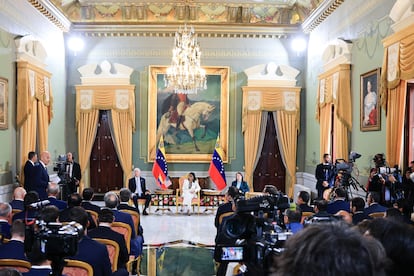
Speaking about Betancourt at Miraflores Palace on Wednesday, Delcy Rodríguez defended the businessman, saying: “He has no outstanding issues with the courts. The problem is that sometimes it is the press that passes judgment on people, not the courts.”
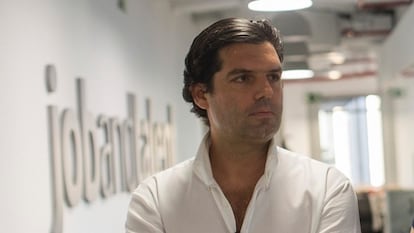
In Venezuela, Betancourt was accused of using his company, Derwick Associates de Venezuela, to orchestrate the purchase of spare parts and second-hand equipment at inflated prices, secure government contracts without competitive bidding, and profit from influence-peddling during the country’s 2011 electricity crisis.
That year, Derwick was awarded contracts by the Venezuelan state to supply, install and bring into operation equipment intended to address the emergency. The crisis would worsen in the following years, particularly by 2014, and has since become a chronic problem across the country.
Despite those allegations, Betancourt has proved adept at cultivating ties with two rival governments and now appears to be at the height of his business influence. Rubio has described the Trump administration’s experience with Betancourt as positive, saying that U.S. authorities have found no information linking him to wrongdoing.
What is the criticism of the deal?
The deal has come under fire in both countries. Critics have portrayed it as a remarkably brazen attempt by the White House to gain control over Venezuelan oil, with the acquiescence of a Chavista government that once made a point of its anti-imperialist rhetoric.
Critics have also questioned whether Washington has effectively sidelined its longstanding commitment to promoting free elections in Venezuela. In an interview with journalist Sergio Novelli, Rubio insisted that democratic elections remain a U.S. objective. But on Wednesday, Donald Trump said that Venezuela is still not ready to hold them.
In Venezuela, discontent is evident across a broad spectrum of society, including academia, labor leaders, the business community, social media, pro-democracy activists and significant segments of Chavismo, the ruling movement founded by the late president Hugo Chávez. The government, by contrast, has remained firmly committed to its optimistic narrative about the agreement.
Among opposition politicians, frustration has been tempered by a reluctance to alienate the United States. Even so, some criticism has emerged from figures who have traditionally been sympathetic to Trump, both because the agreement is seen as legitimizing Rodríguez’s government and because of Washington’s partnership with Betancourt.
In the U.S. Congress, Democrats including Gregory Meeks and Jeanne Shaheen have pressed Rubio over the absence of a clear institutional roadmap linking the economic arrangement to a democratic transition in Venezuela. Their concerns reflect a growing chorus of voices urging Trump to make a more explicit commitment to that goal.
How do Trump and the Delcy Rodríguez government defend the deal?
Both governments argue that they have secured an exceptionally advantageous deal.
The United States says the agreement significantly expands the pool of energy reserves under its sphere of influence. The White House claims that figure will rise from roughly 46 billion barrels to more than 100 billion barrels, while also guaranteeing abundant supplies of oil and inexpensive fuel for the foreseeable future. Venezuelan heavy crude is particularly well suited to the refineries along the Gulf Coast. The arrival of U.S. capital and technical expertise is also expected to curb the influence of China and Russia, which previously operated in some of these fields. This is in line with Washington’s broader strategic objectives, as expressed in the Monroe Doctrine.
For Rafael Quirós, an oil economist and graduate professor at the Central University of Venezuela, the deal is also a “headline-grabbing move to control the collateral damage from the Iran war, which has dragged on and could bog down the White House. It is an effort to improve the [Trump] administration’s narrative and regain ground in the polls ahead of the midterm elections in November.”
Venezuela, for its part, argues that it has secured a major influx of investment and revenue for state coffers. “It does us no good to have the world’s biggest oil reserves if we don’t extract them to meet our people’s needs, worsened by international sanctions and the effects of the double earthquake,” said Rodríguez.
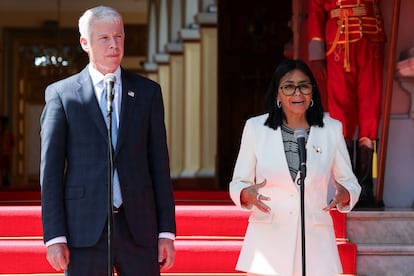
The acting president has insisted that Venezuela retains sovereignty over its natural resources and that the concessions granted under the agreement will help revive the economy once and for all. Many Venezuelans, however, fear that what is taking shape is not so much foreign investment as one country gaining control over another’s natural resources, while at the same time strengthening Chavista rule with Washington’s backing.
What other investments have been announced?
The NABEP agreement has paved the way for a series of new investment announcements by oil companies seeking to expand operations in Venezuela’s oil fields.
On Wednesday at Miraflores Palace, Rodríguez welcomed U.S. Energy Secretary Chris Wright along with representatives of several multinational companies interested in investing in the country, including GeoPark, Keo Capital, Primavera, Aspect Energy and GE Vernova.
Leading the investment push is Chevron, which announced plans to invest more than $7 billion to double its production in Venezuela to about 600,000 barrels per day within five years. The company said the funds would be directed toward its joint ventures with state-owned PDVSA, including Petropiar, Petroindependencia and Petroboscán.
Italy’s Eni also signed an agreement to expand its operations in Venezuela, including at the Junín 5 block. Meanwhile, negotiations advanced with General Electric and other companies to introduce new technology under production-sharing arrangements.
Sign up for our weekly newsletter to get more English-language news coverage from EL PAÍS USA Edition

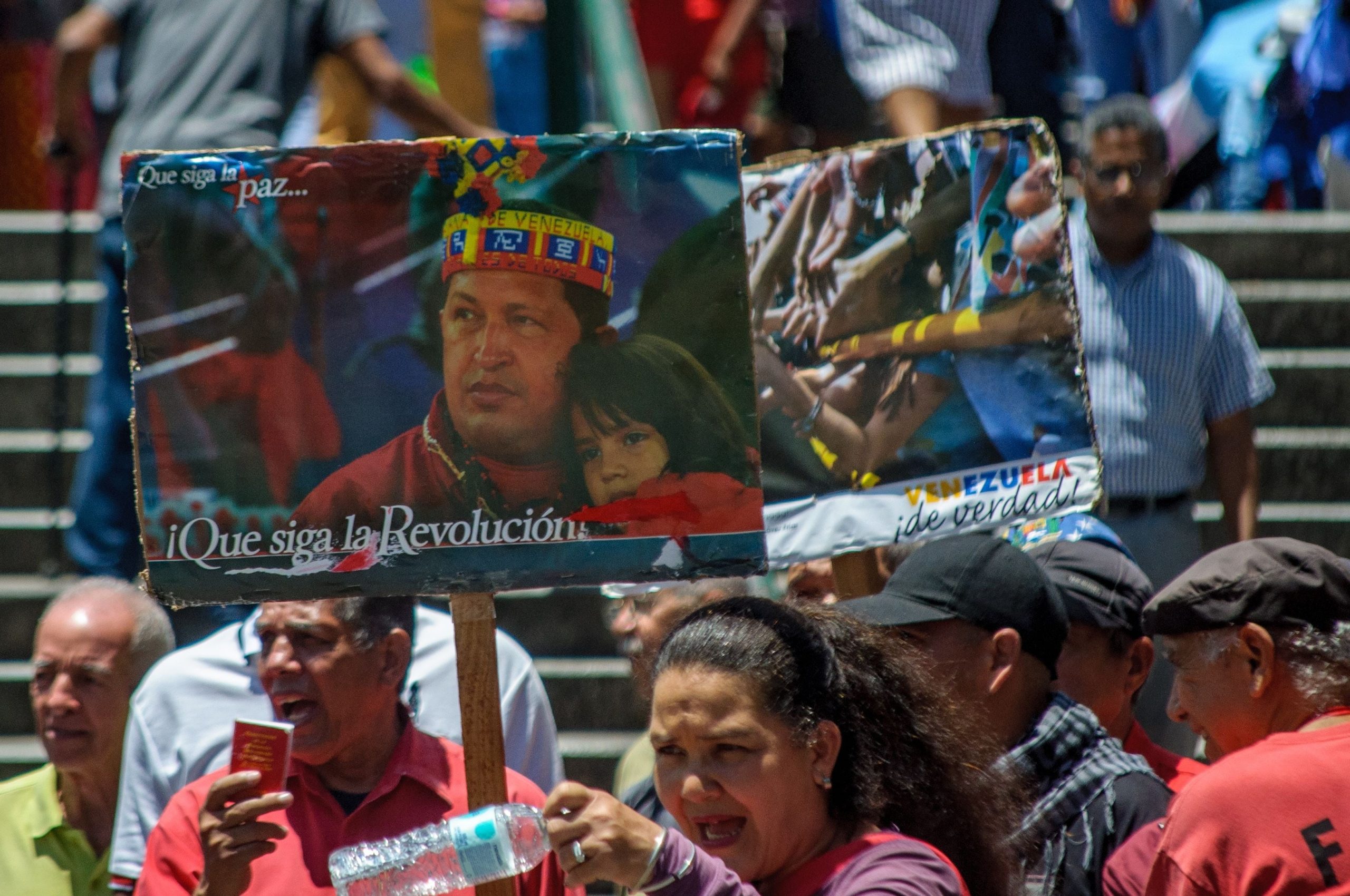
U.S. President Donald Trump on Sunday defended the pact under which his country will have majority control of one-fifth of Venezuela’s oil reserves, calling it a gift from Venezuela to the people of the United States in a message on his platform Truth Social. Trump repeated his claim that the plan agreed to with the interim government in Caracas will not cost U.S. taxpayers a penny and will only bring benefits. He has also promised that one of the things he plans to do with the 65 billion barrels included in the agreement is to replenish U.S. national strategic reserves, which are currently at their lowest level in four decades.
Little by little more details are emerging about a deal that has provoked intense criticism across Venezuela’s political spectrum, from the most hard-line Chavistas to the opposition. The secretly negotiated deal would make the U.S. government the majority partner in a new joint venture that will hold the rights to operate 17 oil fields in Lake Maracaibo and the Orinoco belt for an initial term of 25 years, renewable, the acting president Delcy Rodríguez announced on Saturday.
Many questions remain about who will participate in that public-private partnership and what the final contract details will be. Above all, the big question is whether it can actually be implemented; how it will be executed, with what level of transparency and according to which roadmap. And what impact it will have on the democratic transition in Venezuela.
One thing does seem clear: if it is implemented as both governments envision, the colossal agreement will tie Venezuela’s economy to the United States, and Trump to Delcy Rodríguez. The Republican president needs a figure in Caracas who will diligently carry out his plan to secure preferential access to cheap oil. In turn the Chavista leader, who is deeply unpopular at home, needs backing and an economic improvement that will allow her to stay in power.
Coinciding interests
Venezuelan economist Luis Vicente León agrees that the deal reflects very specific interests in Washington and Caracas that, at this moment at least, are aligned. “For the United States there is a security advantage of reserves at a time when its own are at historic lows and the price of gasoline is very high. The conflict with Iran has not been resolved and could extend much longer than expected,” he explains. “For the Venezuelan government the need for resources is urgent and its room for maneuver vis-à-vis the United States is limited, because the threat remains credible.”
When the agreement was announced on Friday, each leader praised the other. For Trump, Delcy Rodriguez — who once served as the number two official to the now captured Nicolás Maduro, and was installed by the United States in the post after the military operation that seized the Venezuelan president on January 3 to transfer him to New York — is “enormously respected.” Rodríguez, the former Washington foe turned collaborator, expressed her “gratitude” to the U.S. government for its “willingness” to reach the agreement.
According to both parties, the Venezuelan oil sector will receive $100 billion in investment. Caracas estimates that, at a market price of $65 (€56) per barrel, it will receive about $19 for each barrel it sells, roughly $209 billion in royalties over 25 years.
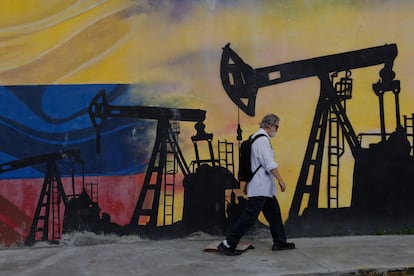
Trump’s enthusiasm in promoting the deal, which he on Friday described as one of the largest in history, seems to vindicate those who warned that the operation to overthrow Maduro never had as its main objective a return to democracy in Venezuela. The argument Washington used for months — the fight against the drug trafficking network that it accused Maduro of leading — is barely recalled now. What mattered was the oil.
“The agreement further damages the image of the United States in Latin America. The January military intervention could have been seen as an act in defense of democracy against a brutal regime that had few friends in the region. Now, however, it is hard to argue that Trump was not primarily motivated by oil, reinforcing critics of the U.S. who maintain that American policy toward the region has never been driven by values but by economic interests,” says Benjamin Gedan, director for Latin America at the Stimson Center and former South America director at the National Security Council under Barack Obama.
Trump had made clear his interest in Venezuelan crude even before Maduro’s capture. He had suggested that he considered the nationalization of the sector ordered by Hugo Chávez in 2007 illegitimate, and a possible legal justification for U.S. military action in the South American country. One of his early acts in the White House brought together the heads of major oil companies to encourage them to invest.
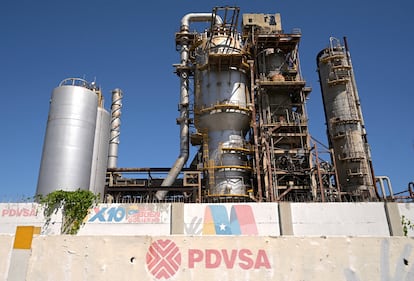
But the big oil companies have so far resisted, given the risks they perceive in a country governed by a president who was not chosen at the ballot box and whose oil industry requires massive investment to recover lost production levels. That reluctance pressured Trump’s decision to make the U.S. government the investor in this unusual deal, in which a Pentagon office, the Office of Strategic Capital, will be the managing entity.
One of the unknowns is precisely whether oil companies will join the agreement, given the setbacks they have suffered in Venezuela. And the pact not only fails to resolve but even exacerbates doubts about the transition process and elections, which had already been relegated to the final step of the third phase of priorities. “My reading is that those contracts will remain protected with Trump or without Trump. They may be modified, but scarcely to the detriment of investors or of Washington,” León maintains. “The announced agreement is bad news for the country’s political trajectory,” Gedan says.
“I do not doubt that [Marco] Rubio, [the secretary of state who led the negotiation of the oil plan from the U.S. side] is committed to a democratic transition. In fact, despite the shameful exclusion of opposition leader María Corina Machado from the process, he has managed to push for the start of negotiations and a first legislative step to recover the independence of the Supreme Court of Justice,” the expert clarifies. “The challenge is that Trump is not interested in democracy and, as long as he perceives benefits from his friendship with Delcy, he will not be encouraged to promote a process that, without a doubt, would end with her leaving power.”
First test
In the United States the first test of the new pact is imminent. Midterm elections will be held in November, in which Trump hopes to put cheap gasoline on the table to counter high prices, the electorate’s main concern. Polls present a scenario in which Republicans could lose control of the House of Representatives and perhaps even the Senate, which would greatly limit the president’s room for maneuver. Although the agreement will not lower fuel costs by then — it will take much longer to have that kind of effect, if it does — the president wants to use the pact to promise that better times are just around the corner.
With those midterm elections looming, Venezuelan journalist and writer Moisés Naím urges caution and patience. November’s results will be decisive in determining Trump’s future and his plans. “Trump’s promises are all sensationalist, ambitious, provocative and conflictive initiatives that then face the courts, Congress and the opposition. So if the agreement follows the pattern of his other major proposals… this won’t take off,” Naím says. For the writer, doubts about whether elections can take place and their credibility with the U.S. pushing every decision in Venezuela are reasonable, but he insists on waiting. “November’s results are much more important than the oil discussion. They will shape everything.”
“The electoral issue is not the immediate objective in Venezuela,” Luis Vicente León says. If the current political situation persists, León believes it likely that the United States will not want change to occur by a radical route when it finally happens. “But politics is very volatile and it is not possible to make a linear projection,” he warns. “Many variables must be considered, among them the Venezuelan population’s desire for change, the popular strength of opposition leadership and internal pressures within the United States.” Analyst Benigno Alarcón trusts that the United States will allow the election to proceed and “that the person everyone knows would win at this time will win,” he says, alluding to María Corina Machado.
Chavismo, meanwhile, is celebrating the agreement. An improvement in the economy is the best — if not the only — electoral asset Delcy Rodríguez has if she wants to be a competitive candidate in potential Venezuelan elections. Her entire circle of power has publicized the agreement — even Nicolás Maduro’s son reposted it on his social media accounts — but none has provided further details beyond a terse official statement. Indira Urbaneja, one of Chavismo’s leading communicators, did weigh in on Saturday, warning: “Calm and prudence!!!! Everything is going to get better… These are new political times. These are new economic times. We only need that wealth to be seen in people’s pockets… Then we will have Chavismo for 1,000 years.” And, in case there was any doubt, in another tweet she announced: “Chavismo will win the next presidential election in two years!!!”
Sign up for our weekly newsletter to get more English-language news coverage from EL PAÍS USA Edition

Why Alexandria Ocasio-Cortez’s Egg Freezing Is One Of 2026’s Most Interesting Political Moves

Última Hora De La Entrada De Inmigrantes A Ceuta, En Directo | Vivas Insiste En Que Marruecos Está Detrás De La Crisis Y Denuncia Que Ceuta “no Tiene Margen Temporal Para Seguir Aguantando”

Hospitalizada La Reina Margarita De Dinamarca Por Una Indisposición


-

 Antonio Hidalgo2 weeks ago
El Deportivo Agua La Fiesta Del Málaga En Su Debut Liguero En Casa
-
Costa del Sol2 weeks ago
Mijas police step up rubbish patrols as residents complain about dumped waste
-
 British2 weeks ago
Three British Tourists Spark Malaga Chaos In Late-Night Vandalism Rampage
-
Latest2 weeks ago
6,000 Lost Bags And 270 Flights Cancelled: Barcelona Airport Strike Rages On
-
Celebrity News2 weeks ago
The world bids farewell to Dolly Parton: The voice behind Jolene is gone
-
European News2 weeks ago
Spain faces potato price uncertainty as France loses nearly a quarter of its crop
-

 ElPais2 weeks ago
Why Chess Still Fascinates Us: The Game That Teaches Us To Think In An Age That Thinks Less And Less
-
 Uncategorized2 weeks ago
McLaren launch FIA appeal as result saga takes new twist: