
Guardia Civil
Spain’s elite Guardia Civil unit welcomes a new colleague with a wild side

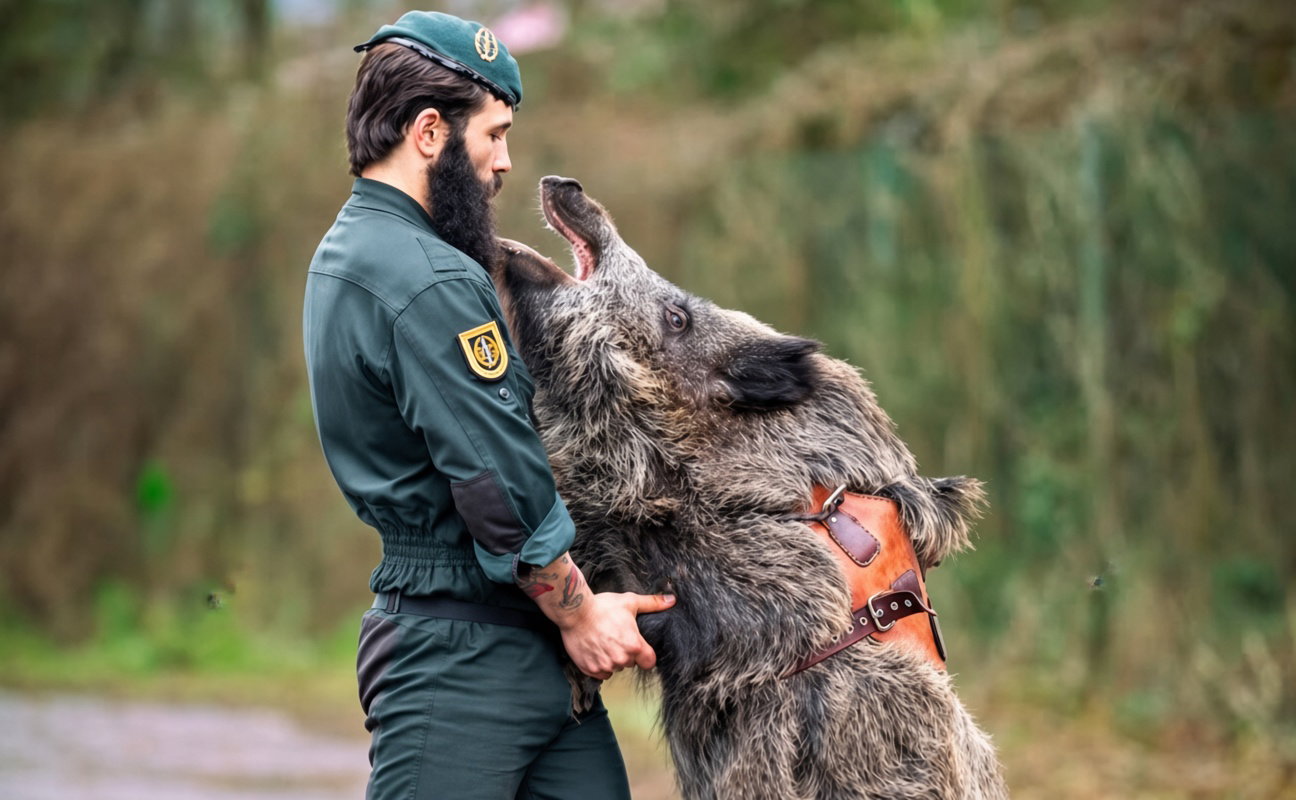
The unusual mascot is part of a tradition that stretches back more than four decades. Photo credit: Guardia Civil on Instagram
Forget the usual police dogs and ceremonial horses. Spain’s Guardia Civil has a rather more unusual character representing one of its specialist units: a wild boar called Iratxo, described by the force as “as faithful as he is imposing”. The Guardia Civil recently introduced Iratxo on social media, sharing a photograph of the animal standing on his hind legs beside a uniformed officer.
The force says he can be a little stubborn, but adapts to any terrain and always moves forward with a firm step. Iratxo is associated with the Unidad de Acción Rural (UAR), or Rural Action Unit, which coordinates specialist units including the Grupo de Acción Rápida (GAR), or Rapid Action Group. The GAR carries out counter-terrorism work and high-risk operations requiring a rapid response.
Why does Spain’s Guardia Civil have a wild boar?
The unusual mascot is part of a tradition that stretches back more than four decades. The Guardia Civil’s association with wild boars began in 1981, coinciding with the first anniversary of the GAR’s territorial deployment. Several animals have represented the unit since then, including Itza and Basati, who appeared at public events and military-style parades. Basati, whose name means “wild” in Basque, was among the previous mascots. In 2024, he appeared during celebrations marking Spain’s National Day in the Intxaurrondo neighbourhood of San Sebastián.
The choice of a wild boar is more than a quirky tradition. Its imposing appearance, toughness and ability to adapt to different environments make it a fitting emblem for a unit associated with demanding operations. Iratxo’s name adds another layer of meaning. In Basque mythology, an iratxo is a mischievous spirit or goblin, not necessarily evil, sometimes associated with acting as a guardian or justiciar and of course it is a perfect name for a mascot that combines a formidable appearance with a folkloric identity.
Pigs are far cleverer than many people realise
Wild boars and domestic pigs belong to the same species, Sus scrofa, and pigs have demonstrated impressive learning and cognitive abilities in scientific studies. Research has found that pigs can learn to navigate tasks, remember information and adapt their behaviour when circumstances change. Studies have also examined their social cognition, including how early social experiences can influence later social skills.
Their intelligence is not just about remembering where food is kept. Pigs can learn to associate particular cues with rewards, distinguish between familiar individuals and develop strategies for solving problems. Their ability to learn from experience has made them an interesting subject for animal cognition research.
That intelligence also makes pigs capable of learning through training. With consistent, reward-based methods, they can learn routines, respond to cues and work out how to complete tasks. Food rewards can be particularly useful when teaching new behaviours, while repetition and consistency help reinforce what they have learnt. However, intelligence does not automatically make every pig easy to handle. Individual temperament, previous experiences and the environment all matter. Wild boars also retain behaviours and instincts that can make them much more challenging to manage safely than domestic pigs.
A mascot with a long-standing role
While the Guardia Civil uses specially trained dogs for tasks such as detecting drugs and employs horses for particular duties, Iratxo represents the UAR in a different way. He is part of the unit’s identity and traditions, connecting its modern work with a history of wild boar mascots that stretches back to the early 1980s. The animals have become recognisable symbols associated with the unit and its public appearances.
For a force known for its serious operational responsibilities, Iratxo offers a more unexpected public face. The mascot gives the unit a distinctive character beyond its equipment, uniforms and specialist operations, while reflecting qualities such as resilience, determination and adaptability. And while the wild boar may seem an unlikely choice, the combination of strength, intelligence and a name rooted in Basque folklore makes Iratxo a memorable representative of one of Spain’s specialist Guardia Civil units.


AP Madrid
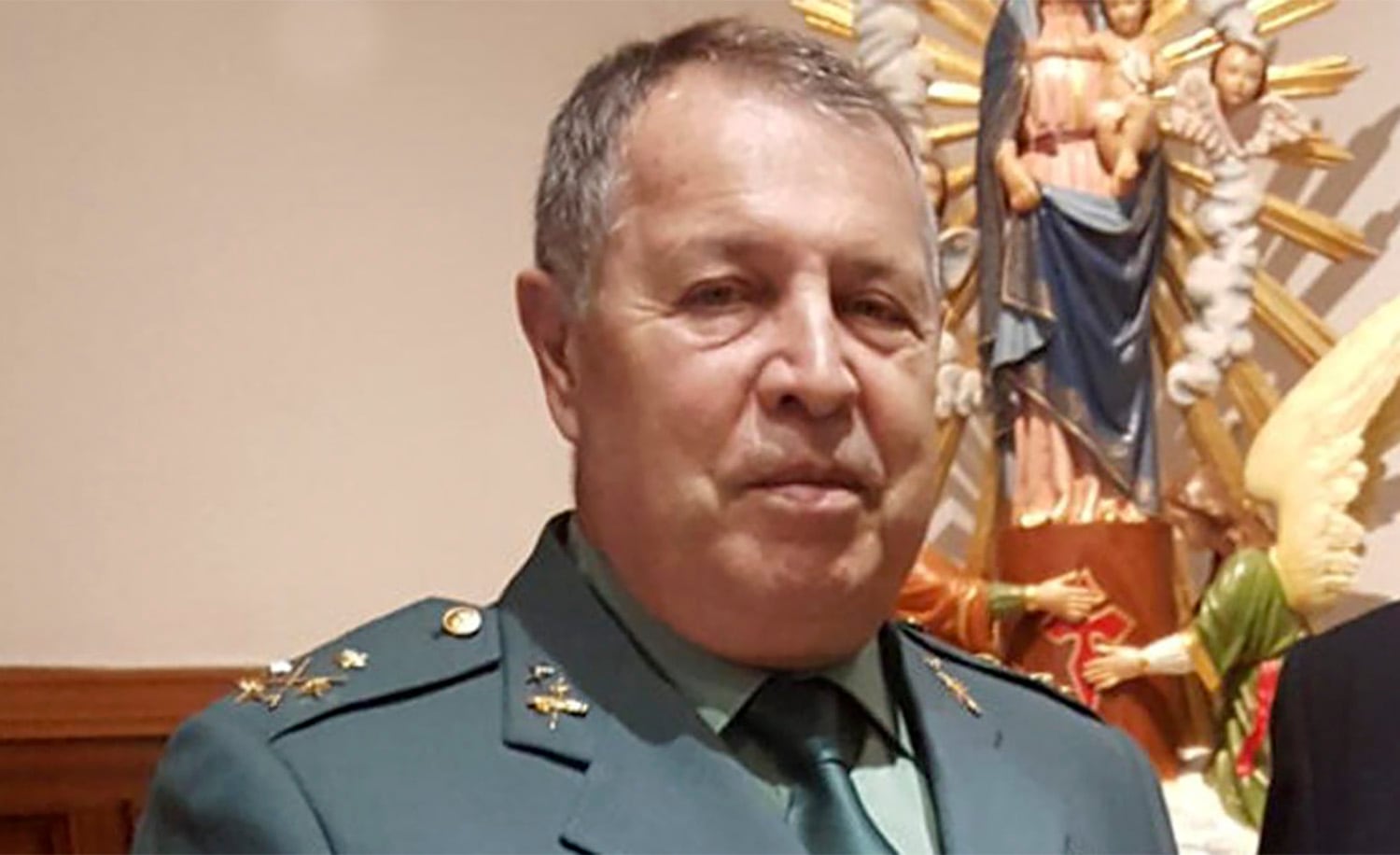
Alto Mandos Describen Como “anómalos” Los Contratos Del ‘caso Cuarteles’ Por Los Que Se Juzga A Un General De La Guardia Civil

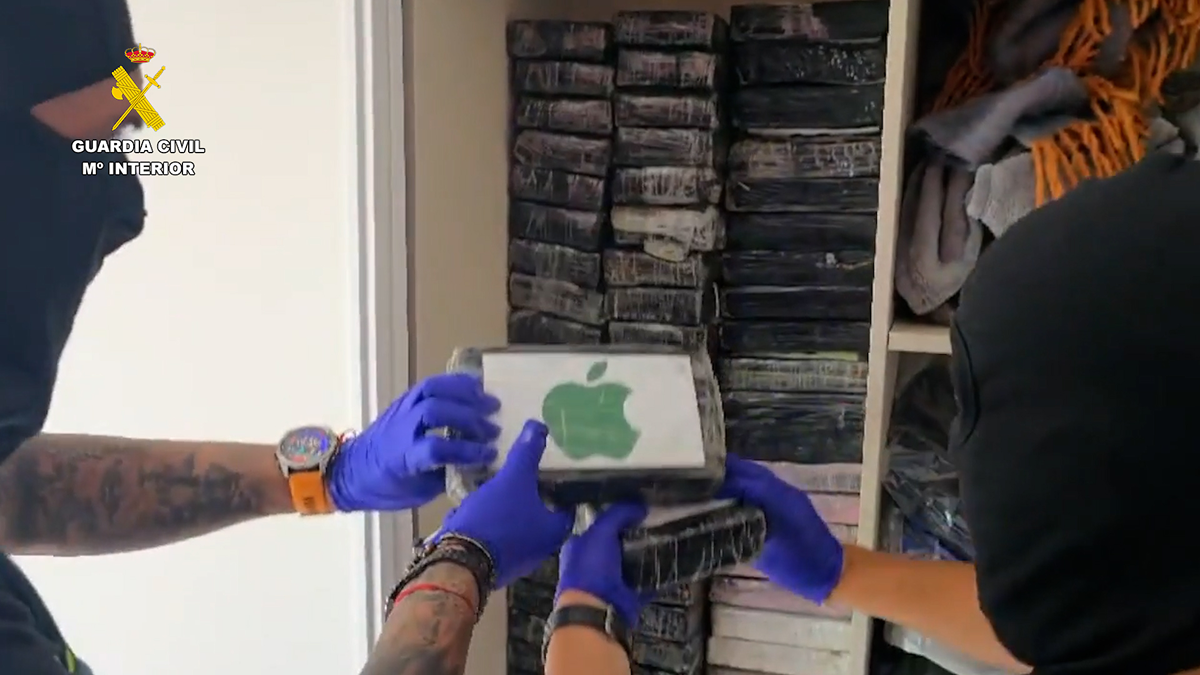
A British cocaine network operating from Spain’s Costa del Sol has been smashed after police seized more than a tonne of the drug, arrested a British suspect and launched an international hunt for five others who fled Spain.
A van full of sports bags started it all
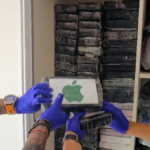
The Guardia Civil’s Operación Miscelanea began when officers stopped a van in Talavera la Real, a town in Badajoz, and found 17 sports bags stuffed with 423 kilos of cocaine.
Days later, officers were following another suspicious vehicle when they intercepted a van on an industrial estate in Baza, in Granada province, with 326 kilos hidden in several suitcases. The driver, who’s of British origin, was arrested.
Rifles and ammunition turned up in Estepona
That arrest led officers to a search in Estepona, in Málaga province, where another 265 kilos of cocaine turned up, along with equipment for sealing and packing the drug.
They also found a rifle, a submachine gun, a semi-automatic pistol (a handgun that reloads itself), plenty of ammunition and cash. Altogether, the three seizures add up to 1,014 kilos of cocaine moved around Spain in vans and suitcases, in a country where many people assume ‘the big loads only ever arrive at the ports’.
The drugs were heading to Britain by sea
According to the Guardia Civil, the gang received large amounts of cocaine at a home where its members lived on the Costa del Sol, then moved it on to ports around Spain.
To do that, they used the so-called ‘go fast’ method (powerful, high-performance cars and large-capacity vans that move the drugs quickly). From there, the cocaine was shipped by sea to Britain.
Five main suspects slipped out of Spain
The rest of the gang managed to leave Spain after the Baza arrest, and a court was asked to issue five international arrest warrants against the main suspects. The Guardia Civil hasn’t said where they went or who they are.
Meanwhile, the driver was brought before the duty judge in Estepona, who ordered him to be held in prison without bail. For now the five remain at large, and any arrests will depend on those warrants being acted on.

Czech football coach goes viral for avoiding reporter’s gaze to keep his wife happy
Spain’s elite Guardia Civil unit welcomes a new colleague with a wild side
Viral video in Spain sparks fury over drivers who ‘have no idea how to drive’


-

 Uncategorized3 weeks ago
F1 Bahrain Grand Prix will be live and FREE on TV this weekend
-
EU2 weeks ago
EU nicotine crackdown sparks warning that ex-smokers could be driven back to cigarettes
-
Blackout preparedness2 weeks ago
Brussels takes action against Spain over failure to update blackout plan
-

 Uncategorized2 weeks ago
Lewis Hamilton F1 wish could come true as stunning plans for new track revealed
-

 Foreign demand3 weeks ago
Market Snapshot: German Market In Q2 2026
-

 Housing access / crisis / affordability2 weeks ago
Radical Housing Decrees Defeated As Snap Election Talk Grows
-

 New Developments3 weeks ago
How To Get A Tourist Rental Licence In Andalusia (Spain) – Step-By-Step Guide 2025
-
Latest1 week ago
The Changes To Spain’s IRNR Non-Resident Property Tax In 2027