Connect with us

%

Temu Faces Tougher Product Safety Checks After €200 Million EU Fine

Published

on

temu-faces-tougher-product-safety-checks-after-e200-million-eu-fine

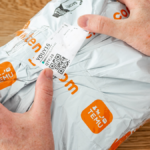
Temu now has four months to show its safety plan is working. Credit: Audio und werbung / Shutterstock

Chargers that failed basic safety tests and baby toys with choking risks helped land Temu with a €200 million EU fine back in May, yet shoppers have so far had to take its word that things will change. Now Brussels has approved a plan to fix it, and Temu only has four months to show it’s working. 

Brussels has accepted Temu’s plan to stop unsafe goods

The European Commission said on Monday October 26 that it had accepted Temu’s action plan to fix the breach of the Digital Services Act (DSA) that led to May’s fine. The plan has five measures. Temu will carry out a risk assessment specific to its own platform, rather than leaning on general online shopping information, and will use reliable measures to check whether its safeguards are genuinely cutting the number of illegal products. 

It will also look at where its content moderation falls short, and whether its recommendation system (the part of the app that decides what shoppers see) is helping illegal goods reach them or not. On top of that, Temu will examine how sellers could take advantage of the app’s features to push illegal listings. 

The Commission said the plan was another example of how the DSA is strengthening consumer protection online.

Why Temu was fined €200 million in May 

The Commission fined Temu on Thursday May 28 after finding its risk assessment underestimated the danger of illegal products being sold to people in the EU. Executive Vice-President Henna Virkkunen said at the time that risk assessments are not box-ticking exercises but the backbone of the DSA.

The evidence was quite irrefutable. An independent testing organisation bought products from the site, and many of the chargers failed basic electrical safety tests. Several baby toys carried medium or high risks, either because of chemicals above legal limits or small detachable parts that children could choke on. 

The Commission also criticised Temu for not looking at how its own design, including its recommendation algorithms and influencer promotion programmes, could push those listings in front of more people. 

Temu called the fine disproportionate, arguing the case centred on its first risk assessment from 2024 rather than the systems it uses now. It said it was studying all its options, although this time it said it welcomed the Commission’s approval.

How the case got here

The Commission opened its formal investigation in October 2024, when authorities in Germany, Denmark and Ireland had raised concerns about counterfeit goods, unsafe toys and so-called addictive design, such as game-like rewards and constant notifications. Reports at the time put Temu’s EU users at 92 million by September 2024.

Preliminary findings followed in July 2025, then the fine in May. Temu had until Friday August 28 to submit its action plan, a board of national digital regulators reviewed it, and the Commission has now made its decision.

However, the fine only closed the risk assessment part of the investigation. The Commission has said it will keep talking to Temu to monitor its wider compliance with the DSA.

Spanish shoppers have been raising the alarm for years 

Consumer groups in Spain didn’t wait for Brussels. OCU and CECU lodged their own complaint with the CNMC (Spain’s competition watchdog) in 2024, accusing Temu of a lack of transparency in its recommendation systems, using manipulative design tricks known as dark patterns, and giving children too little protection.

Temu’s grip on European shoppers has only grown since. EWN reported in last year that its consumer spending in the EU jumped 63 per cent in a single month as US trade measures hit its American business, which helps explain why Brussels is watching so closely.

What Temu has to do in the next four months

Temu now has four months to complete an interim risk assessment, which is meant to show the measures in the plan are actually in place. However, the plan is about how Temu spots and tackles risk across its whole platform, so it isn’t any type of ban and it doesn’t mean it can’t keep selling in the EU.

Shoppers are also paying more for cheap parcels now. The EU agreed in November 2025 to end the duty-free exemption on small parcels, and a €3 fee on low-value packages has been in place since July.

If Temu doesn’t deliver, the Commission can still impose periodic penalty payments, and the DSA allows fines of up to 6 per cent of a company’s worldwide annual turnover.

%

Burglar In Spain Drinks Himself To Sleep In Bar Raid Gone Wrong

Published

on

burglar-in-spain-drinks-himself-to-sleep-in-bar-raid-gone-wrong

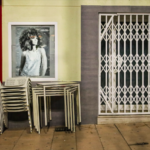
Repeated robberies leave businesses facing repair bills. Photo credit: Sonia Bonet/Shutterstock

A Bilbao bar owner could have been forgiven for expecting a nasty surprise after discovering someone had broken into the premises. Finding the alleged burglar fast asleep inside, with a half-empty bottle of orujo beside him, was probably not what he had in mind.

The bizarre incident happened in the early hours of Friday at the Río-Oja bar in Bilbao’s Casco Viejo. The suspected thief reportedly forced his way inside, helped himself to three beers and opened a bottle of orujo, because, why not? But unfortunately for him, his attempted robbery took an unexpected turn.

An attempted robbery turns into a drinking session

According to Antena 3 Noticias, the man forced open the bar’s metal shutter to gain entry. The alarm system was switched off because it was undergoing maintenance, allowing him to enter without triggering it.

Rather than making a quick getaway with valuables, he reportedly treated the premises as his own private drinking spot. He consumed a fair amount of alcohol including half a bottle of Orujo, a traditional Spanish grape pomace brandy with considerably more kick than your average cerveza.

Neighbours call the police

Noise coming from the premises alerted nearby residents, who contacted the police after suspecting someone had broken in. When officers arrived, they discovered the alleged burglar having forty winks inside the establishment. Beside him sat his Achilles heel: the bottle of orujo, with around half its contents remaining. His night ended in police custody rather than with the stolen goods he may have originally been hoping to find.

The bar had already been targeted

The incident might sound like a comedy of errors, but the Río-Oja has a much more serious problem. The bar had reportedly been targeted for the third time in 2026. During a previous break-in in August, thieves forced the shutter and escaped with €300. Two other nearby establishments were also reportedly targeted that Friday night, adding to concerns among local traders about security in Bilbao’s Casco Viejo.

Repeated robberies leave businesses facing repair bills, damaged entrances and stolen cash or equipment. Even when intruders fail to take anything, owners still have to deal with the damage and the cost of making their premises secure again.

Repeated break-ins leave bar owners worried

Local hospitality businesses have expressed concern about the number of robberies and are calling for greater security in the historic centre. For the Río-Oja’s owner, another break-in means yet more repairs and the worry of being targeted again.

The latest intruder may not have managed to steal anything, but he certainly left the bar with a story that will be difficult to forget. Most customers are eventually asked to leave when a bar closes. This one needed the police to show him the door.

Continue Reading

%

Rincon Tapas Trail Returns

Published

on

rincon-tapas-trail-returns

Sample each tapa and decide the winner. Credit: Ayto

Food lovers will have ten days to sample their way around Rincón de la Victoria when the town’s Ruta de la Tapa returns from Friday, November 13, to Sunday, November 22.

In its sixth year, the event brings together 31 bars and restaurants across La Cala del Moral, Rincon de la Victoria, Torre de Benagalbon and Benagalbon.

Each venue will prepare a tapa specially for the occasion, with every dish priced at €4 including a drink. Customers can choose a draught beer, soft drink or water. Participating premises will display a special sign.

Discover cuisine from Rincon

Organised by Rincon de la Victoria Council’s Tourism Department, the route encourages people to discover local bars and restaurants in the area.

A digital guide linked to Google Maps will help visitors find the venues and plan their route. According to the organisers, the guide has recorded 383,018 visits across the six editions.

Customers can also enter a draw for a share of the €1,000 prize fund. Visitors can collect a ‘tapaporte’ from any participating restaurant or the Municipal Tourist Office. To qualify, they must obtain stamps from four different establishments in at least two of the four local areas, vote for their favourite restaurant and submit the completed passport by November 22.

Which bar has the best tapas?

Five winners will each receive a voucher booklet worth €200. Each booklet contains four €50 vouchers, which must be used at four different participating restaurants by February 28, 2027. Completed passports can be deposited at participating venues or the Tourist Office.

€2,700 will go to the restaurants judged best. A public vote will also decide the public favourite. Full details, including the participating restaurants, their tapas and the competition rules, are available at turismoenrincon.es/ruta-de-la-tapa.

With 31 stops and a set price for food and drink, the route gives residents and visitors a chance to try local specialities without committing to a full meal.

Continue Reading

%

2 Women Hospitalised After 80-Year-Old Runs Red Light In Torrox

Published

on

2-women-hospitalised-after-80-year-old-runs-red-light-in-torrox

Ambulance in Velez-Malaga. Credit: Junta

Two women have been seriously injured after being struck by a car at a pedestrian crossing in Torrox Costa, with the driver reportedly telling police she failed to notice a red traffic light.

The accident happened shortly before 5pm on Friday, November 6, on Avenida de Andalucia, directly opposite the bus station in the coastal town. The area has previously seen a serious road accident in Torrox Costa, involving a motorcyclist and a cyclist.

The victims, aged 62 and 64, were crossing the road at a traffic-light-controlled pedestrian crossing when they were hit by the car.

Both women suffered serious injuries and were given emergency treatment at the scene before being taken by ambulance to the Hospital Comarcal de la Axarquia in Velez-Malaga. A subsequent report on the two women’s hospitalisation on November 7 confirmed they were still in hospital.

Driver says she did not see red light

The car was being driven by an 80-year-old Belgian woman who lives in Velez-Malaga. During the initial police enquiries, the driver reportedly explained that she had been distracted and had not realised the traffic light was red when she approached the crossing.

Two ambulances, Guardia Civil traffic officers and Torrox Local Police attended the scene. Emergency teams treated the injured pedestrians before arranging their transfer to hospital.

The accident took place in a busy part of Torrox Costa, close to the bus station. No other details have yet been released about the women’s medical condition or whether any formal action has been taken against the driver.

The incident is a reminder of the importance of remaining alert behind the wheel, particularly when approaching pedestrian crossings and traffic signals. EWN has previously reported on another pedestrian crossing accident in Spain. The Spanish Traffic Authority’s road safety guidance for pedestrians also explains the rules for crossing roads safely.

Continue Reading

Trending

Copyright © 2017 Spanish Property & News