
Claudia Sheinbaum
Video Of Former Pemex Director Beating His Wife Sparks Outrage In Mexico

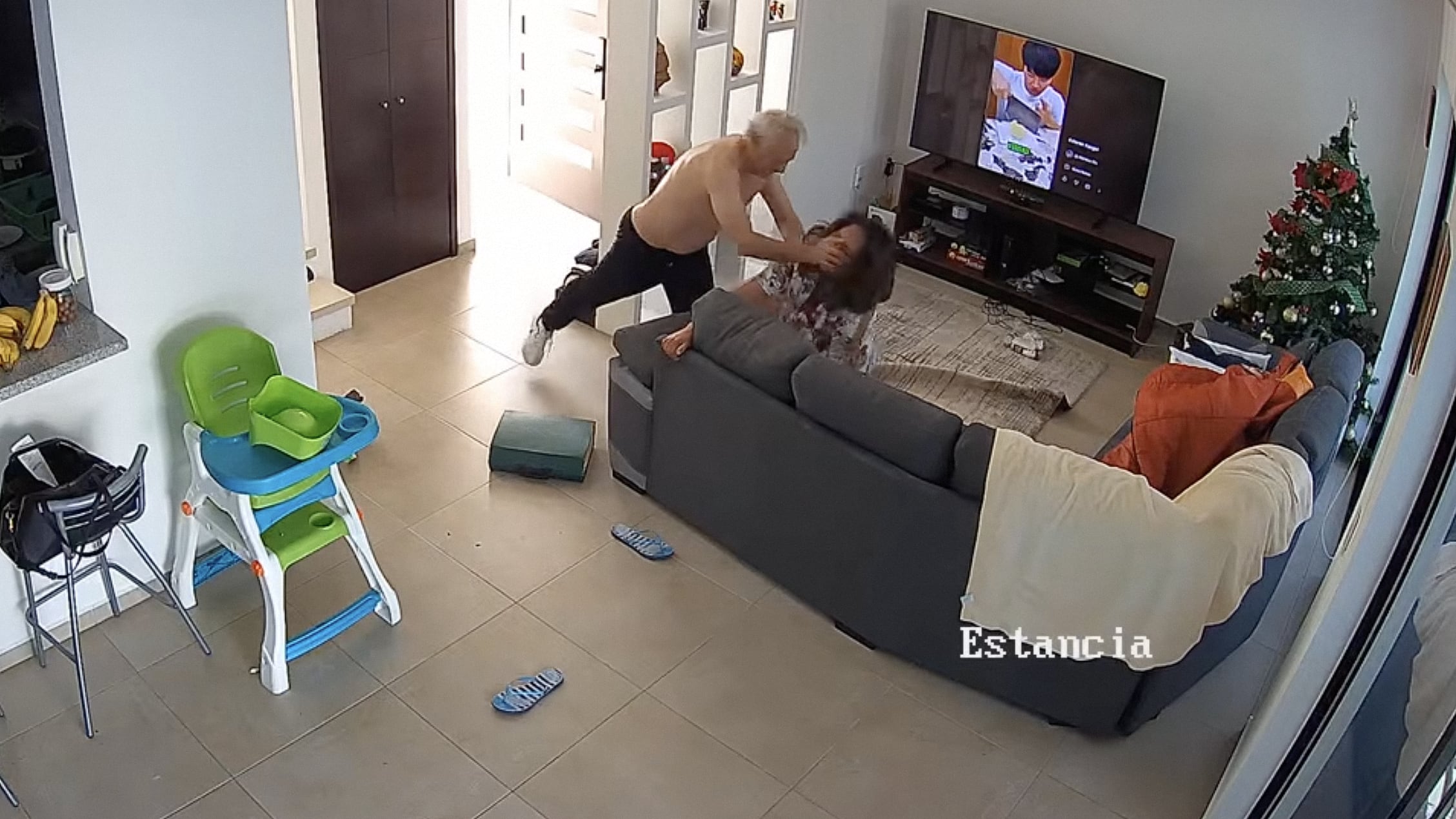
The complaint filed by María Felicia Jiménez, the wife of Víctor Rodríguez Padilla, the former director of Mexico’s state-owned oil company Pemex, has shaken the country. The release of a video showing her being beaten by the former official has sparked solidarity, widespread condemnation, and reactions from Claudia Sheinbaum’s government, which has offered her protection and support in pursuing her complaint. But María Felicia Jiménez is just one of millions of women who suffer gender-based violence in Mexico.
According to figures from Mexico’s National Institute of Statistics and Geography (INEGI) and U.N. Women, 63% of women over the age of 15 in Mexico have experienced some form of violence. Sixty percent of these attacks occur within the home and are committed by their partners. This type of violence often goes unreported, as many victims fear speaking out.
The Executive Secretariat of the National Public Security System recently reported that, between January and May 2026, 230,000 emergency calls to 911 were related to incidents of domestic violence nationwide, with six states accounting for half of these calls: Guanajuato, Mexico City, Sonora, Veracruz, Jalisco and Coahuila. Another 104,000 emergency calls were recorded in connection with incidents of intimate partner violence.
María Felicia Jiménez chose to publicly report her case three months after it occurred, explaining that she did so to protect herself from her alleged attacker, Víctor Rodríguez Padilla, whom she describes as “a senior figure in the current government” who could be shielded due to “his closeness to the highest levels of the presidency.” Rodríguez, who was a classmate of Sheinbaum’s at UNAM’s School of Sciences, served as Pemex director from the start of the administration until May, when he was replaced after receiving praise from the president for his work.

01:20
Former Pemex chief Víctor Rodríguez Padilla accused of domestic violence
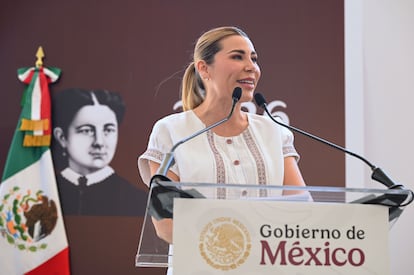
In response to the complaint, the Ministry for Women — an agency created by President Sheinbaum at the start of her administration — has established contact with her to provide care, guidance, support, and institutional assistance. María Felicia Jiménez has also received expressions of solidarity from Senator Laura Itzel Castillo, who will take over as head of the Ministry for Women in September.
“From the moment I saw the news about what happened to her, I reached out to the acting head and deputy minister for women to be in contact with the victim and support her in her complaint,” the senator wrote in a message on social media. “I express my solidarity and strongly condemn any act of violence against women. In the position I will assume, I will work to ensure that no act of aggression goes unpunished and that access to justice, the protection of women’s rights, and the right to a life free from violence prevail.”
The former Pemex director has also spoken out in recent hours, calling for “discretion and prudence” so as not to affect his children. “I reiterate my full willingness to cooperate with the competent authorities, trusting that institutions will clarify the facts objectively, fairly, and in strict observance of the principle of the presumption of innocence,” he said in a statement.
Rodríguez Padilla, who had been set to take over as head of the National Institute of Electricity and Clean Energy (INEEL), said he has stepped away from any public office to address the case strictly as a private citizen, without interfering in the investigations. The Energy Ministry confirmed that he will not take up the post.
Sign up for our weekly newsletter to get more English-language news coverage from EL PAÍS USA Edition








Alfonso Durazo Montaño
United States Keeps Up Pressure On Mexico Over Narcopolitics Two Months After Rubén Rocha Indictment

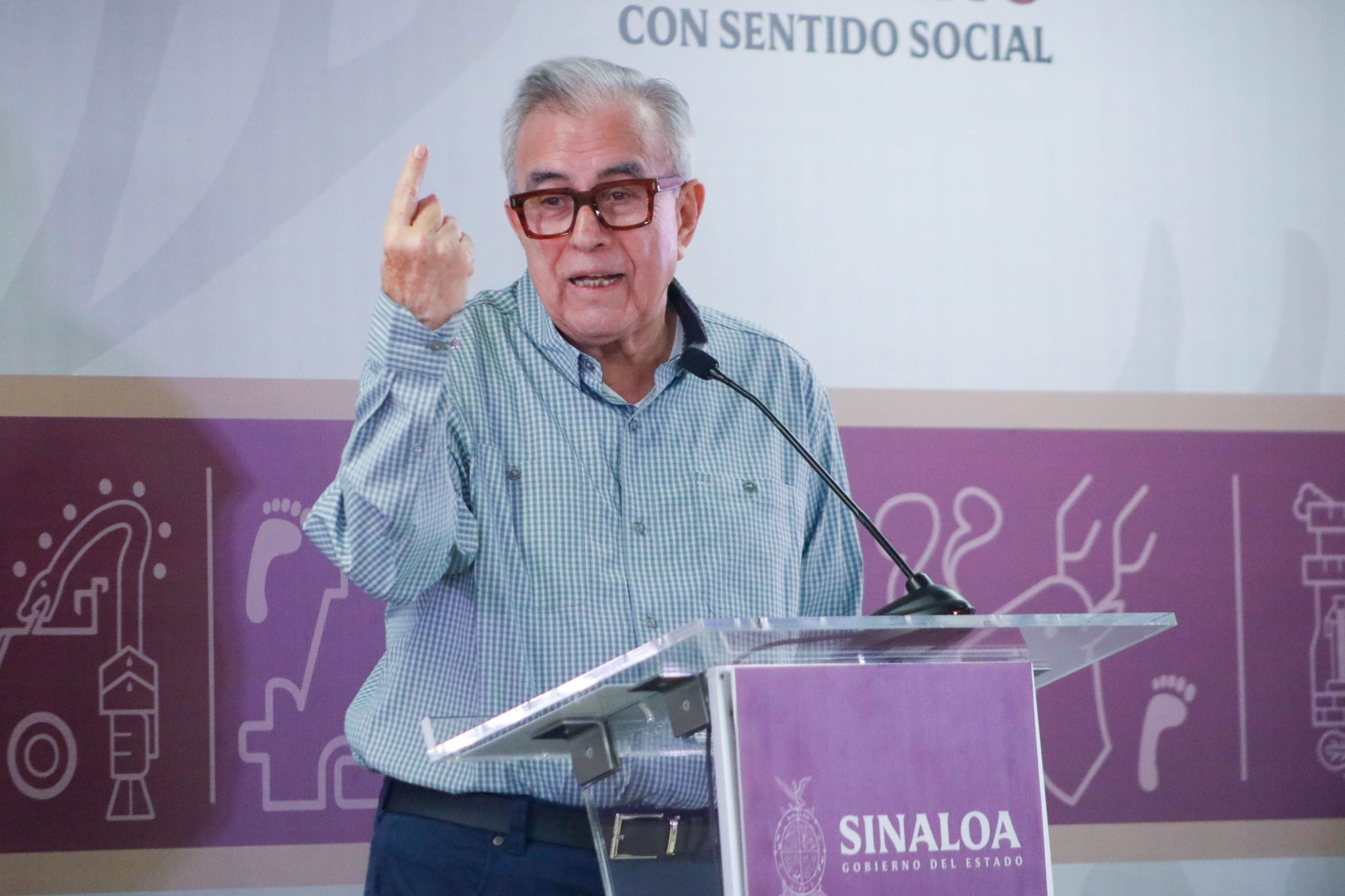
For months, the United States has exerted intense pressure on the Mexican government under the banner of its campaign against alleged ties between politicians and drug cartels. Exactly 60 days ago, the Donald Trump administration formally accused around a dozen officials linked to Morena, Mexico’s ruling party, including Sinaloa Governor Rubén Rocha Moya.
Since then, U.S. media outlets, citing anonymous sources in both countries, have reported that other Morena governors — including those of Sonora, Tamaulipas and Baja California, all border states — appear on a purported list of targets, though Washington has never officially confirmed those claims.
This weekend, fresh reports in the United States alleged that politicians from Mexico’s ruling party have been acting as informants for U.S. authorities in an effort to clear their names. While the officials accused have denied the allegations, Mexican President Claudia Sheinbaum has accused the United States of pursuing interventionist tactics aimed at destabilizing the political movement she leads. According to federal sources consulted by EL PAÍS, the accusations are beginning to generate concern within the ruling party and have fueled suspicions about figures who may be maintaining contacts with Washington.
When the U.S. Department of Justice unusually made public its case against Governor Rocha and several members of the Sinaloa state administration for allegedly collaborating with the Sinaloa Cartel, Mexico responded firmly, arguing that no solid evidence had been presented and that it would not take action without its own investigation by federal prosecutors. Washington had demanded the immediate arrest of Rocha and his associates for extradition purposes, but Mexico said it would wait for the United States to provide convincing evidence of charges ranging from conspiracy to traffic drugs to possession of high-caliber firearms.
To date, neither government has disclosed whether Washington has complied with Mexico’s requests. EL PAÍS contacted spokespeople for Mexico’s Foreign Ministry and the U.S. Embassy regarding the matter, but neither commented.
In response, Sheinbaum instructed Morena officials — from federal lawmakers to state governors — to close ranks in defense of national sovereignty against what she described as foreign pressure. For the ruling party, this was no minor issue. Officials saw clear signs that Trump intended to use Mexico as part of a broader regional strategy. Sheinbaum accused the United States of trying to interfere in the 2027 Mexican legislative elections and speculated about an alliance between Mexico’s opposition and the international far right.
Trump’s moves also prompted the political re-emergence of former president Andrés Manuel López Obrador, who had withdrawn from public life after leaving office. López Obrador, Sheinbaum’s mentor and the founder of Morena, openly argued that Washington’s actions were intended to weaken the movement he created and strengthen Mexico’s right wing so that the United States could once again have “a submissive government” in Mexico.
Far from backing down, the United States raised the stakes. Several members of Trump’s Cabinet publicly threatened incursions into Mexican territory to target drug cartels directly. In May, Trump himself suggested the possibility of ground operations against the cartels after praising strikes against vessels in the Pacific Ocean that Washington accused — without providing evidence — of drug trafficking.
″If they’re not going to do the job, then we’re going to do the job,” Trump said.
Meanwhile, during testimony before the House of Representatives, U.S. Defense Secretary Pete Hegseth urged Mexico to take action against the cartels so that the United States “doesn’t have to.” These threats have at times clashed with statements from other U.S. officials who simultaneously acknowledge the extensive security cooperation Washington has received under Sheinbaum’s administration.
Against this backdrop of interference — further inflamed by revelations that CIA agents had been carrying out security-related activities in Chihuahua without authorization from the federal government — media outlets in both Mexico and the United States have published accusations involving additional Morena politicians.
At the forefront of the accusations are the governors of Sonora, Alfonso Durazo, and Tamaulipas, Américo Villarreal. The first blow came with a revelation in the Los Angeles Times that Washington had revoked the visas of both governors, implying they were under investigation for alleged ties to drug trafficking. The report further alleged that Villarreal had continued crossing into the United States using a special permit reserved for individuals cooperating as informants. Durazo and Villarreal denied that their visas had been revoked, denied being subjects of any investigation, and denied serving as informants for U.S. authorities.
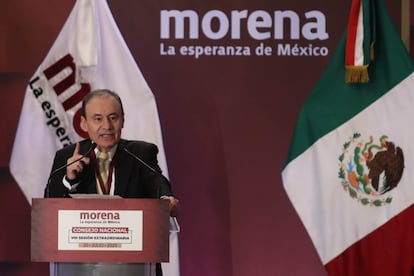
In a fresh report, The New York Times alleged that around a dozen Morena politicians are cooperating with U.S. authorities as informants, providing information “against other members of the party” in an effort to “get ahead of investigations they fear could soon focus on them.” According to the newspaper, the process could trigger a “cascade of cooperating witnesses and indictments” that might weaken Morena. The report also reiterated that both Durazo and Villarreal are under U.S. investigation for alleged corruption.
The two governors once again denied the allegations and criticized the article for failing to provide verifiable evidence. President Sheinbaum also challenged the report, saying her government had no knowledge of any such cooperation and questioning what exactly these officials would be informing on.
The two governors again denied the allegations and criticized the report for not providing verifiable evidence. President Sheinbaum also questioned the NYT, saying her government has no knowledge of such alleged cooperation or of its scope. “First, we don’t know if it’s true. We have no information that anyone is cooperating with the U.S. government. Also, cooperating about what?” the president said at one of her morning press conferences.
Also drawn into the controversy is Baja California Governor Marina del Pilar Ávila, whose U.S. visa was revoked a year ago and who was recently the subject of a leaked phone conversation suggesting she had been in contact with U.S. officials. The Morena governor acknowledged the conversations but said they concerned efforts to recover her visa, which had been cancelled without any clear explanation.
A federal source told EL PAÍS that the U.S. allegations regarding alleged Mexican narcopoliticians have never been formally discussed in meetings of the Security Cabinet, reinforcing the perception that Sheinbaum’s administration does not attach much credibility to the claims emerging through media leaks. The source added, however, that within Morena circles there is growing speculation about which party figures might plausibly be cooperating with Washington. Among the names reportedly being mentioned, the source said, is the governor of Baja California.
Sign up for our weekly newsletter to get more English-language news coverage from EL PAÍS USA Edition
Claudia Sheinbaum
King Felipe Makes First Mexico Visit In Seven Years Ahead Of Spain – Uruguay World Cup Match As Colonial Abuses Spat Subsides

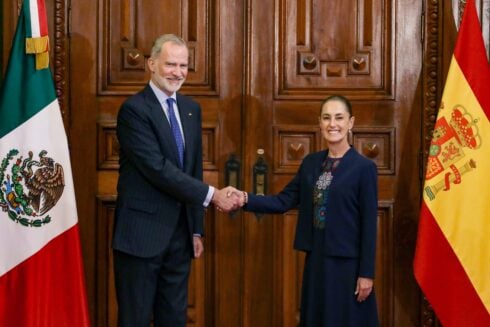
 KING Felipe VI has travelled to Mexico for his first visit in seven years, arriving ahead of Spain’s World Cup meeting with Uruguay. Spain’s King met with Mexican President Claudia
America
El Rey Felipe VI Y Claudia Sheinbaum Entierran El Distanciamiento Entre España Y México Con Un Encuentro En Palacio Nacional

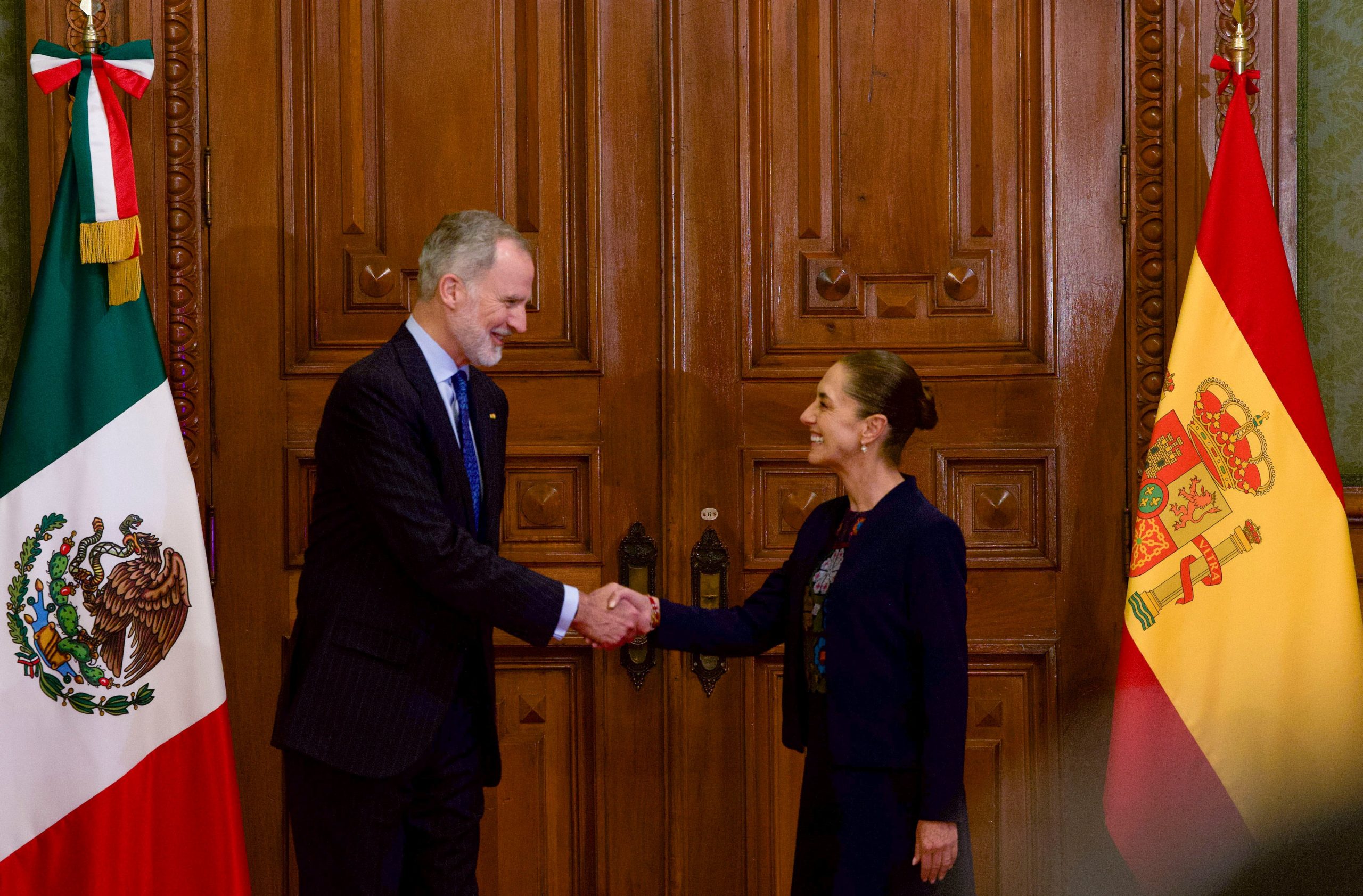
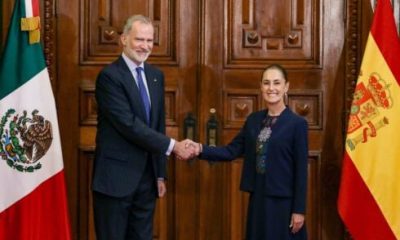
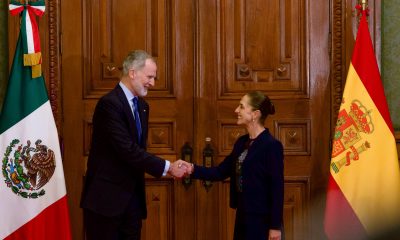
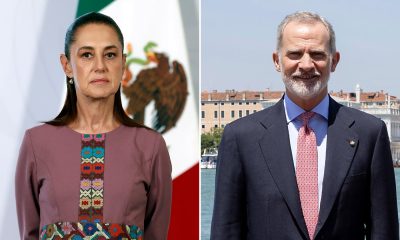
Era la foto esperada. Después de siete años de tensión, el rey Felipe VI y la presidenta de México, Claudia Sheinbaum, se han dado la mano este jueves en Palacio Nacional, en la capital mexicana. Los dos jefes de Estado han aprovechado la asistencia del monarca al partido de fútbol entre la selección española y Uruguay, este viernes en Guadalajara, para reunirse. El encuentro, que ha sido breve, tal y como había avisado la mandataria, entierra el distanciamiento político y diplomático entre los dos países que nació con la polémica carta del perdón por la conquista enviada en 2019 por el entonces presidente Andrés Manuel López Obrador.
Ha costado meses de reuniones, pequeños y grandes gestos diplomáticos, exposiciones y premios culturales, pero, finalmente, España y México han retomado su curso político. Ese que estuvo casi congelado durante años y que llevó, por ejemplo, a que Sheinbaum no invitara al Rey a su investidura en 2024 o que ningún miembro de la Casa Real llegara el año pasado a la Feria Internacional del Libro (FIL) de Guadalajara, que tenía a España como país invitado. Todo parece listo para que eso ahora quede atrás y ambos países se enfoquen en sus inevitables lazos culturales y económicos, que ni siquiera cesaron durante el distanciamiento diplomático.
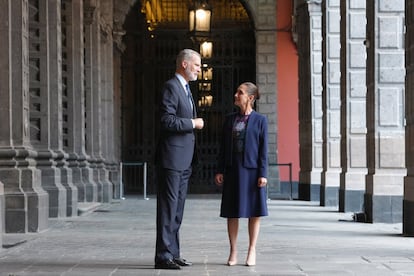
Así lo ha recordado la Secretaría de Relaciones Exteriores (SRE) mexicana en un comunicado publicado este jueves en el que ha recordado que España es el segundo socio comercial de México entre los países de la Unión Europea, con un comercio bilateral de 11.100 millones de dólares. Además, la Cancillería ha recalcado, dentro de la poca información que salido del encuentro, que la reunión se “enmarca en un contexto de intensificación de las relaciones bilaterales y de los recientes gestos de reconocimiento de la importancia de los pueblos indígenas de nuestro país por parte de España”.
En su cuenta de YouTube, la presidenta ha publicado un video de poco más de tres minutos donde se observa a los dos jefes de Estado, de pie, uno al lado del otro, mientras suena el himno de México y también el de España, en un Palacio Nacional coronado con las banderas de los dos países. Después de la música, Sheinbaum y Felipe VI se giran y se estrechan la mano, mientras una voz por detrás recuerda: “A continuación se tomará la fotografía oficial de los mandatarios”.
“Esta foto no se hubiera podido dar con López Obrador”, apunta la internacionalista mexicana Pía Taracena, que identifica en la imagen uno de los caminos propios de la presidenta. Sheinbaum ha cuidado la mayoría de los pilares en política exterior colocados por su predecesor: la defensa férrea de Cuba, el distanciamiento con Ecuador o su trinchera con Pedro Castillo en Perú, por ejemplo. La normalización con España es uno de los pocos rumbos alejado de la estrategia de su predecesor.
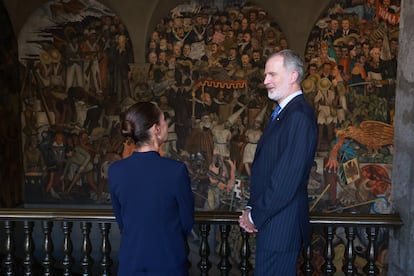
La tensión diplomática con la Casa Real fue una de las herencias que Sheinbaum recibió de su mentor y fundador de su partido, Morena. En 2019, López Obrador mandó una carta a Felipe VI en la que le instaba a revisar y reconocer los abusos que se cometieron durante la conquista y a pedir disculpas por ellos. La carta fue filtrada y el Gobierno español reaccionó rechazando “con firmeza la exigencia”. La polémica que creció alrededor de esta misiva, que el historiador mexicano Alfredo Ávila, define en realidad como “sensata” porque incluso proponía crear un grupo de trabajo para revisar el pasado y ponía sobre la mesa las disculpas de España pero también las de México a los pueblos originarios, separó durante años a los dos países.
Ávila, investigador de la Universidad Nacional Autónoma de México (UNAM), considera que el discurso contra la conquista sirvió a López Obrador para “presentar un frente nacionalista y estimular el patriotismo mexicano” durante la primera presidencia de Donald Trump, cuando el republicano ya hablaba de construir un muro que pagaran los mexicanos. “Hubiera sido muy fácil inflamar un discurso nacionalista contra Estados Unidos, pero, por supuesto, eso no le convenía a López Obrador. Hacerlo con España no tenía gran costo, porque las relaciones culturales, académicas, económicas, sociales, esas se mantuvieron”, reflexiona el historiador.
Ahora el escenario es totalmente otro. En la era del Trump 2.0., EE UU amenaza de forma constante con intervenir militarmente en México, acusa a gobernadores morenistas de tener vínculos con el crimen organizado y busca no renovar los tratados económicos. Así, este encuentro ha servido, ademas, a Sheinbaum para sellar la normalización de las relaciones diplomáticas con uno de sus aliados estratégicos en un momento de acorralamiento con Estados Unidos. Antes de la foto con el Rey de España, se encuentra la firma del tratado con la Unión Europea, el encuentro de líderes progresistas en Barcelona o el último acercamiento con Reino Unido.

El Atlético De Madrid Anuncia El Fichaje De Grimaldo

Última Hora De La Actualidad Política, En Directo | Marlaska, Sobre Los Manejos De Leire Díez: “En Mi Ministerio, A Diferencia De Otros, Actuamos Bajo El Principio De Legalidad”

Sanchez Gaffe: PM Hails Spain’s Safest Region As Also Its Least-Foreign During Launch Of €505m Migrant Integration Plan
Dinosaurs are roaring over to Estepona this summer in a massive 5,000m² exhibition

Families Caring For Elderly Parents In Spain Say Brexit Has Left Them With Impossible Choices
Denia launches new La Marineta music festival this summer with Fangoria and Nil Moliner


-
Costa del Sol1 week ago
Dinosaurs are roaring over to Estepona this summer in a massive 5,000m² exhibition
-
 %2 weeks ago
Families Caring For Elderly Parents In Spain Say Brexit Has Left Them With Impossible Choices
-
Costa Blanca North2 weeks ago
Denia launches new La Marineta music festival this summer with Fangoria and Nil Moliner
-

 %2 weeks ago
One Of Spain’s Top Supermarkets Has Just Been Ranked Among Europe’s Most Innovative In A Major New Report
-
 ElPais2 weeks ago
Primary Elections In New York, Maryland, And Utah: Date And How To Vote
-
Finland2 weeks ago
Finns abroad keep Juhannus traditions alive on Spanish coast in 2026
-
Latest2 weeks ago
KEY POINTS: What Changes About Life In Spain In July 2026
-
Costa del Sol1 week ago
Local community gets ready for its annual Calahonda Day celebration on June 27