
Cuba
Miami, The City Of Vibrant Landscapes And Sustainable Spirit

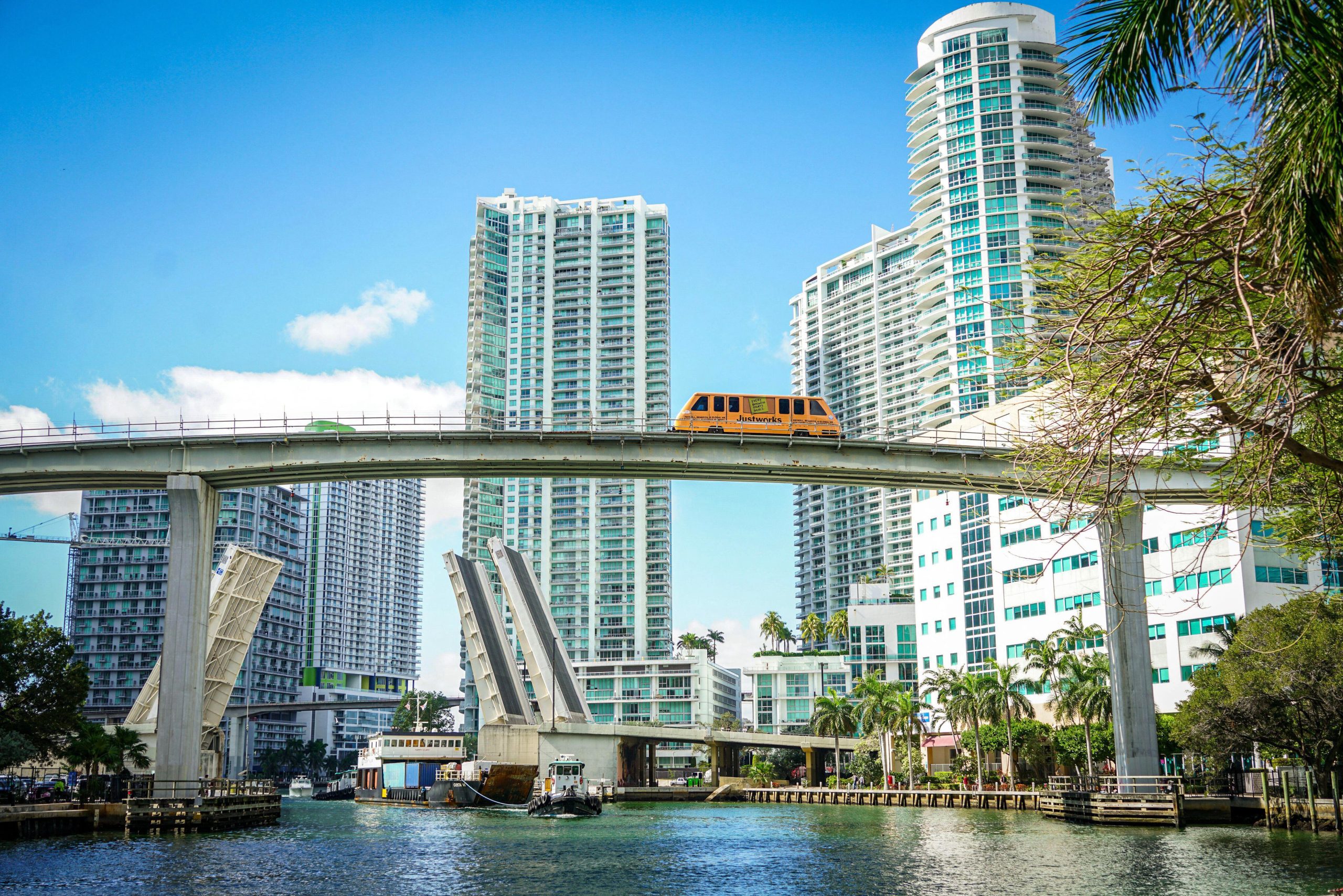
In Miami, it’s essential to stay alert for tropical storm and hurricane warnings. Torrential rains and high winds are compounded by rising sea levels due to global warming caused by climate change. South Florida’s porous limestone foundations act like a sponge. As sea levels rise, groundwater rises to the surface. To prevent Miami from becoming Atlantis, the only option is to raise it above the water, a project underway in Sunset Harbour and other residential areas — see the MB Rising Above cell phone app for details. This strategic plan is part of the Southeast Florida Regional Climate Change Compact.
In addition to this elevation, a mass transit system has been implemented to reduce greenhouse gas emissions, one of the causes of global warming. Miami’s shallow subsoil means that the main highways and the Metromover—a free, driverless monorail consisting of two cars—run above street level. Next to one of its elevated stations, Park West, is the CitizenM Miami World Center, a so-called smart and sustainable hotel where a very high percentage of its electricity comes from renewable energy sources and where plastic bottles have been replaced with water fountains for guests to refill their own bottles.
In the centrally located neighborhood of Brickell, and below the monorail, stretches the long and narrow Underline Park with a series of rest areas, calisthenics equipment, playgrounds, and unique installations, such as ping-pong tables designed to collect and reuse rainwater. Embracing this same sustainable spirit is Brickell City Centre, a shopping mall beneath a sculptural and intelligent roof that harnesses sunlight and rainwater to illuminate its three interconnected four-story buildings and partially power their air conditioning systems, respectively. In Miami, it’s not outlandish to walk around in sandals with a scarf wrapped around your neck.

Along the streets, in addition to the many cars, you’ll also find a type of vehicle called a trolley. It’s a kind of wheeled tram that operates free of charge in different parts of the city, such as Wynwood. This neighborhood, once filled with warehouses, has become a vibrant artistic and cultural hub. From the comfort of a Segway, a practical and fun mode of transportation, you can begin to question the true nature of everything you see. The neighborhood is decorated with large, colorful murals and dotted with restaurants where the milk isn’t dairy and the pizzas aren’t topped with cheese, as is the case with the conscious, vegan-friendly, and healthy Love Life Café.

Without the train, Miami would not exist
In the realm of less polluting modes of transportation, Miami Central Station comes into play. A station with the look and feel of a charming hotel lobby, it’s the hub for Brightline trains departing from and connecting to other Florida cities, such as Orlando, Fort Lauderdale, and Boca Raton. If Miami is what it is today, it’s partly thanks to the train. A severe freeze in 1895 and the purchase of several plots of land—the land that would become Miami—by Julia Tuttle (known as the “mother of Miami”) convinced Henry Flagler to extend the railroad to the southeastern coast of the Florida peninsula. Developers and visionaries quickly recognized the area’s potential as a sun and beach tourist destination and didn’t hesitate to dredge Biscayne Bay, creating new islands and replenishing the mangrove coastline.

What is known as Miami is a county and a city located in the southeast of the Florida peninsula. Between this peninsula, Miami Island, where the eastern Atlantic beaches are found, and the Virginia and Biscayne Keys, lies the Intracoastal Waterway, spanned by bridges and highways that run over the water. South of this amphibious urban network, at the tip of the peninsula, are the Everglades. This is a protected wetland, preserved and cared for by the Miccosukee people. Another group of Native Americans, the Tequesta, settled earlier in Biscayne Bay, around the mouth of the Miami River, the current urban center of the city.
In the 16th century, Spanish conquistadors colonized Florida, a peninsula they ceded to the United States in the 19th century. From then on, bridges and roads began to be built connecting the mainland city with the island across the bay, where a city was built and christened with a name that has become a brand: Miami Beach. To the south, in what is known as South Beach, along Ocean Drive and Collins Avenue, a small group of hoteliers began constructing small accommodations in the 1930s: Beacon, Victor, Breakwater, Avlon, and the Sea Isle Hotel, among others. The latter is located in the middle of the island and is now the Palms Hotel & Spa, a luxury wellness resort for all ages “inspired by nature” and committed to minimizing its environmental impact and raising ecological awareness among locals and guests, who are encouraged to clean their section of the beach each morning alongside the hotel’s Green Team.

This architectural ensemble of white and pastel-hued hotels gives life to what is known as South Beach’s Art Deco Historic District. At 1001 Ocean Drive is the Art Deco Welcome Center, which organizes tours with stops at the most attractive and unique buildings designed in this style, as well as Mediterranean-looking ones. Some of these hotels were converted into makeshift barracks between 1942 and 1945, when half a million members of the U.S. Army Air Corps were stationed in this sunny location for training maneuvers before departing for the various fronts of World War II. After the war, many soldiers settled in Miami Beach and the surrounding area.

Something similar happened with the Cubans who went into exile in 1959, when Fidel Castro took power in Cuba. So many Cubans settled in one area that it became known as Little Havana. Today, Cubans live scattered throughout the city, as do the hundreds of thousands of other Latin Americans who have settled in a city and on an island where Spanish is widely spoken and where almost everyone talks about escaping and hope when asked why they are there.

A complicated relationship with water
Miami is a place almost no one is originally from, yet many aspire to be. It’s also an island surrounded and traversed by water. Mansions with docks line the canals, while South Beach’s beachfront is dominated by skyscrapers of apartments and hotels. These hotels deploy their army of lounge chairs and umbrellas on the sand to the rhythm of Latin music hits. This is no place for saxophones or pianos. Miami seems to forbid boredom, stillness, and silence. It’s an extravagant city where ostentation makes sense and is even hypnotic and photogenic. It is an ornate, sometimes obscenely so, landscape that evokes the world of Miami Vice and Scarface, though this image bears no resemblance to the current one. From a place of corruption and crime, it has transformed into a city of environmental awareness and efforts to mitigate the effects of climate change both on the mainland and on the island. This is the approach being implemented in the Sunset Harbour neighborhood of Miami Beach, one of the lowest-lying areas, which is being raised to cope with rising sea levels. Walking through this area, you can see stormwater pumping stations, which, in addition to providing power and speed, collect, filter, and discharge the cleanest possible water into the bay, and seawalls, which reduce erosion and provide protection against flooding.
In Miami, water is a source of both pleasure and tragedy. It’s also a source of inspiration. The renovated Miami Beach Convention Center is a massive, translucent, wave-shaped structure, built on the premise of resilience and with a commitment to environmental responsibility and sustainable practices in all the events held there. That same water serves as the larder for restaurants like Stiltsville Fish Bar in Sunset Harbour, where fish and seafood are paired with sauces and presented in ways that might surprise more traditional palates, such as their lobster burger.

Fishing and paddling are popular activities at Oleta River State Park. This river estuary, once home to the Tequesta people, offers calm waters lined with mangroves for kayaking. With luck, you might even spot dolphins and manatees. For alligator sightings, head to the Everglades at the tip of the Florida peninsula. This vibrant, restless tip of the peninsula is a place of water where the few remaining members of the Miccosukee tribe, guardians of this swampy land, enjoy showing it off on airboats powered by large fans at the back. This tour, Tigertail Airboat Tours, takes visitors over waterways flanked by lush vegetation and frequented by various birds.

Despite the noise of the speedboat, one can concentrate and take in the aquatic landscape they’re entering. A symphony orchestra where the wind stirs the reeds and sets the water running under the sun, while Jean Sarmiento, from the Love the Everglades movement, tells visitors what this place means to its ancestral and current inhabitants, for whom water is sacred. Although, in Miami’s case, water is also a problem. It’s the price to pay for being a sunny peninsular and island city built where it was.
Sign up for our weekly newsletter to get more English-language news coverage from EL PAÍS USA Edition















Two Guardia Civil Officers Killed In Spain Maritime Drug Trafficking Pursuit

E

E

Dinero En Efectivo Guardado En Casa Y La Devolución De Los Gastos Del PSOE: La Expareja De Koldo Protagoniza La Cuarta Jornada Por El ‘caso Mascarillas’

Última Hora De La Guerra De Estados Unidos E Israel Contra Irán, En Directo | EE UU Asegura Que Dos De Sus Buques Militares Han Cruzado Ormuz Para Desminar El Estrecho E Irán Lo Niega

Mercedes F1 star Kimi Antonelli feeling the pressure after Italian heartbreak


-
 Caso Koldo4 weeks ago
Dinero En Efectivo Guardado En Casa Y La Devolución De Los Gastos Del PSOE: La Expareja De Koldo Protagoniza La Cuarta Jornada Por El ‘caso Mascarillas’
-
 Ataque contra Irán4 weeks ago
Última Hora De La Guerra De Estados Unidos E Israel Contra Irán, En Directo | EE UU Asegura Que Dos De Sus Buques Militares Han Cruzado Ormuz Para Desminar El Estrecho E Irán Lo Niega
-
 Uncategorized4 weeks ago
Mercedes F1 star Kimi Antonelli feeling the pressure after Italian heartbreak
-
DGT4 weeks ago
DGT launches week-long speed crackdown on Spanish roads
-

 New Developments3 weeks ago
How To Get A Tourist Rental Licence In Andalusia (Spain) – Step-By-Step Guide 2025
-

 Andalucia4 weeks ago
La Policía Detiene A Un Hombre En Córdoba Por El Asesinato De Su Pareja
-
Cala Llenya4 weeks ago
3 bedroom Villa for sale in Cala Llenya with pool – € 2,680,000
-

 Elecciones4 weeks ago
Péter Magyar, El Hombre Que Admiraba A Orbán Y Acabó Con él