Connect with us

%

Climber Rescued Near Murcia Summit After Hands Go Numb During Ascent

Published

on

climber-rescued-near-murcia-summit-after-hands-go-numb-during-ascent

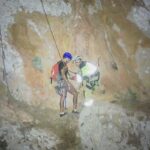
Firefighters rescue stranded climber near Peñas Blancas summit after dark. Photo Credit: Cartagena City Hall

A climber was rescued by firefighters after becoming stranded just 30 metres from the summit of Peñas Blancas in the Region of Murcia, when numbness in his hands left him unable to continue his ascent. The rescue took place after 9:00pm on Wednesday, October 14, when the man was climbing alongside a companion on the XL route, a popular climbing section of the rocky mountain near the Costa Calida municipality of Cartagena.

Stranded near the summit after hands went numb mid-climb

According to reports, the climber managed to reach a ledge where he could remain safely secured while his companion contacted the emergency services for help. Firefighters from Cartagena City Council leapt into action in response to the emergency, accessing the difficult-to-reach area via the Rambla de la Víbora. The rescue team then spent approximately an hour walking to the location, carrying the equipment needed to bring the stranded climber to safety.

Firefighters launch a difficult night-time rescue: Two men brought to safety

Given the challenging terrain and the darkness, rescuers first had to establish the man’s precise position before planning their approach. A drone was deployed to help locate him and allow the team to assess the situation. Firefighters subsequently set up a rescue operation using ropes and anchoring systems to reach the climber and guide him safely to the summit.

Once the first man had been brought to safety, the rescue team also helped his companion leave the area. Fortunately, neither of the two men suffered serious injuries during the incident. Both were reported to have climbing federation licences and were able to leave the area safely following the operation.

The challenges of climbing Cartagena’s Peñas Blancas

Peñas Blancas, which rises to 627 metres above sea level, is the highest peak in the municipality of Cartagena. Its white rock face overlooks the El Cañar gorge and lies close to the Mediterranean coast, between Isla Plana and La Azohía. Although the mountain is not particularly high, its steep rock faces and difficult access can make climbing challenging, especially when an emergency occurs after dark.

The incident, once again, emphasises the important role played by emergency first responder crews in Murcia, who are regularly called to assist people experiencing difficulties in the region’s mountainous and coastal landscapes.

%

Enter Gibraltar’s New High-Tech Watchmen

Published

on

enter-gibraltar’s-new-high-tech-watchmen

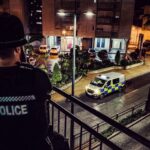
Gibraltar police using latest monitoring equipment Credit: Royal Gibraltar Police

A Moroccan man banned from entering Gibraltar since 2019 has been arrested after being identified by police facial-recognition technology, while a second man has been detained over an allegedly fake British passport at Gibraltar Airport.

Details of both cases were reported by the Royal Gibraltar Police, with the arrests highlighting how Gibraltar’s police and border officers continue to enforce immigration rules following the removal of the old border fence.

The first man, a 40-year-old Moroccan national identified as M.B., was flagged by the Royal Gibraltar Police’s live facial-recognition system on Sunday, October 11, in the frontier area.

Officers from the force’s Response Team arrested him after the system identified him. He was charged with being in Gibraltar in breach of an entry ban, contrary to the territory’s Immigration, Asylum and Refugee Act.

Man was extradited to Spain in 2019

The man was already known to Gibraltar police. In October 2019, he was extradited to Spain under a European Arrest Warrant issued in connection with Operation Iceberg.

The joint investigation by the Royal Gibraltar Police and Spain’s National Police dismantled an organised criminal group involved in the illegal trafficking of migrants between Morocco, Gibraltar and Spain.

An entry ban was imposed on the man following his unlawful presence in Gibraltar. He appeared before the Magistrates’ Court on Tuesday, October 13, and remains on remand at Windmill Hill Prison. He is due to return to court on Tuesday, October 20.

Pakistani man arrested over fake British passport

In a separate case, a 22-year-old Pakistani national was arrested at Gibraltar International Airport on Thursday morning, October 15.

The man, identified as M. A. H., allegedly presented a counterfeit British passport bearing his personal details to officers from the Gibraltar Borders and Coastguard Agency during departure immigration checks.

He was preparing to board a booked flight to the UK when officers detected irregularities on the document’s biometric-data page. Further checks confirmed that the passport was fake. He was taken to New Mole House police station, questioned and charged with possession of a forged or irregular passport, as well as being in Gibraltar without the required legal status.

After appearing before the Magistrates’ Court on Friday, October 16, he remains in custody at Windmill Hill Prison until his next court appearance on October 23.

Security continues after the Verja’s removal

The two cases go to show that the removal of Gibraltar’s old frontier barrier has not ended immigration enforcement. The new UK-EU arrangements took effect on July 15, 2026, bringing the physical Verja to an end while leaving police and border officers responsible for identifying people suspected of breaking the law.

In one case, facial-recognition technology alerted police to a man subject to an entry ban. In the other, airport checks exposed an allegedly counterfeit passport. Both men have been charged and remain in custody pending further court proceedings.

Continue Reading

%

Art For Animals: El Soto Event Raises €1,762 For Two Charities

Published

on

art-for-animals:-el-soto-event-raises-e1,762-for-two-charities

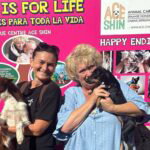
Oskana handing the proceeds to Fabienne. Credit: MO

An art exhibition, handmade jewellery, dancing and a visit from some very special four-legged guests helped raise more than €1,700 for two animal charities at a community event held at El Soto last Saturday, October 10.

Organised by artists and animal lovers Oksana Kocuriene, known as Roxanne, and Lesley Lawrence, the mini-event brought together local residents, creative talents and volunteers united by their love of animals. The event raised €881.25 for ACE|SHIN (Animal Care España|Spaanse Honden In Nood) and the same amount for Donkey Dreamland, bringing the combined total to €1,762.50. Volunteers also collected a further €189 through donations and sales of charity cards and calendars.

Helping abandoned and neglected animals

ACE|SHIN is an animal rescue organisation working in southern Spain to help dogs and cats that have been abandoned, neglected or mistreated. Founded in 1999, it provides shelter, food and veterinary treatment for animals in need, with the ultimate goal of finding them loving permanent homes.

The charity operates shelters in Mijas Costa and Algeciras, caring for hundreds of dogs and cats. Some arrive as strays, while others have been abandoned by their owners or rescued from situations where their lives were at risk. ACE|SHIN also promotes animal welfare, responsible care and sterilisation programmes to help prevent further suffering. Its work relies on donations, volunteers and supporters rather than Spanish government subsidies. More information about its rescue work and animals available for adoption can be found at www.ace-charity.org. Donkey Dreamland, the other beneficiary, provides care for donkeys and other animals in need.

Local artists put their talents to good use

Five artists contributed to the exhibition, with Roxanne and Lesley joined by Kelly Glithro, Anfisa Zinchenko and Margaritha Meus. Visitors could also browse handmade jewellery and macramé created by Gabriela Cervantes and Angelique Roelse-Vis, who donated some of their sales proceeds to the fundraising effort. Two students from Ireland, Ksenija and Anna, helped throughout the day by selling books and golf balls to raise money for the charities. Later in the afternoon, Marisa and Niko organised dance lessons, adding another activity to a programme designed to bring people together for a good cause.

Volunteers from ACE|SHIN and Donkey Dreamland ran a small market, giving visitors the chance to find out more about their work and support the animals in their care. The donkeys themselves were also present, providing a special attraction for guests.

Community spirit made the difference

Organisers thanked everyone who contributed, from the artists and stallholders to the volunteers and visitors who attended. For those involved, the money raised was about more than the final figures. It was also a reminder of what a community can achieve when people contribute their time, skills and enthusiasm to a shared cause. Their message was one of gratitude to everyone who helped make the day possible, with the hope that similar community efforts will continue to support animals in need.

Continue Reading

%

The €4,000 Cost Of Getting Around Spain Is Putting Jobs Out Of Reach

Published

on

the-e4,000-cost-of-getting-around-spain-is-putting-jobs-out-of-reach

owning a car can be a necessity rather than a choice. Photo credit: Kiev.Victor/Shutterstock

For some people in Spain, getting to work, taking children where they need to go or reaching essential services comes with a bill they cannot easily escape. The average household now spends €4,020 a year on transport, and cutting back is not always an option when daily life depends on being able to get from A to B.

The figure is up from €3,158 in 2015, an increase of €862 over a decade. Transport accounts for 11.5% of household spending, according to a report by EAE Business School published on Thursday, October 15. Its findings highlight the growing problem of transport poverty, where people cannot afford to travel or lack access to reliable public transport, making it harder to reach work and essential services.

Where you live can determine how much you pay

The biggest divide is between people who have several ways to travel and those who depend on a car. In municipalities with fewer than 10,000 residents, 73.5% of people rely primarily on cars, compared with 29.6% in larger towns and cities. Public transport shows the opposite pattern. In the most populated municipalities, 48.8% of residents use it as their main means of getting around. In smaller municipalities, the figure falls to just 10.9%, according to the EAE report.

For people living in areas with limited bus or rail connections, owning a car can be a necessity rather than a choice. Fuel, insurance, maintenance and other running costs are difficult to avoid when there is no practical alternative for getting to work, shopping or appointments. That leaves some people with an awkward choice: absorb the expense or travel less. Spending less on transport does not necessarily mean someone is better off. It may mean turning down work, missing appointments or giving up journeys they need to make.

A cheaper home can mean a more expensive commute

Housing decisions can add to the problem. A property outside a town or city may cost less to rent or buy, but the saving can shrink when the journey to work requires a car every day. The report warns that poor transport connections can make a job financially inaccessible even when the salary looks attractive. Distance and the available transport options matter alongside income when calculating whether taking a job is worthwhile.

This can leave people with fewer choices about where they live and work. Someone may spend less on housing but more on getting to employment, while a person without reliable transport may struggle to reach jobs in the first place. Miguel Ángel López Gómez, an EAE Business School professor and author of the report, argues that transport should be seen not simply as another household expense, but as the price people pay to reach work, services and opportunities.

Transport costs can also push up prices

The impact does not stop at household budgets. Spain relies heavily on road transport to move goods, and the report puts road freight activity at 272 billion tonne-kilometres, around 15% of the EU total. Food, agriculture, construction, manufacturing, retail, distribution and tourism all depend on goods being moved around the country.

When transport and logistics become more expensive, businesses can face higher operating costs, which may feed through into the prices customers pay. The pressure can therefore reach people who are not making long commutes as well as those who rely on a car every day.

Transport costs put jobs and essential services out of reach

The cost of getting around leaves people in poorly connected areas with fewer options. Those who can rely on public transport have an alternative to paying for a car, while others face the expense of fuel, insurance and maintenance simply to get to work or reach essential services. For people on lower incomes, those costs can make everyday journeys harder to afford and job opportunities more difficult to access.

EAE calls for better mobility alternatives, particularly for people on lower incomes, those travelling longer distances and households heavily dependent on private vehicles. The figures suggest that access to transport is about more than the cost of a journey: it can determine which jobs people can accept, which services they can reach and how much choice they have over where to live.

Continue Reading

Trending

Copyright © 2017 Spanish Property & News