Connect with us

%

Pets Forced Into Coach Luggage Holds: Why Spain Needs Better Travel Rules

Published

on

pets-forced-into-coach-luggage-holds:-why-spain-needs-better-travel-rules

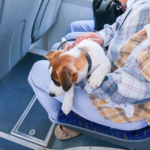
Spain’s Animal Welfare Law requires animals to be transported in suitable conditions. Photo credit: ilona.shorokhova/Shutterstock

For people without a car, taking a pet to the vet or travelling with it to another town can mean relying on friends or family for a lift, paying for a taxi or struggling to find suitable transport. On long-distance coaches, pets may have to travel in the luggage compartment, separated from their owners for the journey.

Access to public transport with a pet should not depend on which Andalusian town you live in. Cádiz has taken a step towards making everyday journeys easier for pet owners, but the real question is whether other municipalities will follow and give people the same opportunity to travel with their animals.

Why pet-friendly public transport is needed

For many people, pets are part of everyday family life, but transport restrictions can make routine journeys difficult. Someone who needs to take a dog to a veterinary appointment may have to find a friend with a car or pay for a private journey. For elderly people, people with disabilities and residents who do not drive, those alternatives are not always practical. Allowing animals on buses under clear conditions would give owners greater independence and make essential journeys easier to organise. It could also reduce the need to use a car or taxi for short trips where public transport would otherwise be suitable.

There is already evidence that such arrangements can work. Cádiz began allowing small pets on its urban buses on October 19, provided owners follow specific rules designed to protect other passengers and keep the animals under control.  That does not mean every animal should be allowed onto every bus without restrictions. Carrier requirements, limits on numbers, hygiene rules and consideration for passengers with allergies or a fear of animals can all form part of a workable policy. The important point is that these arrangements should be considered consistently across the region.

Is the luggage compartment a safe alternative?

On many long-distance coach services, small pets can travel only in a secure carrier in a designated section of the luggage hold. ALSA, for example, requires animals to travel in a closed, rigid and waterproof carrier in the coach’s dedicated compartment. The company also advises against travelling with pets when outside temperatures exceed 25C.  

Although a carrier provides some protection, the owner cannot see or check on the animal during the journey. Movement, noise and temperature conditions are all relevant welfare considerations. If a carrier is not properly secured, vehicle movement can also cause it to shift among other luggage as well as travelling separately from the owner makes it harder to monitor an animal if it becomes distressed or conditions change.

Spain’s Animal Welfare Law requires animals to be transported in suitable conditions that protect them from injury and suffering, with appropriate ventilation and temperature control. It also states that companion animals must travel in specially adapted compartments unless they travel in the same space as their responsible person, subject to road safety rules. Allowing pets to travel beside their owners, where practical and safe, offers a different arrangement: the animal can be monitored throughout the journey rather than left out of sight.

Cádiz shows what can be done

Under Cádiz’s new rules, one pet weighing no more than 10kg may travel per passenger, provided it is inside a closed, approved carrier measuring no more than 45 x 35 x 25 centimetres. The carrier cannot occupy a seat or block the aisle, owners must remain beside it, and passengers must board through the front door. 

The change has practical benefits, but the weight limit still excludes many medium and large dogs, even those that are calm and well behaved. Any policy could consider different arrangements for larger animals, such as leads, muzzles where appropriate and designated spaces, while taking account of passenger safety and the layout of each vehicle. Cádiz is not the only municipality where the issue has been raised. San Fernando’s council approved a motion supporting pets on urban buses in April, although that approval did not itself mean the rules had come into force. 

Will the rest of Andalucía follow?

There is no confirmed region-wide plan requiring every Andalusian municipality to allow pets on urban buses. Each council and transport operator must decide which conditions can work for its services. That leaves pet owners facing different rules depending on where they live and which service they need to use. A more consistent approach would make journeys easier to plan, particularly for people travelling between towns or relying on public transport for veterinary appointments and other essential trips.

The aim would not be to remove every restriction, but to make travelling with a pet a practical option wherever possible. Clear rules on carriers, animal size, numbers permitted and safe positioning could help operators balance animal welfare with the needs of other passengers. Cádiz has shown that pets can be accommodated on urban buses under defined conditions. The question is whether other municipalities will follow, so that travelling with an animal becomes less dependent on local rules and more accessible across Andalucía.

%

Expat Questions Local Police Presence

Published

on

expat-questions-local-police-presence

La Cala de Mijas at night. Credit: Caron Badkin – Shutterstock

Steve Marshall says he has been hearing “disquieting stories” from La Cala, Mijas, including a reported attack on a man returning home at night.

According to the account he received, three youths wielding what were described as “bats” attacked and robbed the man close to Butibamba. Even after he handed over his money, the attackers allegedly stood on his arms and beat him black and blue, leaving him with a bloody gash to his head.

Marshall also refers to a robbery at the Galp garage, where Amazon collection boxes were reportedly vandalised. He says he was told that security cameras were operating, but questions their deterrent value.

“Why does this seem to be happening now?” he asks. “Were the same culprits who attacked the man walking home involved? Is it down to the pressures of the cost of living? I don’t know.”

Mijas Council has also announced plans for more than 150 surveillance cameras across the municipality as part of its efforts to improve public safety and crime prevention.

Where are the night patrols?

“What I do know is that there is little to no police presence at night,” Marshall says, adding that his own experience has been of seeing officers patrolling in the mornings.

“It is well documented that a physical police deterrent, patrolling our streets, not only reassures residents, it discourages crime,” he argues.

His concerns extend to a recent visit to the local police station in Las Lagunas. Arriving in the early afternoon, he says the station appeared closed, with its doors locked. An officer eventually allowed him and his wife inside after his wife explained that, because Marshall is disabled, waiting outside was not an option. He says they were initially told to return later.

As they left, the couple counted as many as 13 police cars parked nearby.

“Surely not all the police were having lunch at the same time?” he asks.

Marshall welcomes reports of increased funding for local police but believes residents deserve to see a visible presence on their streets. “We read a lot about the local police being given priority in funding and that is welcome news,” he says. “But my simple question is ‘where are they?’”

Mijas Council previously announced an increase in local police spending, taking its 2025 budget to almost €1.5 million.

Local elections are closing in fast on the Costa del Sol, and registry ends in December. Perhaps this is the time to make one’s voices heard.

Continue Reading

%

Mercadona Faces Pressure Over Its Ready-Made Meals As Spain’s Bars Demand New Rules

Published

on

mercadona-faces-pressure-over-its-ready-made-meals-as-spain’s-bars-demand-new-rules

Mercadona has been at the centre of the debate. Photo credit: dodotone/Shutterstock

If you grab a ready-made lunch from Mercadona and eat it in the supermarket, you could be at the centre of a growing row between Spain’s supermarkets and its bars and restaurants. The hospitality industry wants supermarkets serving food and drink for customers to consume on the premises to face the same rules and costs as traditional hospitality businesses. It is now asking political parties to take up the issue ahead of the next government, although no new tax has been introduced.

Hostelería de España, the national organisation representing the hospitality sector, has included the proposal in a list of 30 requests sent to political parties. It argues that businesses offering similar services should face equivalent tax, health, labour and licensing obligations. The organisation says the current differences put bars and restaurants at a disadvantage when competing with supermarkets that have expanded their ready-to-eat food ranges. The proposal is a request from the hospitality industry, not an announced government measure. Any change would depend on whether political parties adopted it and a future government decided to act.

Why supermarkets have become part of the dispute

The argument centres on the growth of prepared meals sold by supermarkets, including food that customers can eat in designated areas inside the store. For traditional cafés, bars and restaurants, these services increasingly overlap with what they offer, particularly for people looking for a quick lunch without sitting down for a full restaurant meal. Mercadona has been at the centre of the debate because of its expansion of ready-to-eat food and spaces where customers can consume it. Other supermarket operators have also developed similar services.

José Luis Álvarez Almeida, president of Hostelería de España, raised the issue publicly in May, arguing that supermarkets were moving into territory traditionally occupied by bars. The association has now taken the complaint into the political debate, seeking changes that would apply to businesses offering comparable services rather than targeting Mercadona alone. 

The organisation wants food and drink served for consumption in public areas within commercial premises, clubs and associations to be subject to the same requirements as equivalent services in bars and restaurants. That would mean addressing differences in taxation, food safety rules, employment obligations and licensing. The precise changes would need to be defined by policymakers; the proposals do not set out a new tax rate for supermarkets.

The industry says the rules should be the same

Hostelería de España argues that traditional hospitality businesses face obligations that may not apply in the same way to other businesses offering food for immediate consumption. It believes this creates an uneven playing field, particularly for independent establishments that must meet the costs of running a bar or restaurant.

The organisation represents around 320,000 establishments, including bars, restaurants and cafés. The sector accounts for 6.7% of Spain’s gross domestic product, while the restaurant industry alone contributes 4.7%, according to figures cited in its proposals. It also generates direct employment fo

Those figures form part of the association’s case for giving hospitality a stronger position in economic policy. Its demands extend beyond supermarket food counters, covering taxation, recruitment, small businesses and the preservation of traditional restaurants. For customers, the practical question is whether any future changes would affect the price or availability of prepared meals in supermarkets. There is no confirmed answer yet. The proposal does not automatically mean higher prices, and no change to supermarket charges has been announced.

Other demands include protecting the 10% VAT rate

The supermarket dispute is one of 30 proposals Hostelería de España has sent to political parties ahead of the general election scheduled for 29 November. Another major demand is to protect the reduced 10% VAT rate currently applied to hospitality services. The organisation is concerned about calls at European level for Spain to remove the reduced rate and apply the standard 21% rate instead. It argues that a rise could affect demand, employment and businesses already facing high operating costs. 

The association is also calling for changes to the cost of hiring extra staff. It says an additional social security contribution of €31.22 per day for extra workers makes temporary recruitment more expensive, particularly when businesses need additional staff for weddings, banquets and large events.

It wants the contribution surcharge removed, arguing that hospitality businesses should not face an extra cost that it says does not apply in the same way to agriculture. Other proposals include increasing the tax-exempt value of meal vouchers to €14, reducing administrative paperwork for small businesses and self-employed workers, and improving support for traditional restaurants in rural areas. The organisation also wants a dedicated Directorate-General for Hospitality and Tourism within the Ministry of Industry and Tourism. 

What happens next?

Hostelería de España has asked to meet political parties to discuss its proposals and seek their inclusion in the next legislature’s agenda. That leaves the supermarket demand at the stage of an industry request: it would require political support and subsequent regulatory decisions before any new obligations could take effect.

For now, shoppers can continue buying prepared meals from supermarkets under the rules currently in place. Whether future legislation brings supermarket food counters closer to the regulatory framework for bars and restaurants will depend on the decisions taken by the next government.

The hospitality sector is making its position clear before the election. It wants businesses serving food to customers on their premises to compete under equivalent conditions, regardless of whether the meal is bought in a traditional restaurant or a supermarket.

Continue Reading

%

Spain Orders Replacement Of Eight Million Gas Meters: New Rules, Costs And Deadlines

Published

on

spain-orders-replacement-of-eight-million-gas-meters:-new-rules,-costs-and-deadlines

Households must also be told whether they can own their meter or rent it. Photo credit: Bjoern Wylezich/Shutterstock

If you have a gas meter at home, you could soon be getting a new one, and the change could affect how you track your bills. Spain is introducing smart gas meters that will record your daily consumption remotely, helping you see how much gas you use and potentially avoid bills based on estimates. The rollout starts in earnest in 2029 and will continue until 2036, with around eight million homes and small businesses expected to be affected.

The plan covers around eight million gas meters in homes and small businesses, with the replacement programme approved by Environment Minister Sara Aagesen and published in Spain’s Official State Gazette (BOE) on Tuesday, October 27. The new rules come under Ministerial Order TED/1122/2026, which sets out the timetable, technical requirements and procedures for installing the devices. 

When will Spanish households get smart gas meters?

The replacement will take place gradually rather than requiring every household to change its meter immediately. Gas distribution companies must meet a series of targets, measured across each corporate group.

The order comes into force on October 28, 2026, setting the following deadlines for replacing conventional meters used by customers consuming up to 50,000 kilowatt-hours of gas annually:

  • By 2029: At least 20 per cent of the existing meters must have been replaced and connected to the remote management system.
  • By 2031: The proportion must reach at least 50 per cent.
  • By 2033: At least 80 per cent must have been replaced.
  • By 2036: The replacement programme must be completed, although up to 2 per cent of meters may remain analogue where justified circumstances beyond the distributor’s control prevent replacement and the exception is approved by the regulator.

The programme also covers around 70,000 supply points consuming more than 50,000 kWh and up to five gigawatt-hours annually. These customers must receive remote-reading systems or, where appropriate, smart meters, following a separate timetable.

Will the new gas meters cost households money?

For most consumers, the meter replacement and installation will be free. However, the rules allow an exception where substantial modifications to the existing installation are needed to meet technical or safety requirements. Consumers must also be informed whether they can have the meter in their own name or rent it from the distributor, including the applicable rental price. More than 90 per cent of Spain’s existing gas meters are currently rented, according to the Ministry for the Ecological Transition.

The change is expected to benefit households by reducing the need for manual readings and eliminating estimated consumption readings where the new system provides actual data. Consumers will also be able to access their daily gas consumption through a free online platform provided by the distributor. The new meters can communicate with the distributor in both directions, transmit consumption information remotely and issue alerts when they detect possible tampering or abnormal operating conditions. They can also support remote disconnection of the supply where the equipment and installation permit it. 

How much could consumers save?

The ministry estimates that smart meters could reduce gas consumption by between 1.8 and 5 per cent. Its cost-benefit assessment puts the potential overall economic benefit at more than €800 million over the new devices’ 25-year working life. That calculation uses an assumed average gas price of €34 per megawatt-hour, which the ministry says is less than half the price used in its comparison with current market conditions.

The figure is a projected benefit across the programme, not a guarantee that every household will save the same amount. Access to daily consumption figures should make it easier for households to identify when they use the most gas and adjust their habits accordingly. Remote readings could also reduce billing errors, help distributors identify faults and avoid unnecessary visits to properties to read meters. 

What happens before the meter is replaced?

Households should receive advance notice rather than an unexpected visit from an installer. Distributors must provide an initial notification at least three months before the replacement and communicate the proposed installation date at least 15 days in advance. The rules also require distributors to publish information about their implementation plans and explain how customers can access their consumption data. Information about the replacement programme, potential energy savings, rental or ownership options and the handling of personal data must be made available to consumers.

The devices must meet minimum technical and security requirements, including secure communications, the storage of daily readings and the transmission of consumption data at least every three days. They must also be compatible with gas supplies containing at least 20 per cent hydrogen. For households, the immediate change is not a compulsory appointment in 2026, but a phased programme that will run until 2036. The first major milestone is in 2029, when distributors must have replaced at least a fifth of the conventional meters covered by the order

Continue Reading

Trending

Copyright © 2017 Spanish Property & News