
british airways
Mid-air horror: Powerbank fire forces British Airways flight back to Gatwick

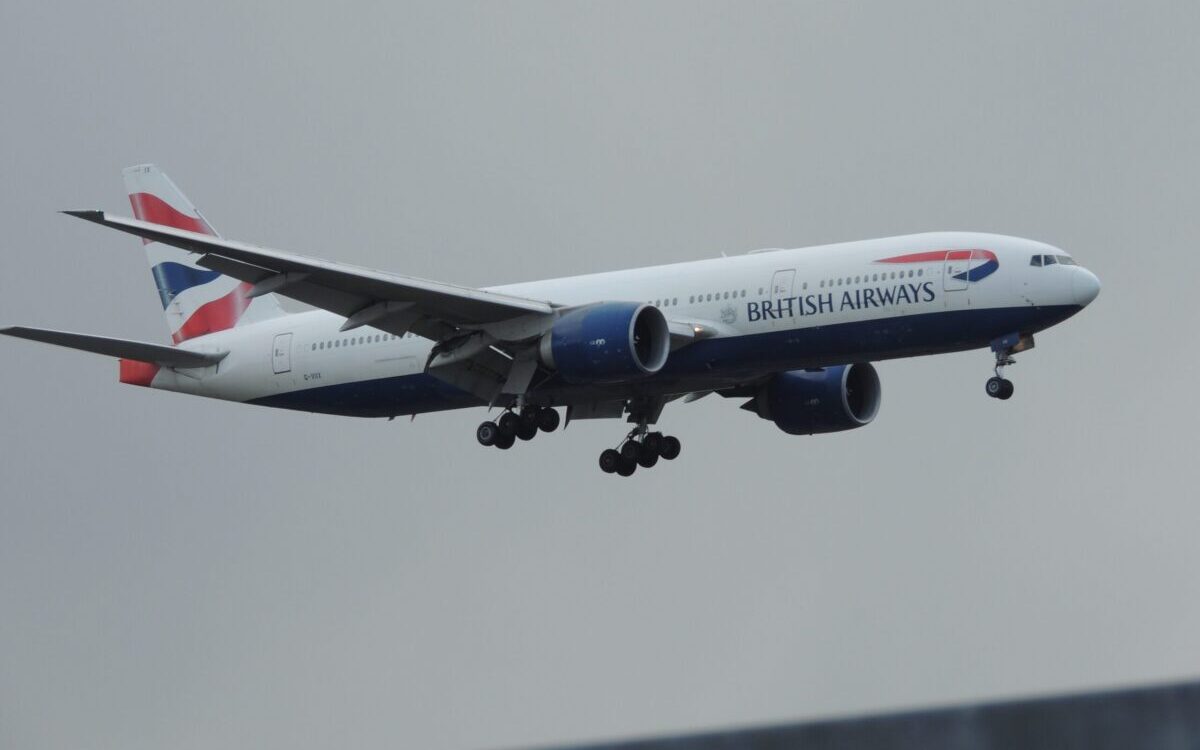
A British Airways flight returned to London Gatwick after a passenger’s portable charger reportedly burst into flames in his pocket, leaving one man with burns and other passengers potentially suffering from smoke inhalation. The incident happened around 15 minutes after take-off, according to a passenger account reported by the London Standard.
Passengers reportedly heard someone shout “fire” before noticing a burning smell and flames further down the aircraft’s aisle. The emergency left no choice for cabin crew who had to tackle the blaze as alarm spread among those on board.
Passenger suffers burns as crew tackle fire
According to the passenger’s account, the power bank caught fire while inside a man’s pocket. British Airways confirmed that the aircraft returned to Gatwick after the incident. The airline lauded its crew for dealing with the emergency and apologised to passengers for the disruption to their travel plans.
One passenger described the experience as the “scariest moment” of their life. The report said the man suffered burns and needed medical attention, while other passengers reportedly sought treatment over concerns about smoke inhalation.
The full extent of the injuries has not been independently confirmed in the available reporting. The flight number, aircraft type and intended destination have also not been established.
Why lithium battery fires are dangerous on planes
Portable chargers typically use lithium-ion batteries, which can overheat and catch fire if damaged or affected by an internal fault. In some cases, a battery can undergo a process known as thermal runaway, releasing intense heat, smoke and flammable gases.
An aircraft cabin presents particular challenges because smoke can affect passengers and crew in an enclosed space, while a burning battery can be difficult to extinguish completely. The incident follows another high-profile power-bank fire involving an easyJet flight at Milan Malpensa in September, when passengers evacuated using emergency slides after a charger overheated while the aircraft was taxiing.
What are the rules for power banks on flights?
British Airways restricts passengers to two power banks per person. They must be carried in hand baggage, must not be recharged using aircraft power supplies and must comply with the airline’s capacity and storage requirements.
Passengers flying from Spain should check their airline’s current rules before travelling, as restrictions can vary between carriers. Power banks remain a popular travel accessory, allowing passengers to recharge phones and other devices while away from a socket. However, repeated reports of battery fires are raising questions about whether existing restrictions are sufficient.
Is it time to ban power banks on planes?
Power banks are convenient, but a fire inside an aircraft cabin can put passengers and crew at risk within seconds. Should airlines impose tougher restrictions on portable chargers, or is a complete ban on power banks the only way to prevent similar incidents? Would you support a ban on power banks on flights, or do you think the existing rules are enough? Let us know in the comments below.






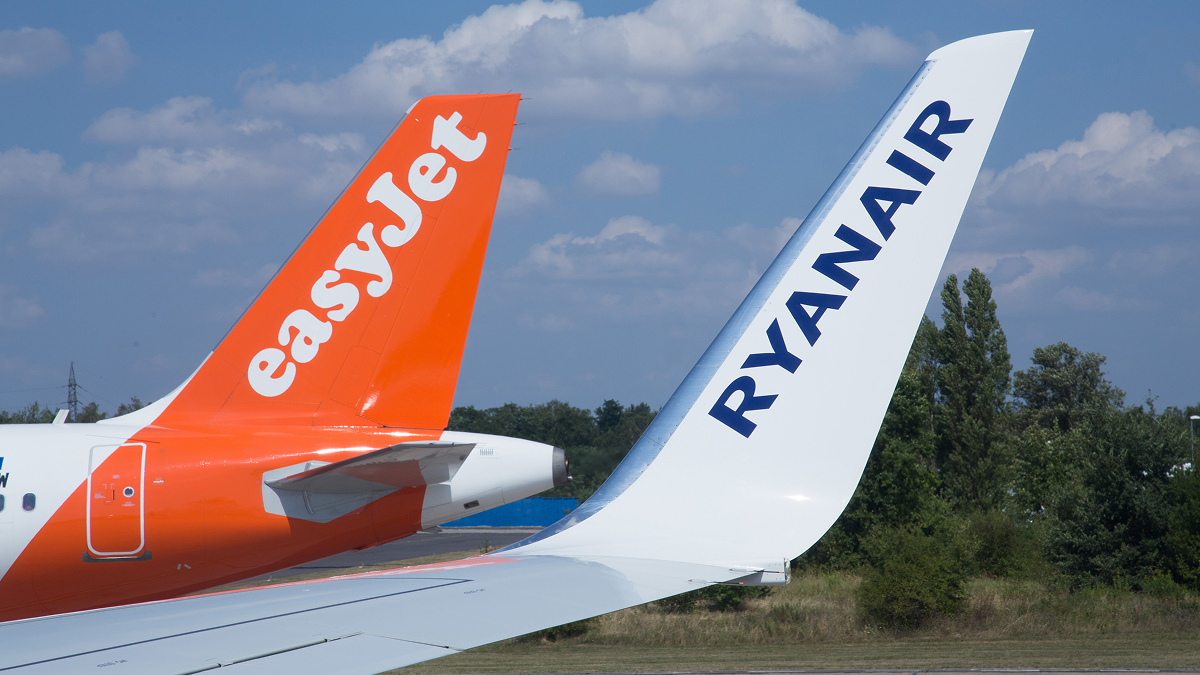
Ryanair beats BA and easyJet on safety, as Jet2 and Vueling land near the bottom. Credit: Mateusz Atroszko / Shutterstock
Budget airlines have taken three of the top five places in a new safety index of 20 European carriers, built on accident records from 2016 to 2025. The index’s authors say a low place doesn’t make an airline unsafe, but Jet2 and Vueling finishing near the bottom will still raise eyebrows on Spain routes.
Three of the top five are budget airlines
Greek carrier Aegean Airlines came out on top of the 2026 European Airline Safety Index with a score of 89 out of 100, with Ryanair close behind on 86 and Austrian Airlines third on 85.5.
Norwegian (85) and SunExpress (84.5) complete the top five, which means three of the five best-scoring airlines are low-cost carriers. Ryanair dropped just two points on its accident record, for two non-fatal accidents in 2023.
Further down, British Airways shares sixth place with Air France and Iberia on 83.5, as easyJet finishes 12th on 82.
“Many travellers assume that a cheaper ticket means accepting more safety risk, but the data doesn’t support this,” Anton Radchenko, chief executive of AirAdvisor, told Euronews Travel. He added that the price of a ticket tells you “very little about how safe an airline is”.
Accident records count for 40 per cent of the score
The index was put together by AirAdvisor, a company that helps passengers claim compensation for delayed and cancelled flights. It compared the 10 largest low-cost and 10 largest traditional airlines in Europe, picked by how many flights they operated in 2025 according to Eurocontrol (Europe’s air traffic management body).
Each airline was scored across six areas. Its accident history from 2016 to 2025, taken from the International Air Transport Association’s (IATA) annual safety reports, makes up 40 per cent of the total points. Certification and audits count for 20 per cent, safety management systems (the internal reporting and flight-data checks airlines run day to day) for 15 per cent, then fleet age and pilot training for 10 per cent each and financial stability for the last 5 per cent.
That mix explains a few surprises too. British Airways, SAS and Eurowings all had perfect accident records over the decade, but still finished outside the top five once the other factors were added in.
Why a lower place doesn’t mean an unsafe airline
So it’s worth being clear on what the ranking can and can’t tell you. AirAdvisor itself said the index is “comparative and should not be read as a measure of whether any individual airline is safe or unsafe”, and it describes serious accidents in European commercial aviation as exceptionally rare.
Much of the scoring outside the accident record also relies on publicly available regulatory and company information rather than independent inspections, and the company hasn’t published a full category-by-category breakdown for every airline.
It’s also only 20 airlines being analysed, so carriers including Air Europa, TUI and Volotea, which fly plenty of Spain routes, weren’t assessed at all.
Where Jet2 and Vueling landed
The bottom of the table will catch the eye of anyone booked on a Spain route this winter. Barcelona-based Vueling, part of the same group as Iberia and British Airways, finished 17th on 77, with Jet2 18th on 73. SWISS was 19th on 72.5 and Turkish low-cost airline Pegasus last on 64.5.
AirAdvisor didn’t explain why exactly those airlines scored lower and which factors were the lowest scorers for each. However, the overall gap between budget and traditional airlines was small, with low-cost carriers averaging 79.2 against 82.8 for the traditional ones.
Budget airlines actually did better on aircraft, averaging 7.8 out of 10 for their fleet age and technical profile against 7.1 for older companies, with Wizz Air and Pegasus both getting full marks. As Radchenko put it, an older aircraft that’s properly maintained “can continue operating safely for decades”.
Why it’s not the same list as January’s ranking
It isn’t the first airline safety league table of the year either. In January, AirlineRatings’ annual global ranking named Turkish Airlines the safest full-service carrier in Europe and put easyJet fifth among the world’s low-cost airlines.
The two lists use different methods, so they don’t line up neatly, and neither tells you much about the disruption passengers actually run into on board. So if your usual airline sits lower than you’d hoped, AirAdvisor’s own advice is that it shouldn’t be read as unsafe, and the full table is on its website for anyone weighing up airlines before booking their next trip.
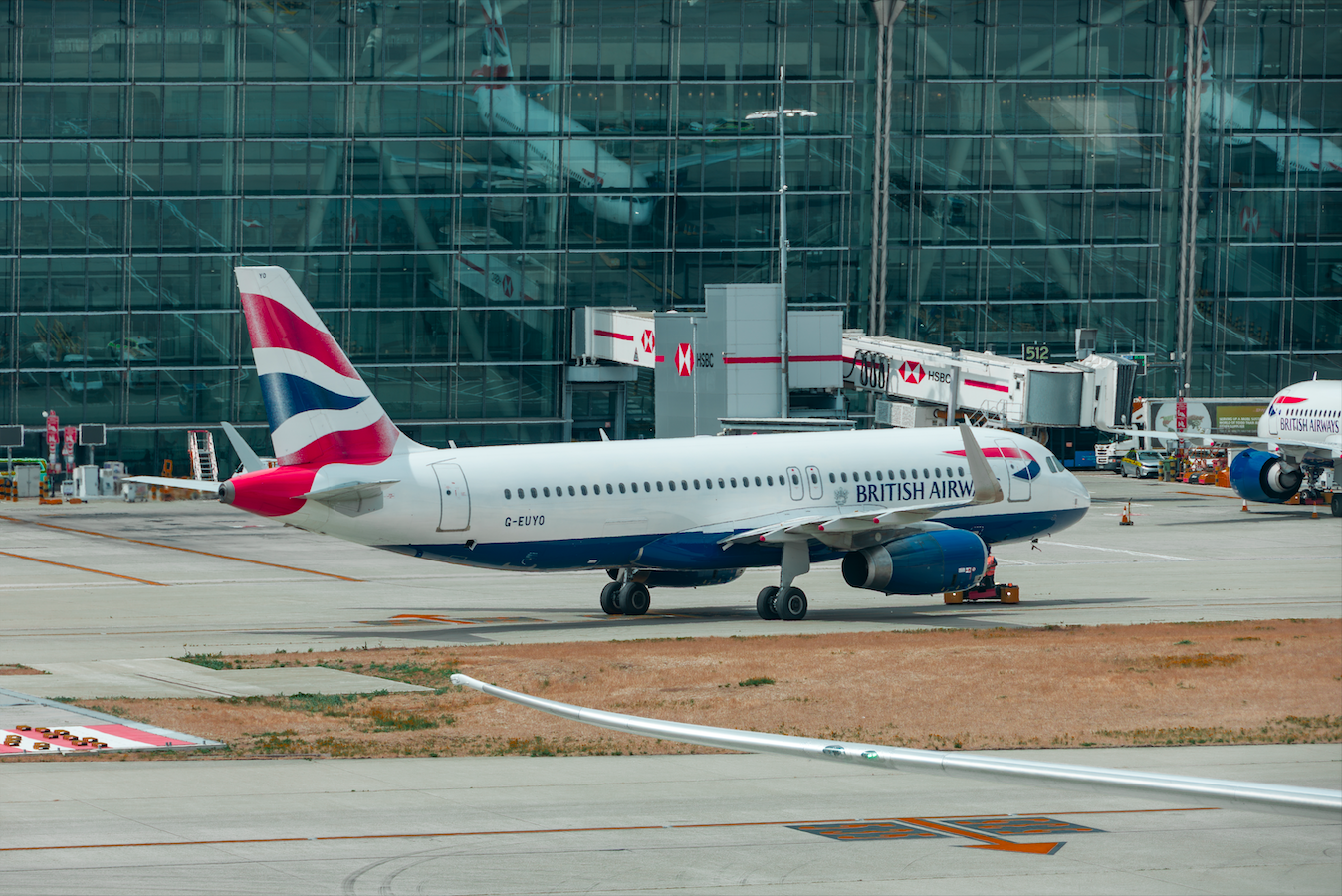
British Airways has confirmed that the aircraft experienced a technical issue. Photo credit: David McQ/Shutterstock
There are few things more unsettling on a flight than realising the aircraft is suddenly going down, and it is even worse when you are thousands of metres above the ground with no idea why. British Airways passengers experienced exactly that on Monday when their flight to Chicago lost more than 8,500 metres of altitude before turning around and heading back to London.
The Boeing 777 had been making its way across the Atlantic when the dramatic descent began, forcing the crew to declare an emergency and abandon the transatlantic journey. It comes just days after the extraordinary flydubai incident that saw another passenger flight plunged into an emergency over the Middle East.
British Airways plane drops 8,500 metres over Ireland
BA295 left London Heathrow at around 11:50am on Monday, October 5, bound for Chicago O’Hare on what should have been an eight-hour-and-40-minute journey. Around an hour after take-off, the Boeing 777 had reached a cruising altitude of approximately 37,000 feet when something went wrong over Ireland. Flight-tracking data showed the aircraft rapidly descending to around 9,000 feet, a difference of roughly 28,000 feet, or more than 8,500 metres, in a matter of minutes.
The crew also transmitted the 7700 emergency code, alerting air traffic control that the aircraft was experiencing a general emergency. Instead of continuing west towards Chicago, the pilots turned the aircraft around and began heading back towards London.
BA flight circles before returning to Heathrow
The Boeing 777 did not immediately return to Heathrow. After turning around, the aircraft spent several hours flying over the UK and surrounding waters, with tracking data showing it circling over the Bristol Channel and travelling over parts of Devon and south-west Wales before making its way back towards Heathrow.
The reason for the lengthy flight back was the amount of fuel still on board. BA295 had been prepared for a transatlantic journey, meaning it had far more fuel than it would need for a short return to London. The aircraft therefore spent time in the air burning fuel before landing. The flight eventually touched down safely at Heathrow at around 5pm, almost five hours after leaving London. The passengers had expected to arrive in Chicago, but instead found themselves back at the airport they had left that morning.
British Airways confirms technical problem
British Airways has confirmed that the aircraft experienced a technical issue, although the airline has not said what the problem was. A spokesperson said: “The safety of our customers and crew is always our top priority,” and confirmed that the aircraft landed safely after the pilots returned to Heathrow.
Passengers were able to leave the aircraft normally, with the airline saying its teams were working to get their travel plans back on track. Reports have also emerged of oxygen masks hanging from the ceiling inside the aircraft, with passengers reportedly using them during the incident. British Airways has not confirmed that a cabin pressurisation problem caused the descent, so the exact reason for the sudden loss of altitude remains unknown.
The 7700 code used by the crew does not reveal what went wrong. It is the standard transponder signal for a general emergency rather than a code identifying a particular technical failure. The airline has not yet provided further details about the fault that prompted the crew to abandon the journey to Chicago.
Passengers forced to abandon Chicago trip
For the passengers on flight BA295, the emergency brought their plans to Chicago to a sudden pause, with British Airways now working on how to get the passengers back on their original travel plans as quickly as possible. With several other Heathrow-to-Chicago services still scheduled, the passengers could potentially continue their journey later than planned, although the airline has not said which flights they will be offered we just hope that the next one doesn’t decide to take the plunge and lands them safely at their destination.


Frente Amplio Y Podemos Fracasan En Su Intento De Pactar Una Papeleta única Para El 29-N
Spain’s pet owners face fines of up to €200,000 for animal welfare offences
Texas man finds six live WWII grenades in box bought at estate sale


-

 Uncategorized2 weeks ago
F1 Bahrain Grand Prix will be live and FREE on TV this weekend
-
Latest2 weeks ago
Spain’s Government Dealt Huge Blow As MPs Reject Housing Crisis Laws
-
Blackout preparedness2 weeks ago
Brussels takes action against Spain over failure to update blackout plan
-

 Uncategorized2 weeks ago
Lewis Hamilton F1 wish could come true as stunning plans for new track revealed
-

 Foreign demand3 weeks ago
Market Snapshot: German Market In Q2 2026
-

 Housing access / crisis / affordability2 weeks ago
Radical Housing Decrees Defeated As Snap Election Talk Grows
-
EU2 weeks ago
EU nicotine crackdown sparks warning that ex-smokers could be driven back to cigarettes
-
Latest1 week ago
The Changes To Spain’s IRNR Non-Resident Property Tax In 2027