Connect with us

%

Ten Hair Transplant Clinics In Turkey Worth Researching In 2026

Published

on

ten-hair-transplant-clinics-in-turkey-worth-researching-in-2026

Istanbul has become one of the busiest destinations in the world for hair restoration, drawing patients from the UK, Europe, the Middle East, and North America. Choosing well requires more than comparing graft counts and package prices. The donor area determines what is realistically possible. Hairline design determines whether the result looks natural. And post-operative communication determines how supported a patient feels once they are back home.

What to ask before shortlisting any clinic

Two questions separate thorough consultations from superficial ones. The first is how the donor area will be assessed, density, hair calibre, scalp characteristics, and long-term capacity all matter before any graft number is quoted. The second is how the hairline will be designed. Age, facial structure, forehead height, and natural growth direction all influence where a new hairline should sit. A line drawn too low or too straight will look unnatural as the patient ages. Patients should also confirm who performs each stage of the procedure, since pre-operative assessment, design, harvesting, and implantation can involve different team members.

Ten clinics patients compare

  1. Aslı Tarcan Clinic
    Works with a substantial proportion of international patients, with initial assessment before arrival, treatment planning, accommodation and transfer coordination, and post-operative follow-up included depending on the package. Head physician Dr. Bülent Catikkas is named on the site. Offers FUE, Sapphire FUE, DHI and ARTAS robotic DHI, and accepts women’s, unshaved and Afro-textured cases. Publishes an indicative price range and a four-day itinerary, making flight planning straightforward.
    Ask about: donor assessment, hair transplant Turkey and long-term planning for future hair loss.
  2. Smile Hair Clinic
    Founded in 2018 by co-founder surgeons Dr. Mehmet Erdoğan and Dr. Gökay Bilgin. Runs doctor-led consultations offering FUE, DHI and Sapphire FUE. Maintains a patient education library worth reading regardless of which clinic you choose. Package tiers differ in how much of the procedure the named surgeons perform personally.
    Ask about: which surgeon performs which stages at each package tier.
  3. Bosphoria Hair Istanbul
    An Istanbul clinic offering restoration to international patients. A useful consultation should address how available grafts will be distributed for maximum visible effect. For many patients, rebuilding the frontal frame creates a stronger result than spreading grafts thinly across every thinning area. Hair direction is also worth raising, particularly around the temples where small differences in implantation angle become visible once the hair grows longer.
    Ask about: graft distribution priorities and implantation direction planning.
  4. Million Hair Center
    A good consultation here should address not only the current pattern of loss but what may happen in the future. Hair transplantation moves follicles into thinning areas but does not stop untreated native hair from continuing to thin. Donor management should therefore be viewed as a long-term decision, and the hairline design should reflect that — a very low line requires more donor hair and may become harder to maintain naturally if loss progresses.
    Ask about: long-term donor planning and how the design accounts for potential future loss.
  5. HWT Clinic
    Patients should ask why a particular graft number is being recommended, since a higher count does not automatically produce a better result. Hair thickness, existing density, scalp coverage, and the actual size of the thinning region all influence how many grafts are useful. Post-operative expectations are equally worth discussing in advance — early redness, temporary shedding, and the gradual nature of new growth can cause unnecessary concern if the patient is unprepared.
    Ask about: the reasoning behind the graft recommendation and the expected recovery timeline.
  6. Sapphire Hair Clinic
    A well-established Istanbul centre whose name reflects its use of sapphire blade instrumentation. The name of a technique alone does not determine whether a result will look natural, hairline design, density transitions, and growth direction all play equally important roles. Patients benefit from asking why a recommended method suits their specific donor area and hair type, rather than simply accepting the technique name at face value.
    Ask about: why the recommended technique is appropriate for your individual case.
  7. Estefavor
    Donor preservation is a key subject to raise here. If too many grafts are removed from a concentrated area, the scalp can appear uneven or sparse once healed, particularly noticeable in shorter hairstyles. A balanced extraction pattern is as important as creating density in the recipient area. Patients should also discuss where density will be strongest, since the frontal zone typically benefits from more careful concentration.
    Ask about: extraction pattern planning and how overharvesting will be avoided.
  8. HairNeva
    A thorough initial assessment should explain how donor capacity and recipient needs relate to one another for the individual patient. Two people with similar-looking hairlines can require very different plans because of differences in hair thickness, scalp contrast, and donor density. A thoughtful hairline design will also avoid making the transition too uniform, subtle natural irregularities and gradually increasing density typically produce a more convincing result.
    Ask about: how your specific hair characteristics will influence the density distribution plan.
  9. Nihat Tüney (Worldplast)
    A named physician whose practice covers hair restoration alongside broader plastic surgery work. Hairline shape and temple design are particularly important here because they determine how the transplant frames the entire face. Natural hair does not grow in one perfectly even row, subtle variation in the frontal zone and increasing density further back helps the result blend convincingly. Implantation direction is a specific question worth raising.
    Ask about: temple design, implantation direction, and the surgeon’s approach to the frontal hairline.
  10. BUK Clinic
    Patients should approach the process understanding that the procedure itself is not the finish line. Scabbing, temporary redness, and a shedding phase before new growth begins are all normal. New hair develops gradually over the following months, and the mature result is generally clearer after twelve months than after three. Patience is a necessary part of the treatment journey.
    Ask about: the expected recovery timeline and who to contact with questions after returning home.

Planning your trip

Istanbul is typically a three to four-hour flight from Spain, the UK, or elsewhere in Europe. Most clinics recommend allowing three to four days: arrival and consultation, the procedure itself, then a follow-up check before flying home.

Patients returning to coastal Spain should keep the scalp out of direct sun for the first month, avoid seawater and pool chlorine until cleared by the clinic, and follow written aftercare instructions carefully. Most standard travel insurance policies exclude planned medical procedures, so specific cover should be arranged before departure.

Frequently asked questions

How much does a hair transplant in Turkey cost?
Costs vary depending on the clinic, team experience, graft requirements, and what is included in the package. The lowest quotation should not be the only deciding factor, donor preservation, natural hairline planning, and post-operative communication all deserve equal consideration.

What makes a hair transplant look natural?
A soft design with subtle irregularities and gradually increasing density typically blends better than a very low or perfectly straight line. The transition from the frontal edge into thicker hair behind it should look graduated rather than abrupt.

When will I see the final result?
Some transplanted hairs may shed in the weeks after the procedure before new growth begins. Density increases gradually, and the mature result is generally visible between twelve and eighteen months after the procedure.

Can women have a hair transplant?
Some women are suitable candidates. The cause and pattern of thinning should be assessed carefully, since female hair loss can be more diffuse than typical male pattern baldness.

This article is for informational purposes only and does not constitute medical advice. Hair transplantation is a surgical procedure. Always consult a qualified medical professional before proceeding with any surgical treatment abroad. Clinic profiles reflect publicly available information and are not endorsements.

%

Enter Gibraltar’s New High-Tech Watchmen

Published

on

enter-gibraltar’s-new-high-tech-watchmen

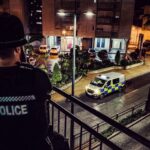
Gibraltar police using latest monitoring equipment Credit: Royal Gibraltar Police

A Moroccan man banned from entering Gibraltar since 2019 has been arrested after being identified by police facial-recognition technology, while a second man has been detained over an allegedly fake British passport at Gibraltar Airport.

Details of both cases were reported by the Royal Gibraltar Police, with the arrests highlighting how Gibraltar’s police and border officers continue to enforce immigration rules following the removal of the old border fence.

The first man, a 40-year-old Moroccan national identified as M.B., was flagged by the Royal Gibraltar Police’s live facial-recognition system on Sunday, October 11, in the frontier area.

Officers from the force’s Response Team arrested him after the system identified him. He was charged with being in Gibraltar in breach of an entry ban, contrary to the territory’s Immigration, Asylum and Refugee Act.

Man was extradited to Spain in 2019

The man was already known to Gibraltar police. In October 2019, he was extradited to Spain under a European Arrest Warrant issued in connection with Operation Iceberg.

The joint investigation by the Royal Gibraltar Police and Spain’s National Police dismantled an organised criminal group involved in the illegal trafficking of migrants between Morocco, Gibraltar and Spain.

An entry ban was imposed on the man following his unlawful presence in Gibraltar. He appeared before the Magistrates’ Court on Tuesday, October 13, and remains on remand at Windmill Hill Prison. He is due to return to court on Tuesday, October 20.

Pakistani man arrested over fake British passport

In a separate case, a 22-year-old Pakistani national was arrested at Gibraltar International Airport on Thursday morning, October 15.

The man, identified as M. A. H., allegedly presented a counterfeit British passport bearing his personal details to officers from the Gibraltar Borders and Coastguard Agency during departure immigration checks.

He was preparing to board a booked flight to the UK when officers detected irregularities on the document’s biometric-data page. Further checks confirmed that the passport was fake. He was taken to New Mole House police station, questioned and charged with possession of a forged or irregular passport, as well as being in Gibraltar without the required legal status.

After appearing before the Magistrates’ Court on Friday, October 16, he remains in custody at Windmill Hill Prison until his next court appearance on October 23.

Security continues after the Verja’s removal

The two cases go to show that the removal of Gibraltar’s old frontier barrier has not ended immigration enforcement. The new UK-EU arrangements took effect on July 15, 2026, bringing the physical Verja to an end while leaving police and border officers responsible for identifying people suspected of breaking the law.

In one case, facial-recognition technology alerted police to a man subject to an entry ban. In the other, airport checks exposed an allegedly counterfeit passport. Both men have been charged and remain in custody pending further court proceedings.

Continue Reading

%

Climber Rescued Near Murcia Summit After Hands Go Numb During Ascent

Published

on

climber-rescued-near-murcia-summit-after-hands-go-numb-during-ascent

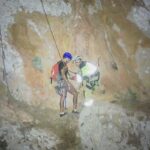
Firefighters rescue stranded climber near Peñas Blancas summit after dark. Photo Credit: Cartagena City Hall

A climber was rescued by firefighters after becoming stranded just 30 metres from the summit of Peñas Blancas in the Region of Murcia, when numbness in his hands left him unable to continue his ascent. The rescue took place after 9:00pm on Wednesday, October 14, when the man was climbing alongside a companion on the XL route, a popular climbing section of the rocky mountain near the Costa Calida municipality of Cartagena.

Stranded near the summit after hands went numb mid-climb

According to reports, the climber managed to reach a ledge where he could remain safely secured while his companion contacted the emergency services for help. Firefighters from Cartagena City Council leapt into action in response to the emergency, accessing the difficult-to-reach area via the Rambla de la Víbora. The rescue team then spent approximately an hour walking to the location, carrying the equipment needed to bring the stranded climber to safety.

Firefighters launch a difficult night-time rescue: Two men brought to safety

Given the challenging terrain and the darkness, rescuers first had to establish the man’s precise position before planning their approach. A drone was deployed to help locate him and allow the team to assess the situation. Firefighters subsequently set up a rescue operation using ropes and anchoring systems to reach the climber and guide him safely to the summit.

Once the first man had been brought to safety, the rescue team also helped his companion leave the area. Fortunately, neither of the two men suffered serious injuries during the incident. Both were reported to have climbing federation licences and were able to leave the area safely following the operation.

The challenges of climbing Cartagena’s Peñas Blancas

Peñas Blancas, which rises to 627 metres above sea level, is the highest peak in the municipality of Cartagena. Its white rock face overlooks the El Cañar gorge and lies close to the Mediterranean coast, between Isla Plana and La Azohía. Although the mountain is not particularly high, its steep rock faces and difficult access can make climbing challenging, especially when an emergency occurs after dark.

The incident, once again, emphasises the important role played by emergency first responder crews in Murcia, who are regularly called to assist people experiencing difficulties in the region’s mountainous and coastal landscapes.

Continue Reading

%

Art For Animals: El Soto Event Raises €1,762 For Two Charities

Published

on

art-for-animals:-el-soto-event-raises-e1,762-for-two-charities

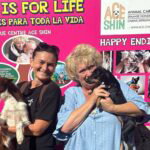
Oskana handing the proceeds to Fabienne. Credit: MO

An art exhibition, handmade jewellery, dancing and a visit from some very special four-legged guests helped raise more than €1,700 for two animal charities at a community event held at El Soto last Saturday, October 10.

Organised by artists and animal lovers Oksana Kocuriene, known as Roxanne, and Lesley Lawrence, the mini-event brought together local residents, creative talents and volunteers united by their love of animals. The event raised €881.25 for ACE|SHIN (Animal Care España|Spaanse Honden In Nood) and the same amount for Donkey Dreamland, bringing the combined total to €1,762.50. Volunteers also collected a further €189 through donations and sales of charity cards and calendars.

Helping abandoned and neglected animals

ACE|SHIN is an animal rescue organisation working in southern Spain to help dogs and cats that have been abandoned, neglected or mistreated. Founded in 1999, it provides shelter, food and veterinary treatment for animals in need, with the ultimate goal of finding them loving permanent homes.

The charity operates shelters in Mijas Costa and Algeciras, caring for hundreds of dogs and cats. Some arrive as strays, while others have been abandoned by their owners or rescued from situations where their lives were at risk. ACE|SHIN also promotes animal welfare, responsible care and sterilisation programmes to help prevent further suffering. Its work relies on donations, volunteers and supporters rather than Spanish government subsidies. More information about its rescue work and animals available for adoption can be found at www.ace-charity.org. Donkey Dreamland, the other beneficiary, provides care for donkeys and other animals in need.

Local artists put their talents to good use

Five artists contributed to the exhibition, with Roxanne and Lesley joined by Kelly Glithro, Anfisa Zinchenko and Margaritha Meus. Visitors could also browse handmade jewellery and macramé created by Gabriela Cervantes and Angelique Roelse-Vis, who donated some of their sales proceeds to the fundraising effort. Two students from Ireland, Ksenija and Anna, helped throughout the day by selling books and golf balls to raise money for the charities. Later in the afternoon, Marisa and Niko organised dance lessons, adding another activity to a programme designed to bring people together for a good cause.

Volunteers from ACE|SHIN and Donkey Dreamland ran a small market, giving visitors the chance to find out more about their work and support the animals in their care. The donkeys themselves were also present, providing a special attraction for guests.

Community spirit made the difference

Organisers thanked everyone who contributed, from the artists and stallholders to the volunteers and visitors who attended. For those involved, the money raised was about more than the final figures. It was also a reminder of what a community can achieve when people contribute their time, skills and enthusiasm to a shared cause. Their message was one of gratitude to everyone who helped make the day possible, with the hope that similar community efforts will continue to support animals in need.

Continue Reading

Trending

Copyright © 2017 Spanish Property & News