
House prices
Why Spain Is Still One Of Europe’s Hottest Property Markets

Spain continues to outperform most of Europe when it comes to house price growth, underlining just how strong demand remains for Spanish property despite affordability pressures and political noise around housing.
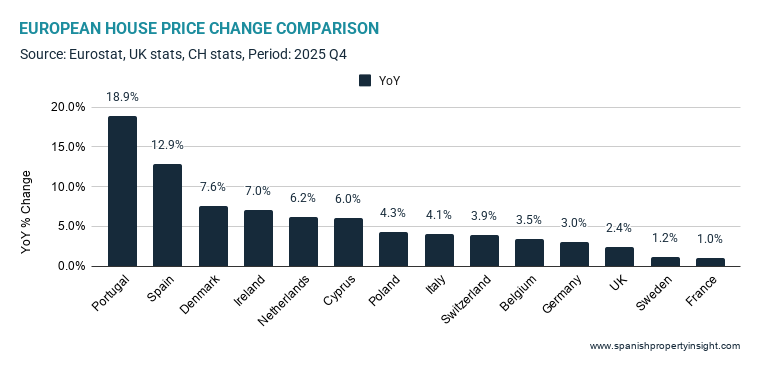
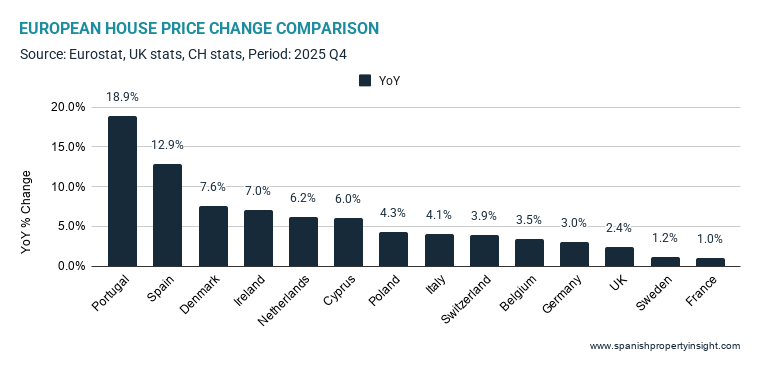
The latest European house price data for Q4 2025 shows Spain near the top of the continental rankings for annual price growth, beaten only by Portugal in this comparison of major markets (see chart above).
According to data from Eurostat and national statistics offices, Spanish house prices were up 12.9% year-on-year in Q4 2025, comfortably ahead of countries like Germany (3%), France (1%), Italy (4%), and the UK (2.4%).
Only Portugal, with annual growth of almost 19%, posted stronger gains in this group of countries.
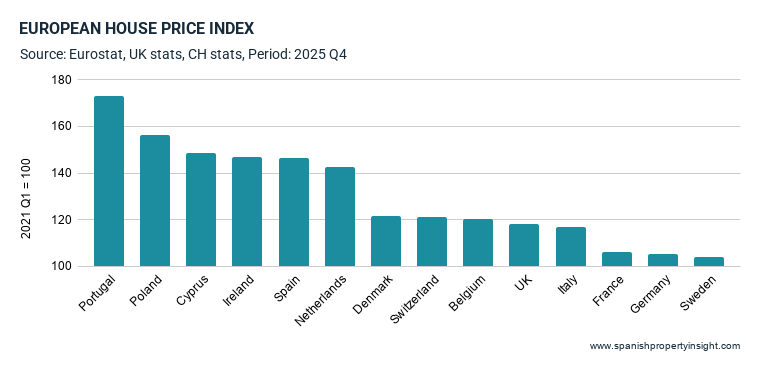
Looking at the bigger picture over five years, Spain has also been one of Europe’s strongest performers. Since Q1 2021, Spanish house prices have risen by around 46%, meaning Spain has almost kept pace with Ireland and Cyprus, and significantly outperformed France, Germany, Italy, Sweden, and the UK.
That tells an important story about the European property market since the pandemic.
Southern Europe has become Europe’s property growth engine
The strongest performers over the last five years are typically in Southern and Eastern Europe:
- Portugal: +73%
- Poland: +56%
- Cyprus: +49%
- Spain: +46%
Meanwhile, some of Europe’s traditional heavyweight markets have barely moved:
- Sweden: +4%
- Germany: +5%
- France: +6%
Germany and Sweden, which both experienced housing downturns after interest rates surged in 2022, still look surprisingly weak in five-year terms.
France stands out in particular. Once viewed as one of Europe’s safest and most stable housing markets, French house prices are now barely above where they were five years ago. That matters for Spain because France is both a competitor destination and an important source of demand for Spanish property, especially in Catalonia and the Costa Brava.
What does this mean for Spain?
For one thing, Spain increasingly looks like a relative winner in the European lifestyle and second-home market.
Compared to France, Germany, the UK, or Sweden, Spain offers:
- Better climate and lifestyle appeal
- Stronger economic momentum
- Higher inflation-driven nominal growth
- Relatively attractive prices in many regions
- A booming tourism economy supporting rental demand
That helps explain why demand from buyers in countries like the Netherlands, Germany, and the UK has remained resilient despite higher interest rates and economic uncertainty.
The Dutch housing market has also boomed over the last five years, with prices up more than 42%, potentially giving Dutch buyers plenty of housing equity to recycle into holiday homes in Spain.
British buyers, meanwhile, continue to come from a market that has seen much weaker growth, but where Spain still offers compelling lifestyle value compared to southern England.
Germany is perhaps the most interesting case. German house prices have barely risen in five years, yet Germans remain one of the biggest groups of foreign buyers in Spain. That suggests lifestyle motivations may now matter more than pure investment logic for many northern European buyers.
Portugal still leads the Iberian boom
If there’s one country making Spain look restrained, it’s Portugal.
Portuguese house prices have surged 73% in five years and almost 19% in the last year alone. That raises questions about sustainability and affordability, especially in Lisbon and the Algarve, where international demand and limited supply have driven prices sharply higher.
Spain looks comparatively balanced by comparison, though some local markets—especially Madrid, the Balearics, Málaga province, and parts of the Costa del Sol—are beginning to show similar dynamics.
Taken together, the latest figures suggest that Southern Europe remains the big winner in Europe’s post-pandemic property landscape, with Spain firmly in the leading pack rather than lagging behind it.













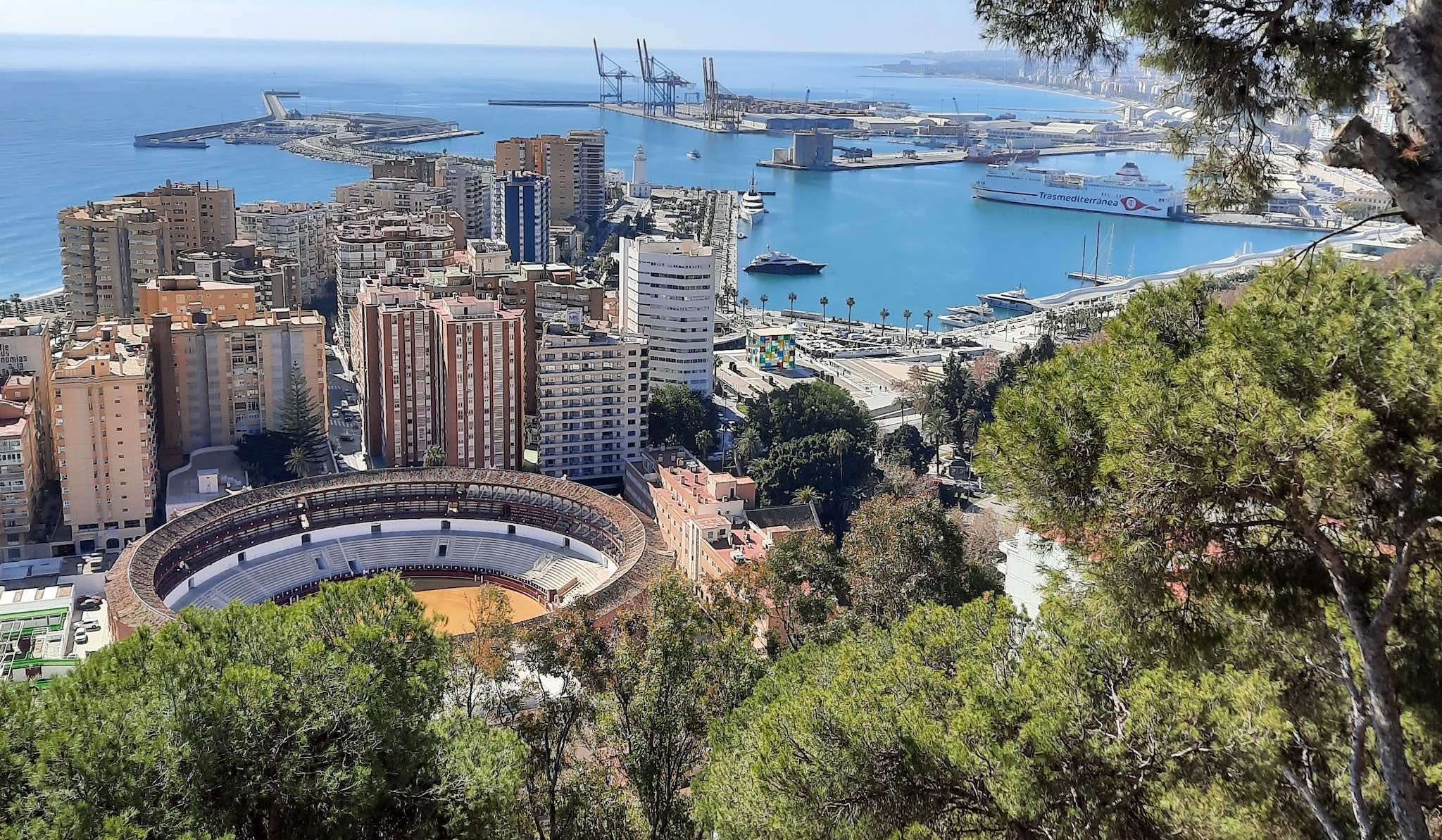
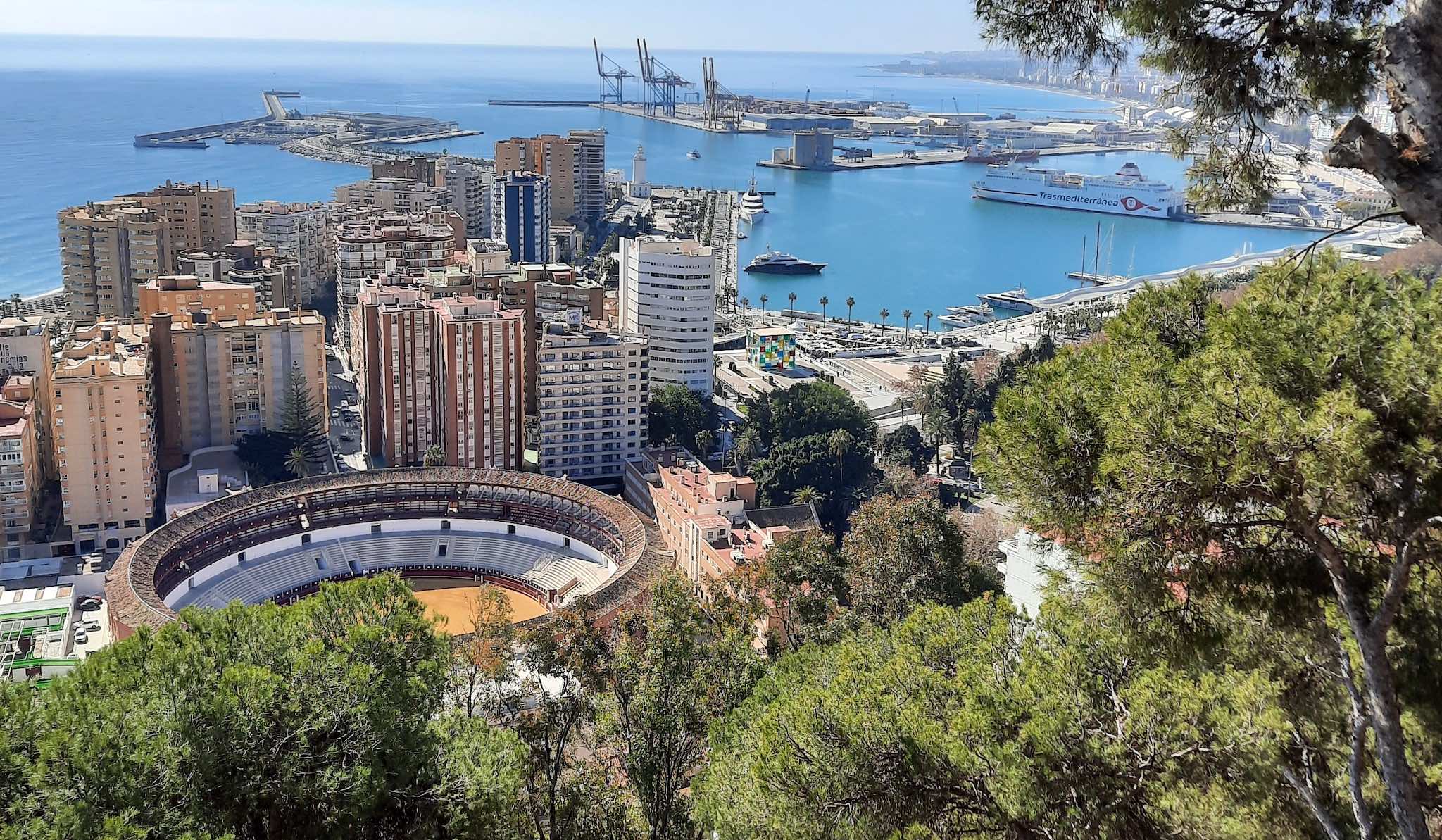
Not all property markets follow the same logic—and in coastal Andalusia, the most expensive homes are often nowhere near the provincial capital.
When people think about high property prices in Spain, they tend to assume the most expensive homes are found in big cities—especially provincial capitals. That’s often true, but along the Andalusian coast the pattern breaks down in a way that tells you a lot about how the market really works.
In all five coastal provinces of Andalusia, there are municipalities where the average price per square metre is higher than in the capital, according to data from the Notaries. The drivers? Tourism, foreign demand, and pockets of high-end residential development.
Málaga leads the way
Málaga is the standout case. The provincial capital, with an average price of €2,860/m², is the most expensive of all Andalusian capitals—but only ranks ninth within its own province.
Ahead of Málaga city are familiar Costa del Sol hotspots like Marbella (€4,300/m²), Fuengirola (€3,656), Nerja (€3,556), Estepona (€3,168), Torremolinos (€3,111), and Benalmádena (€2,971). Even inland municipalities like Benahavís (€4,156) and Ojén (€3,083), closely tied to luxury coastal developments, command higher prices.
This is a clear reminder that in Málaga province, the real pricing power lies along the coast and in prime second-home markets—not in the administrative centre.
The same pattern repeats elsewhere
Cádiz follows a similar trend. The capital sits at €2,371/m², but is outpriced by coastal towns like Tarifa (€3,160), Conil de la Frontera (€2,828), and San Roque (€2,644).
In Huelva, the gap is even more pronounced. The capital averages €1,316/m², well below Punta Umbría (€1,694), Isla Cristina (€1,526), and Ayamonte (€1,435), all of which benefit from their appeal on the Costa de la Luz.
Granada is a partial exception, largely due to geography. Its capital lies around 65 km inland, and only one coastal town—Almuñécar (€2,492)—surpasses Granada city (€1,828).
Almería also fits the broader pattern. The capital (€1,512) is cheaper than several western coastal towns including Pulpí (€1,958), Mojácar (€1,875), and Vera (€1,599).
What this means for buyers and sellers
The takeaway is simple but important: in Spain, location value is not defined by administrative hierarchy but by lifestyle appeal and international demand.
Coastal towns with strong tourism appeal, established foreign buyer markets, and high-end developments can easily outprice provincial capitals. For buyers, this means you shouldn’t assume the “main city” sets the benchmark. For sellers, it highlights the importance of understanding your micro-market—not just the broader regional picture.

E

Max Verstappen delivers sensational lap to warm up for iconic Nurburgring showdown:

S

Dinero En Efectivo Guardado En Casa Y La Devolución De Los Gastos Del PSOE: La Expareja De Koldo Protagoniza La Cuarta Jornada Por El ‘caso Mascarillas’

Última Hora De La Guerra De Estados Unidos E Israel Contra Irán, En Directo | EE UU Asegura Que Dos De Sus Buques Militares Han Cruzado Ormuz Para Desminar El Estrecho E Irán Lo Niega

Mercedes F1 star Kimi Antonelli feeling the pressure after Italian heartbreak


-
 Caso Koldo4 weeks ago
Dinero En Efectivo Guardado En Casa Y La Devolución De Los Gastos Del PSOE: La Expareja De Koldo Protagoniza La Cuarta Jornada Por El ‘caso Mascarillas’
-
 Ataque contra Irán4 weeks ago
Última Hora De La Guerra De Estados Unidos E Israel Contra Irán, En Directo | EE UU Asegura Que Dos De Sus Buques Militares Han Cruzado Ormuz Para Desminar El Estrecho E Irán Lo Niega
-
 Uncategorized4 weeks ago
Mercedes F1 star Kimi Antonelli feeling the pressure after Italian heartbreak
-
DGT4 weeks ago
DGT launches week-long speed crackdown on Spanish roads
-

 New Developments3 weeks ago
How To Get A Tourist Rental Licence In Andalusia (Spain) – Step-By-Step Guide 2025
-

 Andalucia4 weeks ago
La Policía Detiene A Un Hombre En Córdoba Por El Asesinato De Su Pareja
-
Cala Llenya4 weeks ago
3 bedroom Villa for sale in Cala Llenya with pool – € 2,680,000
-

 Elecciones4 weeks ago
Péter Magyar, El Hombre Que Admiraba A Orbán Y Acabó Con él