
ElPais
My Testosterone Levels Are Low… So What? Why The ‘softboy’ Is Suddenly Being Celebrated

Just a few days ago, the magazine InsideHook published a rather unusual piece of journalism. Written by New York writer Jaed Coffin, it’s essentially a tribute to the average man as an alternative to the Nietzschean superman of social media. The essay is also an exhortation to stop going to the gym so much and to gracefully accept the defeat that comes with the passage of time.
Coffin intended to weigh in on a never-ending controversy: the supposed masculinity crisis in the United States, as well as the social and political consequences attributed to it. But his piece veered off course and ended up becoming an exercise in lateral thinking, with a refreshingly simple thesis: so what if masculinity – at least, hormonal masculinity – is actually in decline? And, to go a step further: what’s wrong with having low testosterone?
Coffin allows himself such a dialectical shift because he belongs to a generation that came of age at the turn of the century. He’s among those who studied at progressive universities on the East Coast. As he himself explains, he never wanted to be a gladiator in ancient Rome, break a world record for burpees, or defend the Battle of Thermopylae while baring his chest. Unlike members of the manosphere, he’s not obsessed with halting the decline of the anabolic steroid produced by men’s genitals.
Moreover, the writer admits that, today, 15 years after regularly hitting the gym, he attributes some of his most commendable personal qualities – such as his tolerance, his lack of aggression and his sense of humor – to low testosterone levels (which, incidentally, he doesn’t seem to have measured).
It’s not an urban legend
“Where has all that lost testosterone gone?” asked an article published by The Atlantic this past August. It’s worth clarifying some concepts: beyond the biased interpretations and unfounded sociological analyses, the decline of the male sex hormone is a proven fact. Just a few months ago, in London, UK, one of the main studies presented at the annual meeting of the European Society of Human Reproduction and Embryology (ESHRE) quantified the phenomenon: the average testosterone level in men fell by 54% in just 47 years, between 1972 and 2019.
Previous studies had yielded similar results. However, some analysts have attributed such striking data to methodological problems.

The large-scale study just presented is endorsed by Dr. Hagai Levine, a fertility expert who co-authored a pioneering analysis nine years ago, demonstrating that sperm concentration had fallen by more than 50% in just four decades. Furthermore, this time around, the sample size is very large (around 118,000 men of reproductive age from five different countries: the United States, Brazil, Israel, Finland and Denmark). The gradual decline is particularly evident after the year 2000, when the methodological and measurement issues pointed out by some experts had already been corrected.
According to Levine, we are facing a “major crisis in male reproductive health” and “it’s not given enough attention.” In his opinion, this could be attributed to lifestyle factors that are prevalent in high-income 21st-century societies, especially stress, overeating and a lack of exercise. Individuals struggling with obesity and those with early-onset diabetes are the most likely to suffer from male hypogonadism – that is, abnormally low testosterone levels. However, a significant drop in hormone levels is also observed in the rest of the population.
Let’s clarify a concept again: hypogonadism, or severe testosterone deficiency, is a medical condition that some males experience from puberty, while others develop it during the transition to middle age (roughly coinciding with andropause, colloquially referred to as “male menopause”). In the latter case, it usually produces a variety of initial symptoms, such as lack of energy, loss of libido, or depressive states. The uncontrolled progression of hypogonadism frequently leads to infertility, erectile dysfunction, loss of body hair, decreased muscle mass, breast tissue growth and bone loss.
In other words, testosterone deficiency tends to cause a series of disorders that can be perceived as a gradual loss of “virility” – the attributes we traditionally and culturally ascribe to masculinity. But acute hypogonadism (that is, at levels that cause discomfort and may make hormone treatment advisable) affects less than 1% of men under the age of 40 and between 2% and 6% of those who have already reached andropause.
The decline in average testosterone levels, on the other hand, is a global trend, affecting most men. And yet, its significance is primarily statistical: the fact that men in the 21st century have less of this hormone than our fathers and grandfathers doesn’t imply that we’re experiencing a rampant hypogonadism pandemic, nor that we’re rapidly becoming feminized. And it doesn’t mean that the fertility of our species is in danger in the medium term.
It’s not a Biblical curse
We now enter the very slippery terrain of cultural perceptions. In the United States, the political consequences of the so-called “masculinity crisis” have been discussed for at least 30 years now.
The scope of the debate is somewhat blurred. But during the initial phase, there was a lot of speculation around the disruptive effects of so-called “toxic masculinity.” This involved young men who, faced with a new context, given the partial dismantling of patriarchal barriers, felt disoriented, unsure of what social role they should adopt or what was expected of them.
These kinds of theories were by no means the exclusive domain of the new waves of feminism. Even the conservative theorist Francis Fukuyama considered the rising crime rates of the late-1990s to be reflective of the “failure to socialize young men by giving them breadwinning, fatherly role models.”
Around that time, another academic – this time a progressive one, the writer Beatrix Campbell – argued that the mass vandalism occurring in cities like Liverpool and Los Angeles was a direct consequence of the consolidation of a “tribe” of violent offspring of postmodern capitalism. She described “the vanity of fragile masculinity with nothing but time on its hands and a borrowed car to break into.”
Years later, however, came the fierce backlash against these theories. The narrative of “fragile masculinity” began to be seen by some opinion leaders as an attempt to emasculate and domesticate young men, forcing them to conform to a series of social behavior patterns that are contrary to their nature.
In the words of Ana Yara Postigo, a researcher at the University of Málaga in Spain, there’s recently been a self-serving attempt to link the crisis of masculinity to another supposed phenomenon: “male loneliness.” Apparently, “men today are more isolated, have fewer friends and feel more emotionally disoriented than in the past.” Hence, in line with this premise, increasingly radical and aggressive narratives of male empowerment are proliferating on social media, in podcasts and magazines, and via other more or less niche channels.
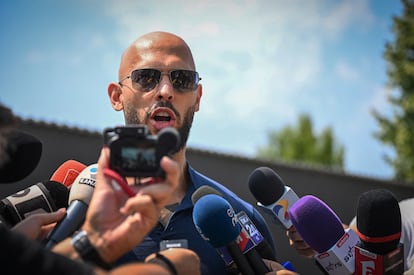
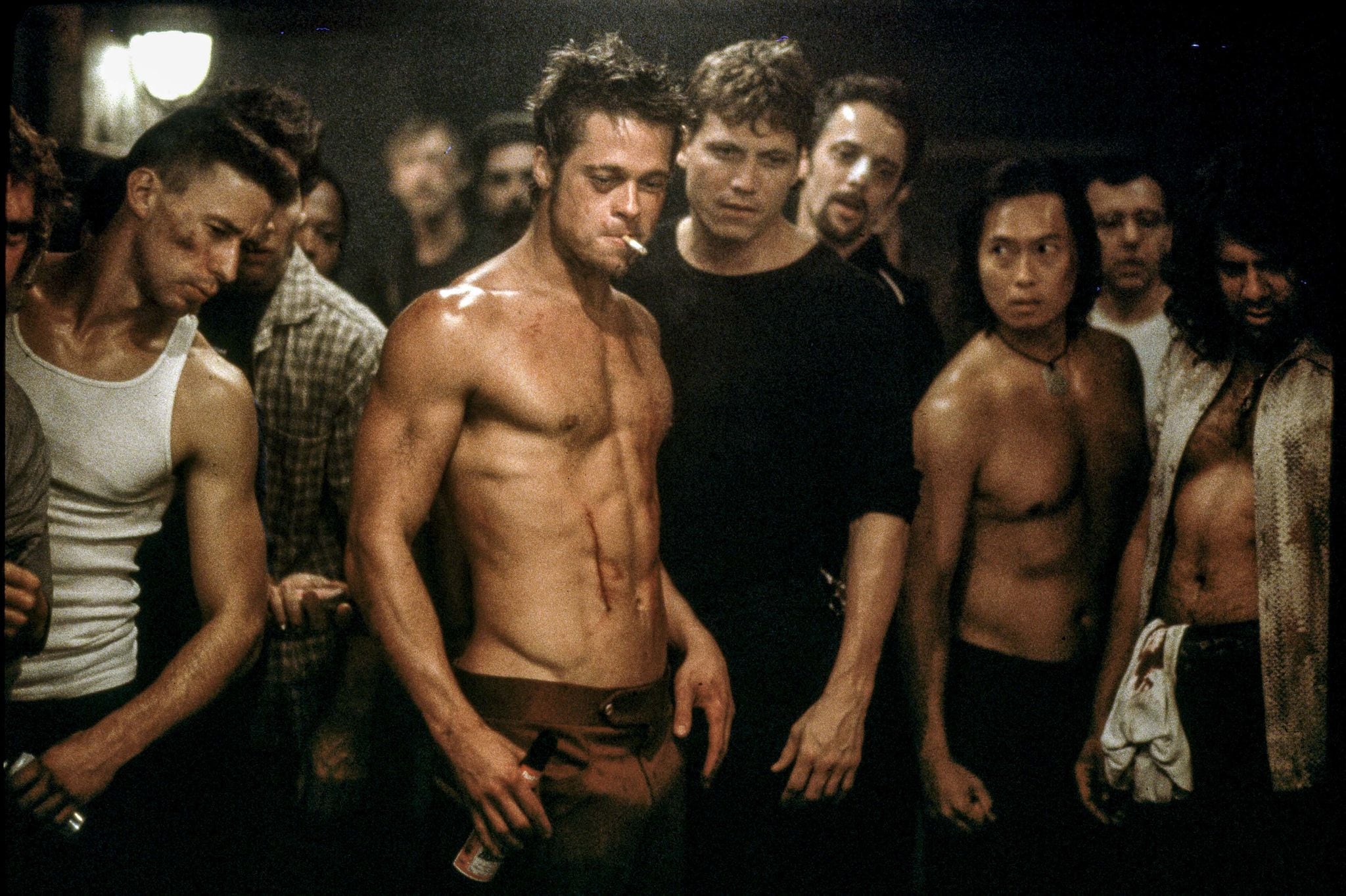
This is the case with the influencer Andrew Tate and his recipes for resisting what he perceives as the “tyranny” of feminism, while developing a mutual support network among men. In more ways than one, this harkens back to the dystopia of Fight Club (1999). Also, speaking from more conciliatory positions, there’s Scott Galloway, who in Notes on Being a Man (2025) offers practical tips for young men, in an era that’s seeing a transition toward a series of “different” masculinities (something he perceives as not necessarily positive).
It was only a matter of time before public figures who are heavily inclined toward conservative views, such as Donald Trump’s secretary of health, Robert F. Kennedy Jr., connected the dots to conclude that masculinity is in crisis because testosterone levels are declining (or vice versa?). And they think that the United States, consequently, needs an urgent “remasculinization” treatment that isn’t merely ideological, but also hormonal.
In a famous conversation with the podcaster Joe Rogan, the sitting vice president of the United States, J.D. Vance, dared to claim that there’s a direct correlation between conservative voting and high testosterone levels. Rogan served up the conclusions on a silver platter by suggesting that maybe healthier young men vote for Trump, while the effeminate and sickly ones opt for his Democratic rivals. This goes back to the biased logic of the 1930s, when magazines like Newsweek and Time – imbued with the atrocious eugenic thinking of the era – asserted that testosterone injections could revitalize the elderly, cure homosexuality and transform weak young men into patriotic paragons of masculinity.
As the University of Sydney denounces in a damning study, “young men are being encouraged to undergo testosterone testing and start hormone therapy through Instagram and TikTok content.” These calls for hormone therapy on social media are “normalizing unnecessary testosterone testing and treatment among healthy young men, despite these therapies being associated with potentially serious health risks.”
The University analyzed 46 Instagram and TikTok posts that reached a total audience of 6.8 million users and accumulated more than 650,000 likes. One of the study’s coordinators, Dr. Brooke Nickel, denounces that self-proclaimed influencers and “sex coaches” are telling perfectly healthy young men that they need to undergo treatment if they don’t want to “lose” their virility. Nickel identified several harmful messages, such as this one: “If you’re not waking up in the morning with a boner, there’s a large possibility that you have low testosterone levels. Get it checked!”
Jaed Coffin, who penned the essay in InsideHook, is entering his fifties. He doesn’t know if his testosterone levels are high or low, and he’s long since lost count of the days he wakes up without an erection. But he doesn’t care. For him, reclaiming his identity as a “low-T man” (that is, a man with low testosterone) seems to be a good way to oppose the delusion and toxicity of “high-T” men — the apostles of a kind of masculinity that’s enhanced by compulsive physical training and hormone therapies.
At a roundtable on new masculine models organized by The New York Times, writer Nadja Spiegelman noted that the political debate in the United States is heading toward a dangerous place: “Men are moving more to the right, women are moving more to the left, and it’s only exacerbating these problems. And I think part of what I’m really interested in is, how does the left bring men back into the fold?”
Perhaps part of the answer lies in reclaiming the “low-T man” that Coffin proposes. He’s imperfect, but empathetic; “fragile,” but trustworthy.
Sign up for our weekly newsletter to get more English-language news coverage from EL PAÍS USA Edition








Barack Obama
What If The Polls Are Wrong? How The Democrats’ ‘blue Wave’ Could Become A Tsunami Or Fade Into A Ripple


Dexter
Michael C. Hall: ‘Twenty Years Have Passed For Dexter And For Me, And With Age Come Struggles, Wisdom, Battle Scars…’


In October 2006, viewers were introduced to Dexter Morgan, a Miami police forensic analyst specializing in blood-spatter analysis who, in his spare time, liked to hunt down serial killers who had escaped justice to appease “the dark passenger” within him. He was a likable guy with an unshakeable, if questionable, moral code, and audiences fell in love with him.
Twenty years later, after a controversial ending to the original series (2006-2013) and a death that turned out not to be one in Dexter: New Blood (2021-2022), he is still killing and dispensing justice, now in New York.
Michael C. Hall, 55, knows that his name will always be linked to the character, who in the second season of Dexter: Resurrection is going through his own version of a midlife crisis. “He has an appetite for recognition, and for someone like him that could get him in a lot of trouble,” the actor says in a video-call interview.
As a nod to longtime fans and to mark the show’s 20th anniversary, the series has recreated its iconic opening credits sequence.
“It was like walking into the ghost of my former self and trying to move with it,” says Michael C. Hall, noticeably more relaxed and smiley than his character usually is.
Question. Dexter has grown with you as an actor and with us as viewers. How has he changed over these years?
Answer. He used to compartmentalize the regular person he pretended to be from the killer he really was. The line separating them has blurred, and now he has integrated both sides. That muddies the waters. It‘s not so neat and tidy in terms of what he’s doing. When Dexter interacts with his son, for example, he’s not pretending to be a father; he actually experiences what it is to be a father and to have a real relationship. Twenty years have passed for the character and for all of us, myself included. I don’t have to act like I’m 20 years older — I just am, and so is he, and with age come struggle, wisdom, battle scars…
Q. Do you think the character has changed with you, that your changes as an actor have made the character evolve?
A. Sure, although I can’t say which influences which. Dexter is, ultimately, words on a page, and I, as an actor, am the guardian of my sense of that character’s truth. He comes to life through me, so Dexter’s inner life is mine; what happens to me on a given day or across a decade affects the character. The truth is I don’t spend much time thinking about how he has changed me or how I have changed him. At this point I just try to let it happen.
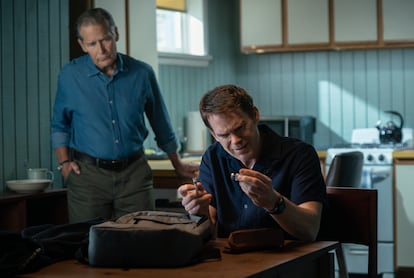
Q. Do you remember how the role of Dexter first came to you? You had just finished Six Feet Under (2001-2006), with one of the most groundbreaking characters on television at the time, David Fisher, the gay son in the central family, and I wonder whether you had any doubts about signing on to a project like this…
A. I did, yes. After Six Feet Under ended, I moved to New York intending to return to the theater, and the last thing I thought I’d do was another television show. But the Dexter script came, and there was something too compelling about the character. The audacity of making a show that invited people to go on a journey with someone like Dexter was a compelling invitation. But I didn’t know if it would work — honestly, I didn’t know if we would be able to pull it off. I never imagined I’d be talking to you about the character 20 years later and that he would still have a life and continue evolving. It’s wild. But yes, I had some misgivings. But anything worth doing is probably accompanied by a good dose of fear, and I think Dexter was worth doing
Q. What would be your top three favorite Dexter villains?
A. Ummm. I’d say Arthur Mitchell, the Trinity Killer [played by John Lithgow]; Brian Moser, the Ice Truck Killer, Dexter’s brother [played by Christian Camargo]; and Miguel Prado [Jimmy Smits]. It’s hard to choose, but I’d say that’s Dexter’s Mount Rushmore of villains.
Q. How has playing such a charismatic character affected your career? Has it influenced, for example, the types of roles you’ve been offered or the projects you’ve been approached with?
A. Yes, of course, but that’s a done deal. Dexter is the character with whom I think I’ll always be associated. I’ve done a lot of other things on stage and screen. I never imagined when I started as an actor that I would do a series for five seasons like Six Feet Under, let alone that I would intermittently play a character for another 20 years. Of course it affects things, though it’s hard to say how because there’s no parallel universe to compare to where it didn’t happen. It affects how people see me, what I’m offered and what I’m not… But I’m cool with it. Obviously I haven’t run away from Dexter; it’s a fascinating world, and I’ve returned because I think there’s still more to explore.

Q. Why do you think Dexter is still so popular two decades later?
A. I’m probably in a uniquely bad position to assess that because I’m so close to it, but we live in a world where we increasingly sense that we’re not in control. We feel controlled, manipulated, lied to. Dexter is a character who, in his little corner of the world, has taken control. He loses it from time to time and then regains it. People like to watch him get into trouble and get out of it. And we all have, in some way, a shadow, a darkness we manage — maybe not as formidable as his, but enough that we can relate. And the fact that we hear his inner thoughts gives us the sense that we’re along for the ride with him rather than watching it from the outside.
Q. We already know it’s hard to kill Dexter Morgan, but then, what would be the perfect ending for the character in your opinion?
A. I don’t know, I don’t know… The perfect ending… To be shot into space? To dematerialize and turn into mist? I don’t know [laughs].
Q. Have you thought about how long you’ll be able to keep playing Dexter?
A. Yes, I have thought about it, but I don’t know… At this point, I’ve learned never to say never, you know…
Sign up for our weekly newsletter to get more English-language news coverage from EL PAÍS USA Edition


Ten European countries are investigating alleged abuses committed against their nationals while taking part in expeditions organized by the Global Sumud Flotilla, which was carrying humanitarian aid to Gaza and was intercepted by Israel in international waters.
Prosecutors from 10 European Union member states — Spain, France, Italy, Portugal, Belgium, the Netherlands, Poland, Slovakia, Sweden and Finland — along with Australia, have been cooperating and sharing information on cases and investigations opened following complaints against Israeli politicians, officials and military commanders, including members of Benjamin Netanyahu’s cabinet, for torture, kidnapping, ill-treatment and other alleged crimes. This was confirmed to EL PAÍS by legal sources who took part in a meeting held on September 16 in The Hague.
All the countries that attended the meeting have some form of inquiry underway into the flotilla raid, according to those sources, who said the purpose of the gathering was to exchange information on their respective investigations. The meeting, which lasted around eight hours, took place within a framework of cooperation coordinated by Eurojust, the EU’s judicial cooperation agency. Australian representatives attended as guests. In at least five other European countries, including Germany, Norway and Austria, complaints have been filed over the same events, but the authorities have not yet decided whether to open formal investigations.
Most of the states represented at the meeting were primarily interested in gathering information that could support cases they have already opened, or may pursue, in their own jurisdictions. These focus on alleged crimes committed against their citizens during the flotilla raid in October 2025 and when a second humanitarian mission was intercepted by Israeli forces in international waters in May this year, the sources said.
The first reports of the meeting in The Hague emerged in Italy, according to an exclusive report by the newspaper La Repubblica. The Rome Attorney General’s Office, headed by chief prosecutor Francesco Lo Voi, later confirmed in a statement that meetings had taken place with representatives from other countries, without providing further details. A spokesperson for Eurojust, meanwhile, declined to comment “on possible meetings or confirm the existence of ongoing investigations.”
Investigations in Spain
Spain was represented at the meeting by Dolores Delgado, the prosecutor responsible for coordinating human rights and democratic memory cases within Spain’s Attorney General’s Office. Delgado launched an investigation from within the Attorney General’s Office in 2025 into crimes allegedly committed by Israel in Gaza.
Also present was investigating judge Francisco de Jorge, who is overseeing an ongoing case at Spain’s High Court, the Audiencia Nacional, concerning the flotilla raid. In July, he agreed to hear a criminal complaint against Eyal Zamir, chief of staff of the Israeli military, and Ram Rotberg, commander of the Israeli navy, allowing the case to proceed.

These sources note that, unlike other countries, Spain has been investigating the matter for many months. In June 2025, after receiving a report from the National Police, Delgado opened a case file into the actions of the Israeli military against the civilian population in Gaza. The aim was to gather evidence and submit it to the proceedings already under way against Israel before the International Court of Justice (ICJ), as well as to the cases against Prime Minister Benjamin Netanyahu and Israel’s then defence minister, Yoav Gallant, before the International Criminal Court (ICC).
After the flotilla raid took place in October last year, Spanish prosecutors incorporated the incident into their investigation and, according to prosecution sources, prepared reports and took testimony from several of those affected. Among them was Ada Colau, former mayor of Barcelona, who was travelling aboard one of the vessels in the expedition.
However, once proceedings were opened at the High Court, every aspect of the investigation relating to the raid on the vessels had to be transferred to Judge Francisco de Jorge. Under Spanish law, when an investigating judge opens proceedings into specific events, prosecutors cannot conduct a parallel investigation into the same facts.
The High Court case also has a distinctive feature. Unlike other countries, which have opened investigations because their own citizens were affected and want to examine crimes that may have been committed against them, Judge De Jorge accepted the complaints against the two Israeli commanders after concluding that, under the United Nations Convention on the Law of the Sea, Spain has jurisdiction only over events that took place aboard flotilla vessels sailing under the Spanish flag.
According to his interpretation, those vessels were, for practical legal purposes, Spanish territory. Spain can therefore investigate alleged crimes committed on board them, regardless of the nationality of the victims. The judge stressed, however, that his jurisdiction ends once passengers were transferred to Israeli territory or to other vessels. In other words, he cannot investigate alleged abuses committed after flotilla activists left the Spanish-flagged ships.
For freelance journalist Néstor Prieto, one of the flotilla participants who led the complaint before the High Court, the investigation is “positive, but insufficient,” because the alleged rights violations continued during the activists’ several days in detention and because it excludes participants who were not travelling aboard Spanish-flagged vessels.

The reporter, who was part of the October 2025 mission aboard the Adara, says several military vessels surrounded their ship, fired tear gas and boarded it. From that moment, they spent “between 12 and 14 hours” cut off from the outside world and crammed into the vessel’s cabin. During that time, they were subjected to physical and verbal abuse, threatened with firearms, and given little access to food, water or medication. Upon arrival in port, those detained were transferred to a prison, where they remained until being deported more than 72 hours later.
In the flotilla that set sail in May, the level of violence escalated significantly. As EL PAÍS contributor Ignacio Ladrón de Guevara, who was aboard one of the vessels, later recounted, the beatings and mistreatment were so severe that the mission recorded at least 35 bone fractures and more than 10 allegations of sexual abuse. Taser shocks and stun grenades also became part of daily life for members of the flotilla.
Saif Abukeshek, one of the leaders of the Global Sumud Flotilla, who was detained during the May mission, believes all these allegations should ultimately lead to convictions.
“They carried out a military interception in European waters and entered Greek territory. The violations committed by Israel are very clear and the orders that were given were made public,” he says, referring to threats issued by the Israeli government.
The Palestinian-Spanish activist spoke to EL PAÍS from the Italian port of Augusta, where campaigners were carrying out actions at sea to prevent commercial ships bound for Israel from making a stop there.
Israel’s chain of command under scrutiny
Bound, forced to kneel and publicly humiliated. That was how Itamar Ben Gvir, Israel’s far-right national security minister, chose to present the flotilla activists detained in May.
“This is how we welcome terror supporters. Welcome to Israel,” the minister declared in a video he posted on social media. The footage sparked an international outcry and even drew criticism from Netanyahu. In June, prosecutors in Italy opened an investigation into Ben Gvir on allegations of kidnapping and torture.
Following complaints filed by 50 Italian passengers, prosecutors decided to go a step further and announced a broader investigation targeting not only Ben Gvir but also 13 other senior Israeli officials, including Defence Minister Israel Katz. Unlike Spain, the Italian authorities are seeking to establish the full sequence of events, from the moment the vessels were forcibly boarded until the flotilla participants were deported from Israel.

Israel’s entire chain of command is under scrutiny, from Eyal Zamir, commander of the Israel Defense Forces, and Daniel Levy, head of the national police, to the officer in charge of the Ashdod naval base, the port where the activists were brought ashore, and the governor of Ketziot Prison, where several of them were held for days.
After being named in the investigation, Israel’s prison authorities said they had acted “in accordance with the law and with full respect for the activists’ fundamental rights.”
Although they are examining abuses allegedly committed during two different flotilla missions, Italian prosecutors argue that the cases point to a modus operandi involving systematic violence and human rights violations. They also reinforce the view that, although the alleged abuses took place at different times, they were carried out under the same chain of command.
What began as isolated complaints and condemnations has developed into a growing wave of cases moving through European courts. In June, judicial investigations were opened in France and Poland. That same month, Australian police announced that they were investigating allegations of rape and torture made by a group of activists from their country.
In the Netherlands, seven flotilla participants filed a complaint in July accusing Israeli military personnel of sexual assault. In August, the Turkish government, one of the strongest critics of the Israeli authorities, issued arrest warrants for 35 Israeli suspects, including Netanyahu, over alleged crimes against humanity and torture committed against flotilla participants.
Sign up for our weekly newsletter to get more English-language news coverage from EL PAÍS USA Edition
Horse sinks into trouble after falling into pond in Valencia

El Tribunal Supremo Rechaza Apartar Unas 20.000 Boletas En California En Vísperas De Las ‘midterms’
Spain’s AVE trains under scrutiny again as passengers spot missing speed indicators


-

 Arabia Saudí3 weeks ago
Un Ataque De Los Hutíes Contra El Aeropuerto De Riad Causa Al Menos 12 Muertos Y Más De 300 Heridos
-
DGT2 weeks ago
Viral video in Spain sparks fury over drivers who ‘have no idea how to drive’
-

 %4 weeks ago
Spain Payslip Change Coming In January 2027
-

 America3 weeks ago
Un Tirador Mata A Ocho Personas En Una Vivienda En Pensilvania
-
 House prices4 weeks ago
Spanish House Prices Rise 9pc But Market Growth Stalls In H1 2026
-
News from Spain3 weeks ago
Spain police warn parents over WhatsApp scam that uses their children’s real accounts
-

 %3 weeks ago
Concrete Balcony Slabs Collapse Onto Marbella Street
-

 America3 weeks ago
Trump Llega A Un Acuerdo Con Putin Para Que Rusia Libere Miles De Barriles De Diésel En Los Mercados Mundiales