
ElPais
My Testosterone Levels Are Low… So What? Why The ‘softboy’ Is Suddenly Being Celebrated

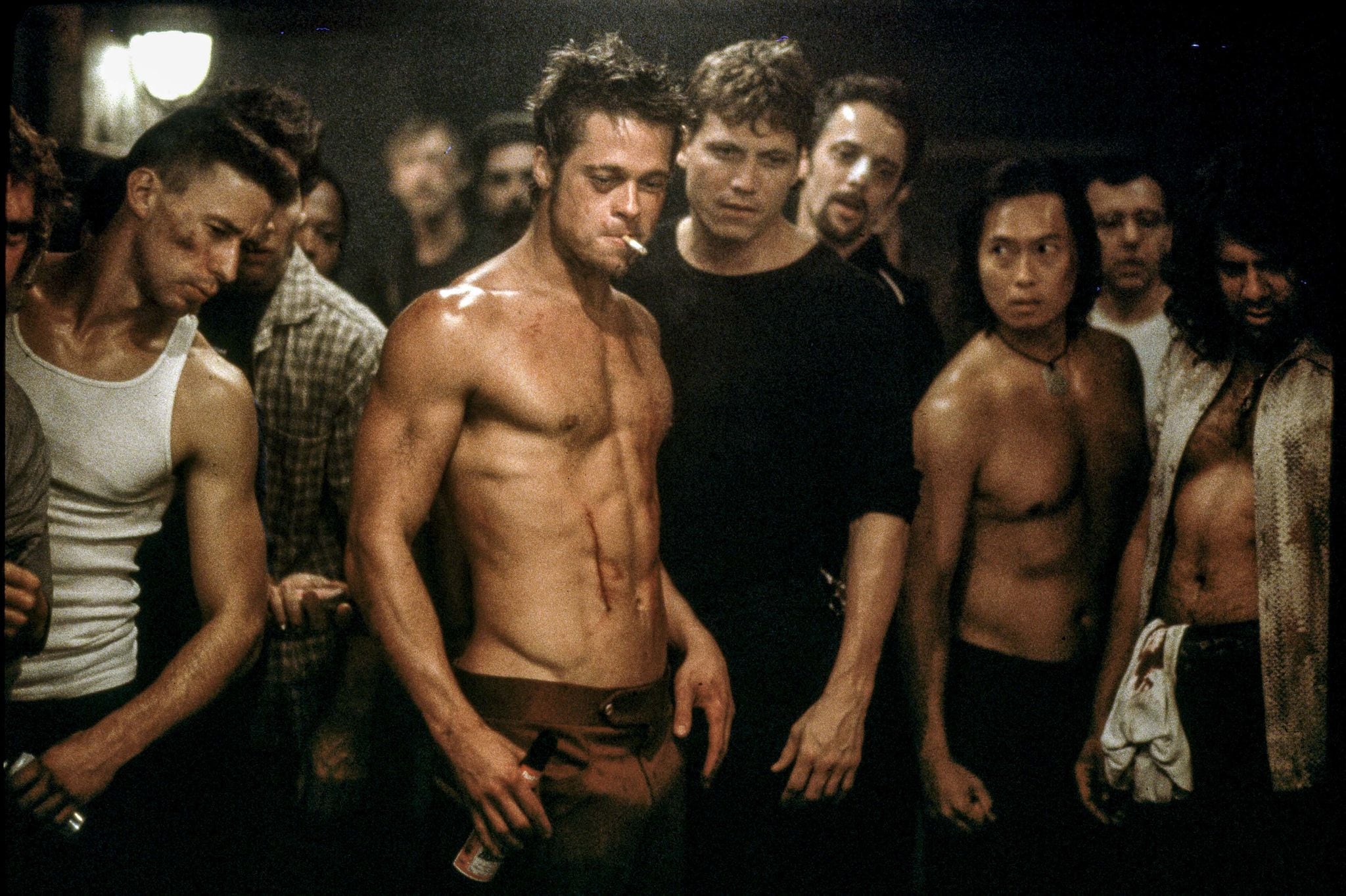
Just a few days ago, the magazine InsideHook published a rather unusual piece of journalism. Written by New York writer Jaed Coffin, it’s essentially a tribute to the average man as an alternative to the Nietzschean superman of social media. The essay is also an exhortation to stop going to the gym so much and to gracefully accept the defeat that comes with the passage of time.
Coffin intended to weigh in on a never-ending controversy: the supposed masculinity crisis in the United States, as well as the social and political consequences attributed to it. But his piece veered off course and ended up becoming an exercise in lateral thinking, with a refreshingly simple thesis: so what if masculinity – at least, hormonal masculinity – is actually in decline? And, to go a step further: what’s wrong with having low testosterone?
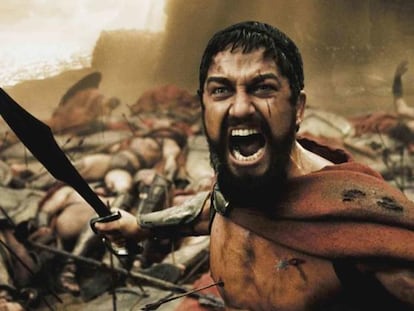
Coffin allows himself such a dialectical shift because he belongs to a generation that came of age at the turn of the century. He’s among those who studied at progressive universities on the East Coast. As he himself explains, he never wanted to be a gladiator in ancient Rome, break a world record for burpees, or defend the Battle of Thermopylae while baring his chest. Unlike members of the manosphere, he’s not obsessed with halting the decline of the anabolic steroid produced by men’s genitals.
Moreover, the writer admits that, today, 15 years after regularly hitting the gym, he attributes some of his most commendable personal qualities – such as his tolerance, his lack of aggression and his sense of humor – to low testosterone levels (which, incidentally, he doesn’t seem to have measured).
It’s not an urban legend
“Where has all that lost testosterone gone?” asked an article published by The Atlantic this past August. It’s worth clarifying some concepts: beyond the biased interpretations and unfounded sociological analyses, the decline of the male sex hormone is a proven fact. Just a few months ago, in London, UK, one of the main studies presented at the annual meeting of the European Society of Human Reproduction and Embryology (ESHRE) quantified the phenomenon: the average testosterone level in men fell by 54% in just 47 years, between 1972 and 2019.
Previous studies had yielded similar results. However, some analysts have attributed such striking data to methodological problems.
The large-scale study just presented is endorsed by Dr. Hagai Levine, a fertility expert who co-authored a pioneering analysis nine years ago, demonstrating that sperm concentration had fallen by more than 50% in just four decades. Furthermore, this time around, the sample size is very large (around 118,000 men of reproductive age from five different countries: the United States, Brazil, Israel, Finland and Denmark). The gradual decline is particularly evident after the year 2000, when the methodological and measurement issues pointed out by some experts had already been corrected.
According to Levine, we are facing a “major crisis in male reproductive health” and “it’s not given enough attention.” In his opinion, this could be attributed to lifestyle factors that are prevalent in high-income 21st-century societies, especially stress, overeating and a lack of exercise. Individuals struggling with obesity and those with early-onset diabetes are the most likely to suffer from male hypogonadism – that is, abnormally low testosterone levels. However, a significant drop in hormone levels is also observed in the rest of the population.
Let’s clarify a concept again: hypogonadism, or severe testosterone deficiency, is a medical condition that some males experience from puberty, while others develop it during the transition to middle age (roughly coinciding with andropause, colloquially referred to as “male menopause”). In the latter case, it usually produces a variety of initial symptoms, such as lack of energy, loss of libido, or depressive states. The uncontrolled progression of hypogonadism frequently leads to infertility, erectile dysfunction, loss of body hair, decreased muscle mass, breast tissue growth and bone loss.
In other words, testosterone deficiency tends to cause a series of disorders that can be perceived as a gradual loss of “virility” – the attributes we traditionally and culturally ascribe to masculinity. But acute hypogonadism (that is, at levels that cause discomfort and may make hormone treatment advisable) affects less than 1% of men under the age of 40 and between 2% and 6% of those who have already reached andropause.
The decline in average testosterone levels, on the other hand, is a global trend, affecting most men. And yet, its significance is primarily statistical: the fact that men in the 21st century have less of this hormone than our fathers and grandfathers doesn’t imply that we’re experiencing a rampant hypogonadism pandemic, nor that we’re rapidly becoming feminized. And it doesn’t mean that the fertility of our species is in danger in the medium term.
It’s not a Biblical curse
We now enter the very slippery terrain of cultural perceptions. In the United States, the political consequences of the so-called “masculinity crisis” have been discussed for at least 30 years now.
The scope of the debate is somewhat blurred. But during the initial phase, there was a lot of speculation around the disruptive effects of so-called “toxic masculinity.” This involved young men who, faced with a new context, given the partial dismantling of patriarchal barriers, felt disoriented, unsure of what social role they should adopt or what was expected of them.
These kinds of theories were by no means the exclusive domain of the new waves of feminism. Even the conservative theorist Francis Fukuyama considered the rising crime rates of the late-1990s to be reflective of the “failure to socialize young men by giving them breadwinning, fatherly role models.”
Around that time, another academic – this time a progressive one, the writer Beatrix Campbell – argued that the mass vandalism occurring in cities like Liverpool and Los Angeles was a direct consequence of the consolidation of a “tribe” of violent offspring of postmodern capitalism. She described “the vanity of fragile masculinity with nothing but time on its hands and a borrowed car to break into.”
Years later, however, came the fierce backlash against these theories. The narrative of “fragile masculinity” began to be seen by some opinion leaders as an attempt to emasculate and domesticate young men, forcing them to conform to a series of social behavior patterns that are contrary to their nature.
In the words of Ana Yara Postigo, a researcher at the University of Málaga in Spain, there’s recently been a self-serving attempt to link the crisis of masculinity to another supposed phenomenon: “male loneliness.” Apparently, “men today are more isolated, have fewer friends and feel more emotionally disoriented than in the past.” Hence, in line with this premise, increasingly radical and aggressive narratives of male empowerment are proliferating on social media, in podcasts and magazines, and via other more or less niche channels.
This is the case with the influencer Andrew Tate and his recipes for resisting what he perceives as the “tyranny” of feminism, while developing a mutual support network among men. In more ways than one, this harkens back to the dystopia of Fight Club (1999). Also, speaking from more conciliatory positions, there’s Scott Galloway, who in Notes on Being a Man (2025) offers practical tips for young men, in an era that’s seeing a transition toward a series of “different” masculinities (something he perceives as not necessarily positive).
It was only a matter of time before public figures who are heavily inclined toward conservative views, such as Donald Trump’s secretary of health, Robert F. Kennedy Jr., connected the dots to conclude that masculinity is in crisis because testosterone levels are declining (or vice versa?). And they think that the United States, consequently, needs an urgent “remasculinization” treatment that isn’t merely ideological, but also hormonal.
In a famous conversation with the podcaster Joe Rogan, the sitting vice president of the United States, J.D. Vance, dared to claim that there’s a direct correlation between conservative voting and high testosterone levels. Rogan served up the conclusions on a silver platter by suggesting that maybe healthier young men vote for Trump, while the effeminate and sickly ones opt for his Democratic rivals. This goes back to the biased logic of the 1930s, when magazines like Newsweek and Time – imbued with the atrocious eugenic thinking of the era – asserted that testosterone injections could revitalize the elderly, cure homosexuality and transform weak young men into patriotic paragons of masculinity.
As the University of Sydney denounces in a damning study, “young men are being encouraged to undergo testosterone testing and start hormone therapy through Instagram and TikTok content.” These calls for hormone therapy on social media are “normalizing unnecessary testosterone testing and treatment among healthy young men, despite these therapies being associated with potentially serious health risks.”
The University analyzed 46 Instagram and TikTok posts that reached a total audience of 6.8 million users and accumulated more than 650,000 likes. One of the study’s coordinators, Dr. Brooke Nickel, denounces that self-proclaimed influencers and “sex coaches” are telling perfectly healthy young men that they need to undergo treatment if they don’t want to “lose” their virility. Nickel identified several harmful messages, such as this one: “If you’re not waking up in the morning with a boner, there’s a large possibility that you have low testosterone levels. Get it checked!”
Jaed Coffin, who penned the essay in InsideHook, is entering his fifties. He doesn’t know if his testosterone levels are high or low, and he’s long since lost count of the days he wakes up without an erection. But he doesn’t care. For him, reclaiming his identity as a “low-T man” (that is, a man with low testosterone) seems to be a good way to oppose the delusion and toxicity of “high-T” men — the apostles of a kind of masculinity that’s enhanced by compulsive physical training and hormone therapies.
At a roundtable on new masculine models organized by The New York Times, writer Nadja Spiegelman noted that the political debate in the United States is heading toward a dangerous place: “Men are moving more to the right, women are moving more to the left, and it’s only exacerbating these problems. And I think part of what I’m really interested in is, how does the left bring men back into the fold?”
Perhaps part of the answer lies in reclaiming the “low-T man” that Coffin proposes. He’s imperfect, but empathetic; “fragile,” but trustworthy.
Sign up for our weekly newsletter to get more English-language news coverage from EL PAÍS USA Edition








America
Matt Barreto: ‘More Than A Reversal Or A Shift In Voting Trends, The Latino Vote Is A Repudiation Of Trump’


Matt Barreto has spent years studying the Latino vote and advising the Democratic Party on an electorate whose support, while often taken for granted, is far from guaranteed, as became clear in 2024 when Latino voters helped propel Donald Trump to victory. Barreto worked on Hillary Clinton’s 2016 presidential campaign, Joe Biden’s 2020 campaign, and Kamala Harris’s 2024 bid. He also led Latino outreach for the Senate campaigns of Catherine Cortez-Masto in Nevada and Michael Bennet in Colorado. Between 2021 and 2025, during the Democratic administration, he served as a White House adviser.
He is currently a professor of Political Science and Chicana/o and Central American Studies at UCLA and president of BSP Research, the polling and research firm he co-founded. His latest polling for the November 3 midterm elections points to a return to the Democratic Party among Latino voters who backed Trump two years ago, helping Democrats regain control of the House of Representatives. However, he warns that this does not reflect growing support for Democrats so much as a rejection of President Trump. He believes that while both parties have begun to rethink how they engage with Latino voters, this remains an electorate that, despite being the fastest-growing voting bloc in the country, still does not receive the attention it deserves.
Question. You have worked on several election campaigns. What are the differences between presidential elections and midterms in terms of voter turnout and motivation?
Answer. Presidential elections always have the highest motivation and the highest enthusiasm for all Americans, and this is especially true for racial and ethnic minorities. Some people just don’t feel as connected, especially if they’re in a state that maybe doesn’t have an exciting election contest. We know there will be a drop-off this year compared to 2024, but the question will be whether or not it is a large drop-off or a small drop-off. Some states like Texas are running very close to presidential-level turnout.
Q. Early voting has increased in these midterm elections, even setting records in some places compared with 2022. What do you think is driving that trend?
A. Latino voters are very frustrated about the lack of economic recovery. Trump came into office on a campaign promise of economic recovery. He talked about his business experience and said he would understand how to manage the economy. But the economy has gotten worse, especially for Latino and working-class voters. This is the single biggest factor that is holding him back, and the entire Republican Party: voters are frustrated with grocery prices, gas prices, and tariffs. What’s more, health care costs have gone up because they’ve canceled the Affordable Care Act subsidies, and they’ve canceled Medicaid expansion. Everything is expensive, and when you’re the incumbent, you have to answer to the voters. And so that’s what is motivating the election far and wide for Latino voters.
Q. Polls are showing now that the Democratic Party has an advantage over the Republican Party. How reliable are the surveys? Could there be any surprises?
A. I don’t think there’s going to be any major surprises this year. Almost every single survey is showing that Democrats are on pace to win back the House, with seven points on average; I think that is almost a certainty. The Republicans have a lot of negative ratings, by the fact that they haven’t differentiated themselves from Trump. The Senate is definitely much more up for grabs.

Q. Are we truly seeing a return of Latinos to the Democratic Party, or is it rather a move away from Trump?
A. It is a sharp move away from Trump. And because we have a two-party system in the United States, Latino voters are going to the Democrats. I wouldn’t say it’s a reversal; I would say it’s a repudiation of Trump. It’s definitely not a trend. It’s one data point, and that’s what we said in 2024. What happened in 2024 wasn’t a trend — although a bunch of people thought it was — and now here we are looking at the opposite.
But the Democrats will need to have a message after this election about why Latinos should continue to support them, and they will need to have some deliverables. This is part of the reason that the Latino vote looks as though it swings back and forth: there’s no overarching partisan alignment among Latinos, so each party always needs to make their case every two years.
Q. Why is the Latino vote so relevant this year?
A. Because it has appeared to shift between Democrats and Trump for the last three or four elections. Democrats had a very good election in 2018, the first time Trump was president during that midterm. The Democrats took the House back, and Latinos voted pretty heavily Democratic. But then, in the next few elections, Republicans started to get more votes, especially in 2024. And now in 2026, it looks like the Latino vote is shifting back.
The other factor is that the Latino vote is growing faster than any other vote. Latinos are now an important voting bloc, not just in Texas, but in North Carolina, in Georgia, and in a number of states. The Senate race in Iowa might be decided by two or three percentage points and Latinos are up to about five or six percent in that state.
Q. Latino voter turnout has traditionally been lower than that of other voter groups. What accounts for this?
A. Historically, there has not been a lot of party outreach, and so if the candidates don’t come knock on your door or call you, then you’re less likely to vote. And the candidates focus on people who they think are likely voters, and so if they don’t think you’re a likely voter, they don’t call you.
There has been a long history of under-mobilization of the Latino community, and that’s the primary reason, not because Latinos don’t care about politics. That’s starting to change. We are seeing a big change in places like Texas. There’s lots of outreach and lots of ads in English and Spanish. There is a Latina running for governor. It’s a very exciting time to be seeing this dramatic increase in Latino voter outreach.
Q. Which groups of Latinos are more likely to abstain from voting?
A. Younger people. And part of the reason that Latinos appear to have lower voter turnout is that we’re the youngest group. So the same trend exists for young white voters, young Black voters, young Asian voters, especially in a midterm. And for Latinos, our largest demographic segment is voters under 40, while for white voters, their largest demographic segment is voters over 60. People who are over 60 — whether they are Latino, Black, or white — vote at super high rates because they’ve been around, they see the political system, and understand why their vote can influence things. Whereas younger people don’t have as much faith in the system.
Q. There are around four million Latinos who can vote for the first time because they turned 18 years old. Is there anything that defines them?
A. They are very concerned about getting a good-paying job and being able to afford a place to live. They want to make sure they have health care. They are just starting out in their careers, and typically the political parties and the established politicians don’t do a good job of talking to younger voters, especially younger Latino voters. So if they don’t hear from the political parties and the candidates, they’ll probably vote at low rates. And this is a very, very important group because it’s substantial in size.
Q. The first concern of the Latinos is the economy. That is also the main concern of all citizens. Is it right to keep speaking about them as a separate group?
A. All Americans have the same worries this election: the cost of living, affordability, gas prices, and the war in Iran, which has very low support. So there are a lot of similarities. There is also a sense of anti-establishment, anti-incumbent sentiment that we’re seeing across the board. At the same time, all voters want to feel like the politicians care about their community. Latinos might have the same concerns, but if the politicians never show up in the Latino part of town, or they never air any ads in Spanish, or they don’t have any Latinos on their staff, then it doesn’t matter if you have the same concerns because you feel left out.

Q. Latino organizations insist that Hispanics do not vote as a monolithic bloc. Does it still make sense, then, to study them as a single electoral group?
A. Most Latinos agree that they have a lot in common with other Latinos. However, you shouldn’t think of them as a cohesive unit. Do all 40 of them like the same food, music, and candidates? No. So the diversity doesn’t mean that Latinos aren’t a voting bloc; they are, but they still have diversity in the same way that all groups do. If you think about the groups that have gotten other attention — such as working-class white men — they don’t all vote the same, they don’t all vote 100% Republican, and they don’t all have the same issues. But they’re an interesting demographic group because they do have a lot in common, and that’s the same with Latinos.
Q. Beyond the economy, Latinos are the group most affected by this administration’s aggressive immigration policies. To what extent does this influence whether Latino voters change their vote?
A. Immigration is not the number one issue for Latinos, but it is the number one anger issue. And anger leads to mobilization. Many people are very upset; they didn’t think Trump would be as extreme. They thought he was only going to be finding these so-called criminals, but he’s not. So when you have an economy that’s not recovering, and you have your immigration police in the streets — literally shooting people —, it’s a terrible situation. That’s why you see people like María Elvira Salazar in Florida and others distancing themselves from Trump. It’s a double negative in the same cycle. If the economy was doing amazing and everyone was making $300,000, people would still be mad about immigration, but the economy always drives people’s vote.
Texas barometer
Q. The race for the Senate seat in Texas between Democrat James Talarico and Republican Ken Paxton has attracted enormous attention and campaign spending. Trump has been more involved there than in other contests. Will it serve as a barometer for the supposed shift in the Latino vote?
A. Texas is interesting, and we need to look at the results by region. We have the South Texas Rio Grande Valley region that has gotten a lot of attention because it has voted heavily Democratic and more 50-50 for Trump in recent years. That is a very interesting region because it is very working class, it’s lower income, less educated, and near the border. That’s the first region to pay attention to because it does send a signal, not just for Latinos, but for its large rural areas.
Given Trump has generally done very well with rural voters and Republicans, it tells us something not just about Latinos down there, but about rural Americans, working-class Americans in general, as well as Latinos in the rest of the country who might be in a similar situation. And then you have the cities, which tend to be much more democratic. In the past, they have not been a particularly strong electoral force, because they haven’t had high voter turnout. Houston, for example, has one of the lowest voter turnout rates of any big city in America. Definitely, there are a lot of clues in Texas that we’ll get as we get the data.
Q. Beyond Latino voters, is there another group that could drive a shift into Congress?
A. We’re seeing similar trends with Asian Americans, another group that is very immigrant-heavy and also shifted in 2024. We’re seeing similar shifts back: this group, which is also very economy-oriented, thought that Trump was going to recover the economy; however, they are very upset about the cost of living and the lack of progress on affordability.
Q. Republicans have made a major effort to redraw electoral districts in ways that reduce the influence of minority voters, a practice known as gerrymandering. What impact will this have on the election results?
A. They drew these districts based on the 2024 vote, where Trump did much better with Latinos, but now he’s doing much worse. In states such as Texas and Florida, the districts that got redrawn may not perform for Republicans. They made some wrong assumptions by only looking at the 2024 data.
Sign up for our weekly newsletter to get more English-language news coverage from EL PAÍS USA Edition
Barack Obama
A Former Model And A Paralympic Medallist: How Democrats Hope To Break Republicans’ Grip On Iowa

A dozen cancer patients have gathered at the Smokey Row café in Ankeny, a prosperous suburb north of Des Moines. They have come to share their experiences with Rob Sand, the charismatic Democratic candidate for governor of Iowa, a Midwestern state known for its endless cornfields. It is one of the emblematic territories of the so-called Corn Belt, the agricultural heartland of the United States, which overwhelmingly backed Donald Trump in the 2024 election. The Democrats are pinning their hopes on Sand. He is slightly ahead in the polls over his conservative rival, Zach Lahn. He is on the verge of becoming the first Democrat to win a major statewide election in Iowa in nearly two decades.
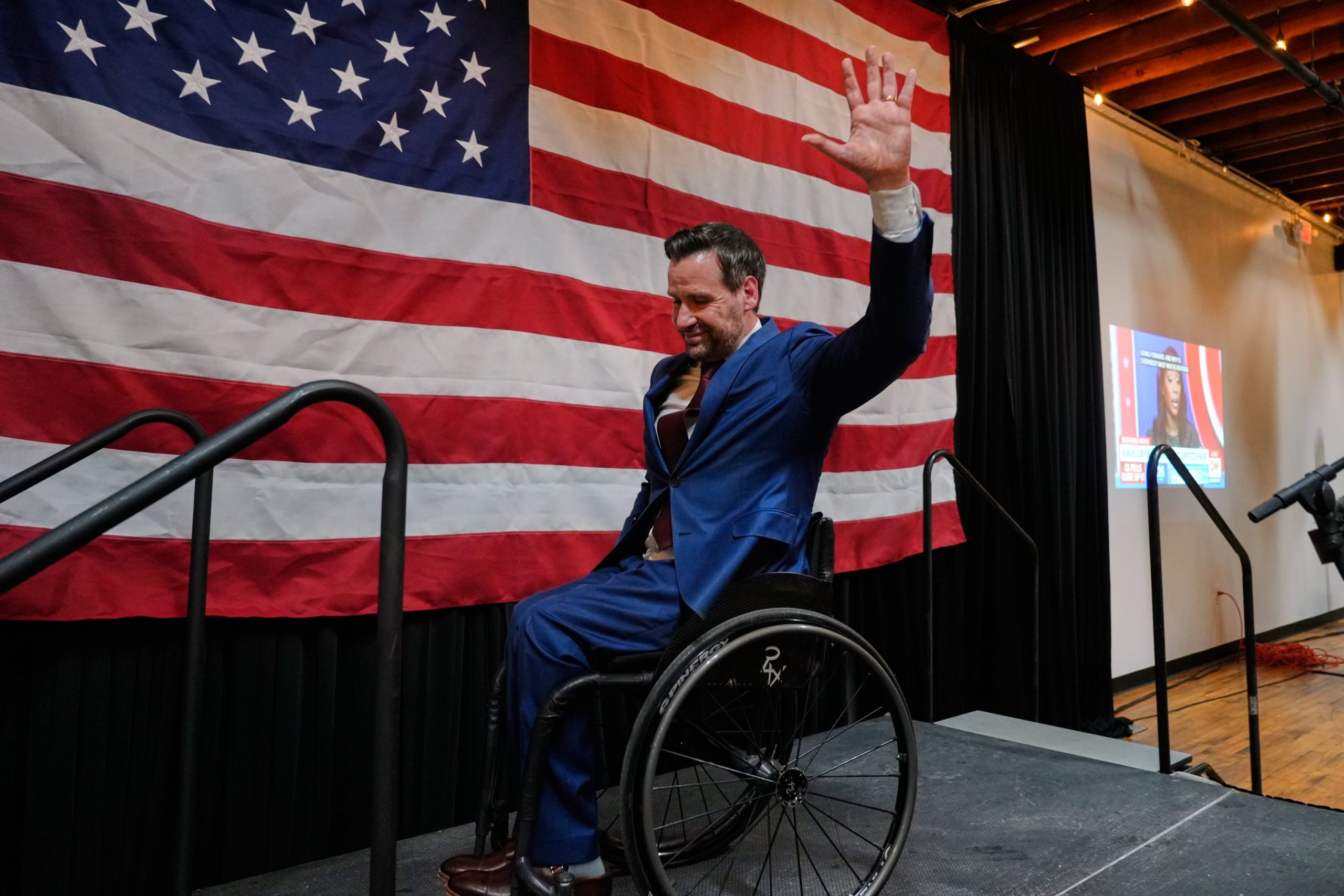
The Democrats’ other leading contender for breaking through in rural America is Josh Turek, a 47-year-old three-time Paralympic basketball medalist. He has used a wheelchair since childhood. He is running for Iowa’s U.S. Senate seat, which has been in Republican hands for 18 years. He is tied in the polls with Republican Ashley Hinson, a former local television presenter. Hinson is young, blonde and has stronger debating skills than Turek, as she demonstrated in the two televised debates. But Turek is steady, persistent and projects an image of resilience and perseverance that draws voters’ interest.
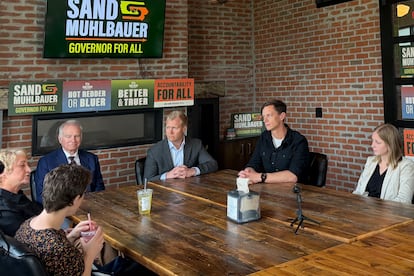
A week spent roaming Des Moines and Cedar Rapids, Iowa’s two largest cities, is enough to realize that the issue weighing most heavily on voters’ minds is water quality. Many wonder whether it has been contaminated by runoff from agricultural chemicals such as fertilizers, pesticides and nitrates. Cancer rates in the state have risen alarmingly in recent years, and many point to the water as a possible cause. The concern surfaces in conversation after conversation. Iowa has the country’s second-highest increase in cancer cases among young adults.
Rob Sand, wearing gray New Balance sneakers and a dark shirt untucked over beige trousers, as if he were a college student, listens patiently as each attendee shares their story at an event attended by EL PAÍS in mid-October. Among them is Isabelle Ireland, who has travelled 37 miles from Saint Marys, to explain that she was diagnosed at 16 with an extraordinarily rare form of cancer and treated with the same chemotherapy that was being used 50 years ago.
Sand asks questions, takes an interest in the details of each case and, above all, avoids making empty promises. He does not deliver a long, grandiose speech: he only pledges to focus the administration’s efforts on patients rather than bureaucracy.
From ‘Vogue Italia’ to hunting a bison
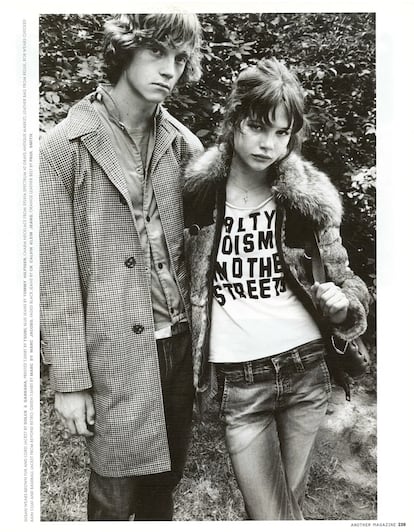
Rob Sand stands around 6 ft 3 in tall. He is 44, with light brown hair, blue eyes and the face of Tom Sawyer. No one would guess that this moderate Midwestern politician, who enjoys bow hunting and keeps a bison head mounted in his office, once worked as a model on the runways of Milan and Paris.
As a young man, he had the languid, carefree look favored by fashion magazines such as Vogue Italia. He even posed for photographers including Terry Richardson, but it is not something he likes to be remembered for. That chapter is behind him. Today, he cultivates the image of an ordinary Iowan concerned with the everyday problems of his neighbors. That is why he is in a café in Ankeny.
Sand is not a conventional politician. Despite his relaxed appearance, he often seems like a man from another era: somewhat moralistic, religious, teetotal and moderate. He opens his rallies with America the Beautiful, one of Donald Trump’s favorite songs; likes to weave Christian references into his speeches; and criticizes political polarization. He describes the two major parties as “private clubs.” He has a particular knack for steering clear of controversial issues and avoiding hot-button disputes.
Some say he bears a certain resemblance to John F. Kennedy. The Wall Street Journal described him as “the Democrat who Republicans fear in red-state America.”
Sand is married to Christine Lauridsen, the chief executive of a company that produces additives for broths and pet food. They have two children. His wife comes from a wealthy family that has financed much of his political career.
Originally from Decorah, a forested area in the state’s northeast, Sand is the son of a doctor and a physiotherapist who worked with children with disabilities. He earned a degree in Political Science from Brown University in Rhode Island, where he attended on a scholarship and wrote a thesis on political participation. After graduating, he spent some time in Europe working as a model. Upon returning to Iowa, he completed a law degree at the state’s university. He often boasts that he turned down Harvard to stay in Iowa, known as the United States’ largest agricultural producer.
He worked for several years as an aide to the state attorney general before running for the elected post of state auditor. His victory drew the attention of the Democratic Party. Since then, he has received numerous endorsements for his ability to win elections in deeply conservative territory.
His experience as auditor has left its mark. He seems almost obsessed with efficiency, repeatedly stressing the need to ensure that every public dollar is spent effectively and not lost to irregularities or bureaucratic waste.
Turek, the image of perseverance
In addition to water quality, Iowa voters are worried about the economy. In recent years, discontent has been growing among the state’s influential farmers. That is where Josh Turek comes in. Seated in his aluminium wheelchair atop a carbon-fibre frame, he has travelled to all 99 counties in Iowa, explaining the impact that tariffs and the war with Iran have had on the region’s economy.
Turek is challenging Ashley Hinson for Iowa’s U.S. Senate seat in a state that Donald Trump carried by more than 13 percentage points two years ago. But he thrives on competition. He has spent his entire life fighting.
Turek was born with spina bifida as a result of his father’s exposure to chemical agents during the Vietnam War. He had already undergone 21 surgical operations by the time he was 10. He has used a wheelchair ever since. But that has never stopped him from taking on challenges.
When he saw his younger brothers playing basketball beside the porch of their home, he wanted to join them. At 12, he attended a camp for people with mobility disabilities. What began as a hobby became a way of life.
He went on to become a standout athlete at the University of Minnesota, where he captained the team. In late 2004, he moved to Spain to play for Fundosa ONCE, one of the top teams in the Spanish league, where he became a star. He later signed for a team in Bilbao. Altogether, he spent nearly a decade playing for various clubs in Spain’s wheelchair basketball league, where he met his wife, who is of Dominican origin.
Since 2022, when he won election to the state legislature, he has served as a lawmaker in Des Moines. He often highlights the dozens of times he has worked across party lines with Republicans on issues such as tougher penalties for repeat offenders among immigrants and public safety measures.
Basketball star in Spain
Turek is from Council Bluffs, a small town in the state’s southwest, and was raised in a humble household. His father, an Army veteran, carried the grief throughout his life of losing his first daughter, who drowned in a swimming pool. His mother worked as a social worker for people with intellectual disabilities.
“It’s hard enough to grow up in poverty, but it’s really tough to grow up poor and disabled,” he said at one rally, where he acknowledged he suffered bullying because of his mobility issues. “I didn’t have many friends, I had low self-esteem, and basketball and adaptive sports gave me an escape,” he said.
He retired from professional basketball in 2022 with an impressive record: two gold medals at the Paralympic Games in Rio (2016) and Tokyo (2021), after winning bronze in London.
He returned to Iowa to work for a mobility-device company. His leap into politics came after he grew frustrated seeing how many medical requests for children with disabilities were denied. He ran for the state House and won his seat by six votes. He describes himself as “a prairie populist” and, while he holds progressive views, he has emphasized his moderate credentials on the campaign trail to counter attacks from his opponent. Hinson argues that he is too liberal for Iowa.
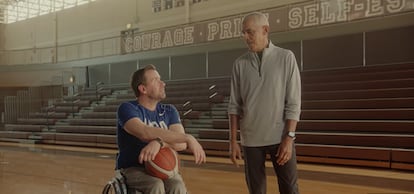
The candidate has secured the endorsement of Barack Obama, who recorded a campaign video playing basketball with Turek. “He’s someone who knows how to win,” the former Democratic president said.
During the two televised debates between Turek and Hinson, the Republican demonstrated a quicker ability to respond on her feet than the former athlete, who at times appeared uncomfortable, pausing to drink water as his mouth went dry. Still, he held his own by repeatedly attacking the conservative congresswoman, accusing her of excessive loyalty to Trump and of backing the tariffs, the war with Iran and the Big Beautiful Bill, which has cut healthcare coverage for thousands of Americans.
Hinson accuses him of frequently being absent from his office and skipping sessions of the state legislature. He counters that he has chosen instead to spend time out in the field with voters. Unlike his opponent, Turek does not stand out for his physical presence or his debating skills. But local residents describe him as reliable, persistent and genuinely committed to the community. Polls suggest he has a real chance of wresting the seat from the Republicans. To do so, he will need to sink one final basket.
Sign up for our weekly newsletter to get more English-language news coverage from EL PAÍS USA Edition
ElPais
Susan Sarandon: ‘Sometimes People Call Me A Communist. I Think That’s Just Their Way Of Saying Someone Is Out Of Their Mind’

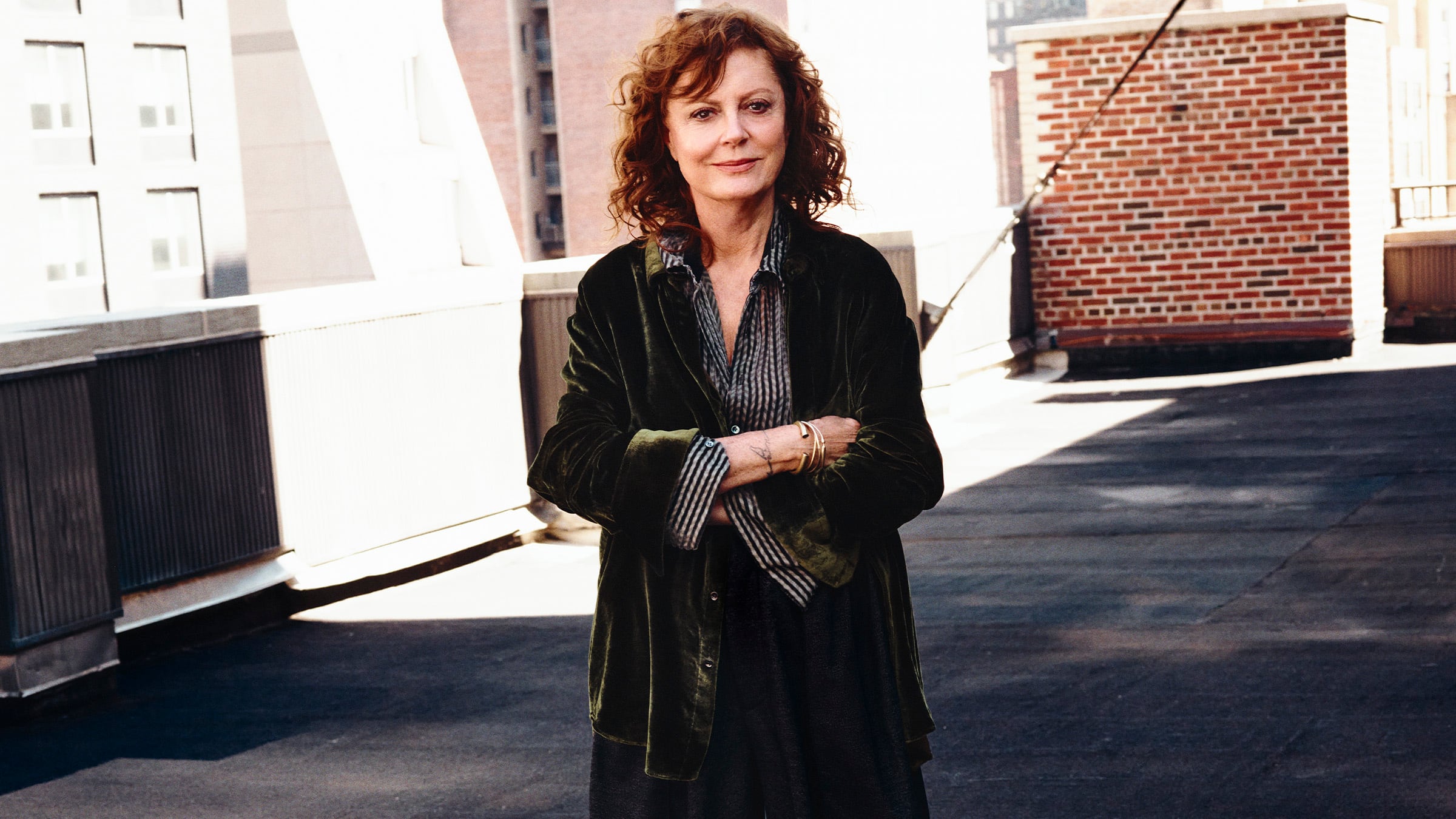
On September 25, just a week after this interview, Susan Sarandon, 80, was arrested outside the United Nations headquarters in New York. She was protesting, alongside actresses such as Hannah Einbinder and Cynthia Nixon, against Israeli Prime Minister Benjamin Netanyahu’s address to the General Assembly. It was not the first time she had been arrested, and it may not be the last.
Sarandon, who has appeared in more than 100 films, has starred in Hollywood hits such as The Client, Stepmom and The Witches of Eastwick; cult classics including The Rocky Horror Picture Show and Thelma & Louise; and socially engaged films such as Dead Man Walking, which earned her an Academy Award. She has also appeared in the TV series Friends and worked with French director Louis Malle.
Sarandon chooses her projects much as she lives her life: without preconceived limits, guided by a mix of curiosity and defiance. “When I read a script, I want to be moved. I want the character to be something I haven’t done before. It’s great if there’s a proven director, but sometimes they’re new directors. It’s great if you can get paid, but sometimes you don’t.”
Her latest project, The Accompanist, for example, is by first-time director Zach Woods. In the movie, she plays Sylvia, a troubled and eccentric foster mother.
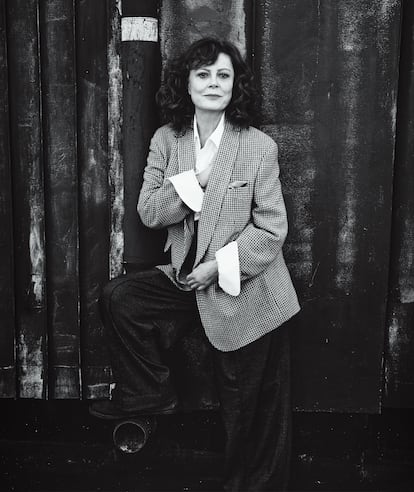
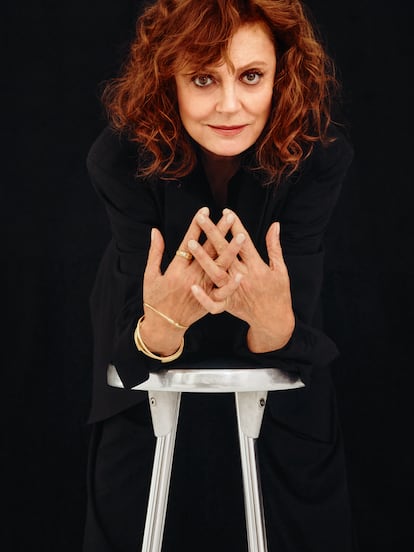
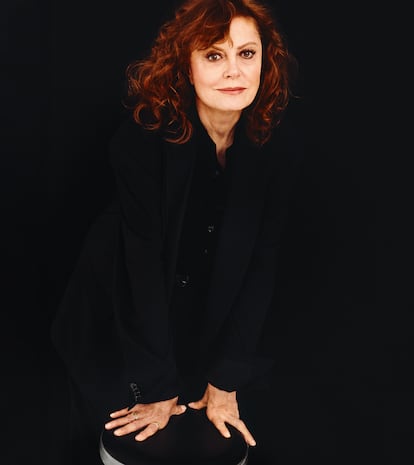
Sarandon arrives right on time for the interview with EL PAÍS’ fashion supplement Smoda. She tries on clothes for the shoot and eats breakfast while having her makeup done. Later, during the photo shoot, she jumps onto a table in a single bound and effortlessly crouches down. Nimble in both body and mind, she sits for the interview just days before turning 80, a milestone she has already celebrated at a ranch in Montana with her grandchildren and her three children: Eva Amurri, whom she had with Franco Amurri, and Jack and Miles Robbins, from her more than 20-year relationship with Tim Robbins.
“I wanted to be with my family, and the only week my grandkids had open in their busy schedules was in August,” she says.
Question. In The Accompanist, you play Sylvia, a funny, tough and vulnerable woman who also happens to be remarkably tolerant as a foster mother. Were you an open-minded mother yourself?
Answer. Let’s say certain things don’t bother me that maybe bother other people. I talked to my children about drugs, about sex… They grew up in New York, and if you live downtown, it’s not hard to raise a kid to be open to different religions, races and family structures… That was one of the reasons I wanted to raise them in the city, because I felt I wasn’t vigilant enough to raise them with that openness to difference, and the city is great for that, you know: all kinds of art, all kinds of everything… that helps. My feeling was that if you’re going to raise privileged kids, at least you have to make sure they’re aware of their privilege and don’t take it for granted.
Q. The film presents exactly the opposite of a privileged upbringing: a young girl is forcibly removed from her home by an inexperienced child welfare worker, played by Aubrey Plaza.
A. Yes, and I want to mention one thing that we found out during a press junket: Aubrey’s mother and my mother were both in foster care. My mother grew up in foster care and an orphanage, and so did her mom. We didn’t know that while we were filming. There are a few problematic things about the foster system, but one of the worst is that when foster kids turn 18, they’re thrown out without any job, without any housing, without anything. No training, no education, no job, no money. Boom, you’re out.
Q. You are the eldest of nine siblings. What was your childhood like?
A. My childhood was fine. I mean, I didn’t know any different. It wasn’t a very playful childhood because, as the eldest, my sisters tell me I was the one who put them to bed, bathed them and did all those things because there was always a baby at home. A large family definitely teaches you to survive in chaos. I’m very good at that. You also get used to having no privacy. When I was little, I didn’t go out much because they needed me at home. But it was okay.
Q. Did becoming a mother affect the choices you made in your career?
A. Yes. For example, Jane Campion offered me a very good part in a film and it was exactly when my daughter was starting middle school, which is a huge transition and she was very nervous, and Jane Campion told me I could go back and forth, but I would spend the whole time waiting to leave. Of course my daughter doesn’t know or remember this. I should throw it in her face now [laughs]. But yes, there were things I turned down because it wasn’t the right time. I tried to have big movies line up with the summer, like Thelma & Louise or The Client. They were all done on location and my kids were with me in the summer. I remember the first time I did a film without my children with me. It was the one with Richard Gere and JLo, and I thought, “Jesus, what do I do?” I no longer had to arrange for them to come to set at lunchtime or look up where the museum was. I think one of the gifts I gave my children is flexibility. They’re adaptable, you know, because of their horrible upbringing [laughs].
Q. Did they complain?
A. I remember one of my kids saying: “When I was little, there were all these artists dancing in our living room, playing the piano and helping us make art.” He was telling a friend who said something like: “That sounds great, actually.” It’s normal — you have to be mad at your parents, but only until you’re 30. After that, you have to start taking some responsibility for yourself. Your dad was cold? OK. Then you be warm.
Q. You often play strong but vulnerable women. That’s the case with Sylvia, but also with Sister Helen, the role that won you the Oscar for Dead Man Walking, your fourth nomination. How important was that Oscar?
A. If I was going to win for anything, I’m glad it was for that film because I found the book, I found the nun who wrote it and she gave me the book, I worked on the script; I basically produced the film. There was a huge responsibility because I knew it was the first time a film was going to show both sides of what the death penalty means. People have very strong opinions about the death penalty, just like they do about birth control, but nobody had any idea of the specifics of what actually happens or how unjust it is or how it doesn’t really bring any solace to the victims. What I loved about the book was that Sister Helen doesn’t start out as a hero. She gets pulled in, little by little. She’s a real person who sees something wrong and begins to ask questions. Those are the women I love to play. Sister Helen and I are still friends. She lived in our house while Tim was deciding whether he wanted to do the film, until one day I threw a hissy fit and said, “You have to decide now if you’re going to do it because otherwise I’m going to take the book to someone else.” And he said: “Okay, I’ll look at it.”
Q. Did your own activism evolve in much the same way, almost by accident?
A. No. I was already taking part in protests at college; in the late 1960s it was easy to be against the Vietnam War. And I kept doing it. In 1984 I was in Nicaragua delivering baby formula and things like that. I’ve been an activist for a long time because I believe you have a responsibility within your community to do everything you can to make sure people are fed, have a home and can live with dignity.
Q. Protesting and speaking out about the genocide in Gaza has cost you work. Is this the first time your activism has had consequences for your career?
A. No, it has happened before, but not so badly. For example, during the AIDS epidemic you weren’t supposed to speak about it publicly, and when I spoke at the Oscars about Haitian refugees with HIV who were in Guantánamo, I was kicked out of the Academy. But the important thing is that I’m not a victim; we should be talking about the victims and what is happening in Gaza and the West Bank.
Q. In 2018, you were arrested for protesting the separation of children from their parents at the U.S.-Mexico border. Are you still active on immigration issues?
A. Yes, I was arrested years ago during that first wave of children being separated from their parents at the border, and I think I’m due to go to the Elizabeth detention center [an immigrant detention center in New Jersey] and raise some hell there about what is happening to refugees in this country. A lot of the people being picked up are citizens; they have all their paperwork. They’re not arresting criminals.
Q. You’ve also been active in supporting refugees in other parts of the world.
A. I was on Lesbos, and it was heartbreaking because migrants thought that once they survived that existential threat of getting on those boats with fake life jackets, everything would work out. But then they ended up in that camp. Those days my cell phone barely worked, but I managed to speak with my daughter Eva. She was calling with my granddaughter, who was then two, and there was a woman there with a child about the same age, and the two girls looked at each other and pointed, and I thought: “My granddaughter simply got lucky being born where she was.” I asked a woman how she could risk making that journey with her small child, and she said: “If you’re on the top floor of a burning building and you know you’ll die if the fire reaches you, you jump. You hope for the best, but you jump.” And that’s what all these people were doing.
Q. For decades, you have used your fame and platform to champion social causes. Is there a misconception about you that you’ve stopped trying to correct?
A. I’m not sure because I don’t read any of that stuff. Every now and then, someone calls me a communist. I think it’s just the easiest way to try to say somebody’s out of their mind, a lefty. But I’m definitely not a communist. I’m not a Democrat either, though. I’ve said it before. I’m a patriot. I’m an independent.
Q. But do you vote?
A. Yes. But I can’t vote in the primaries because I’m not a Democrat, so I can only vote in the general elections. But we got [New York Mayor Zohan] Mamdani anyway, even without my communist vote.
Q. Do you like Mamdani?
A. I love him. He’s making substantial, concrete, actual positive change in New York; he’s making life materially better for many working people. He’s very smart.
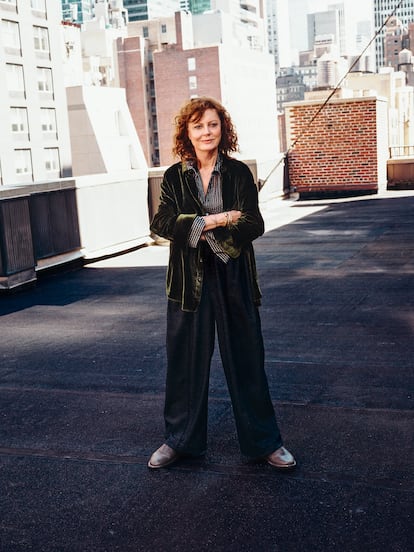
Q. At 80, is there something you wish you had understood earlier?
A. Make mistakes faster. Make mistakes — big ones — but make them faster. You know when something is toxic, so get out of it. You feel it in your gut when you’re not being authentic, when you’re not being true to yourself, so listen to that and absorb it, but it doesn’t need to take two years. You could probably learn the lesson in about four months. I always give everyone too many chances.
Q. Is there anything you miss about being younger?
A. Definitely. Physically, because mentally I don’t think of myself as 80 — that still surprises me. But you notice how the body slows down. The other day I was talking with my grandkids, and I said, “I just want to be all used up when I die.” With nothing left to spare. As they say in sports, “don’t leave anything on the field.” Just show up. That would be a good epitaph if I were going to be buried, which I’m not. But if it were, “She showed up” seems like a good one. It’s pretty simple.
Q. This year, Thelma & Louise was featured on the official poster for the Cannes Film Festival to mark its 35th anniversary. It’s become an iconic film. When you were making it, did you have any sense of what it would become?
A. We were making a cowboy movie with trucks and women, and it turned into this other thing because we really didn’t understand how that genre was held by white heterosexual heroes. When you gave two women guns and freedom, it was very threatening to people. There was a lot of pushback. At first, they said we were condoning suicide, although no one said that about Butch Cassidy and the Sundance Kid. But, of course, they also said the film hated men and that the male characters weren’t very good. The film provoked an unexpected backlash. And then, because it became so controversial and popular, I don’t even know how much money it made. It’s funny because I get letters saying: The Rocky Horror Picture Show woke me up, and after seeing Thelma & Louise I left town.
Q. You’ve worked with Joel Schumacher, Barry Levinson and George Roy Hill, as well as with new directors like Zach Woods. Is there any director you’d like to work with?
A. I love all those fabulous Mexican directors: [Alejandro] Iñárritu, Guillermo del Toro, Alfonso Cuarón… Anything they did I would like to have done. Another director I love is Danny Boyle. He’s such a good filmmaker; last night I watched his film Ink. And Chloé Zhao is also a director I’d like to work with. When I saw Nomadland and Hamnet, I thought: “These are grown-up films.” These are people who know how to make a film. It’s not just television. They’re actual filmmakers.
Q. You recently received a Goya in Spain. What did that recognition mean to you?
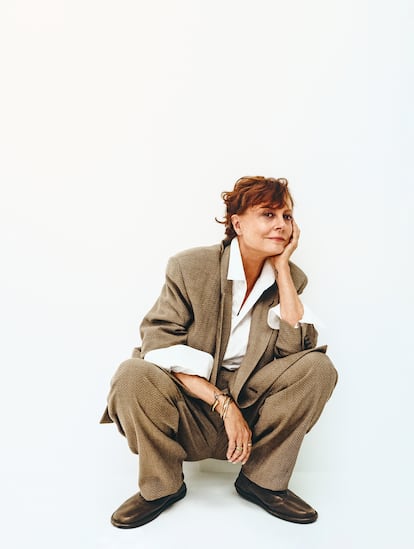
A. I hadn’t realized what a big deal it was when I went. I might have been too scared to go if I’d known… [laughs]. But I love Spain. I’m sure there are terrible things in your country, like everywhere. But Spain and Ireland have really come through and dared other countries to be more morally responsible, and I appreciate that.
Q. How familiar are you with contemporary Spanish cinema?
A. There used to be all these little cinemas in New York that programmed independent films. When I was with Louis Malle, he would physically take his films to the projectionist because everyone knew the good projectionists. That’s how old I am. And that’s also how The Rocky Horror Picture Show was discovered — in gay cinemas and tiny venues. But there’s hardly any left, so it’s hard to see films that aren’t commercial and I don’t know much about contemporary Spanish cinema. Of course, I love all of Pedro [Almodóvar]’s work. He has a very particular point of view. I protested with him in Los Angeles against the Iraq War, right around the Oscars. I really admire him. Although I’m kind of mad he’s never put me in one of his films, but that’s okay.
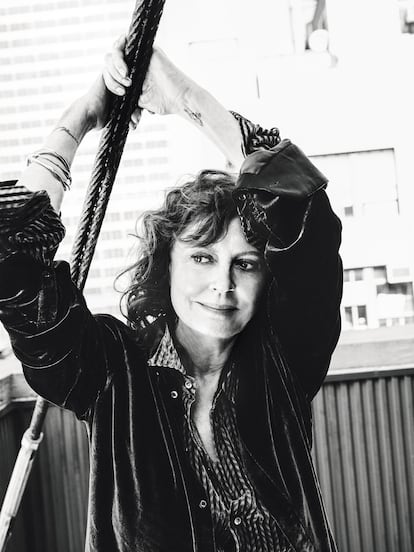
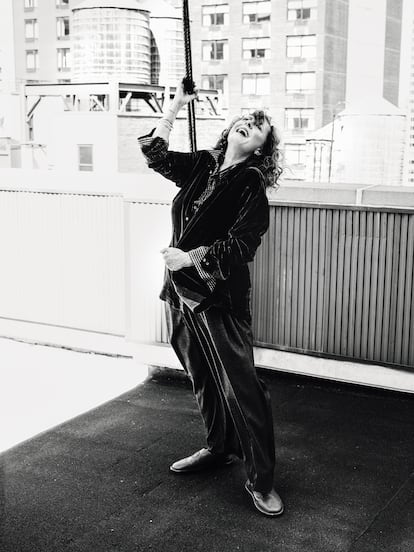
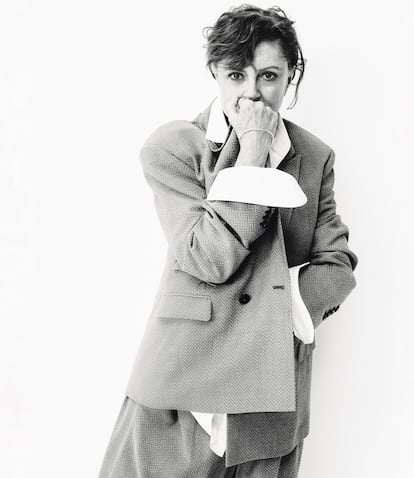
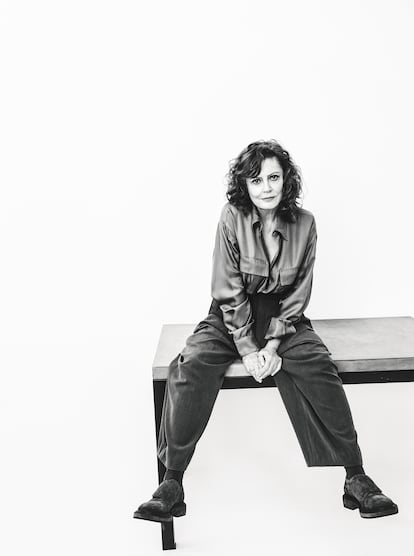
Credits
Styling: Juan Cebrián
Makeup, hair styling, and nails: Genevieve Herr (Sally Harlor), Matthew Monzon (TMG LA) and Pattie Yankee.
Production: Cristina Serrano.
Production assistant: Pete Koukov.
Set design and on-set editor: Elaine Winter and Mari Siviakova.
Photo editing: La machine.
Local production: Drita Curanaj (R3 Mgmt) and Wojtek Szaulinski.
Tailor: Margarita Babina.
Photography assistants: Christopher Morel and Keegan Eckart.
Styling assistant: Fern Cerezo and Jan Anthonio Diaz.
Deadly mushroom danger in Spain as shoppers are urged to check before buying
Spanish Supermarket launches new mobile shopping system to cut supermarket checkout queues
Power cuts hit Malaga: Eight towns and villages affected by electricity faults


-
Catalonia4 weeks ago
Why the rain opened a hole in front of Granollers’ courts
-
DGT2 weeks ago
Viral video in Spain sparks fury over drivers who ‘have no idea how to drive’
-

 %4 weeks ago
Spain Payslip Change Coming In January 2027
-

 Arabia Saudí3 weeks ago
Un Ataque De Los Hutíes Contra El Aeropuerto De Riad Causa Al Menos 12 Muertos Y Más De 300 Heridos
-

 America3 weeks ago
Un Tirador Mata A Ocho Personas En Una Vivienda En Pensilvania
-
 House prices3 weeks ago
Spanish House Prices Rise 9pc But Market Growth Stalls In H1 2026
-
News from Spain3 weeks ago
Spain police warn parents over WhatsApp scam that uses their children’s real accounts
-
airports2 weeks ago
Travelling between Spain and Italy? The extra border checks could soon end